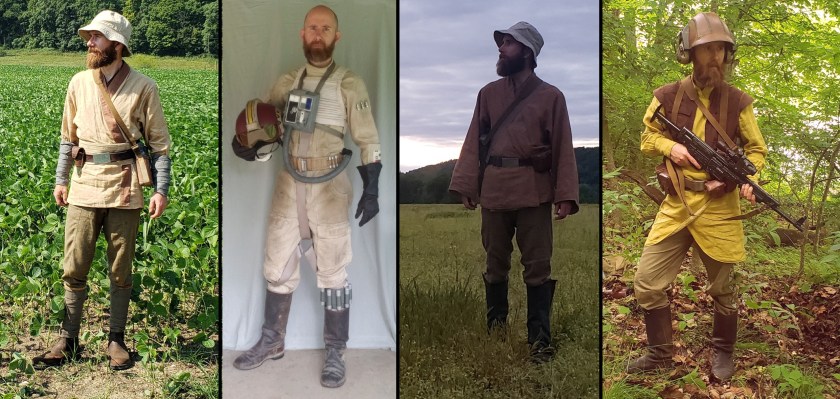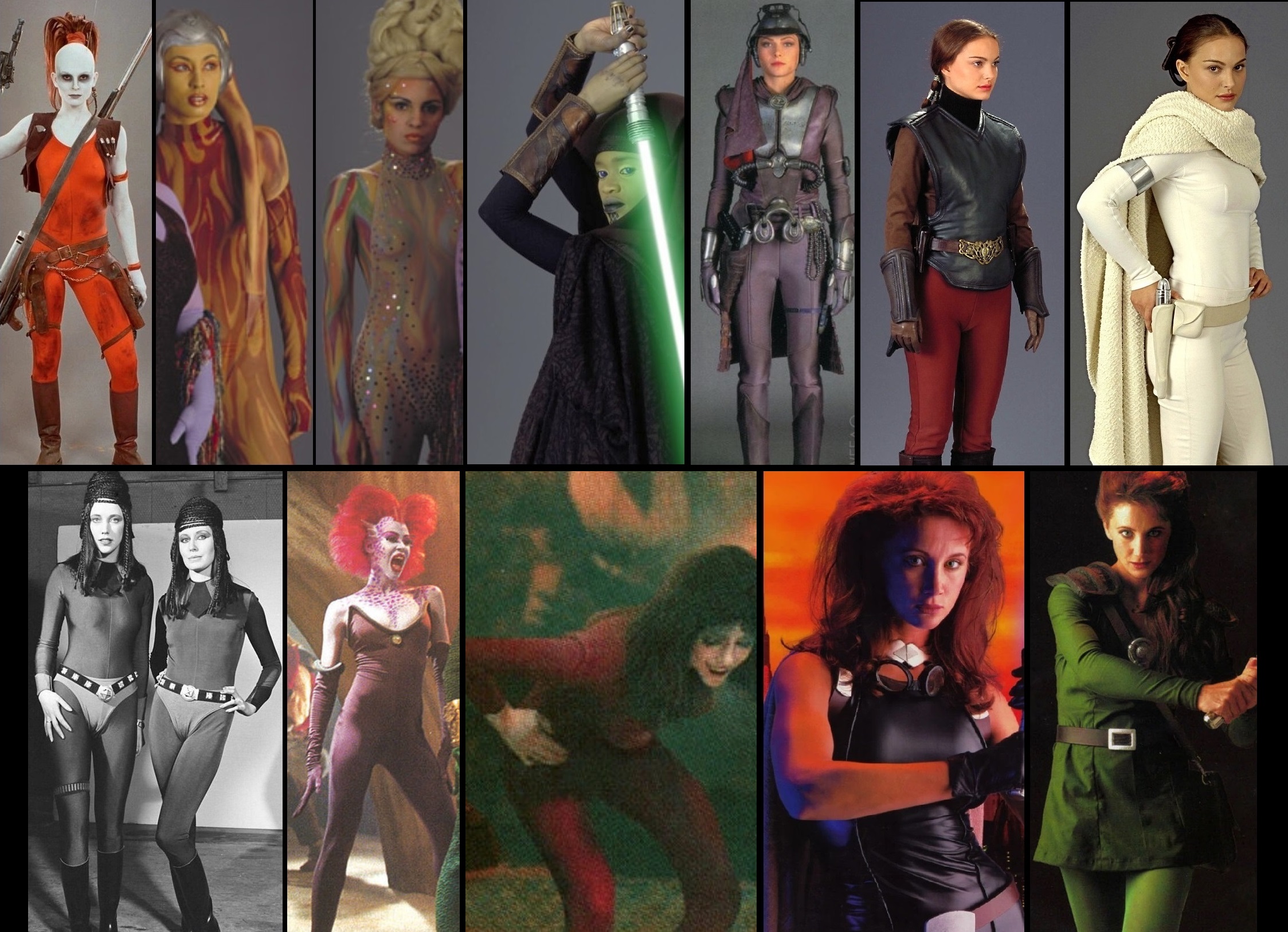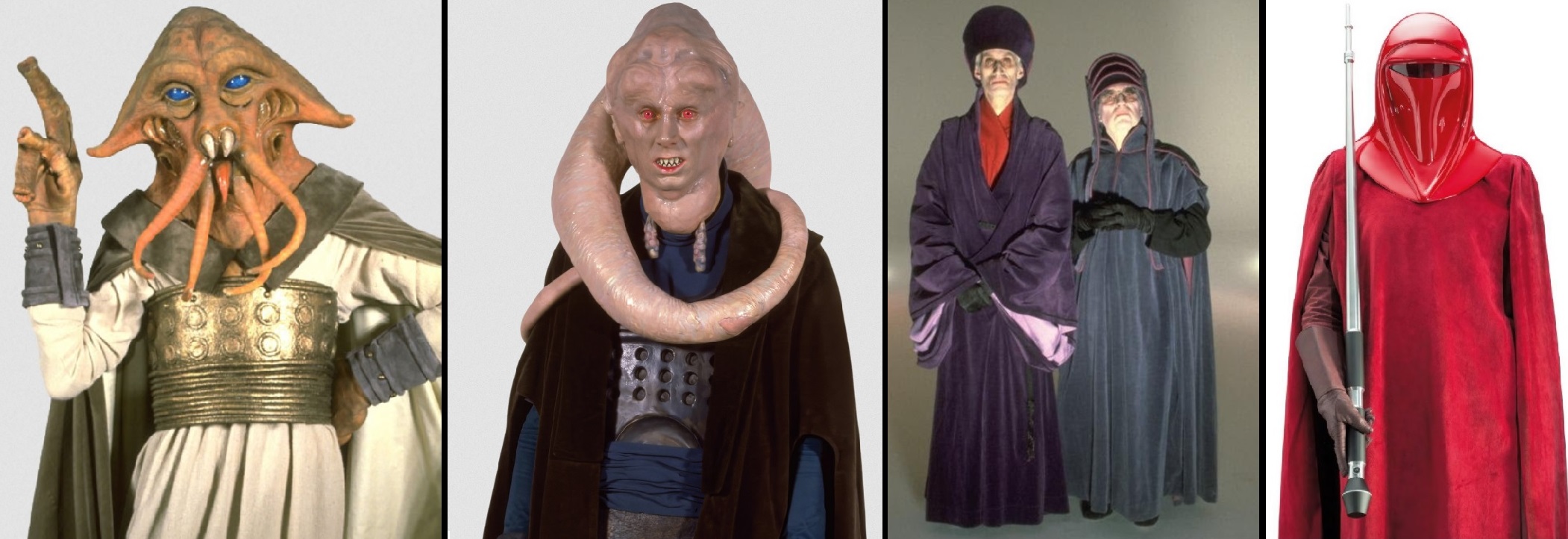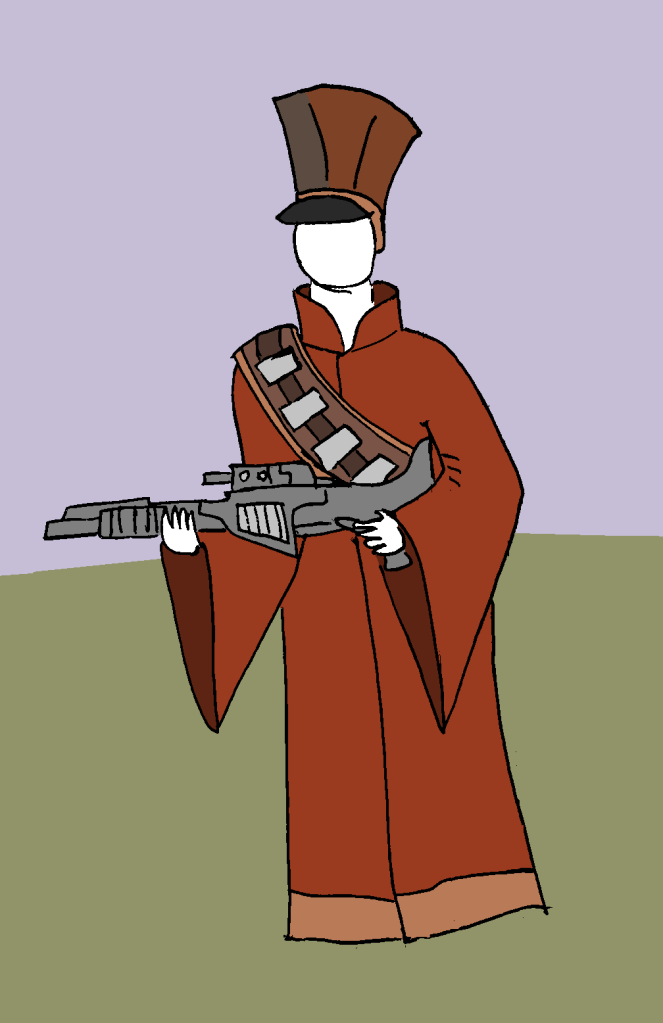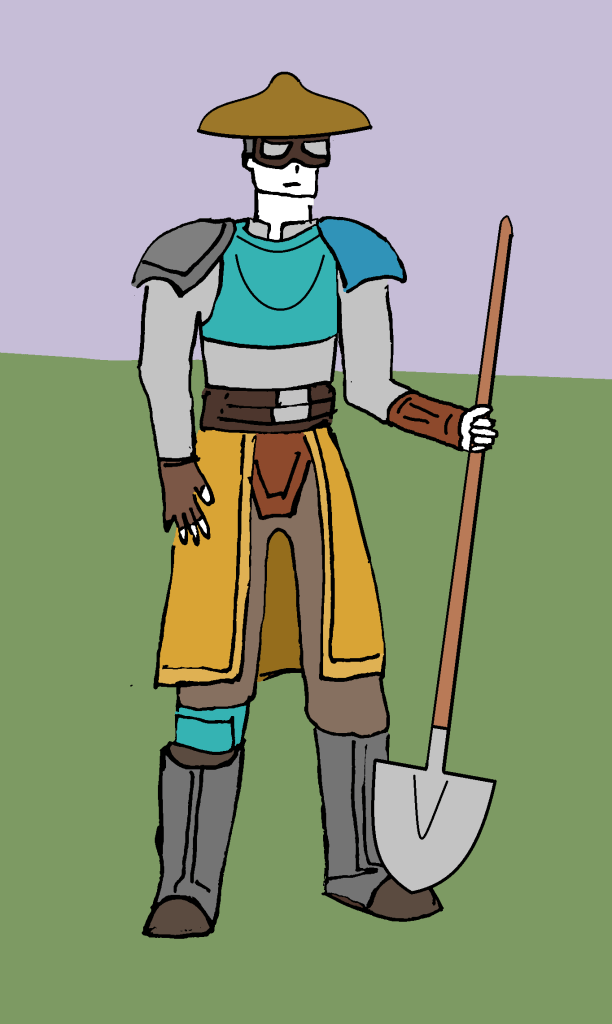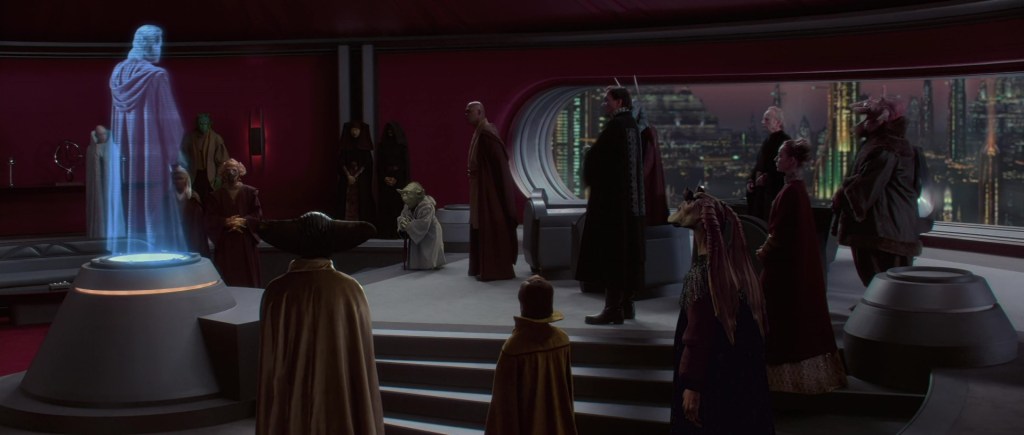
Galactic Style Guide – Designing Foundational Characters: part 3

Welcome back to the Galactic Style Guide, the series where we break down the ‘Star Wars aesthetic’ in order to help you create a more authentic ‘outer persona’ for your ‘denizen’ or OC.
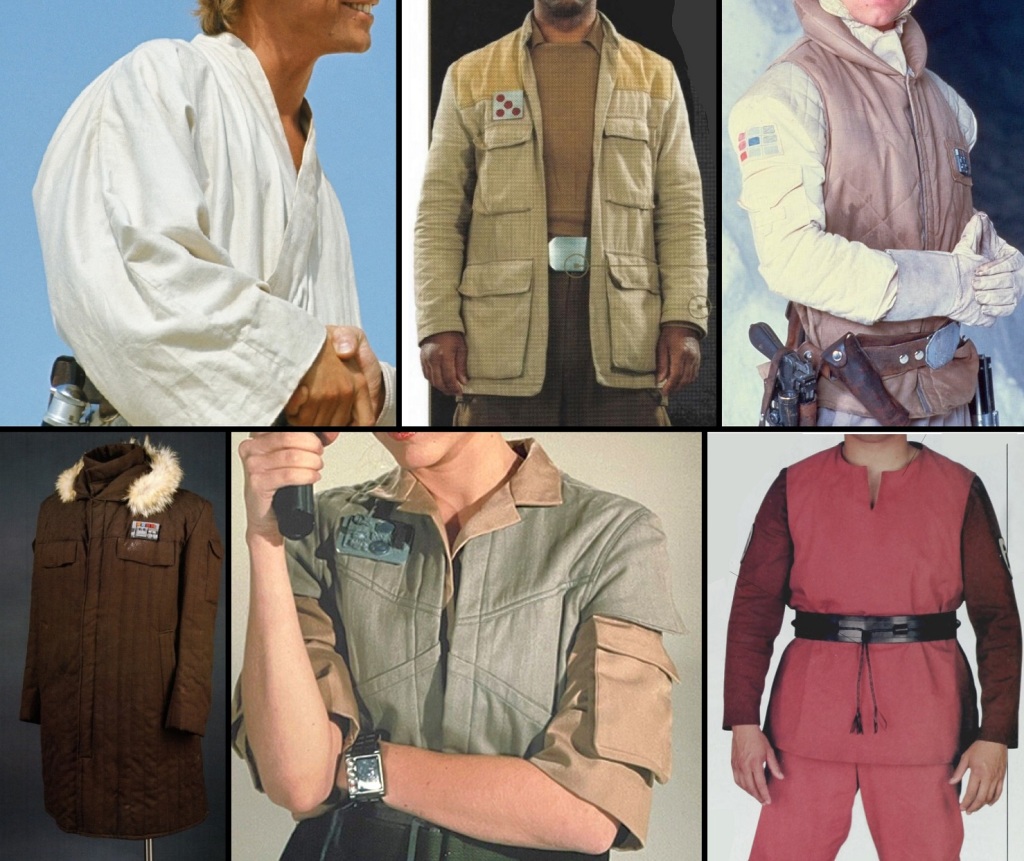
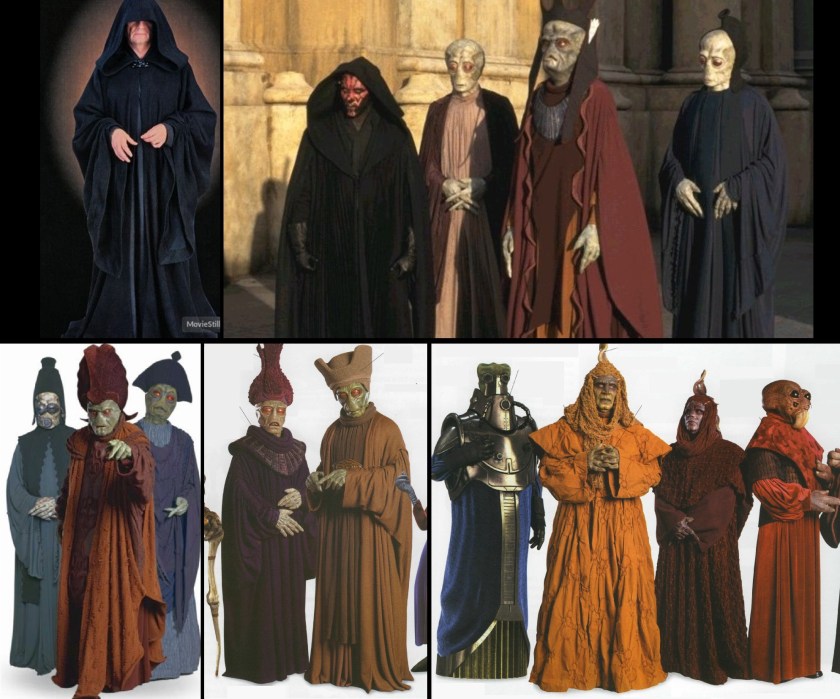
As pointed out in EC Henry’s excellent video on the foundations of good SW vehicle design (which I believe is absolutely applicable to character/costume design as well), the first requirement is an iconic design – i.e. like computer icons, Star Wars characters (and character types!) should be recognizable by their silhouettes and largely not be mistaken for each other.
Cosplayers new to the idea of ‘original character’ or ‘denizen’ costuming often chafe when exposed to the reality that the GFFA setting, while far-reaching, is not in fact without limitations, but operates instead within a specific visual idiom in which character types are associated with certain design styles.
We’ve explored several of these in our two previous entries, so this time, I want to show how trying to mix-and-match elements from these styles can actually sabotage otherwise-solid character concepts.

keep reading for more examples and artwork

Galactic Style Guide – Materials II

Welcome back to the Galactic Style Guide, the series where we break down the ‘Star Wars aesthetic’ in order to help you create a more authentic ‘outer persona’ for your denizen or OC! For my northern hemisphere readers it’s late summer and still probably plenty hot. One key factor that helps determine how comfortable an in-universe outfit will be is the materials it’s made from, so in this month’s entry, we’re concluding our close look at onscreen fabrics! Let’s get back into it with a fabric which is much-used onscreen but underutilized by fan costumers: silk!

Made from unspooled cocoons of the mulberry silkmoth, as we can see here silk can be appropriate for everything from high-class politicians to desert hermits, depending on the quality and amount of processing! Throughout Episodes IV and V, Leia Organa spends much of her screentime wearing this material in the form of crêpe de chine, a lightweight silk with lovely drape:

In addition to her iconic ANH look, Leia also wears variations of the gown for the Yavin victory ceremony and on the hospital ship

When most of us think of silk, the form that comes to mind is probably the highly-finished, satiny variety. Aside from Lando’s silk brocade cape lining and Padme’s Ep III nightgown, I haven’t found any specific mentions of its use for onscreen costumes in my research, however, ‘shimmersilk’ worn by highstatus characters shows up in reference books fairly often:

keep reading

Galactic Style Guide – Materials I

Welcome back to the Galactic Style Guide, the series where we break down the ‘Star Wars aesthetic’ in order to help you create a more authentic ‘outer persona’ for your denizen or OC! For my northern hemisphere readers it’s the middle of high summer and probably plenty hot. One key factor that helps determine how comfortable an in-universe outfit will be is the materials it’s made from, so in this month’s entry, we’re starting a close look at onscreen fabrics! (If you’re interested in the general characteristics of these materials beyond aesthetics, check out Step 5 from the First Steps section^!)

Compared to synthetics like polyester, natural fabrics are far more breathable, and thankfully for galactic costumers’ sake, natural fibers are a major reason the GFFA looks the way it does! We must remember that when SW’77 first came out, “science fiction” had been lousy with cheesy “quasi-futuristic” tinfoil-looking costumes and skintight bodysuits for decades; Lucas and Mollo’s desire to treat the Galaxy as an historical setting meant that they would have to use historical fabrics for its costumes as well.
As a result, generally speaking woven, natural-fiber fabrics are the rule – knits are the exception (and especially jersey/t-shirt or hoodie/sweatshirt materials). Thankfully synthetic knits like modern athleisure/activewear are an even tinier minority.
In addition to making an outfit look ‘real’ or ‘fake’, the materials an outfit is made from also play a major role in the wearers’ comfort.

In our modern times, cotton is probably the fabric most people are most familiar with, and in all honesty, if it’s a lighterweight piece with fairly low texture and no need for a lot of ‘drape’, a good percentage of onscreen Star Wars costumes are probably made of cotton as well. Likely among these:

While cotton is a short staple (fiber length) that generally equates to lower strength, one particular type of cotton fabric, denim, has a reputation for toughness which is most closely associated with blue jeans. Of this material in-universe I’ve only been able to come up with three clear examples:

Continue reading “Galactic Style Guide – Materials I”

Galactic Style Guide – Patterns

Welcome back to the Galactic Style Guide, the series where we break down the ‘Star Wars aesthetic’ in order to help you create a more authentic ‘outer persona’ for your denizen or OC! In this month’s ‘GSG Counterpoint’ entry, we’re looking at an element of visual character design that tends to fall by the wayside when we think about the foundations of galactic style. While the vast majority of characters in the Original Trilogy wear clothing made of solid-color material, there are a few rare places where patterned fabrics are used. As we’ll see, the Prequels introduce a statistically higher number of examples, though they are still the minority. The highest-quality post-Disney title includes several, but in a very specific context!
Note that in this entry, we are primarily dealing with ‘prints’, as opposed to textured fabrics (in which the apparent pattern is caused by the actual dimensional quality of the fabric itself).

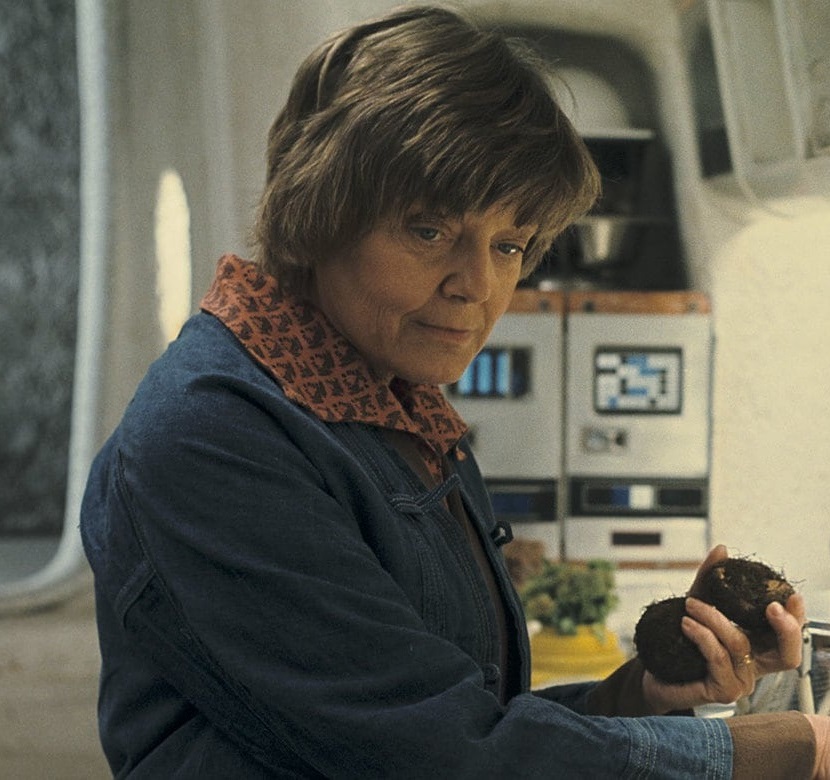
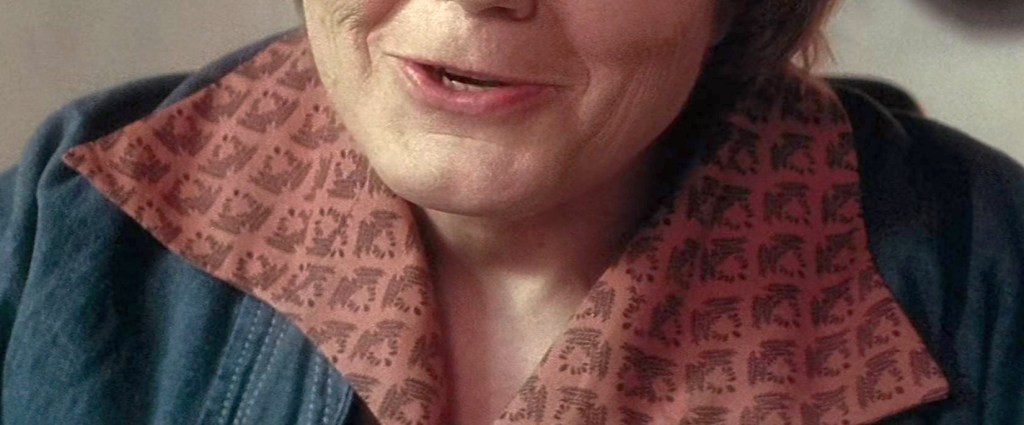
In all three films of the OT, I think we can count the number of characters wearing (non-camouflage) patterned clothing on one hand. The first is pre-skeleton Beru Lars, whose innermost layer (of three!) is a collared shirt with a repeated design in a square pattern:

Next up, one of the patrons at the Mos Eisley Cantina sports a long tunic with a surprising pattern – but you’d never know it from onscreen:

keep reading to learn more!

Project: Sweater retool 2025

What’s this? Another sewing retool project?? Yes!
What can I say? Maybe it’s just my local shop, but while the offerings at Goodwill seem to be getting worse lately (thanks largely to the influx in garbage-quality fast fashion from places like SHEIN), I still manage to find good (i.e. with Swarzy potential!) pieces now and then. Case in point: this odd women’s sweater-thing made by Kenar – I guess when worn open, it might be considered a cardigan?

At this point in my scavenging career, the initial attribute I scan for is texture (and by extension, fabric content) more than anything like color or design, so considering its fuzzy nap, I instantly had this sweater pegged as wool. As I’m always working towards the goal of GFFA-ifying my modern hiking kit, I thought this could be a good replacement for my current midlayer (an Earth-y, crewneck cashmere sweater) – but not without a little retooling!

tell me this doesn’t look cozy!

The material itself is great – it’s actually a knit, but since it’s 100% wool there’s enough felting going on that it both looks woven and doesn’t unravel when cut! Color-wise, it’s a bit brighter than simply Navy blue and a bit lighter than Royal blue, which is fine for GFFA uses. Obviously I’d prefer something a little lighter or less saturated, but it otherwise checked most of my boxes… except one.

how to swarzify this ugly sweater?

Galactic Style Guide – Coats & Robes

Welcome back to the Galactic Style Guide, the series where we break down the ‘Star Wars aesthetic’ in order to help you create a more authentic ‘outer persona’! Somehow it’s been about a year since we’ve had a Style Guide entry dealing with soft kit, so this time around we’re diving into another category of somewhat ‘swishy’ garments – coats and robes!
As we ran into a similar semantic issue when we looked at capes and cloaks (distinct from today’s subject due to their lack of sleeves), before we get ahead of ourselves we should probably try to nail down the differences between these two.
So, how exactly does a coat differ from a robe? To be honest, it’s a blurred line. After collecting and scrutinizing the references for this entry, the answer seems to be a combination of 1) the amount of tailoring the garment has, 2) the wearer’s activity level, and 3) perhaps the degree of closure: thus Robes tend to be longer and flowier (less tailored), worn closed, and folks who wear them tend to do more standing around. Coats tend to be somewhat shorter, more tailored, worn open, and those wearing them do more while wearing them. Or perhaps robes are less utilitarian, while coats serve more functional purposes, like protecting the wearer (from cold, dirt, etc.)? As I say, it’s a complicated spectrum to navigate, and the boundaries are more than a little unclear, but I’ve done my best to group them here, hopefully to show the differences.

First up we have what I’m calling ‘true robes’:

continue reading

Project: Coat Retool 2024

If it feels like it’s been forever since I’ve had a finished project to unveil, you would be right – turns out it’s been nearly a year! The funny thing is, this one has been finished since Christmas, but I’ve been so busy with, y’know, gutting a house and renovating it literally from the ground up to be able to work on nearly anything else (like taking pictures of the final product!) We may have moved in right after the New Year, but it’s only been in the last two weeks that I’ve got my sewing space in a more-or-less workable condition! Anyway, this particular project started last January when I was (as ever) browsing the racks at my local Goodwill, not looking for anything in particular, only to find something in a solid material with great potential Swarziness…if I could just manage to rework it to be less hideous.

In this case, a camel-colored 100% wool coat with a massive collar and weirdly rounded shoulders…major Asian granny vibes. However, I’m always up for a challenge (especially at a price point of just $7!) and was in the market for a lighter-weight coat (my only other option at the time was a Soviet behemoth meant for the Eastern Front!) so I got it home and started making my plan of attack.

what all goes into such a transformation?

Galactic Style Guide – Designing Foundational Characters: part 2

Welcome back to the Galactic Style Guide, the series where we break down the ‘Star Wars aesthetic’ in order to help you create a more authentic ‘outer persona’! Continuing on from our last entry, we’re trying something a little different. As we said last time, the first requirement for a great character is an iconic design – i.e. like computer icons, Star Wars characters and character types should be recognizable by their silhouettes and largely not be mistaken for each other. What exactly makes each of those character archetypes unique is the question we’re discussing right now!

-As we’ve seen before, upper-class characters (like politicians, diplomats, etc.) typically wear less tailored garments, relying instead on more voluminous robes and cloaks made of lushly draped fabrics often more colorful than what the average citizen wears. While still rare overall, patterns are somewhat more frequently seen among this group, but silly hats are well represented!

keep reading for more character examples and artwork

Galactic Style Guide – Designing Foundational Characters: part 1

Welcome back to the Galactic Style Guide, the series where we break down the ‘Star Wars aesthetic’ in order to help you create a more authentic ‘outer persona’! In this installment, we’re trying something a little different!

Cosplayers new to the idea of ‘original character’ or ‘denizen’ costuming often chafe when faced with the reality that the Galaxy Far, Far Away, while far-reaching, is not in fact without limitations, but instead operates within a specific visual idiom in which character types are associated with certain design styles:

“[Lucas] made pronouncements of a general nature … First of all, he wanted the Imperial people to look efficient, totalitarian, fascist; and the rebels, the goodies, to look like something out of a Western or the US Marines [in Vietnam]. He said, ‘You’ve got a very difficult job here, because I don’t want anyone to notice the costumes. They’ve got to look familiar but not familiar at the same time.’ – _The Making of Star Wars_ (Rinzler), p.130.

“[Mollo] broke down the [Episode IV] characters into general costume themes:
peasant costumes (Russo-Japanese); Western/U.S. cavalry/motorcycle looks; Nazi-style uniforms/armor/cloaks; space technology-type outfits; ladies’ mock-medieval/Tarzan attire; semi-monsters with armor; and full monsters.” – _SWCOT_ (Alinger), p.16. From the sound of it, these categories roughly correspond with: Tatooine civilians, Alliance leadership/Han, Imperials & Vader, pilots, Leia/upstrata, Chewbacca, and…???

As pointed out in EC Henry’s excellent video on the foundations of good SW vehicle design (which I believe is absolutely applicable to character/costume design as well), the first requirement is an iconic design. Like computer icons, Star Wars characters (and more importantly for us, character types!) ought to be recognizable by their silhouettes and largely should not be able to be mistaken for each other: in other words, each of these “classes” has a specific visual style that makes it unique; because of the ‘period piece’ nature of the setting, these visual styles usually hearken back to some historical antecedent, albeit often slightly remixed.
For those interested in creating an ‘OC’ for cosplay/costuming/reenacting/living history purposes, I’ve used the above categories as a jumping-off point to break these character archetypes into general style pointers, hopefully to help illustrate what makes each look unique and how to avoid a key pitfall when creating such characters.

We’ll begin with general ‘galactic ‘peasants’ (what we might call ‘commoners’ or civilian-type characters), which is a wide category and varies (naturally) by planet:

keep reading for more character archetypes and artwork

Galactic Style Guide – Binoculars

Welcome back to another installment of the Galactic Style Guide, the series where we break down the ‘Star Wars aesthetic’ in order to help you create a more authentic ‘outer persona’! It’s been a while since we’ve looked at any in-universe hardware, but in this installment, we’re digging deep into a specific type of gear used in the field across the galaxy: space binoculars!
A good set of binocs (whether macro- or electro-) are a great accessory to help add depth to an appropriate character impression, filling in for the collapsible brass telescope or ‘field glasses’ frequently carried by characters in various SW-influencing historical genres – whether that be swashbuckling pirates, Old West cowboys, or World War soldiers.
Let’s get started with our ur-example: the Lydree MB450 macrobinoculars carried by Luke back in SW’77:

keep reading to see TONS more examples!