Galactic Style Guide – Coats & Robes

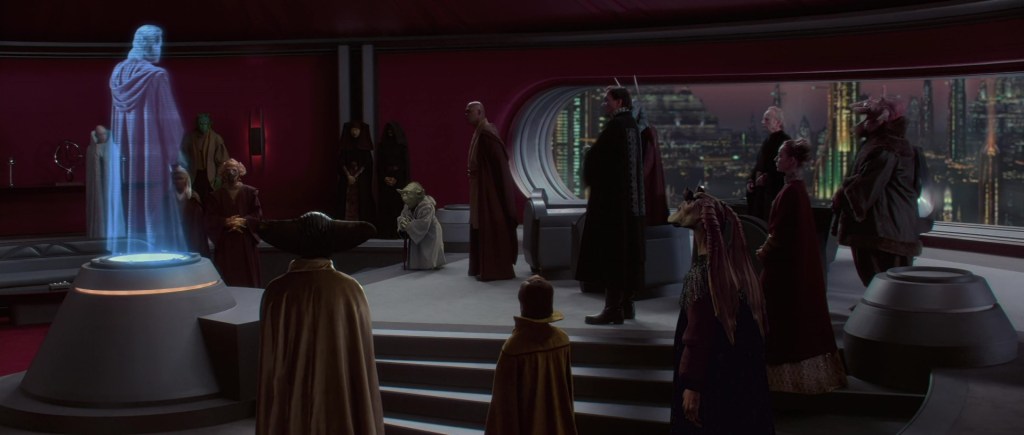
Welcome back to the Galactic Style Guide, the series where we break down the ‘Star Wars aesthetic’ in order to help you create a more authentic ‘outer persona’! Somehow it’s been about a year since we’ve had a Style Guide entry dealing with soft kit, so this time around we’re diving into another category of somewhat ‘swishy’ garments – coats and robes!
As we ran into a similar semantic issue when we looked at capes and cloaks (distinct from today’s subject due to their lack of sleeves), before we get ahead of ourselves we should probably try to nail down the differences between these two.
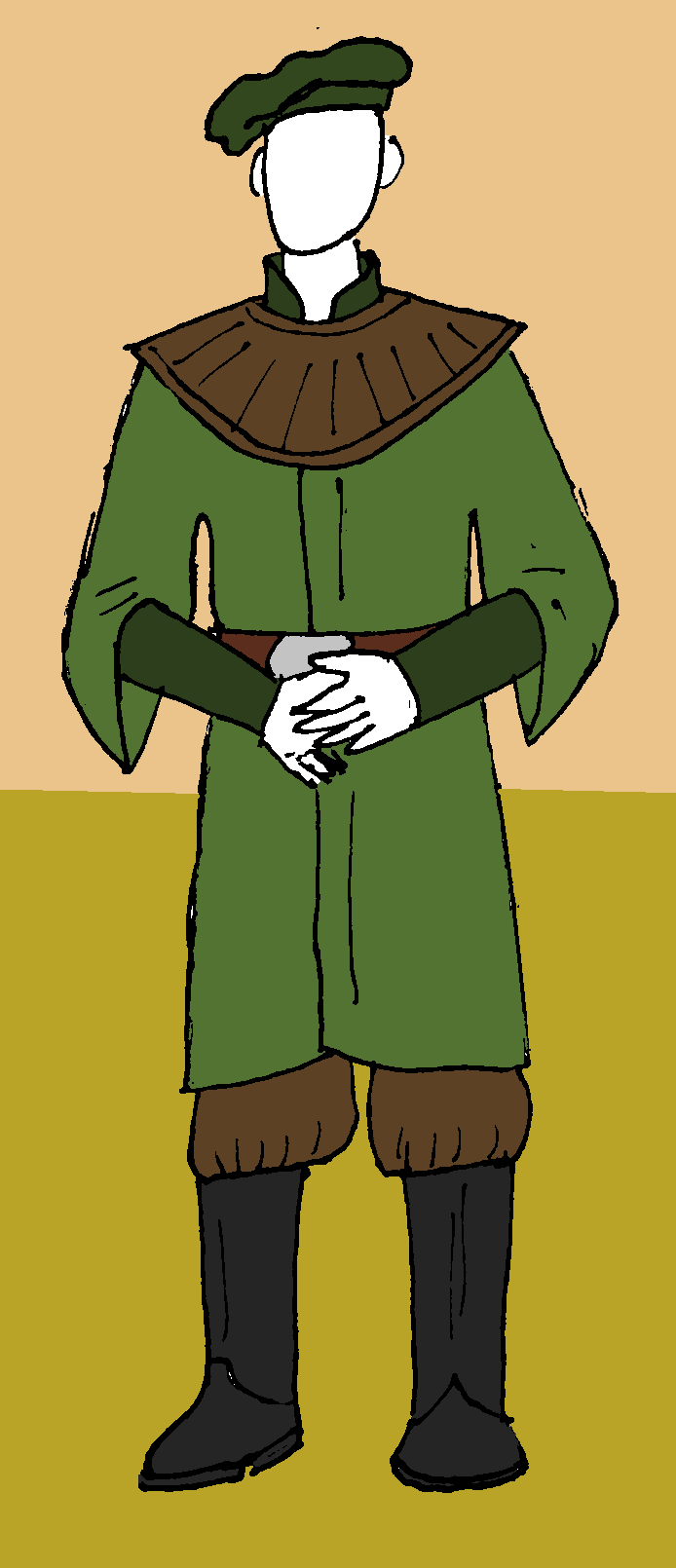
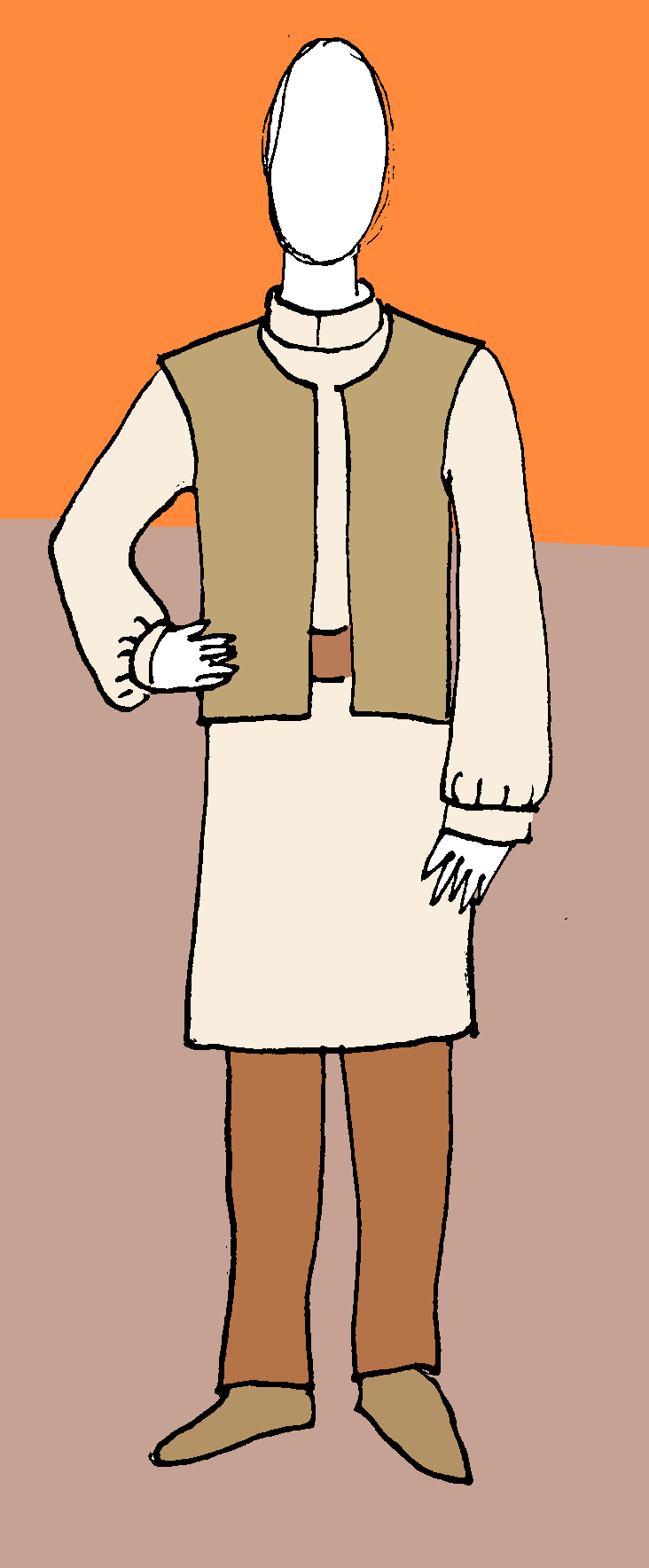
So, how exactly does a coat differ from a robe? To be honest, it’s a blurred line. After collecting and scrutinizing the references for this entry, the answer seems to be a combination of 1) the amount of tailoring the garment has, 2) the wearer’s activity level, and 3) perhaps the degree of closure: thus Robes tend to be longer and flowier (less tailored), worn closed, and folks who wear them tend to do more standing around. Coats tend to be somewhat shorter, more tailored, worn open, and those wearing them do more while wearing them. Or perhaps robes are less utilitarian, while coats serve more functional purposes, like protecting the wearer (from cold, dirt, etc.)? As I say, it’s a complicated spectrum to navigate, and the boundaries are more than a little unclear, but I’ve done my best to group them here, hopefully to show the differences.

First up we have what I’m calling ‘true robes’:
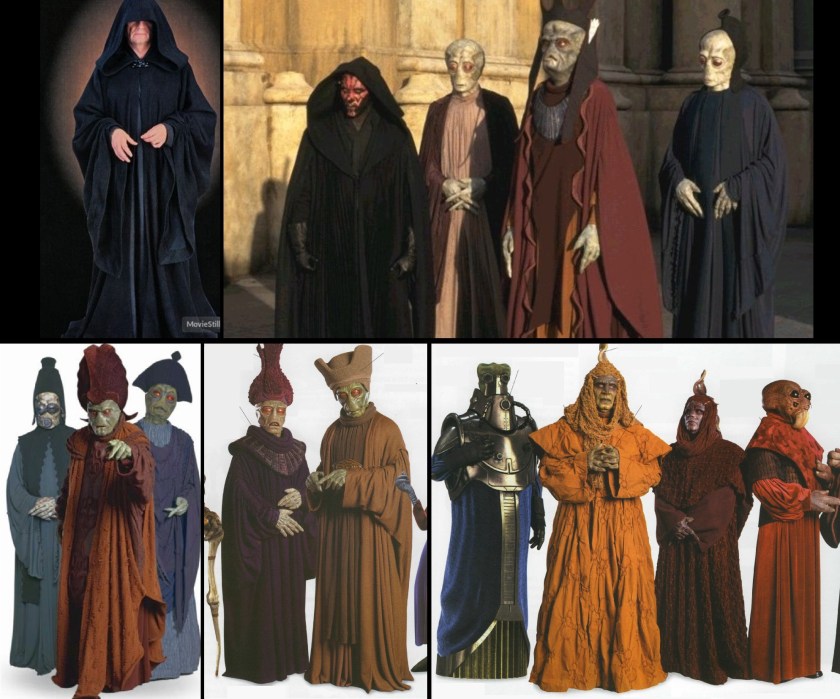
continue reading

Project: Coat Retool 2024

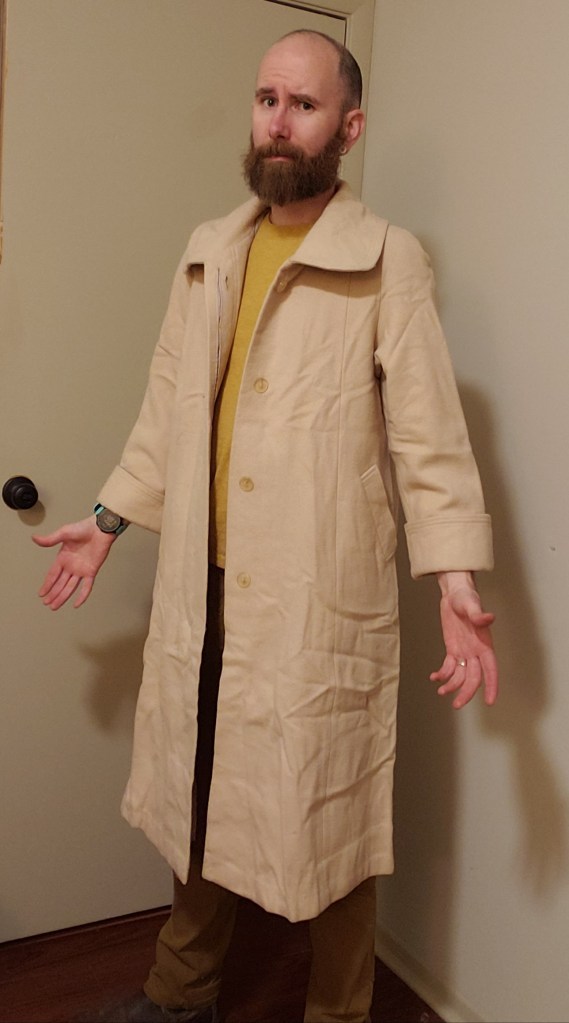
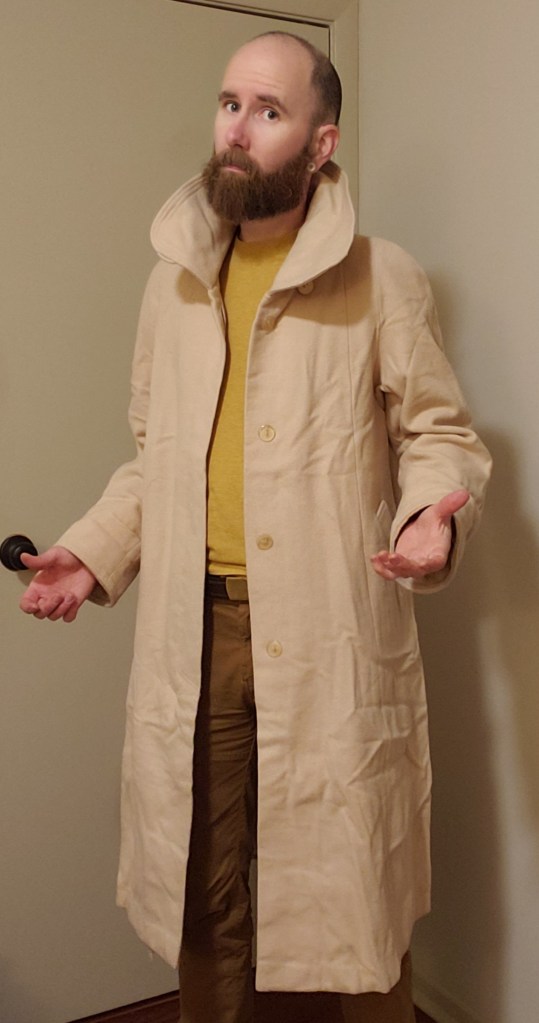
If it feels like it’s been forever since I’ve had a finished project to unveil, you would be right – turns out it’s been nearly a year! The funny thing is, this one has been finished since Christmas, but I’ve been so busy with, y’know, gutting a house and renovating it literally from the ground up to be able to work on nearly anything else (like taking pictures of the final product!) We may have moved in right after the New Year, but it’s only been in the last two weeks that I’ve got my sewing space in a more-or-less workable condition! Anyway, this particular project started last January when I was (as ever) browsing the racks at my local Goodwill, not looking for anything in particular, only to find something in a solid material with great potential Swarziness…if I could just manage to rework it to be less hideous.

In this case, a camel-colored 100% wool coat with a massive collar and weirdly rounded shoulders…major Asian granny vibes. However, I’m always up for a challenge (especially at a price point of just $7!) and was in the market for a lighter-weight coat (my only other option at the time was a Soviet behemoth meant for the Eastern Front!) so I got it home and started making my plan of attack.

what all goes into such a transformation?

Galactic Style Guide – Designing Foundational Characters: part 2

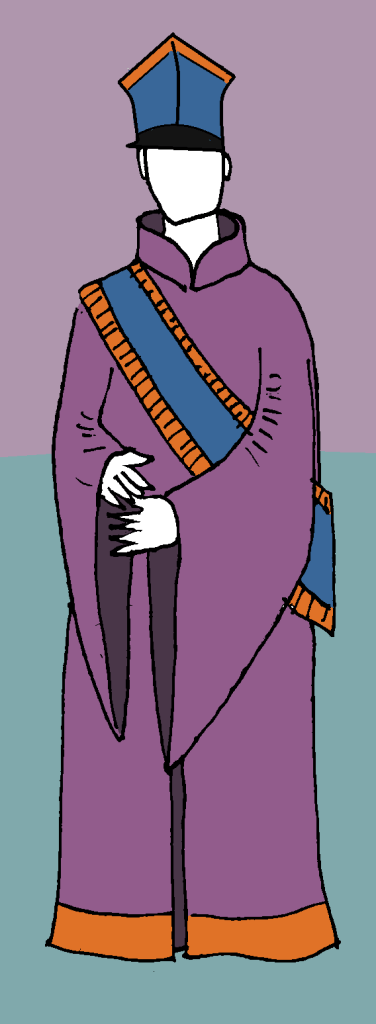
Welcome back to the Galactic Style Guide, the series where we break down the ‘Star Wars aesthetic’ in order to help you create a more authentic ‘outer persona’! Continuing on from our last entry, we’re trying something a little different. As we said last time, the first requirement for a great character is an iconic design – i.e. like computer icons, Star Wars characters and character types should be recognizable by their silhouettes and largely not be mistaken for each other. What exactly makes each of those character archetypes unique is the question we’re discussing right now!

-As we’ve seen before, upper-class characters (like politicians, diplomats, etc.) typically wear less tailored garments, relying instead on more voluminous robes and cloaks made of lushly draped fabrics often more colorful than what the average citizen wears. While still rare overall, patterns are somewhat more frequently seen among this group, but silly hats are well represented!

keep reading for more character examples and artwork

Galactic Style Guide – Designing Foundational Characters: part 1

Welcome back to the Galactic Style Guide, the series where we break down the ‘Star Wars aesthetic’ in order to help you create a more authentic ‘outer persona’! In this installment, we’re trying something a little different!

Cosplayers new to the idea of ‘original character’ or ‘denizen’ costuming often chafe when faced with the reality that the Galaxy Far, Far Away, while far-reaching, is not in fact without limitations, but instead operates within a specific visual idiom in which character types are associated with certain design styles:

“[Lucas] made pronouncements of a general nature … First of all, he wanted the Imperial people to look efficient, totalitarian, fascist; and the rebels, the goodies, to look like something out of a Western or the US Marines [in Vietnam]. He said, ‘You’ve got a very difficult job here, because I don’t want anyone to notice the costumes. They’ve got to look familiar but not familiar at the same time.’ – _The Making of Star Wars_ (Rinzler), p.130.

“[Mollo] broke down the [Episode IV] characters into general costume themes:
peasant costumes (Russo-Japanese); Western/U.S. cavalry/motorcycle looks; Nazi-style uniforms/armor/cloaks; space technology-type outfits; ladies’ mock-medieval/Tarzan attire; semi-monsters with armor; and full monsters.” – _SWCOT_ (Alinger), p.16. From the sound of it, these categories roughly correspond with: Tatooine civilians, Alliance leadership/Han, Imperials & Vader, pilots, Leia/upstrata, Chewbacca, and…???

As pointed out in EC Henry’s excellent video on the foundations of good SW vehicle design (which I believe is absolutely applicable to character/costume design as well), the first requirement is an iconic design. Like computer icons, Star Wars characters (and more importantly for us, character types!) ought to be recognizable by their silhouettes and largely should not be able to be mistaken for each other: in other words, each of these “classes” has a specific visual style that makes it unique; because of the ‘period piece’ nature of the setting, these visual styles usually hearken back to some historical antecedent, albeit often slightly remixed.
For those interested in creating an ‘OC’ for cosplay/costuming/reenacting/living history purposes, I’ve used the above categories as a jumping-off point to break these character archetypes into general style pointers, hopefully to help illustrate what makes each look unique and how to avoid a key pitfall when creating such characters.

We’ll begin with general ‘galactic ‘peasants’ (what we might call ‘commoners’ or civilian-type characters), which is a wide category and varies (naturally) by planet:

keep reading for more character archetypes and artwork

Galactic Style Guide – Binoculars

Welcome back to another installment of the Galactic Style Guide, the series where we break down the ‘Star Wars aesthetic’ in order to help you create a more authentic ‘outer persona’! It’s been a while since we’ve looked at any in-universe hardware, but in this installment, we’re digging deep into a specific type of gear used in the field across the galaxy: space binoculars!
A good set of binocs (whether macro- or electro-) are a great accessory to help add depth to an appropriate character impression, filling in for the collapsible brass telescope or ‘field glasses’ frequently carried by characters in various SW-influencing historical genres – whether that be swashbuckling pirates, Old West cowboys, or World War soldiers.
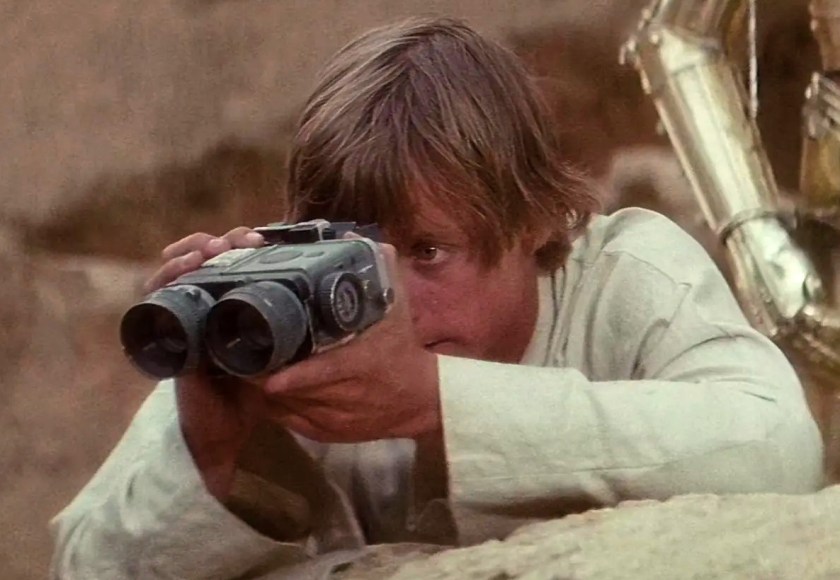
Let’s get started with our ur-example: the Lydree MB450 macrobinoculars carried by Luke back in SW’77:

keep reading to see TONS more examples!

HOW TO: Hide Your Buttons #2

In a previous post, I concluded by saying “when the flavor of the world is ‘no visible fasteners’, then cover up your darn buttons.” However, for some folks that may be easier said than done. If you like the idea of having an outfit be sans visible-fasteners but find the idea of how to actually make it happen a little overwhelming, then this post is for you!
Adding the ability to hide fasteners to your toolbox is a major level-up, especially for those outfitting an Original Character. Off-the-rack items can be great for dressing a ton of far-background characters, or creating a suggestive ‘everyday bounding’ look, but if you’re after a 100%-in-universe-legit look, these kinds of pieces can only take you so far. I hope you’ll note how our main characters almost always wear custom-designed garments, which may still be reminiscent or incorporate elements of familiar/off-the rack pieces, but usually tweaked just a little to give it that timeless GFFA flavor.
In this post, we’re going to show you a second method to create a button-free appearance on an upperbody garment by ‘genderswapping’ our garment, a version of which I’ve used before on this raw silk shirt retool project. How do you swap a piece of clothing’s gender, you ask? Keep reading to find out!

level up your costuming game with this handy skill

Galactic Style Guide – the Post-Disney era (part 2)

Welcome back to another installment of the Galactic Style Guide, the series where we break down the ‘Star Wars aesthetic’ in order to help you create a more authentic ‘outer persona’!
Like last time, this entry is a bit of a departure from our usual collection of references. This time we’re continuing to focus on elements which I’ve identified as either clear deviations from what existed in the Lucas days, or which originated firmly in the post-Disney era. Let’s keep it moving with #6!

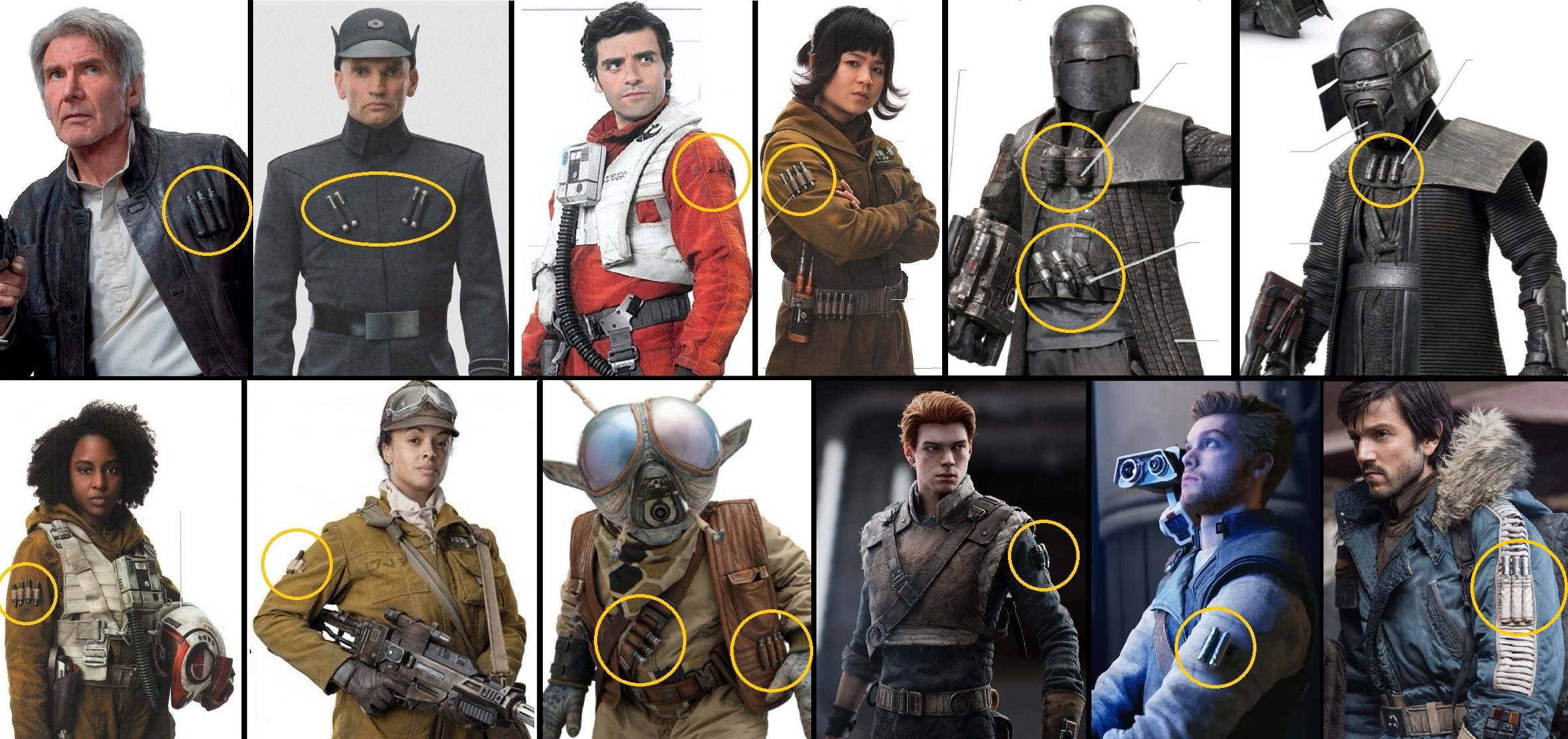
When it comes to soft kit, after perusing the various Visual Dictionaries one trend I noticed started appearing with the Sequels and subsequently latched onto by fan-makers is that of little discrete loops (instead of pockets) being used to hold various doodads on clothing – your code cylinders, ‘mini flares’, blaster ammo, etc.:

What I really want to know is why everyone in the new continuity seems to need so many of these little silver things anyway? In the OT, we’d see Rebel pilots and technicians with small ones on their belts, and big ones kept below the knee (Reb pilots and Bossk seemed to be just about it). But in the Disney era, they’re all over the place! In short, I think they’re a symptom of the new era costumings’ general reliance on overdesign, versus good design, which in the case of the Star Wars setting, usually boils down to Less is More. You don’t need to have every single visible surface sporting some sort of detail – it’s OKAY for costumes to have ‘blank space’! This is especially true in our crispy 4k UHD+ present, when it is all too easy for an overdesigned outfit to leave the viewers’ eyes overwhelmed.

Keep reading for more observed abberations!

HOW TO: Hide Your Buttons #1

In one of my previous entries, I concluded by saying “when the flavor of the world is ‘no visible fasteners’, then cover up your darn buttons.” However, for some folks that may be easier said than done; if you like the idea of having an outfit be sans visible-fasteners but find the idea of how to actually make it happen a little overwhelming, then the next couple posts are for you!
Adding the ability to hide zippers or buttons to your toolbox is a major level-up, especially for those outfitting an Original Character. Off-the-rack items can be great for dressing a ton of far-background characters, or creating a suggestive ‘everyday bounding’ look, but if you’re after a 100%-in-universe-legit look, off-the-rack can only take you so far. I hope you’ll note how our main characters almost always wear custom-designed garments, which may still be reminiscent or incorporate elements of familiar/off-the rack pieces, but usually tweaked just a little to give it that timeless GFFA flavor.
In this post, we’re going to show you one method to create a button-free appearance on an upperbody garment by sewing a very basic cover panel over our buttonholes. Then, in part two, we’ll learn to hide buttons by ‘genderswapping’ our garment. What’s that all about, you ask? You’ll just have to wait and see, but for now let’s get started!

level up your sewing game with this handy skill

Galactic Style Guide – the Post-Disney era (part 1)

Welcome back to another installment of the Galactic Style Guide, the series where we break down the ‘Star Wars aesthetic’ in order to help you create a more authentic ‘outer persona’!
And now, for something completely different. If you’ve been following this site, you may have noticed that the majority of my references come from live-action sources of the Lucas era. However, as we inexorably continue further from the boundary between that period and the current one, it becomes clear that not only did this modern era come with a new continuity, but a noticeable shift in visual aesthetics as well, and I want to explore elements of this shift as they relate to our pursuits here (recreating the Star Wars galaxy in ‘reenacting’ form!). In this post (and at least one more!), we’re looking specifically at some elements which I (coming from a relatively outside perspective) have identified as either clear deviations from what existed before, or which originate firmly in the post-Disney era. You’ll see what I mean.
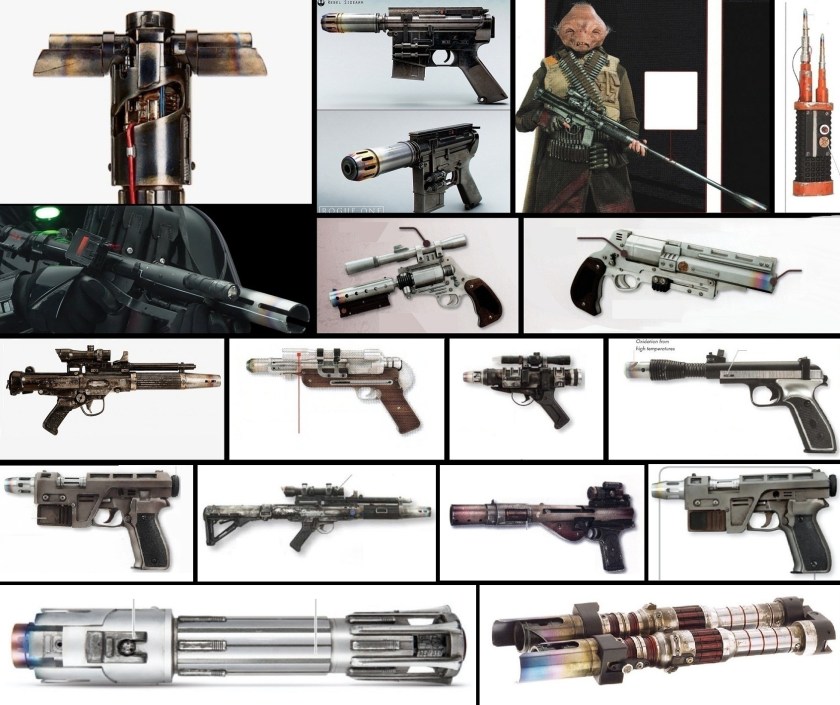
I’m not doing this ‘countdown’ style, but when it comes to something we got along without perfectly fine and was unequivocally not present in the pre-Disney days, #1 at the top of the list has to be the presence of the tempering rainbow on the muzzles, emitters, or tips of blasters, lightsabers, or tools:

I read somewhere that all the Remnant TKs in Mandalorian also feature this, but the scenes are so dark it’s hard to tell.
Keep reading for more observed abberations!

HOW TO: Collar conversion

Even if you’re fairly keyed into the intricacies of clothing in the Galaxy Far, Far Away, there’s one easily-overlooked element that plays a major role in helping separate our own modern fashion from that of the Star Wars galaxy: collars!

When he first began designing his world, we read how Lucas “made pronouncements of a general nature” and that he wanted “the rebels, the goodies, to look like something out of a Western” (Rinzler: The Making of Star Wars, p.130; quoted slightly modified in Alinger’s SWCOT, p15). This is an important distinction, as it was one of the broad styles John Mollo used to sort his character designs : “peasant costumes; Western/U.S. cavalry/motorcycle looks; Nazi-style uniforms/armor/cloaks; space technology-type outfits”, etc. (Alinger, p16). More on these categories later!

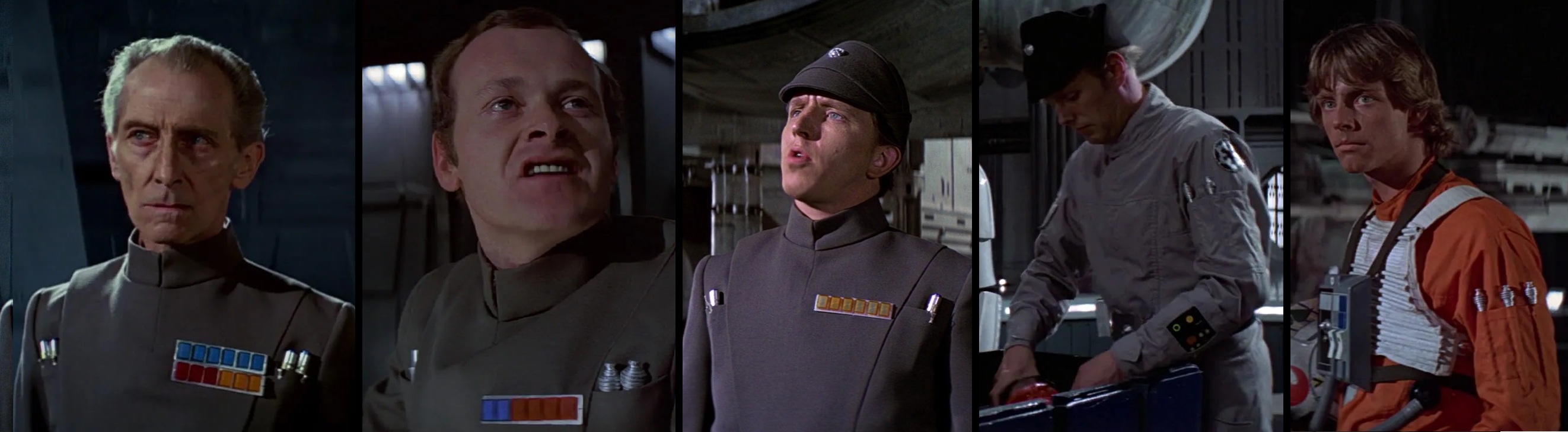
As something so mundane as the collar on a shirt or jacket, it’s likely you may not have noticed the fact that fairly few characters in Star Wars actually wear shirts with modern-style ‘fall collars’. Of course, we do have a few examples, but by-and-large, most characters who wear collared garments wear ones with some form of ‘stand collar’, and quite often these are full-on Mandarin collars.
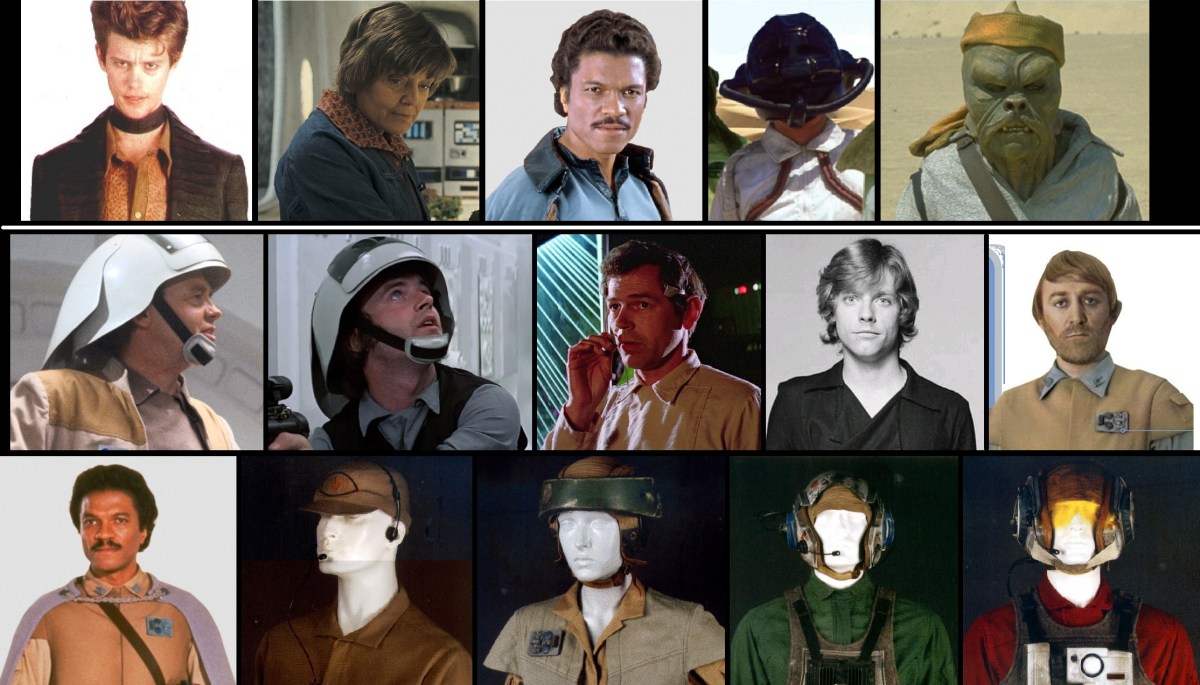
After thumbing through my reference library, if I had to spitball some numbers, I would say that well over 50% incorporate some form of upright collar, perhaps 20% are collarless, and less than 5% are fall collars – really, the characters above are pretty much all I came up with.

I hope you’ll note that of our samples, the majority of them are Rebel Alliance ranks or ‘character classes’ (officer, fighter pilot, fleet trooper, communications tech, etc.)! Ergo, judging by our samples, the fall collar is generally a good way to give ones’ impression a touch of Rebel Alliance-style militarism, but if you’re portraying an unaffiliated galactic citizen, something that says ‘slightly exotic’ like some flavor of stand collar may be the way to go.
Luckily, most modern shirts with two-piece fall collars are readily adaptable to a more upright style with one easy tweak!

learn an easy minimal-sewing hack to upgrade your outfit!