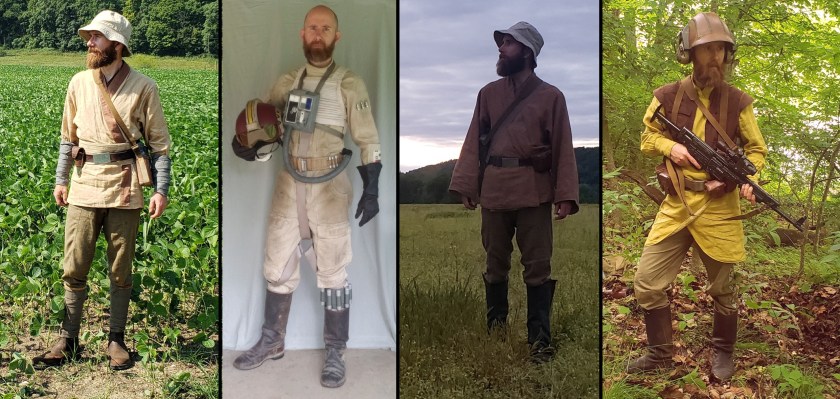
SOMEHOW, it’s rapidly approaching a decadesince I first entertained the idea of using the Galaxy Far, Far Away as a setting for first-person ‘reenacting’, and because progressive reenacting involves constant tinkering and improvement, a fair amount of these various personas has changed since their creation. (Of course, I’m a perfectionist who likes to wait until something is ‘finished’ before sharing – hence why I rarely share full-kit updates! – see the problem here?) Though I haven’t had the time, energy, or opportunities to do anything with them in much-too-long, while I am making incremental progress towards my ‘functional workshop and sewing space’ goals, I wanted to use this Spring to overcome inertia, get some pieces out of my drafts folder, and check in with the state of my galactic impressions!
To accomplish this, I’ve been detailing each of these in their most up-to-date form, as well as summarizing the background research and justifications for choices that I’ve made to create each impression – all intended to serve as an example of what solid, research-based, fictional living history can look like.
Instead of publishing these as Posts (which will inevitably get pushed down the site’s front page), these breakdowns can now be found collected at the more permanent Personas and Impressions page ^above^! Check them out, and let me know your thoughts!
Welcome back to the Galactic Style Guide, the series where we break down the ‘Star Wars aesthetic’ in order to help you create a more authentic ‘outer persona’ for your denizen or OC! For my northern hemisphere readers it’s late summer and still probably plenty hot. One key factor that helps determine how comfortable an in-universe outfit will be is the materials it’s made from, so in this month’s entry, we’re concluding our close look at onscreen fabrics! Let’s get back into it with a fabric which is much-used onscreen but underutilized by fan costumers: silk!
Made from unspooled cocoons of the mulberry silkmoth, as we can see here silk can be appropriate for everything from high-class politicians to desert hermits, depending on the quality and amount of processing! Throughout Episodes IV and V, Leia Organa spends much of her screentime wearing this material in the form of crêpe de chine, a lightweight silk with lovely drape:
In addition to her iconic ANH look, Leia also wears variations of the gown for the Yavin victory ceremony and on the hospital ship
When most of us think of silk, the form that comes to mind is probably the highly-finished, satiny variety. Aside from Lando’s silk brocade cape lining and Padme’s Ep III nightgown, I haven’t found any specific mentions of its use for onscreen costumes in my research, however, ‘shimmersilk’ worn by highstatus characters shows up in reference books fairly often:
Welcome back to the Galactic Style Guide, the series where we break down the ‘Star Wars aesthetic’ in order to help you create a more authentic ‘outer persona’ for your denizen or OC! For my northern hemisphere readers it’s the middle of high summer and probably plenty hot. One key factor that helps determine how comfortable an in-universe outfit will be is the materials it’s made from, so in this month’s entry, we’re starting a close look at onscreen fabrics! (If you’re interested in the general characteristics of these materials beyond aesthetics, check out Step 5 from the First Steps section^!)
Compared to synthetics like polyester, natural fabrics are far more breathable, and thankfully for galactic costumers’ sake, natural fibers are a major reason the GFFA looks the way it does! We must remember that when SW’77 first came out, “science fiction” had been lousy with cheesy “quasi-futuristic” tinfoil-looking costumes and skintight bodysuits for decades; Lucas and Mollo’s desire to treat the Galaxy as an historical setting meant that they would have to use historical fabrics for its costumes as well. As a result, generally speaking woven, natural-fiber fabrics are the rule – knits are the exception (and especially jersey/t-shirt or hoodie/sweatshirt materials). Thankfully synthetic knits like modern athleisure/activewear are an even tinier minority. In addition to making an outfit look ‘real’ or ‘fake’, the materials an outfit is made from also play a major role in the wearers’ comfort.
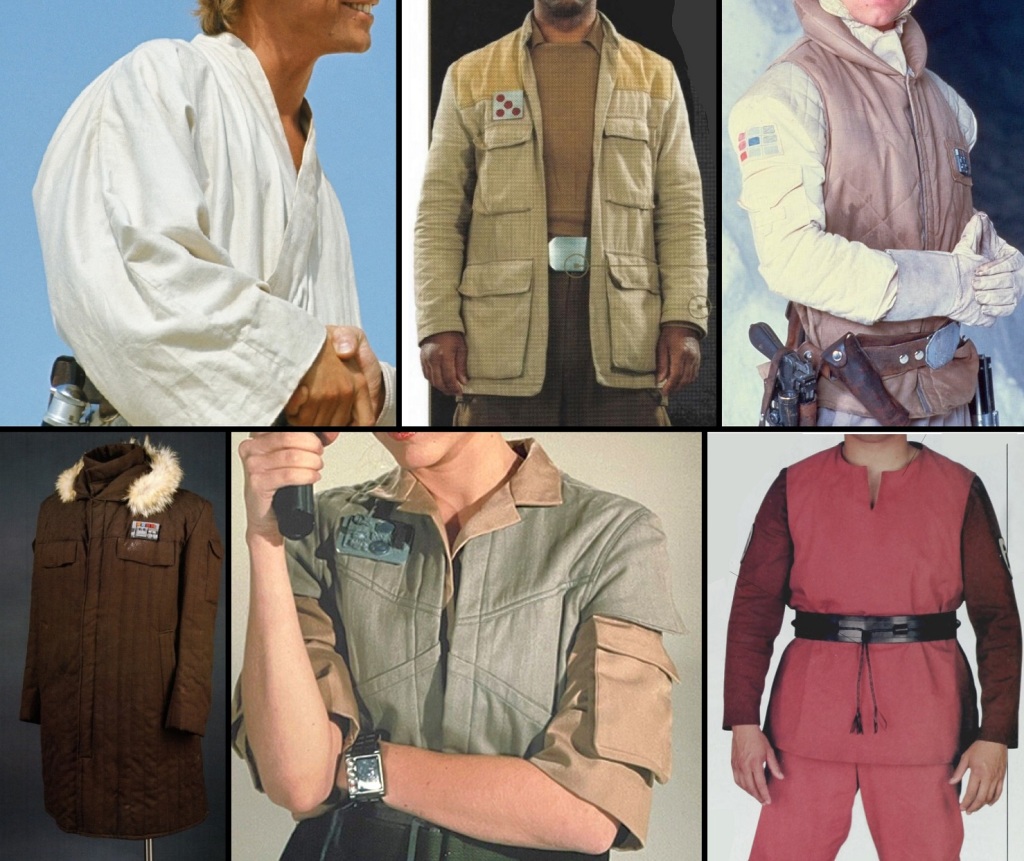
In our modern times, cotton is probably the fabric most people are most familiar with, and in all honesty, if it’s a lighterweight piece with fairly low texture and no need for a lot of ‘drape’, a good percentage of onscreen Star Wars costumes are probably made of cotton as well. Likely among these:
While cotton is a short staple (fiber length) that generally equates to lower strength, one particular type of cotton fabric, denim, has a reputation for toughness which is most closely associated with blue jeans. Of this material in-universe I’ve only been able to come up with three clear examples:
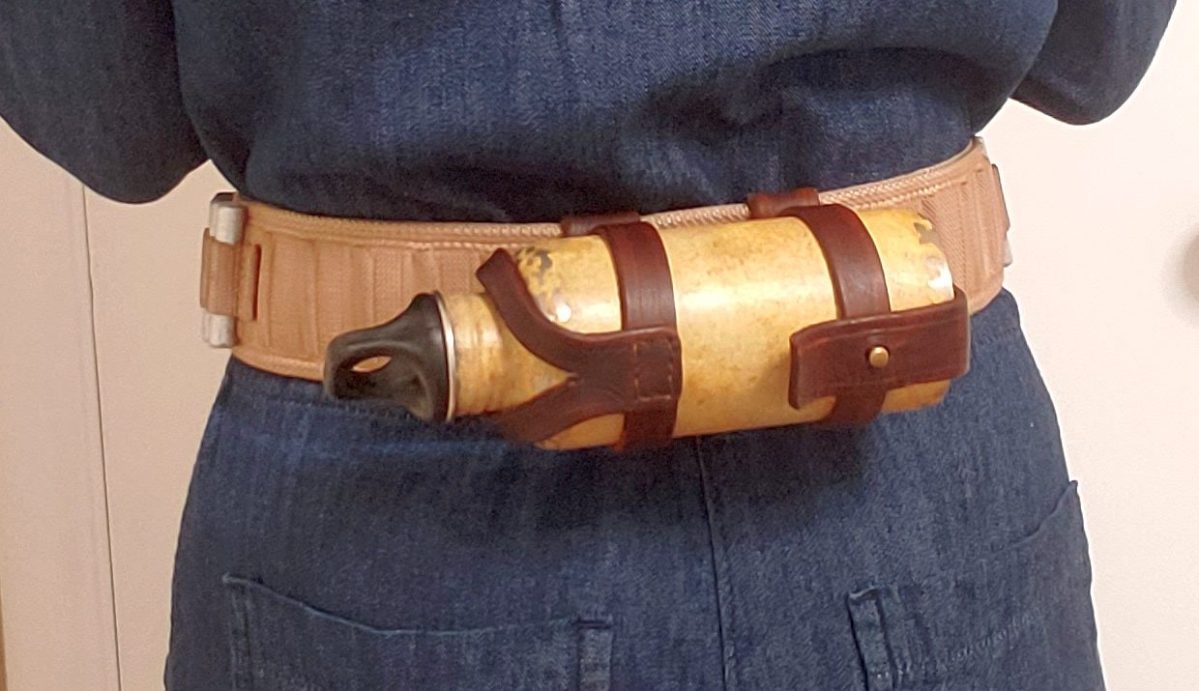
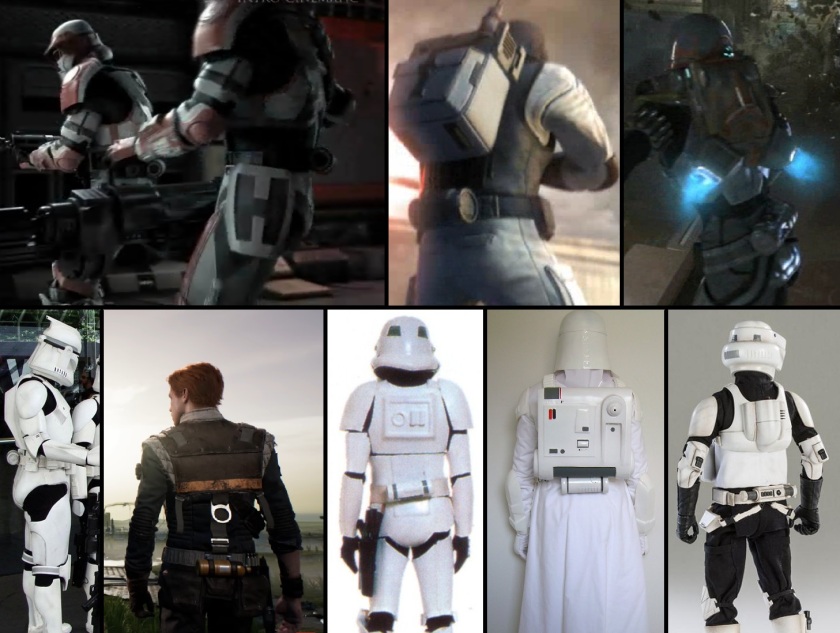
As is becoming my usual tendency, this project began as a quick burst of creative energy, only to be followed by months of hiatus until some right material is found, and then another hiatus until my craft docket or mental bandwidth could catch up. This project in particular is also the result of a curious local quirk: the area of town where I live has a very strong culture of ‘curb crawling’, in that neighbors frequently put unwanted items on their curbs free for the taking! One day last summer I was biking around town when I came upon one of these treasure caches and pulled over to take a look. Among the knick-knacks and a cool bell beaker-shaped glass vase was a plain stainless water bottle (of the sort I had spotted onscreen in Episode II several years back), so I took it home and cleaned it up. The size was actually smaller than the onscreen one – holding only a pint or so – but I thought it might be a useful bit of hydration kit. Since I already have some great in-universe canteens, and this bottle was too small to be a proper canteen, I thought it might be useful for holding some other fluid (electrolyte concentrate? Corellian whisky?), and began brainstorming how I might carry it in a pack or on my person. One way the Star Wars galaxy has always felt like a real setting is the use of repeated visual elements which give a sense of cultural continuity and cohesion. Among my favorite of these is the ubiquitous cylinder carried at the rear of the wearer’s belt:
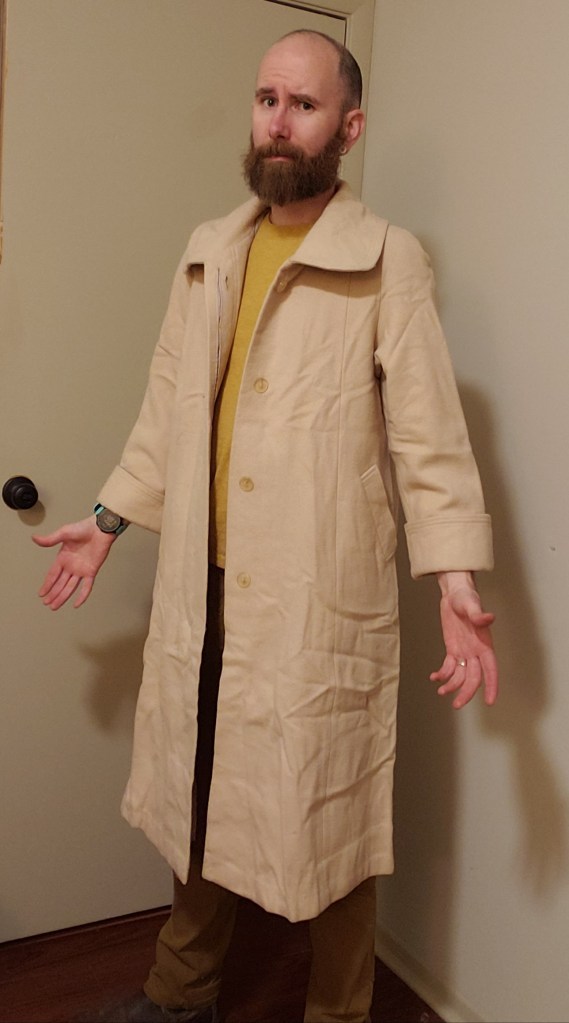
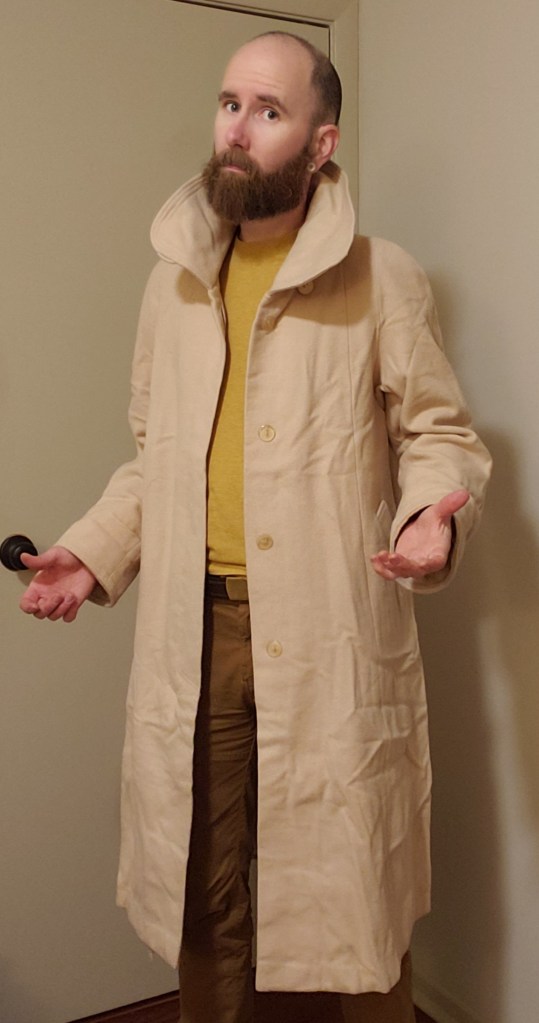
If it feels like it’s been forever since I’ve had a finished project to unveil, you would be right – turns out it’s been nearly a year! The funny thing is, this one has been finished since Christmas, but I’ve been so busy with, y’know, gutting a house and renovating it literally from the ground up to be able to work on nearly anything else (like taking pictures of the final product!) We may have moved in right after the New Year, but it’s only been in the last two weeks that I’ve got my sewing space in a more-or-less workable condition! Anyway, this particular project started last January when I was (as ever) browsing the racks at my local Goodwill, not looking for anything in particular, only to find something in a solid material with great potential Swarziness…if I could just manage to rework it to be less hideous.
In this case, a camel-colored 100% wool coat with a massive collar and weirdly rounded shoulders…major Asian granny vibes. However, I’m always up for a challenge (especially at a price point of just $7!) and was in the market for a lighter-weight coat (my only other option at the time was a Soviet behemoth meant for the Eastern Front!) so I got it home and started making my plan of attack.
While the new-home renovations continue, I am still at least a month from having a functional crafting studio or workshop again, and so in the interest of avoiding a lull and having to overcome the inertia to resume publishing (and to get some pieces out of my drafts!), I thought this would be a good time to check in with the state of some of my galactic impressions. Links to each of these breakdowns will all be collected at the Personas and Impressions page ^above^!
Seeing as how I’ve continued to rework this impression in the years since its ‘first draft’, I want to show how things have progressed, and also serve as a benchmark for any changes I make in the future. Since Naboo pretty much drops off the galactic stage after about 18 BBY, this impression required a large amount of ‘frog DNA’ to extrapolate and create a complete kit from a specific time and place. However, as I hope will become clear, this method of taking the truth of my own life and ‘translating’ it to an in-universe context works very well for creating a fleshed-out but believable persona that stays within the bounds of the setting. (Numbers in [brackets] refer to reference sources in end notes.)
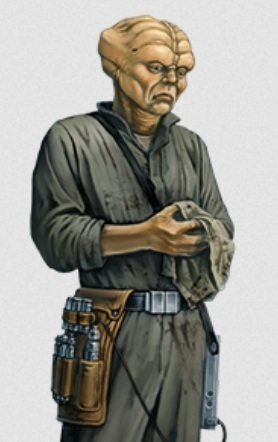
Welcome back to another installment of the Galactic Style Guide, the series where we break down the ‘Star Wars aesthetic’ in order to help you create a more authentic ‘outer persona’! In this entry, we’re continuing our examination of blue-collar mechanic or technician-type characters by seeing how examples from print sources compare to those from live-action. While most SW titles center around exciting or elite character classes (Jedi, Sith, politicians, mercenaries, troopers, etc), if there’s one subset of GFFA publication that fully embraces the more mundane characters like these, it’s role-playing games – especially the current license holder Fantasy Flight Games. FFG’s Age of Rebellion and Edge of the Empire games include sourcebooks for Technicians and Engineers to give us a number of examples to help fill out our sample. If they follow the trends we noted in our live-action examples last time, we should expect these RPG designs to dress in text-free, one-piece coveralls of a muted single color. Let’s see how they measure up!
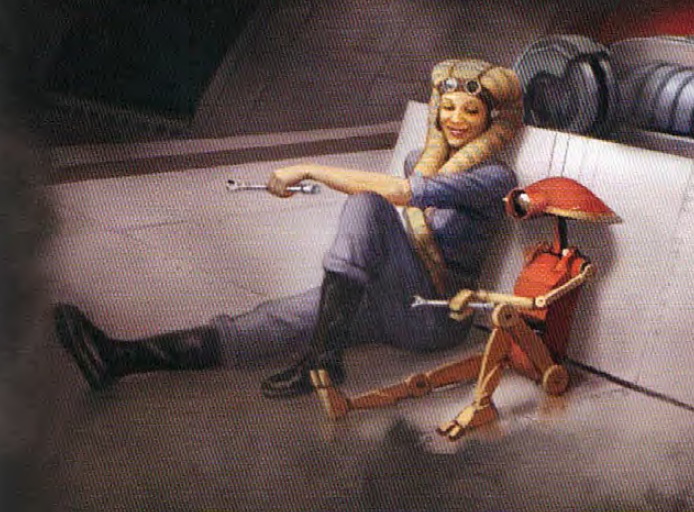
The vignette that opens Special Modifications (the Technician sourcebook) sees Twi’lek mechanic Chalan Talosi hanging with her pit droid, WAC-77. We can see she wears a gray or slate blue coverall with the sleeves and legs rolled up – normally if a tech is wearing tall boots, they’re visible because the pants are tucked/bloused, not rolled up, so this is certainly a choice…but hey, maybe it gives better ventilation or something? It could simply be a gathered waistband, but it does look like she’s wearing a belt. Also note the goggles (not currently in use), which are a prime accessory for any welding-related occupation!
Welcome back to another installment of the Galactic Style Guide, the series where we break down the ‘Star Wars aesthetic’ in order to help you create a more authentic ‘outer persona’! By audience request, in this entry we’re trying something different! This time around, we’re not looking at a specific category of clothing or gear, but a specific “character class”! Just like with our regular Style Guide entries, the idea is still to analyze examples of a single theme to see what they share – and therefore see what the most common and representative elements are, hopefully to prevent the spread of reenactorisms! As always, there’s plenty of room in the Galactic Costumed-Arts Spectrum for fun and personal interpretations, but if (as I believe is entirely possible) the GFFA is to be seen as a legitimate setting for high-quality living history, it really pays to take a page from the reenacting playbook and try to represent the common galactic populace as faithfully as possible…which means sticking to the visual ‘rules’ of the setting. What are those rules for mechanic/technician characters? Let’s find out!
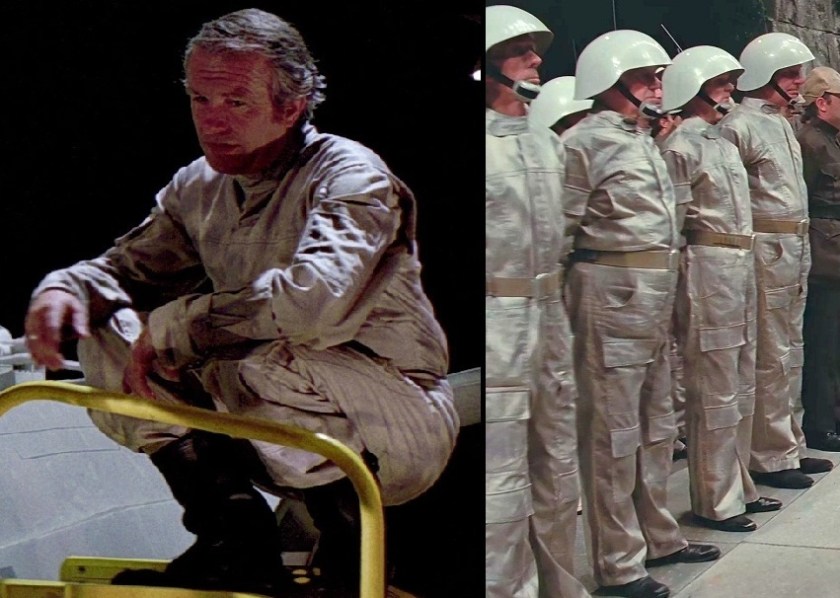
As the majority of SW titles continue to revolve around face characters from the more ‘exciting’ (i.e. typically martial) character classes (Jedi, fighter pilots, bounty hunters, troopers, etc.), we have a relatively small pool to draw from, at least when it comes to live-action. Our first look at this type of character comes from act three of SW’77, with our heroes’ arrival at the Rebel base on Yavin IV.
(We’ll see Rebel hangar crews continuing to dress like this before Endor as well)
It may certainly have been a while since I had a new kit built to break down, but I think I finally picked a real winner with this one! As I mentioned recently, I’d apparently been toying with the idea of assembling a proper Rebel Alliance Pilot kit for a while now: at the end of last April it was an idle fancy, by May, I was highly considering it, and by the end of June I had actively started pricing and sourcing the components!
When I was first entertaining the idea, I experienced a funny, unfamiliar feeling. I’ve become SO used to having to doactual research/work—decide on a home planet, find references to extrapolate the local style, draft patterns, create garments, etc.—for my typical ‘Original Character’ impression/persona that an Alliance pilot (made up of specific elements without much room for customization) feels like just a series of boxes to check off. However, I figured I had already acquired three of the biggest elements (flightsuit, boots, and vest) over the years for use in other kits (because they’re no-nonsense, commonly-seen-in-universe pieces that naturally lend themselves to mix-and-matching!), so why not take the next step and create a kit that would actually be recognizable to John Q Public with minimal explanation? Plus, since opportunities for doing SW living history continue to be pretty much non-existent in my sector, a pilot outfit might actually finally allow me to join up with the Rebel Legion – because none of my previous kits1 quite jive with their current model!
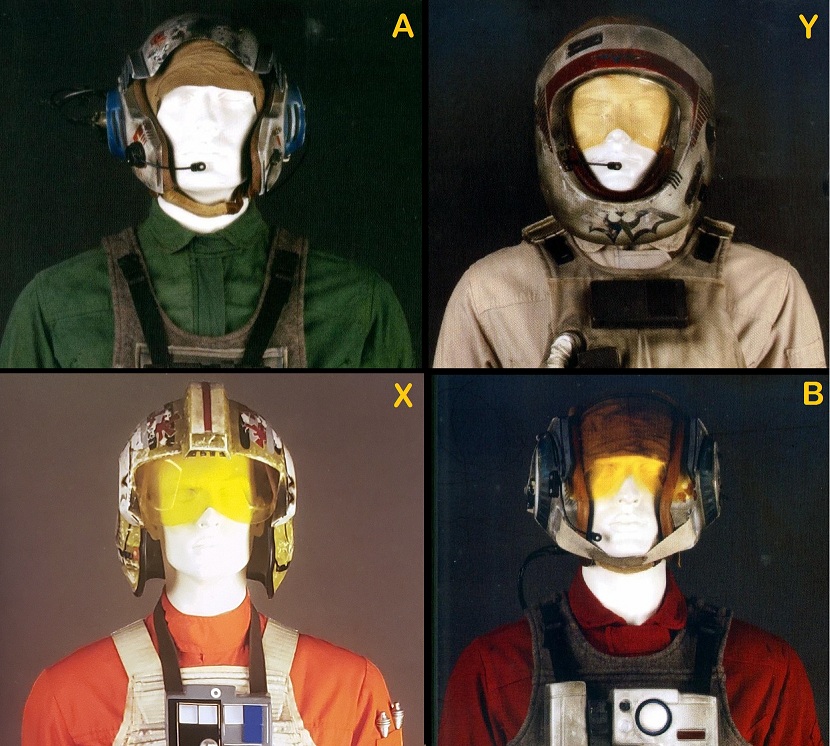
Usually, whenever I see someone online who has put together a ‘custom pilot’ costume, it’s been prefaced by some variation of “I put my own spin on it!” and leans more on the OC’s go-to “wouldn’t it be cool if ___?”…. and thus the final result rarely ‘reads’ as “pilot”. As should be clear by now, I have a really hard time going along with the crowd; however, as I hope I’ve also made clear, I believe a valid ‘middle way’ exists between the two extremes of the dogmatic “on-screen assemblages only!” Legion, and more casual, “anything goes, let your imagination run wild!”-type cosplay. I don’t know how many hundred OT-era pilot cosplayers there are out there (easily 95% of these are X-wings), but I’ve yet to see one that didn’t follow these same old onscreen combinations of flightsuit color and helmet style:
As someone really interested in the early Rebellion period, I think switching things up to be a little less uniform helps underline the ‘ragtag’ nature of the Alliance. I’m sure there had to be pilots who joined up and brought their own personal flightsuits with them – I definitely remember some climate ‘direct actions’ where we street medics were literally told, “Sorry we don’t have any supplies for you, you’ll have to requisition your own or use what you have” and can easily imagine similar situations in the pilots’ ranks. Obviously, I can’t resist pushing the boundaries of OT-era pilot style at least a little bit, but I’m not going to go so far outside the bounds that I no longer look like an OT-era pilot! (Now there’s a nice summary of the ‘middle way’ approach for you: do your research, push the boundaries, but stay within the guardrails!) Luckily for me, I don’t have to feel like I’m sticking my neck out too far because an often-overlooked EU source did it first!
If it seems like a long time since we’ve had a standalone project to show off, you’re not wrong! We haven’t been idle lately, it’s just that everything we’ve been working on has been towards one specific, very detailed goal. Every now and then, however, something comes along and begs our attention for a week or two.
A funny observation I’ve made lately: whenever I go out shopping (ever on the lookout for gear or materials I can use for reenacting), every time I grumble to myself, “This place never has anything good!”, then something tends to comes up! Last November I popped into my local Goodwill having just complained that such a civilized thrift shop would be a terrible place to find pieces for my Middle-earth kits……only to score a gorgeous maroon 100% wool blanket for just $2 (!!!). Then a few months ago, while accompanying my wife on an outing to TJMaxx, I found myself was grumbling how the clothes there are all made of polyester and any ‘hard kit’ type items are always so ‘consumer-grade’ and never made for rigorous galactic use. Well, wouldn’t you know it, in among the reusable water bottles I found this double-thermos canister…thing:
“[It] may not look like much, but [it’s] got it where it counts”
This Hydraflow POD measures up at about 9.5 inches tall; the top section holds about a pint, and the lower section holds nearly a liter! There’s a spot under the lid for a folding spoon, which turned out to be pretty terrible. However, it’s triple insulated, is pretty much a blank canvas for retooling with in-universe style, and best of all, is made of steel (90% recycled!). Unlike the last Thermos I reworked, this one is watertight, tough, and ready for real use in the field!
In keeping with the authentic aesthetic seen on screen, I knew it wouldn’t take much to SWarz this up – a more neutral color and some weathering would be about it. The first step would be to tackle the screw-on lid.







 Living History in the Star Wars Galaxy