As I was leafing through my Star Wars Visual Dictionary—after looking up one thing I usually wind up flipping a few pages to see if anything new jumps out—a few months ago, I came across a particularly un-Star Wars-y looking knife: a Twi’lek dagger with a ‘Taulek -style handle’: Not only are there no extraneous greeblies, this would appear to not even be intended to be a vibroblade—just a run-of-the-mill, stabby, fighting knife along the lines of a Sykes-Fairbairn. This makes it the perfect candidate for authentic replication, as it requires no hand-waving or suspension of disbelief to explain. Continue reading “Project: Twi’lek dagger (part 1)”
Tag: common
Whittling & galactic ‘pocket trash’ – R4 Astromech


In his Getting Started In Living History series, Master Jon Townsend suggests that the small items carried on one’s person are a great way to add depth to a living history impression, as well as create a more intimate connection to your persona. Reenactors refer to these items collectively as ‘pocket trash’, and can be anything from a love letter from the homefront, empty brass and small change, to an interesting rock or a pocket compass.
Continue reading “Whittling & galactic ‘pocket trash’ – R4 Astromech”
Ode to the Side-Release Buckle
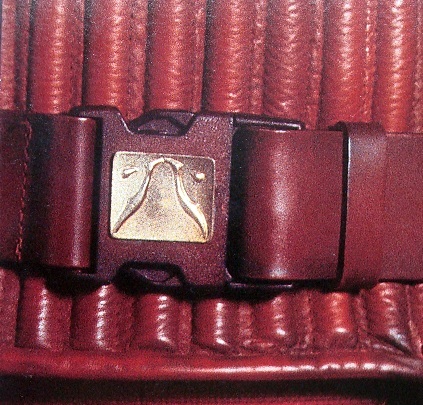
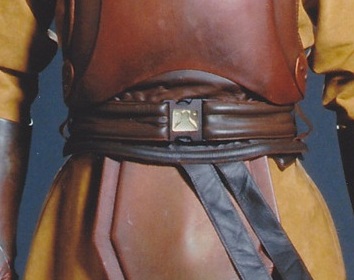
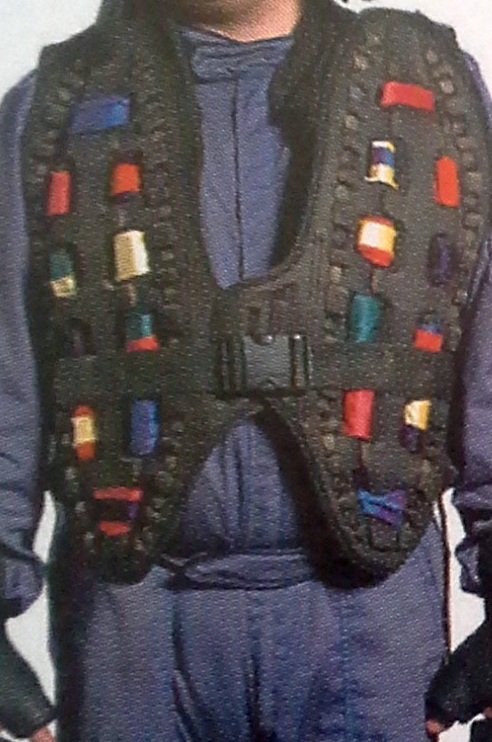
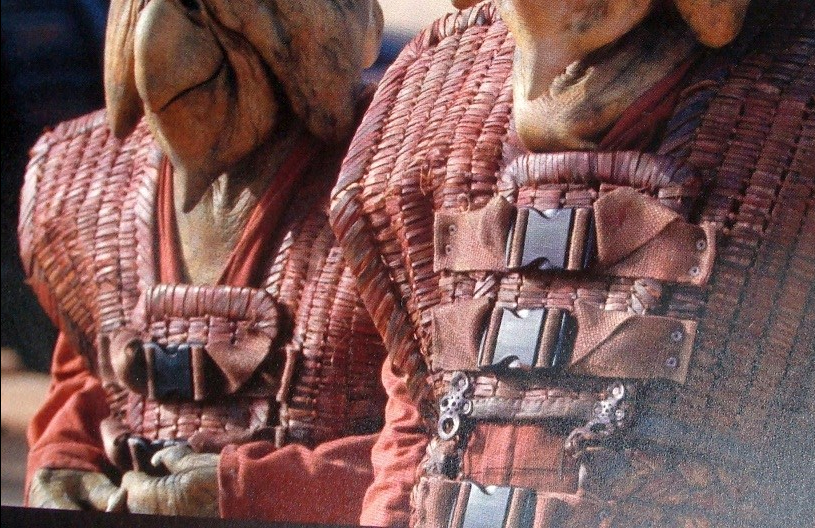
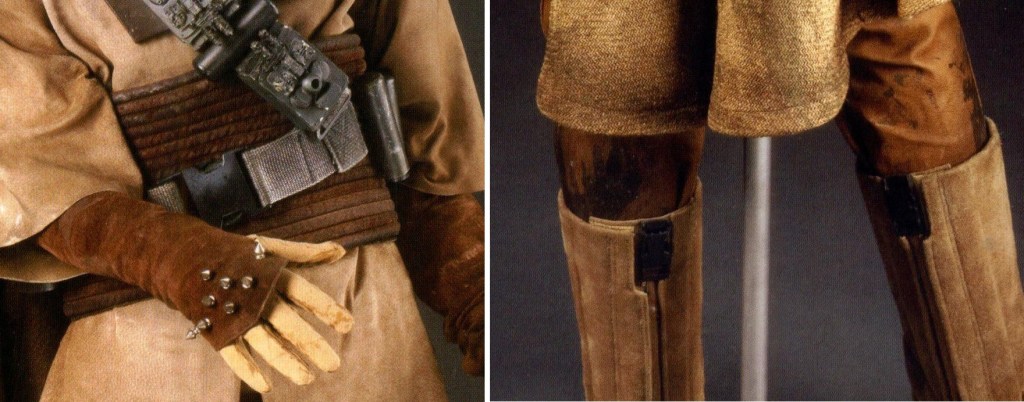
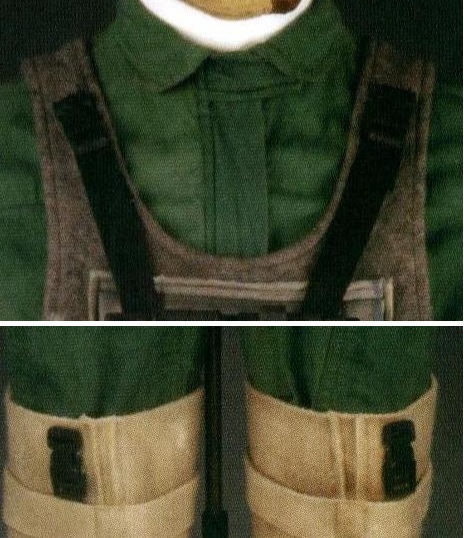
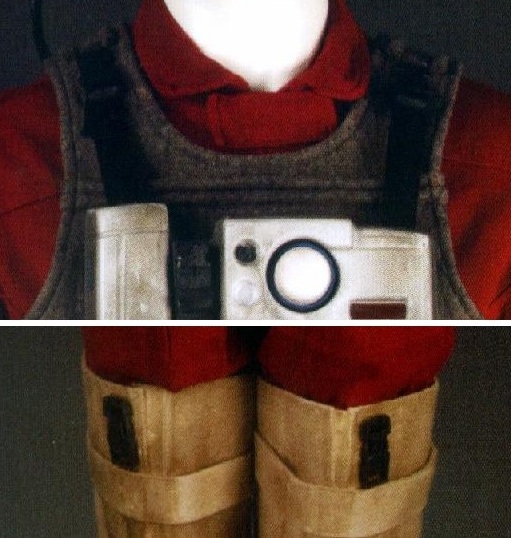
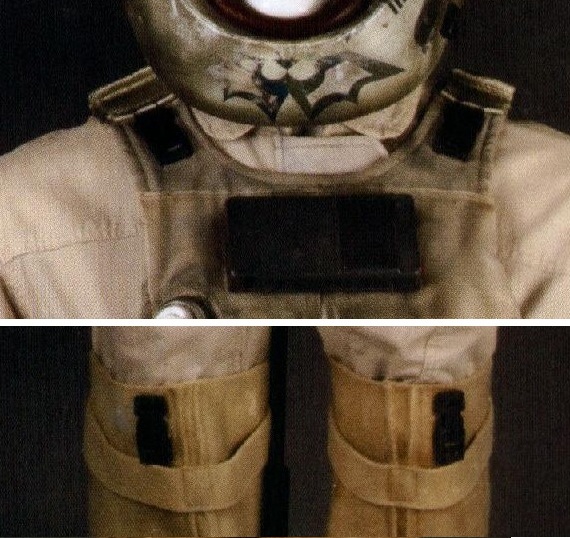
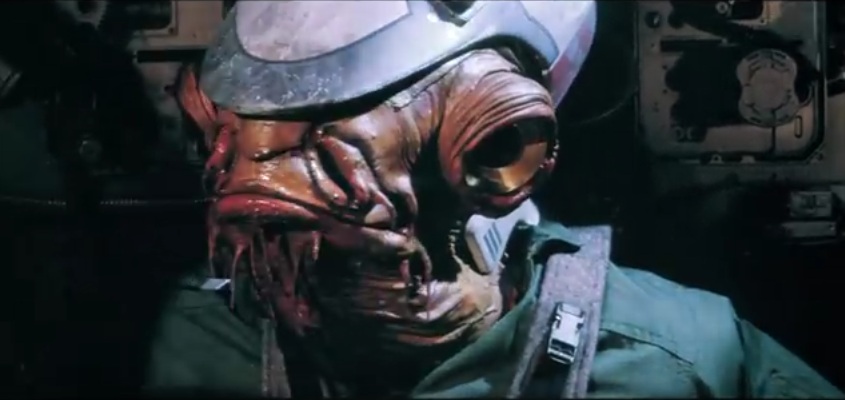

While I currently have several projects on the proverbial back burner—waiting on, among other things, a 3D modeler, a printer, and a blacksmith—I am doing my best to keep the blog from lapsing into content-hiatus. This week, I offer a simple collection of images, centered around the humble side-release buckle. This piece of costume hardware was apparently commonplace throughout the Galaxy, and so would be an appropriate item to include in one’s GFFA kit.
Applied geometry: Star Wars style
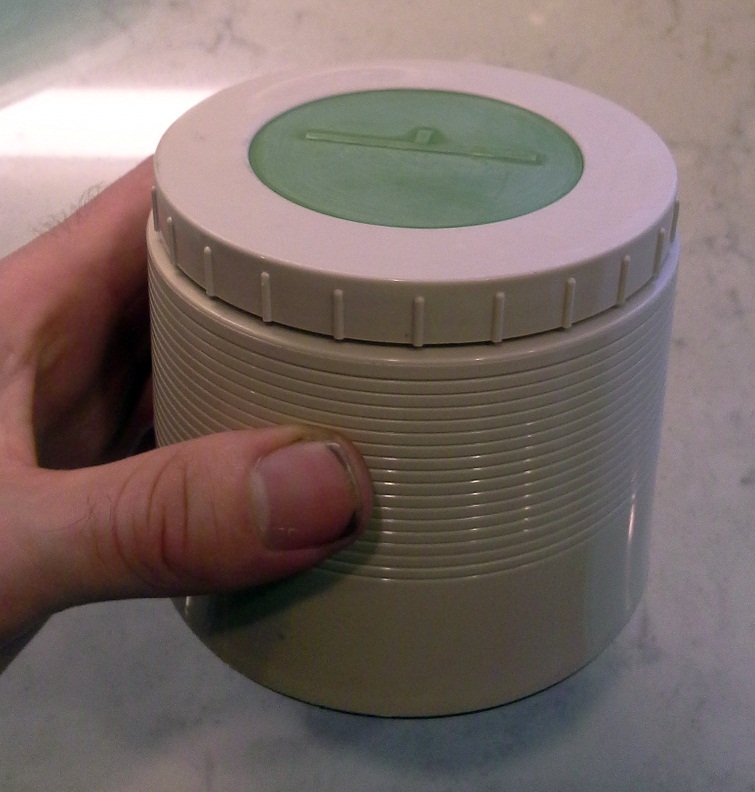 One of the largest stumbling blocks to getting a real-world-functional GFFA kit is the lack of references to everyday material culture in the Galaxy. We have little evidence, for example, of the kinds of containers your average galactic citizen has around the house—do the citizens of Bespin have Tupperware? And as someone with an interest in creating a realistic—but recognizably Star Wars-y—set of outdoor-adventure gear, this is a wall I have often run into. When we have so few resources to draw on, we instead have to get creative in our solutions. In this case, since we have little gear to draw aesthetic inspiration from, why not draw inspiration from the gear that influenced the aesthetic we aspire to?
Viewed through modern eyes, it’s pretty clear that the original Trilogy films are products of the 1970s and 80s…so let’s take a look at late 70s and early 80s Tupperware and Thermos products!
Continue reading “Applied geometry: Star Wars style”
Building the Rebel persona – 4.1: Naboo soft kit
Based on the broad trends noted in the previous post, I decided that my Naboo civilian impression would need (at minimum) a tunic, trousers, and tall boots, and possibly an outer layer as well.
The tunic would need to follow local style, and so be in a muted color, have an overlapping and/or asymmetrical closure, a high Mandarin collar, and long sleeves, probably without cuffs.
Continue reading “Building the Rebel persona – 4.1: Naboo soft kit”
Searching for civilian style on Naboo
When I first started toying with the idea of portraying a Rebel ‘partisan’, I knew I wanted to integrate elements of the local planetary fashion, but also include enough elements of the larger galactic style so that the impression would still be recognizably Star Wars.
Finding the right ratio between the two would be the real trick, since a) Naboo’s nobles in the late Republic period tended to dress in an impractical, distinct Renaissance style, b) we don’t really know what Naboo fashion was like during the Imperial period, and as I’ve written before, it’s hard to be taken seriously as a guerilla fighter when you’re dressed like Catherine de Medici. If I wanted to pull this off, I was going to have to do some detective work.
Continue reading “Searching for civilian style on Naboo”
Building the Outer Persona: a three-season pack
While I’ve been humping my Bergan external frame pack around for almost a decade (and I’m very pleased with it!), I’ve been starting to wonder if maybe it isn’t…overkill. As an aspiring minimalist, I like to try and pare my outdoors kit down to the bare essentials, and a large frame pack with lots of attachment points—in a gear version of Jevon’s Paradox (as one’s pack increases in capacity, the expanded space cannot help but be filled)—only makes it too easy to throw in everything but the kitchen sink.

I realized then that while the Bergan is perfectly suited to be a winter pack—able to carry a tarp, sleeping pad, and blanket/sleeping bag, plus a drybag of spare clothes and other seasonal necessities—I might need something a bit more modest for the rest of the year. Continue reading “Building the Outer Persona: a three-season pack”
The Cure for Temporal Headaches
Whenever you begin putting together a new persona (in any setting, fictional or historical), it always helps to firmly ground yourself in a specific time. This is simply Good Living History—the narrower the range, the more focused your research can be, contributing to a more accurate impression. If you’re portraying a ‘longhunter’ (an 18th century market hunter), you don’t want to be drawing your ‘outer persona’ (aka clothing and accoutrements) from the 1720s or 1790s (even though they’re technically still in the 18th century); rather, you would focus on the 1750s through 1770s, since that’s the period in which these folks operated. If you have enough information from primary or secondary sources, you can even pin your impression down to a specific year, month, or week (this becomes easier to do the closer to the present one gets, as the amount of raw information (and therefore, potential sources) increases exponentially).
Deciding on a specific span of time makes your persona more authentic, especially if you’ve done your research.
Continue reading “The Cure for Temporal Headaches”
Image Analysis: Ruusan lookout

“The statue that had occupied the platform off to his left had fallen hundreds of years before. The remains of it were scattered down the forward slope and pointed toward a skillfully sculpted hand. The palm was blackened where signal fires hand burned, beckoning travelers from many kilometers away. It must have been something to see.” Star Wars: Jedi Knight (William C. Dietz) 1998.
I’ve always liked this piece from the Jedi Knight novella. Actually, Dave Dorman’s photo-realistic paintings have always been very influential in terms of how I imagine the GFFA. This vignette just happens to be one of the few EU depictions of an isolated cell of commoners on the run from Imperial forces – and so is very useful for my purposes.
Here we see a familiar mishmash of gear that is very inspirational for those of us who portray fringe-y Rebel personas:
Continue reading “Image Analysis: Ruusan lookout”
Image Analysis: Taxi Ride

This will be a short post, as there’s not a lot in this vignette (from page 109 of Wizards of the Coasts’ Galactic Campaign Guide) to talk about, just some buildings, a lot of ships, and a few non-humans (a Duros taxi driver, two Cereans, and an unknown). However, one of those speeders is very familiar:
 Don’t recognize it? How about now?

That’s right, we finally have an appearance of Boba Fett’s toy airspeeder in situ – it’s no longer just a prop made up for a Visual Dictionary, it’s a legitimate vehicle!
 Living History in the Star Wars Galaxy