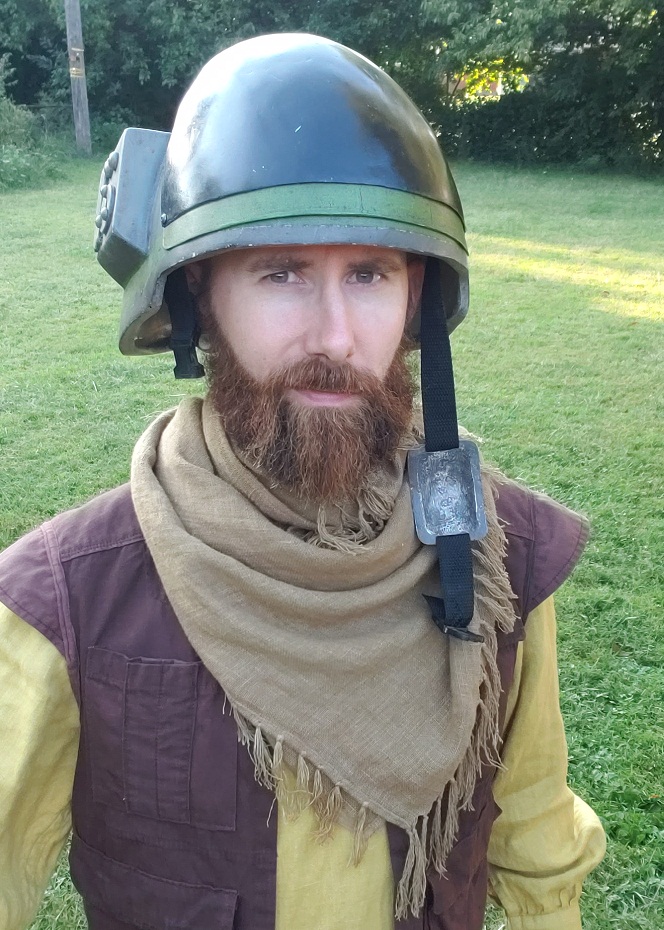
Intro to Fabric Prospecting

(This article is a modified version of a workshop I recently taught at the 10th annual Whippoorwill Festival here in central Kentucky)
Greetings, galactic crafters! – and happy ‘May the Fourth’ weekend!
If you’re in search of an authentic GFFA wardrobe that can stand up to the rigors of authentic GFFA activities, I find that off-the-rack fashion pieces from Amazon can only take your look so far. When you’re in the middle of a tariff war and most of that cheap clothing comes from overseas, this might be the perfect time to add a useful skill to the ol’ proverbial toolbox and start creating more of your garments yourself!
So, do you want to create a solid, in-universe outfit but find that the good materials (linen, raw silk, wool, etc.) at the online fabric merchants have gotten too expensive? Or has your go-to big-box craft store gone bankrupt and closed its doors, leaving a choice between one that doesn’t even sell fabric in-store, and another run by Christian Nationalists? Then you should consider Fabric Prospecting!
What’s that? I’m glad you asked!

Traditionally, prospecting is done for valuable raw materials—like precious metals, or crude oil—but in the costumed arts, the raw material in demand is quality fabric! As you would expect, traditional markets price these accordingly (especially when compared with synthetics, which are dirt cheap). However, did you know that there’s an oft-overlooked source of high-quality, natural-fiber fabric just waiting to be exploited and put to costumery uses?

learn the secrets of fabric prospecting!
HOW TO: Hide Your Buttons #2

In a previous post, I concluded by saying “when the flavor of the world is ‘no visible fasteners’, then cover up your darn buttons.” However, for some folks that may be easier said than done. If you like the idea of having an outfit be sans visible-fasteners but find the idea of how to actually make it happen a little overwhelming, then this post is for you!
Adding the ability to hide fasteners to your toolbox is a major level-up, especially for those outfitting an Original Character. Off-the-rack items can be great for dressing a ton of far-background characters, or creating a suggestive ‘everyday bounding’ look, but if you’re after a 100%-in-universe-legit look, these kinds of pieces can only take you so far. I hope you’ll note how our main characters almost always wear custom-designed garments, which may still be reminiscent or incorporate elements of familiar/off-the rack pieces, but usually tweaked just a little to give it that timeless GFFA flavor.
In this post, we’re going to show you a second method to create a button-free appearance on an upperbody garment by ‘genderswapping’ our garment, a version of which I’ve used before on this raw silk shirt retool project. How do you swap a piece of clothing’s gender, you ask? Keep reading to find out!

level up your costuming game with this handy skill

HOW TO: Hide Your Buttons #1

In one of my previous entries, I concluded by saying “when the flavor of the world is ‘no visible fasteners’, then cover up your darn buttons.” However, for some folks that may be easier said than done; if you like the idea of having an outfit be sans visible-fasteners but find the idea of how to actually make it happen a little overwhelming, then the next couple posts are for you!
Adding the ability to hide zippers or buttons to your toolbox is a major level-up, especially for those outfitting an Original Character. Off-the-rack items can be great for dressing a ton of far-background characters, or creating a suggestive ‘everyday bounding’ look, but if you’re after a 100%-in-universe-legit look, off-the-rack can only take you so far. I hope you’ll note how our main characters almost always wear custom-designed garments, which may still be reminiscent or incorporate elements of familiar/off-the rack pieces, but usually tweaked just a little to give it that timeless GFFA flavor.
In this post, we’re going to show you one method to create a button-free appearance on an upperbody garment by sewing a very basic cover panel over our buttonholes. Then, in part two, we’ll learn to hide buttons by ‘genderswapping’ our garment. What’s that all about, you ask? You’ll just have to wait and see, but for now let’s get started!

level up your sewing game with this handy skill

HOW TO: Collar conversion

Even if you’re fairly keyed into the intricacies of clothing in the Galaxy Far, Far Away, there’s one easily-overlooked element that plays a major role in helping separate our own modern fashion from that of the Star Wars galaxy: collars!

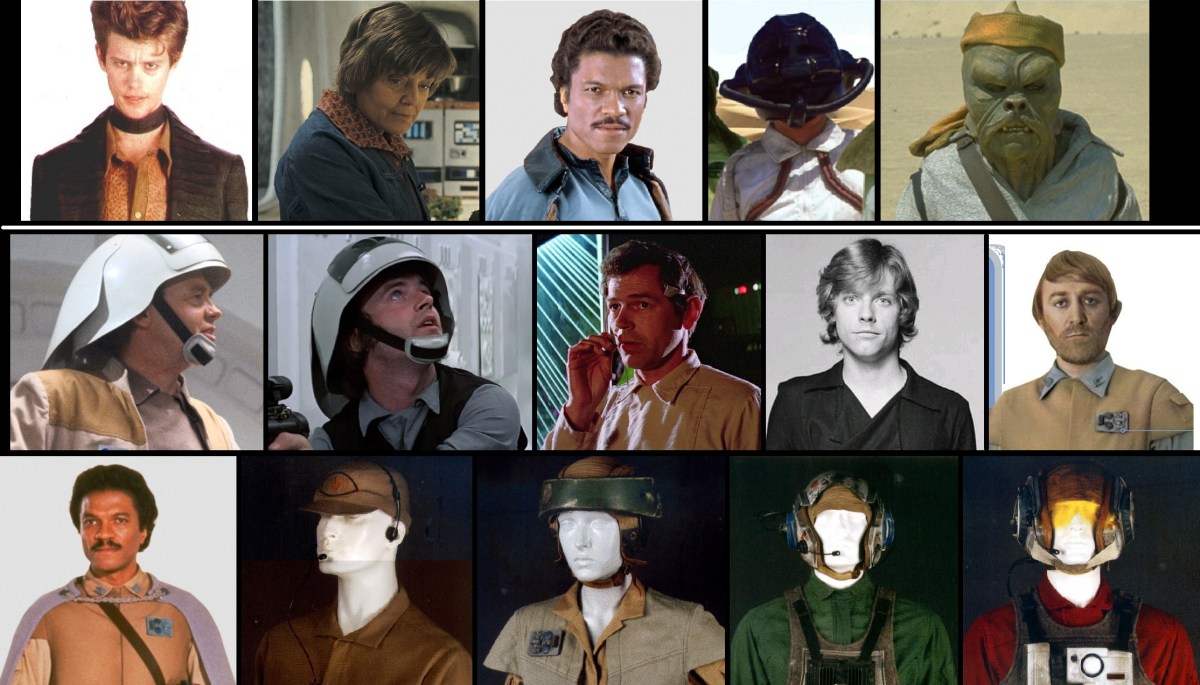
When he first began designing his world, we read how Lucas “made pronouncements of a general nature” and that he wanted “the rebels, the goodies, to look like something out of a Western” (Rinzler: The Making of Star Wars, p.130; quoted slightly modified in Alinger’s SWCOT, p15). This is an important distinction, as it was one of the broad styles John Mollo used to sort his character designs : “peasant costumes; Western/U.S. cavalry/motorcycle looks; Nazi-style uniforms/armor/cloaks; space technology-type outfits”, etc. (Alinger, p16). More on these categories later!

As something so mundane as the collar on a shirt or jacket, it’s likely you may not have noticed the fact that fairly few characters in Star Wars actually wear shirts with modern-style ‘fall collars’. Of course, we do have a few examples, but by-and-large, most characters who wear collared garments wear ones with some form of ‘stand collar’, and quite often these are full-on Mandarin collars.
After thumbing through my reference library, if I had to spitball some numbers, I would say that well over 50% incorporate some form of upright collar, perhaps 20% are collarless, and less than 5% are fall collars – really, the characters above are pretty much all I came up with.

I hope you’ll note that of our samples, the majority of them are Rebel Alliance ranks or ‘character classes’ (officer, fighter pilot, fleet trooper, communications tech, etc.)! Ergo, judging by our samples, the fall collar is generally a good way to give ones’ impression a touch of Rebel Alliance-style militarism, but if you’re portraying an unaffiliated galactic citizen, something that says ‘slightly exotic’ like some flavor of stand collar may be the way to go.
Luckily, most modern shirts with two-piece fall collars are readily adaptable to a more upright style with one easy tweak!

learn an easy minimal-sewing hack to upgrade your outfit!

HOW TO: DIY shemagh scarf

As we’ve seen before, scarves and headwraps are absolutely legitimate pieces of in-universe headwear, but if I had to make a list of commonly-seen ‘reenactorisms’ which have the power to derail my appreciation of an otherwise-solid GFFA outfit, an off-the-shelf, Earth-y, two-tone shemagh/keffiyeh headscarf would have to be near the top. (Also up there? Those zipper-covered, holster-wannabe, drop-leg fanny packs.)
These items are super useful for all sorts of authentic adventuring uses besides looking cool and keeping the sun off one’s head (improvised gathering container, level-one water prefilter, bandage/sling, last-ditch cordage source, etc); however, your standard two-color shemagh has some issues.


Visually, prints or busy motifs are rarely seen in GFFA ‘soft kit’ – solids are by far the rule. (Especially in the Classic Trilogy period; in the Prequels, more variation is seen, but this is typically accomplished by embroidered details, not the actual weaving.)
Thematically, there’s nothing wrong with channeling an ethnic fashion sense for SW purposes…a good scarf or headwrap can make you feel like a romantic desert rebel (Lawrence of Arabia, the Fremen of Arrakis, etc) which is a perfectly valid GFFA character type! However, in the 21st century, mass-produced shemaghs have a tendency to feel more ‘tacticool prepper bro’ than ‘exotic native insurgent’.
Politically (because of their association as a ‘tactical’ accessory), the shemagh has been embraced by various anti-democratic groups…and we absolutely want to distance ourselves from that kind of sithspit.

BUT what if I told you that for about the same price as an Amazon-bought shemagh, you could make your own headscarf that’s even better? If you want to easily level up your Star Wars costuming and gain some DIY XP, read on!

get started on an Easy afternoon project