As I was preparing an upcoming post, I started wondering which characters in the Saga wore colors beyond earthtones, black, white, or shades of gray. I started leafing through my Visual Dictionaries and several hours later I had created the following rainbow of characters. These are presented in chronological order within each color band, and as we cans see, Trisha Biggar’s costumes for the Prequels are FAR more colorful than those of the Galactic Civil War period. If I do a third collection for all the blacks, whites, grays, and earthtone characters, I’m sure there will be many more OT characters represented.
Hello there, folks! We don’t have a regular post for you this week, but believe me that next week will more than make up for it (a triple-header, in fact)!
As I was reflecting recently, I’ve been a maker of Star Wars clothing, costumes, props, and gear for over 20 years! After building and growing my skills for so long, I’ve been thinking it might be time to try and turn my hobby into a small business. So…
To help identify my market and see what potential products people might be interested in, I’ve created a short, anonymous survey, which you can find HERE. Your participation will be greatly appreciated – thank you!
In historic reenacting circles online, rarely do I see anyone say, ‘Thinking about starting on a Fallschirmjagerkit. Show me some FJ impressions for inspiration!’. The best and most authentic ‘inspo’ is not other reenactors’ kits, it’s the primary sources themselves!: wartime photography or film, military manuals, soldiers’ diaries, etc. Reenacting/living history in the Star Wars setting is no different – if you want to build an authentic impression of x, you don’t look for what others have done (that’s how reenactorisms get spread), you look at the media where that impression comes from – the film, TV, book, video game, or comic book.
If one takes a quick scroll-through of facebook’s largest general reenacting group, Living History~ show your impressions (currently 19,000+ members), a pattern quickly emerges: “Roman auxiliary, Teutoberg, Germania, Autumn 9 CE” “Loyalist rat catcher, Philadelphia summer of 1781” “Confederate widow in mourning, Richmond Virginia, early 1865” “LIFE Magazine photographer attached to C Troop, 82nd Armored Reconnaissance Battalion, 2nd Armored Division in Autumn 1944.” “Cpl Bradshaw, Automatic Rifleman of Dog Company, 2nd Battalion, 5th Marines, 1st Provisional Marine Brigade, Pusan, Republic of Korea, August 3rd, 1950”
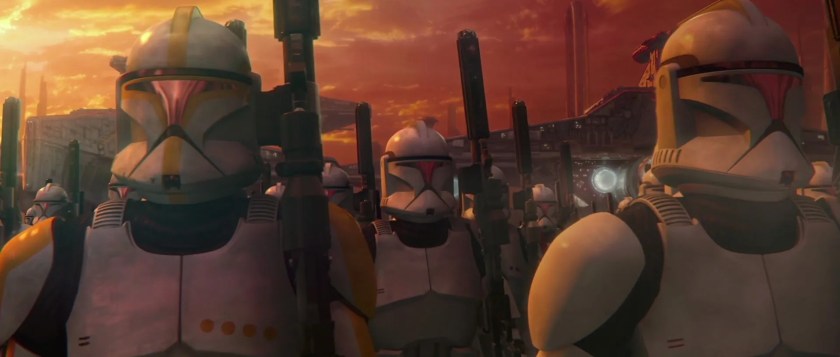
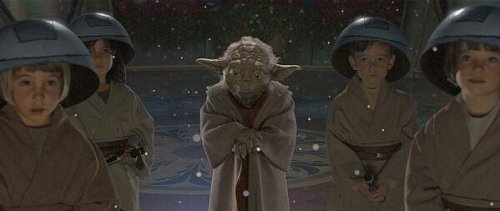
I talk a lot on this blog about the idea of ‘reenactorisms’ – inaccuracies that get unknowingly (or knowingly!) perpetuated because someone didn’t do their research. Usually when discussing these blunders we’re talking about individuals making them, but I wanted to point out two examples to day that prove the big players are not immune to making sloppy mistakes either! Following the release of Episode III in 2005, LA’s FIDM (Fashion Institute of Design and Merchandising) hosted the exhibit Dressing a Galaxy, which featured 100 screen-used costumes from Episodes I through VI. From the pictures I’ve seen online it was an absolutely incredible presentation. However, one tableau of costumes held a glaring mistake for all to see:
Anything seem ‘off’ about this?
If you can’t spot it, maybe we’d better check the references:
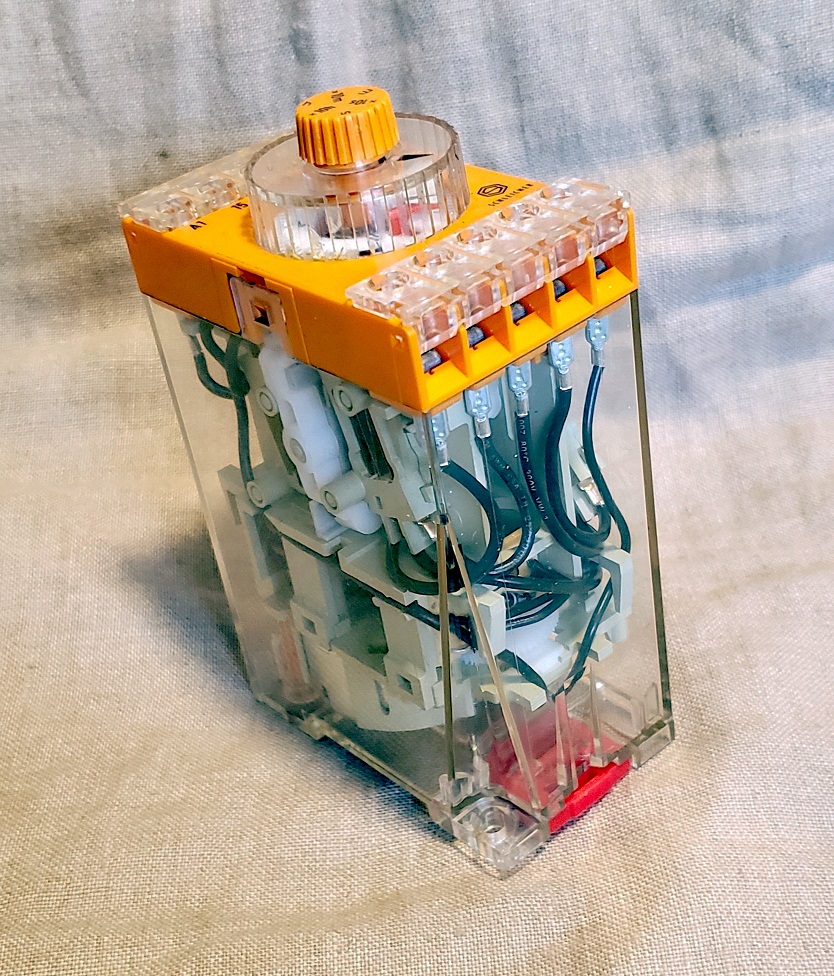
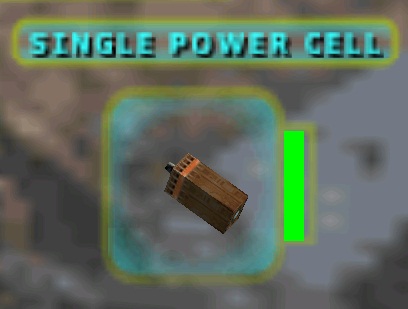
I had written about this prop years ago, but that was really just noticing that the item Qui-Gon hands Anakin was the same as one in the Episode I Racer game:
Well, last week I decided to enlist the help of the prop hive-mind and posted a thread on the RPF seeking help in identifying this piece, and in a surprisingly rapid timeframe, one of the respondents had it pinned down!
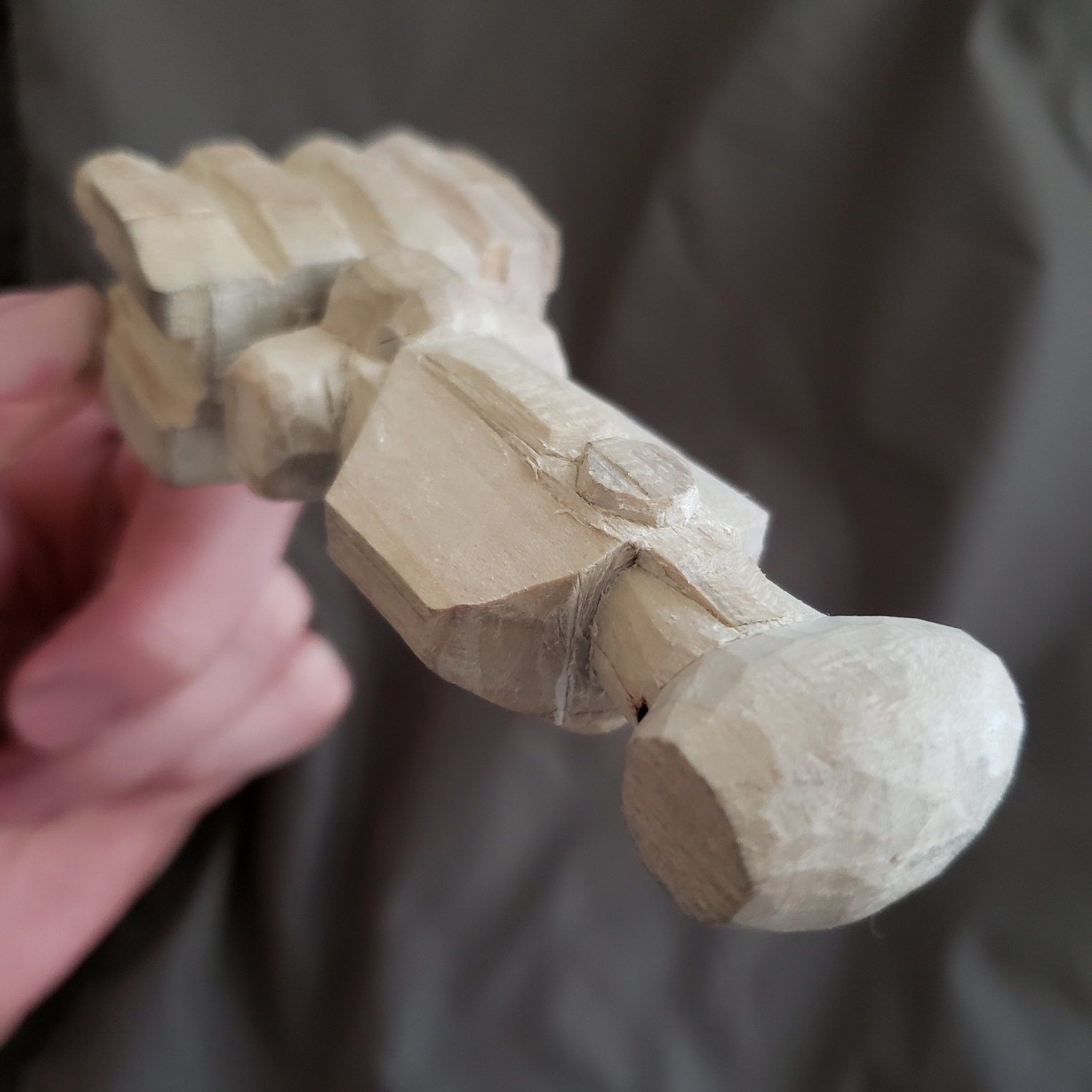
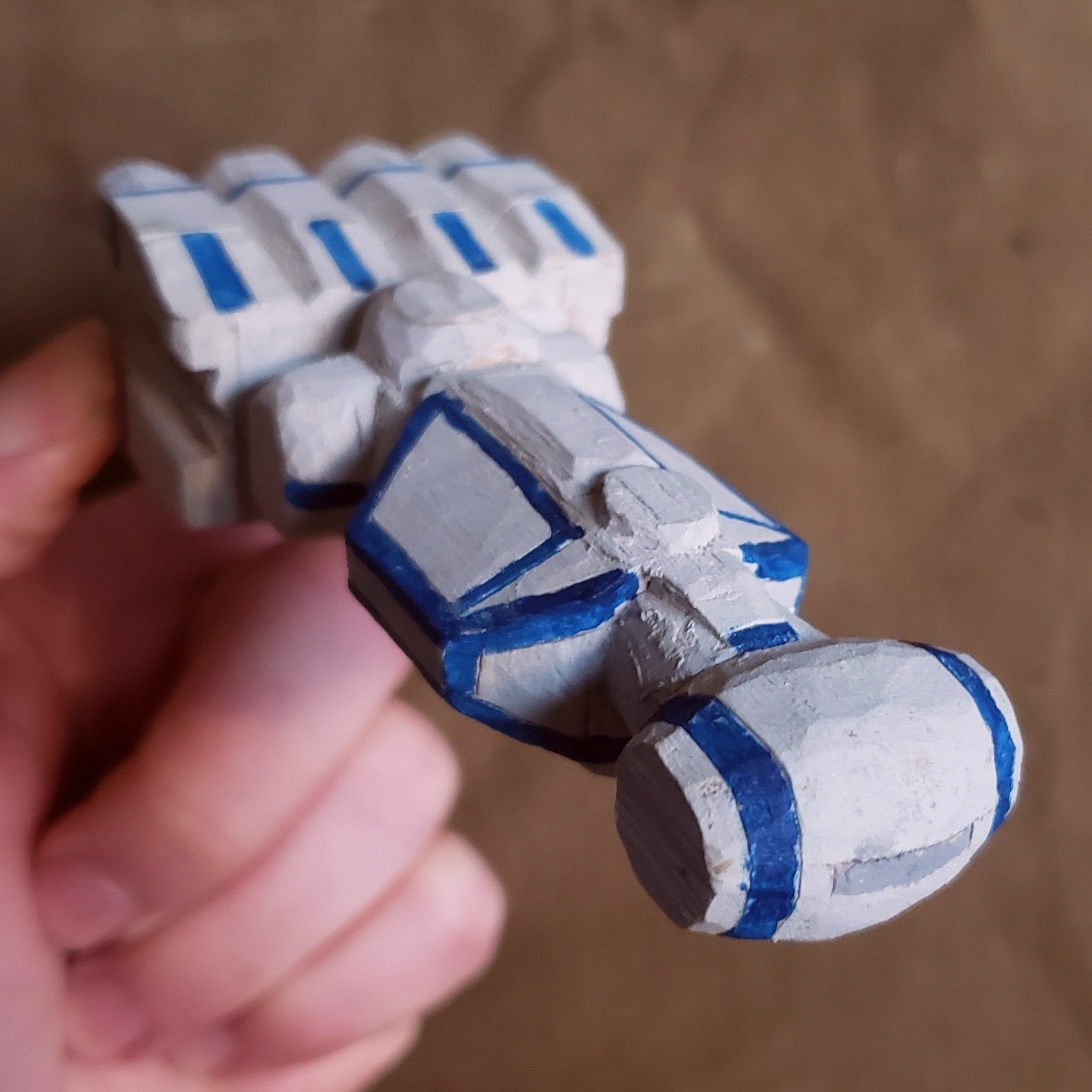
It’s been quite a while since I’ve had any new Star Warsy whittlings to show off! I had planned to do some whittling along the Appalachian Trail last year (and found the perfect little neck-knife in a hiker box)…but unfortunately hiking 15-20 miles a day doesn’t leave time for much else besides eating and sleeping. I actually carved up this little consular ship last midwinter, and forgot I had been sitting on it for a whole year! Unlike the Republic cruiser I last whittled, this one was made out of poplar, so I was able to include a much higher level of detail:
It’s almost certainly Blockade Runner nostalgia, but I think this line of ships look so much better seen from an aft perspective.
Contrary to popular belief, while they look very similar, this is NOT the same model ship as the iconic ‘blockade runner’ of Episode IV!
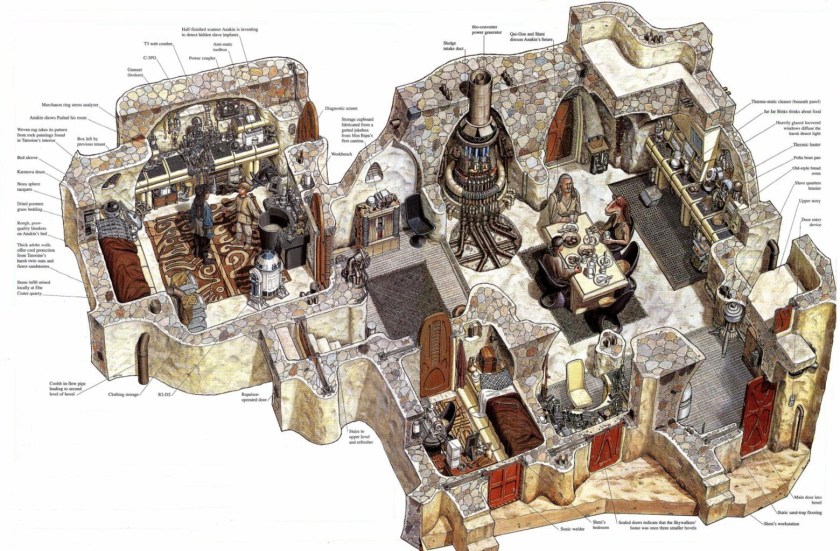
Happy new year and welcome to our first post of 2022! I apologize for the delay in new postings, but since getting off the Trail my wife and I moved to a new city, which is always stressful and takes priority from hobbies like running this blog. Since I’ve been thinking a lot about living spaces lately, I thought it would be a great time to share a great nugget I uncovered while doing some recent research.
art by Hans Jennsen (Inside the Worlds of Episode I)
Say what you will about the Prequels, but I always thought despite being slaves, Anakin and Shmi’s home in Mos Espa seemed downright cozy (it’s probably all the low ceilings, rounded corners, and warm, creamy colors – cob-style architecture for the win!). But can we know how big it really was?
Before I went on Appalachian Trail thru-hiking blog-hiatus, some dedicated Star Wars ‘reenactors’ and I were kicking around ideas for some sort of asynchronous long-distance trek or ‘ruck’ challenge we might organize in the future. We started by brainstorming any known distances from the Saga materials, and one of the first things that came up was the Mos Espa Arena podrace circuit. We figured if the length of the racetrack could be determined, it might serve as a nice basis for some sort of virtual relay race. The question was…how long was it?
As has become disppointingly apparent in my attempts to apply the rigors of realism to the galactic setting, because 90% of stories told under the Star Wars banner are purely plot-driven, the mundane details of life are too often nonexistent. Or if they are included, it is done in the most minutiae-focused manner and overlooks the more relatable pieces of information. Or, to paraphrase Maw Installation Redditor FlavivsAetivs, “plot and visual aesthetics—not technical specifications or internal consistency—are the primary focus of Star Wars“.
Case in point: the Boonta Eve Classic podrace! I could easily tell you the names of all the formations or obstacles on the race course, the names, species, and homeworlds of each racer, which racers did not finish the race, which racers completed the course, how fast they did so, and their average speed. But I have thus far been unable to find any mention of the distance the race covered. Unfortunately for us, the Boonta is not like the Indy 500 (the distance is right there in the name). However, a little math does allow us to calculate the length of the race course!
Welcome back to Aurebesh Month and our first of two installments of the Galactic Style Guide (where we break down the ‘Star Wars aesthetic’ in order to help you create a more authentic ‘outer persona’) taking a look at something that’s become really popular among the Batuu-bounding community in recent years: using in-universe Galactic Basic lettering—the Aurebesh—on kit items.
I see folks incorporate Aurebesh words into their clothing so often, it inspired me to do some digging and see how many examples I could find from the various visual media sources. The first instances I found are all a certain segment of the galactic populace that I don’t think I’ve ever seen re-created before, but which would make for an excellent living history impression:
PRISONERS: from Agent of the Empire—Hard Targets and Empire: The Wrong Side of the War
I was a little disappointed that these guys are just wearing yellow/orange jumpsuits, and that there wasn’t a little more consistency between them and the more interesting prisoner uniform of the Imperial Remnant in 12 ABY (Jedi Outcast):











 Living History in the Star Wars Galaxy