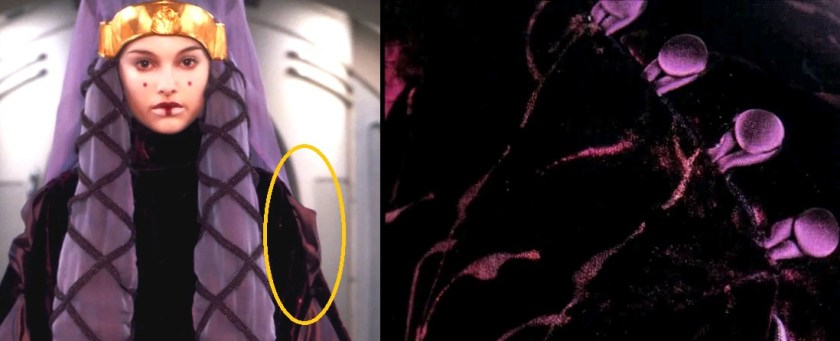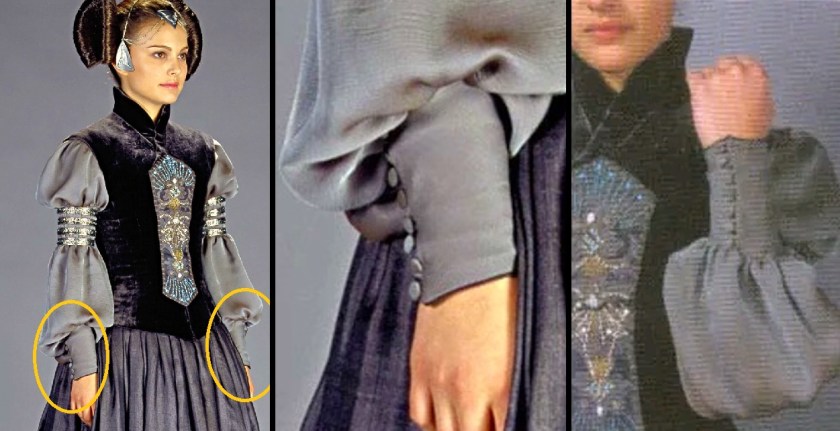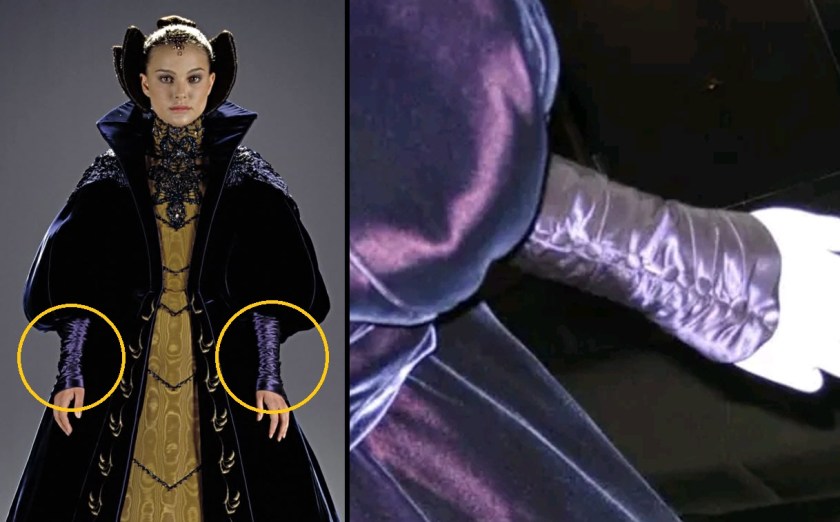
HOW TO: Hide Your Buttons #2

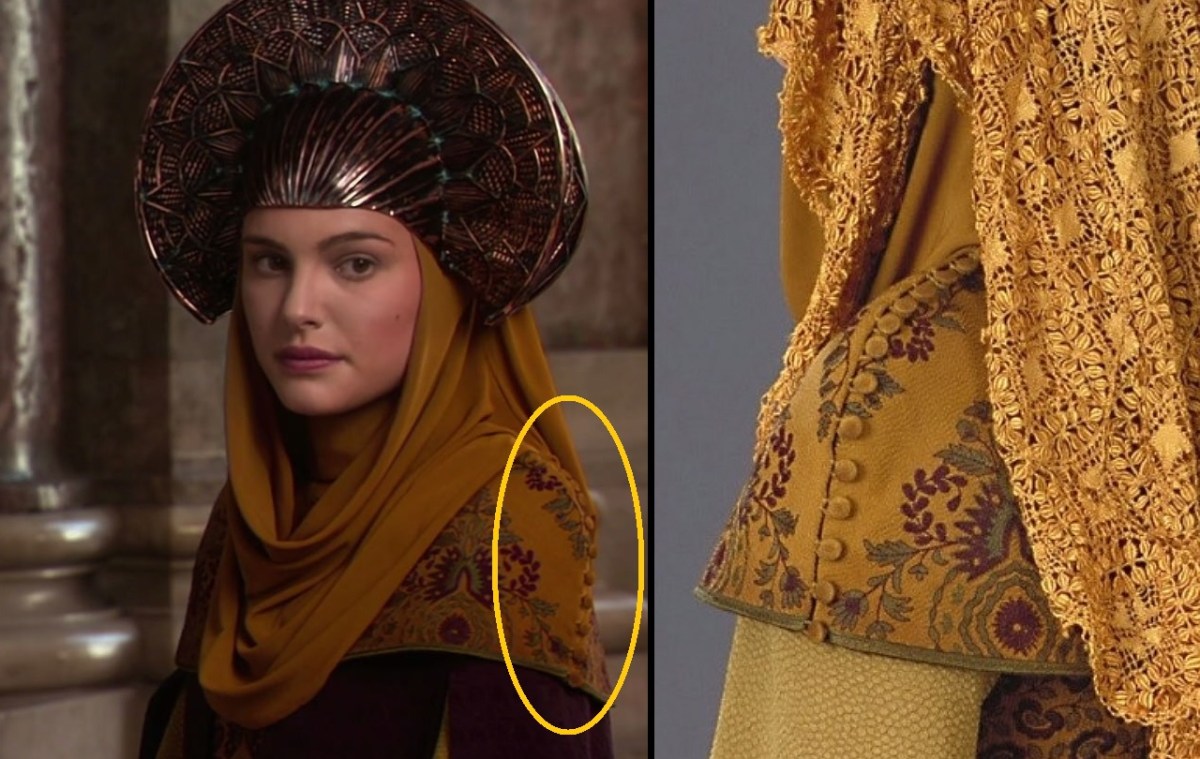
In a previous post, I concluded by saying “when the flavor of the world is ‘no visible fasteners’, then cover up your darn buttons.” However, for some folks that may be easier said than done. If you like the idea of having an outfit be sans visible-fasteners but find the idea of how to actually make it happen a little overwhelming, then this post is for you!
Adding the ability to hide fasteners to your toolbox is a major level-up, especially for those outfitting an Original Character. Off-the-rack items can be great for dressing a ton of far-background characters, or creating a suggestive ‘everyday bounding’ look, but if you’re after a 100%-in-universe-legit look, these kinds of pieces can only take you so far. I hope you’ll note how our main characters almost always wear custom-designed garments, which may still be reminiscent or incorporate elements of familiar/off-the rack pieces, but usually tweaked just a little to give it that timeless GFFA flavor.
In this post, we’re going to show you a second method to create a button-free appearance on an upperbody garment by ‘genderswapping’ our garment, a version of which I’ve used before on this raw silk shirt retool project. How do you swap a piece of clothing’s gender, you ask? Keep reading to find out!

level up your costuming game with this handy skill

Galactic Style Guide – the Post-Disney era (part 2)

Welcome back to another installment of the Galactic Style Guide, the series where we break down the ‘Star Wars aesthetic’ in order to help you create a more authentic ‘outer persona’!
Like last time, this entry is a bit of a departure from our usual collection of references. This time we’re continuing to focus on elements which I’ve identified as either clear deviations from what existed in the Lucas days, or which originated firmly in the post-Disney era. Let’s keep it moving with #6!

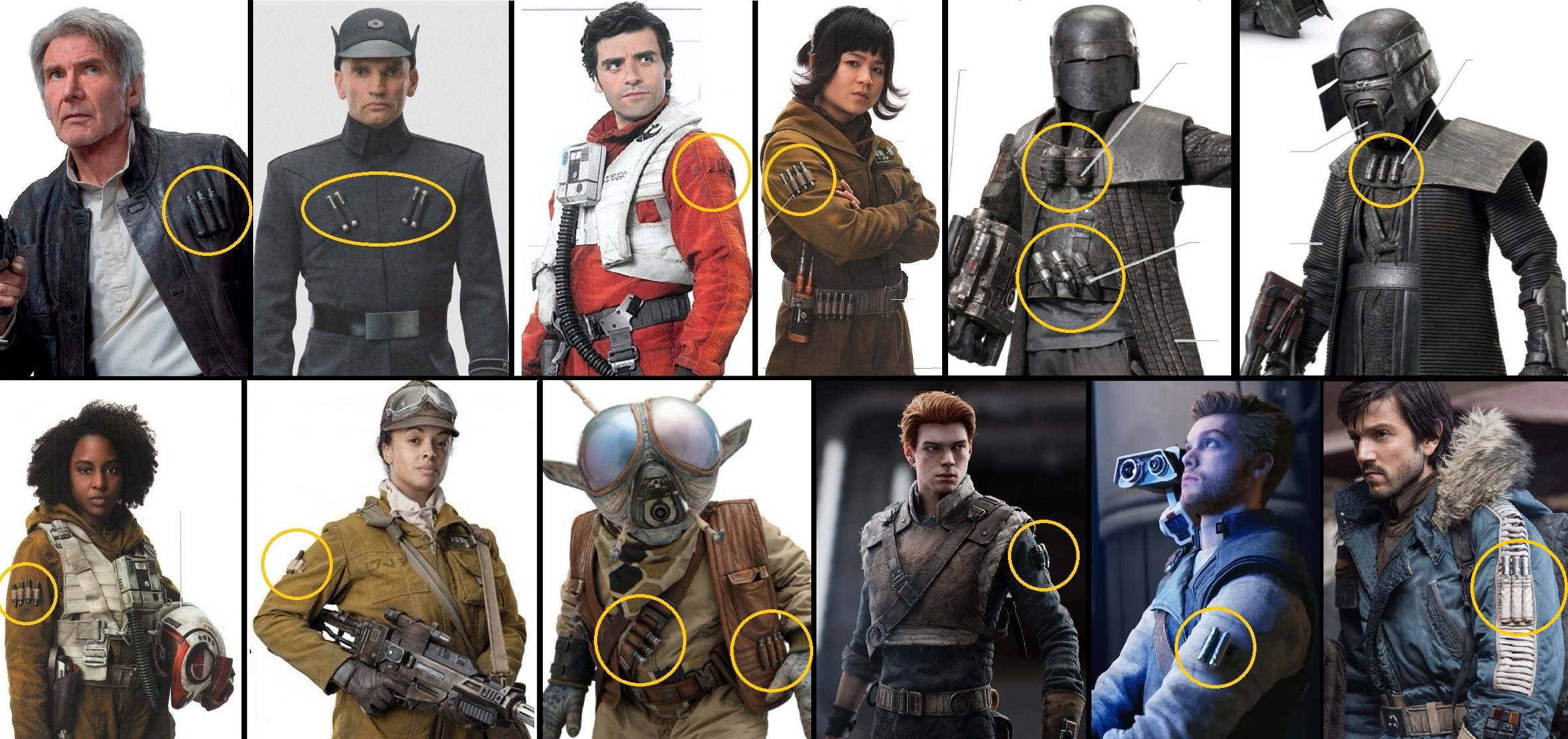
When it comes to soft kit, after perusing the various Visual Dictionaries one trend I noticed started appearing with the Sequels and subsequently latched onto by fan-makers is that of little discrete loops (instead of pockets) being used to hold various doodads on clothing – your code cylinders, ‘mini flares’, blaster ammo, etc.:

What I really want to know is why everyone in the new continuity seems to need so many of these little silver things anyway? In the OT, we’d see Rebel pilots and technicians with small ones on their belts, and big ones kept below the knee (Reb pilots and Bossk seemed to be just about it). But in the Disney era, they’re all over the place! In short, I think they’re a symptom of the new era costumings’ general reliance on overdesign, versus good design, which in the case of the Star Wars setting, usually boils down to Less is More. You don’t need to have every single visible surface sporting some sort of detail – it’s OKAY for costumes to have ‘blank space’! This is especially true in our crispy 4k UHD+ present, when it is all too easy for an overdesigned outfit to leave the viewers’ eyes overwhelmed.

Keep reading for more observed abberations!

HOW TO: Hide Your Buttons #1

In one of my previous entries, I concluded by saying “when the flavor of the world is ‘no visible fasteners’, then cover up your darn buttons.” However, for some folks that may be easier said than done; if you like the idea of having an outfit be sans visible-fasteners but find the idea of how to actually make it happen a little overwhelming, then the next couple posts are for you!
Adding the ability to hide zippers or buttons to your toolbox is a major level-up, especially for those outfitting an Original Character. Off-the-rack items can be great for dressing a ton of far-background characters, or creating a suggestive ‘everyday bounding’ look, but if you’re after a 100%-in-universe-legit look, off-the-rack can only take you so far. I hope you’ll note how our main characters almost always wear custom-designed garments, which may still be reminiscent or incorporate elements of familiar/off-the rack pieces, but usually tweaked just a little to give it that timeless GFFA flavor.
In this post, we’re going to show you one method to create a button-free appearance on an upperbody garment by sewing a very basic cover panel over our buttonholes. Then, in part two, we’ll learn to hide buttons by ‘genderswapping’ our garment. What’s that all about, you ask? You’ll just have to wait and see, but for now let’s get started!

level up your sewing game with this handy skill

Galactic Style Guide – the Post-Disney era (part 1)

Welcome back to another installment of the Galactic Style Guide, the series where we break down the ‘Star Wars aesthetic’ in order to help you create a more authentic ‘outer persona’!
And now, for something completely different. If you’ve been following this site, you may have noticed that the majority of my references come from live-action sources of the Lucas era. However, as we inexorably continue further from the boundary between that period and the current one, it becomes clear that not only did this modern era come with a new continuity, but a noticeable shift in visual aesthetics as well, and I want to explore elements of this shift as they relate to our pursuits here (recreating the Star Wars galaxy in ‘reenacting’ form!). In this post (and at least one more!), we’re looking specifically at some elements which I (coming from a relatively outside perspective) have identified as either clear deviations from what existed before, or which originate firmly in the post-Disney era. You’ll see what I mean.
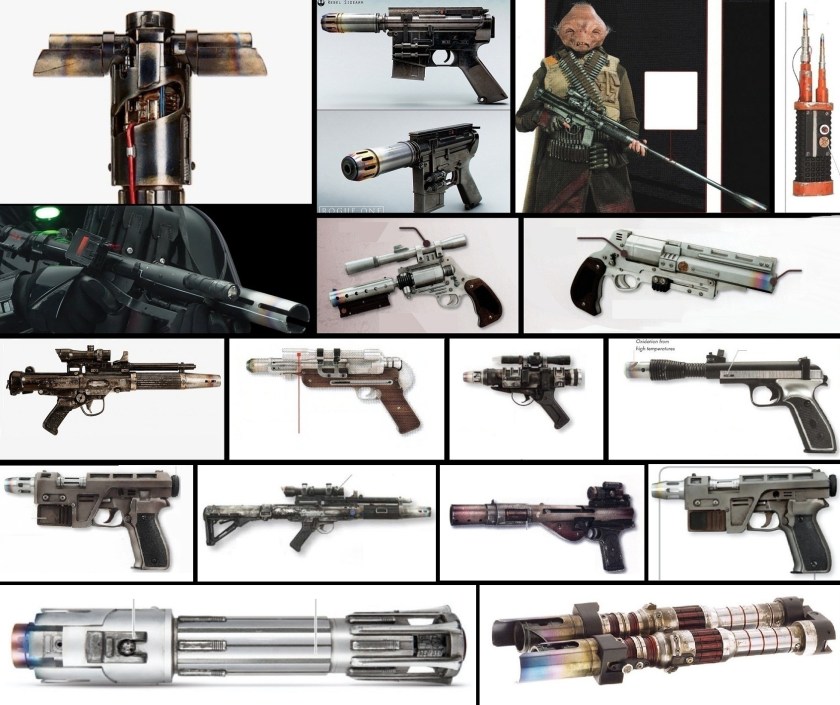
I’m not doing this ‘countdown’ style, but when it comes to something we got along without perfectly fine and was unequivocally not present in the pre-Disney days, #1 at the top of the list has to be the presence of the tempering rainbow on the muzzles, emitters, or tips of blasters, lightsabers, or tools:

I read somewhere that all the Remnant TKs in Mandalorian also feature this, but the scenes are so dark it’s hard to tell.
Keep reading for more observed abberations!

Galactic Style Guide – Zippers

Welcome to another installment of our ‘Galactic Style Guide counterpoint’ subseries, where we help you strengthen your ‘Star Wars eye’ by highlighting and remedying common faux pas that can make your kit look Not Star Warsy. As part of the GSG, the ultimate goal is still to help you create a more accurate ‘outer persona’ – but we approach the goal from the opposite direction!
This month, we’re taking a look at one of the specific elements which George Lucas decided would have no place in his Star Wars aesthetic – zippers! (For our look at the other form of visible fastener Lucas specifically didn’t want to see, see this previous entry).

If I were to ask you when you first learned that Lucas didn’t want to see zippers and buttons onscreen, there’s a very good chance it was sometime after 2014 and the release of Brandon Alinger’s excellent SW Costumes – The Original Trilogy. However, the no-visible-fastener rule had already been in print for at least seven years: discussed in Rinzler’s The Making of Star Wars (2007), on page 125. What accounts for the delay before this fundamental GFFA costuming rule became truly widely known is, I think, social media; Facebook was still in its relative infancy in 2007. Since then however, the top-down Lucas directive has become frequently-cited in costuming circles, and yet cosplayers and Batuu-bounders still try to excuse visible zippers in their costumes; typically, this involves pointing to a screenshot of Luke Skywalker zipping up his flightsuit in Episode V:

Remember, per our sources, Lucas said he didn’t want to see such fasteners, not that they didn’t exist at all (many seem to have trouble with this distinction). Why Luke’s zipper (and presumably, those of all the other onscreen pilots and technicians) is perfectly permissible is simple: once worn, it isn’t visible – it’s hidden by a flap! (If you can think of a way to convey a pilot suiting up for battle by donning a one-piece flightsuit without showing them zipping it up, I am all ears!) However, there are a fair number of other characters whose costumes do include uncovered zippers: luckily for us, these tend to fall into one of two categories; unluckily for us, things seem to have taken a step backwards in the modern era…

keep reading for plenty of examples from the lucas and disney eras!

Galactic Style Guide – Text

Welcome to another installment of our ‘Galactic Style Guide counterpoint’ subseries, where we help you strengthen your ‘Star Wars eye’ by highlighting and remedying common faux pas that can make your kit look Not Star Warsy. As part of the GSG, the ultimate goal is still to help you create a more accurate ‘outer persona’ – but we approach the goal from the opposite direction!
This month, we’re taking a look at a design phenomenon that’s big on the Disney side of things (whether it be in films made under them, things sold by them, or costumes worn by fans while visiting them) but which was only ever a minimal part of the ‘Star Wars aesthetic’: text on stuff!

The fact that we went six films with zero non-technical Aurebesh (and the first two, most seminal films had NONE at all) should tell you everything you need to know: when it comes to Aurebesh on kit items, it’s always superfluous.
With that in mind, I want to look at some examples to illustrate why you’re better off omitting Aurebesh entirely. Out of respect for the SW costuming/maker community, I’m focusing on publicly-available items sold by Disney, but the point is still applicable: even when executed correctly it’s still largely* unnecessary, and—if used at all—should act as a garnish, not a side dish – let alone the main course! If your impression is relying on Aurebesh to make sense, something’s not working and it might be time to go back to the drawing board.

*As we saw before, pretty much the only folks we saw wearing Aurebesh pre-Disney are prisoners and biker-gang types. Occasionally we see small identifiers like ‘crew’ or ‘staff’, but these simply serve to demonstrate the wearer’s membership in a group as separate from the public.
For a refresher on examples of places where we do commonly see in-universe lettering, check out this GSG entry.

Let’s start off with a couple items featuring completely redundant Aurebesh additions. Did you ever notice that all the top brass at the Death Star’s conference room had matching drinkware?

Here’s the version sold at Galaxy’s Edge:

From one side, it just looks like a slick space-fascist travel mug. From the other side though, it looks like the Empire thinks its officers need to be constantly reminded of who they work for.
more Bad aurebesh products, and how to prevent them!

Galactic Style Guide – Colored Lenses & Visors

Welcome to another installment of our ‘Galactic Style Guide counterpoint’ subseries, where we help you strengthen your ‘Star Wars eye’ by highlighting and remedying common costuming faux pas that can make an outfit look Not Star Warsy. As part of the GSG, the ultimate goal is still to help you create a more accurate ‘outer persona’ – but we approach the goal from the opposite direction!
In past entries, we’ve looked at things that aren’t really part of the typical ‘galactic aesthetic’: bright colors, visible fasteners, overly-designed patchwork clothing, etc. This month, we’re going to focus on an element of character design which is present in the visual record, but which has a very specific pattern of usage and which is far overrepresented in the fan-costuming community.

Good reenacting—fictional or historical—typically deals less with the elites of a given culture/period/setting, and more with accurately representing the experience of its common people. Since the current paradigm of Star Wars ‘Original Character’ costuming seems to entirely revolve around 3D printing, armor, and helmets, if you want to create an armored or helmeted ‘OC’ that will faithfully represent a typical galactic inhabitant, then listen up and read on!

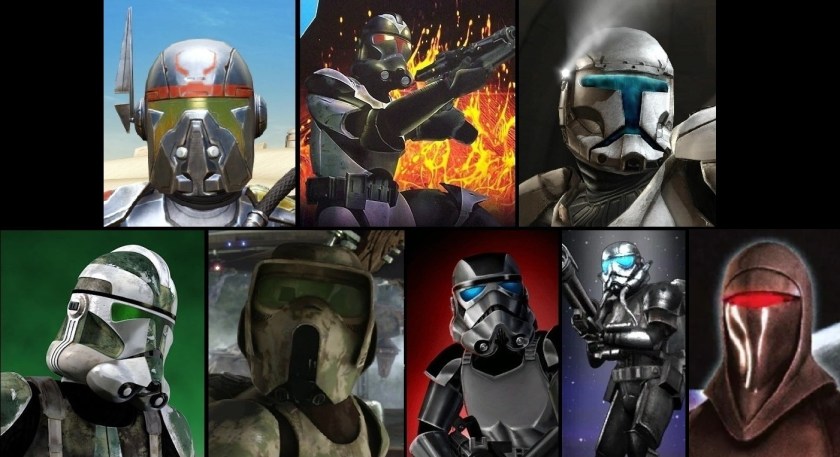
There’s one easy way to tell at a glance if an armored Star Wars character is somehow SPECIAL: just look at their helmet! If the lenses or visor are anything other than plain black*, you can bet money that they’re some sort of elite. Some examples from the good old EU:

Shae Visla (Mandalore the Avenger!), Utapau shadow scouts/Clone shadow trooper, clone commandos, Commander Gree and 41st scout trooper (Episode III), shadow trooper, shadow EVO trooper, and Emperor’s Shadow Guard (The Force Unleashed)

Notice anything?

Keep reading for recent post-disney examples, and analysis!

Galactic Style Guide – Good Greeble Guidelines

Happy New Year’s Eve, and welcome to another installment of our ‘Galactic Style Guide counterpoint’ subseries, where we help you strengthen your ‘Star Wars eye’ by highlighting and remedying common costuming faux pas that can make an outfit look Not Star Warsy. As part of the GSG, the ultimate goal is still to help you create a more accurate ‘outer persona’ – but we approach the goal from the opposite direction!

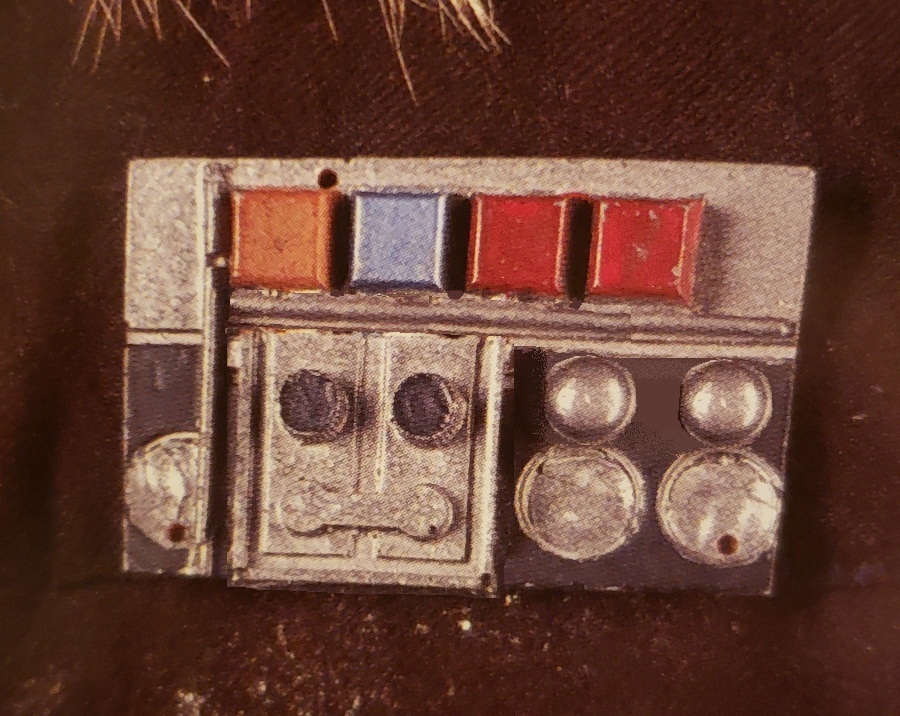
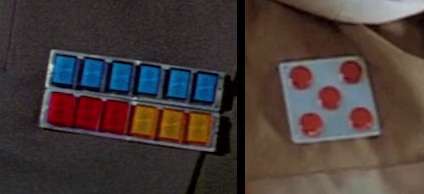
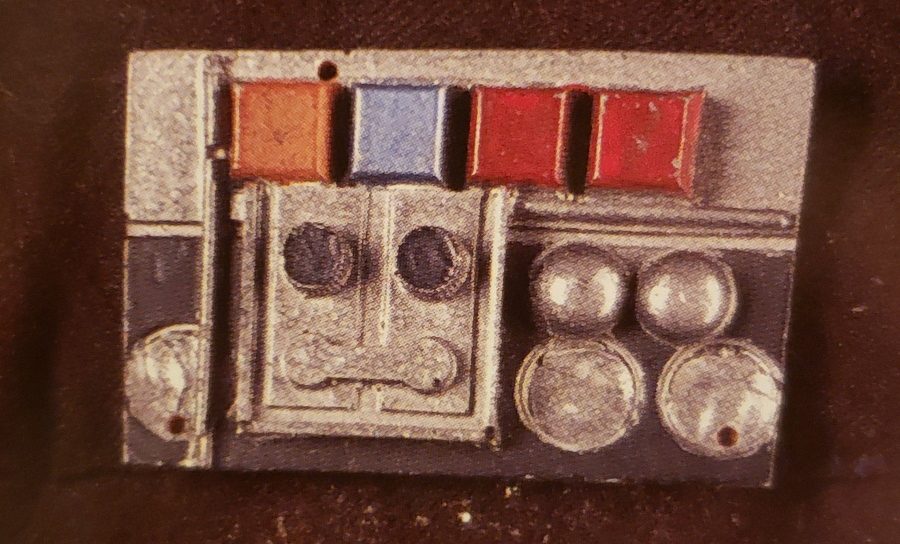
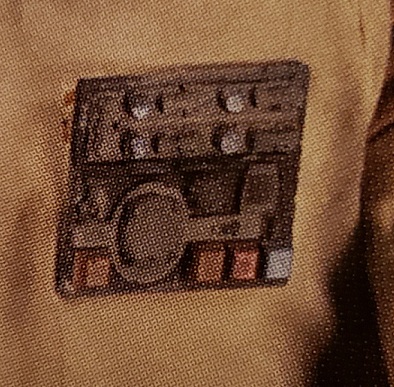
Although notably absent in the original film (and the Prequels), the pieces of wearable technology discussed in this early Style Guide entry have become nearly ubiquitous in the post-Disney era and among the casual costuming/Batuu-bounding communities. These devices’ purposes have been inconsistently identified, but most sources suggest they are either communication devices or personal transponders—think a wearable ‘Personal Locator Beacon’. (These differ from the plaques worn by Imperial and Rebel officers throughout the Original Trilogy, which clearly served to denote the wearer’s rank, and about which this article is not concerned!)


Despite being fairly limited in the visual record, “jacket greeblies” are frequently relied on by costumers to add ‘GFFA spice’ to an outfit, and the proliferation of 3D printing in the last decade has unleashed a flood of fan-made iterations of these wearable doodads. However, not all fan-made greeblies are created equal, so I wanted to try and ‘crack the code’ to see what makes the onscreen examples ‘work’ and some fan designs work…not so well.

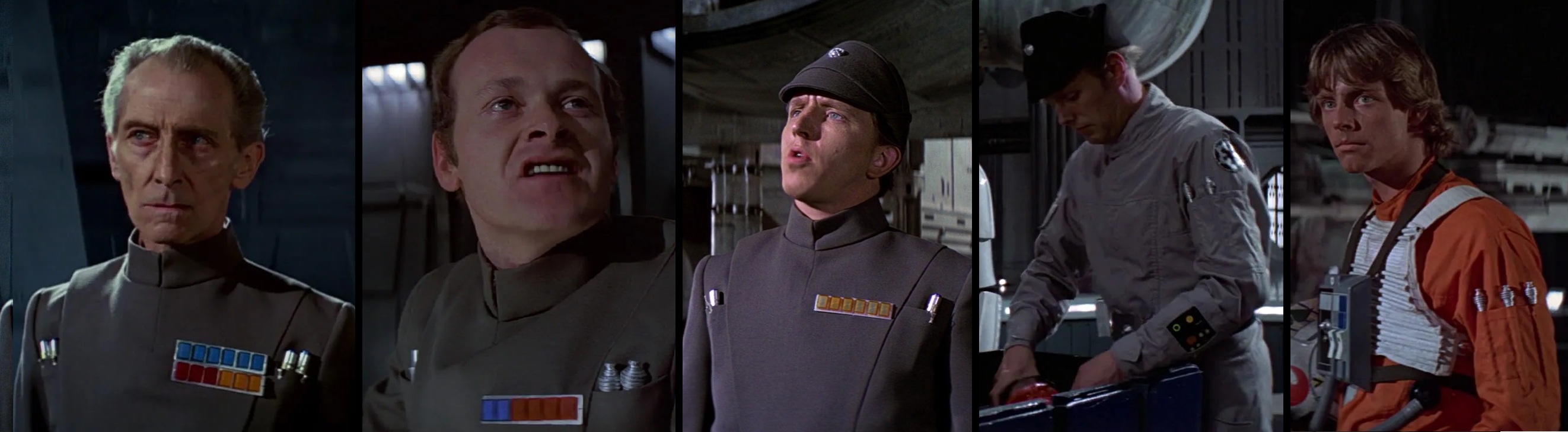
It is important to note that when they show up in Episodes V and VI, we really only see these devices worn by Rebel Alliance personnel (with one possible underwhelming exception). If we look at our samples, we note that those from Empire are constructed in a different manner than those seen in Jedi: while they were kitbashed originally, the pieces worn onscreen were resin casts (Alinger, 86), which is perfect for outfitting dozens of background troops but limits the amount of detail seen on the final product:

Continue reading to learn the secrets of designing good greeblies!

Galactic Style Guide – Design

Welcome to another installment of our ‘Galactic Style Guide counterpoint’ subseries, where we help you strengthen your ‘Star Wars eye’ by highlighting and remedying common costuming faux pas that can make an outfit look Not Star Warsy. As part of the GSG, the ultimate goal is still to help you create a more accurate ‘outer persona’ – but we approach the goal from the opposite direction!

Our last two Style Guide entries on jackets concluded with a bit of homework. I wanted us to look at our source examples and pay special attention to the design elements of each jacket, particularly any areas that used different-colored paneling, the placement of any added details, and the overall degree of symmetry. All of these contribute to this month’s theme of “Design”.
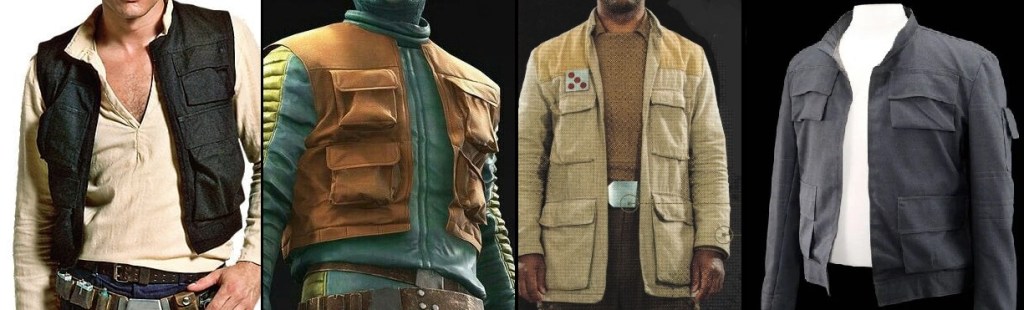
As we’ve seen in previous posts, there are several aspects which are commonly seen in GFFA upper-body outerwear and—taken as a whole—contribute to ‘the Star Wars ‘look”’. In addition to a muted color palette, these include:

-plenty of pockets (typically with flaps)
striped, ribbed, or pleated sections down sleeves
many more examples within!

HOW TO: DIY shemagh scarf

As we’ve seen before, scarves and headwraps are absolutely legitimate pieces of in-universe headwear, but if I had to make a list of commonly-seen ‘reenactorisms’ which have the power to derail my appreciation of an otherwise-solid GFFA outfit, an off-the-shelf, Earth-y, two-tone shemagh/keffiyeh headscarf would have to be near the top. (Also up there? Those zipper-covered, holster-wannabe, drop-leg fanny packs.)
These items are super useful for all sorts of authentic adventuring uses besides looking cool and keeping the sun off one’s head (improvised gathering container, level-one water prefilter, bandage/sling, last-ditch cordage source, etc); however, your standard two-color shemagh has some issues.


Visually, prints or busy motifs are rarely seen in GFFA ‘soft kit’ – solids are by far the rule. (Especially in the Classic Trilogy period; in the Prequels, more variation is seen, but this is typically accomplished by embroidered details, not the actual weaving.)
Thematically, there’s nothing wrong with channeling an ethnic fashion sense for SW purposes…a good scarf or headwrap can make you feel like a romantic desert rebel (Lawrence of Arabia, the Fremen of Arrakis, etc) which is a perfectly valid GFFA character type! However, in the 21st century, mass-produced shemaghs have a tendency to feel more ‘tacticool prepper bro’ than ‘exotic native insurgent’.
Politically (because of their association as a ‘tactical’ accessory), the shemagh has been embraced by various anti-democratic groups…and we absolutely want to distance ourselves from that kind of sithspit.

BUT what if I told you that for about the same price as an Amazon-bought shemagh, you could make your own headscarf that’s even better? If you want to easily level up your Star Wars costuming and gain some DIY XP, read on!

get started on an Easy afternoon project