Welcome back to Aurebesh Month! You can read last week’s entry HERE! When the subject of backwards Aurebesh comes up, oftentimes people like to point to LucasArts games as a source of the flipping confusion. I will admit that there have been many times in LucasArts games where Aurebesh (or another in-universe script) has been seen in a horizontally-flipped orientation. However, this is different from the ‘flipped capitals’ reenactorism…because in these cases the letters aren’t flipped… the entire word is, and there’s an easy explanation.
In a post earlier this year, I brought up the idea of ‘reenactorisms’—the spread and perpetuation of an inaccuracy being unknowingly (or knowingly) passed around because somebody didn’t do their research. After that initial post, I realized one of the biggest reenactorisms in Star Wars costuming was my most infuriating pet peeve: the phenomenon of backwards Aurebesh letters. Having spent probably-too-much-time thinking about the issue, I thought I’d try something new and devote an entire month to the topic of writing in the Galaxy Far, Far Away. That’s right, folks: welcome to Aurebesh Month!
A quick search of Etsy for the term will easily reveal the problem we are facing: an annoying lack of consistency in how the letters are to be written. A number of these items are geared towards the Batuu-bounding crowd—patches, ID tags, Aurebesh ‘translators’, luggage tags, etc.—and I suspect it is the popularity of the Disney parks (coupled with the recent rise of Cricut-type machines that make cranking out crispy stickers so easy) that has caused the proliferation.
At the heart of the issue is the erroneous idea that Aurebesh has capital letters at all, let alone that it indicates them by horizontally flipping the letters. None of the Aurebesh texts seen at the Galaxy’s Edge park—the writing system’s most high-profile manifestation—includes these backwards capitals, so where did this idea originate???
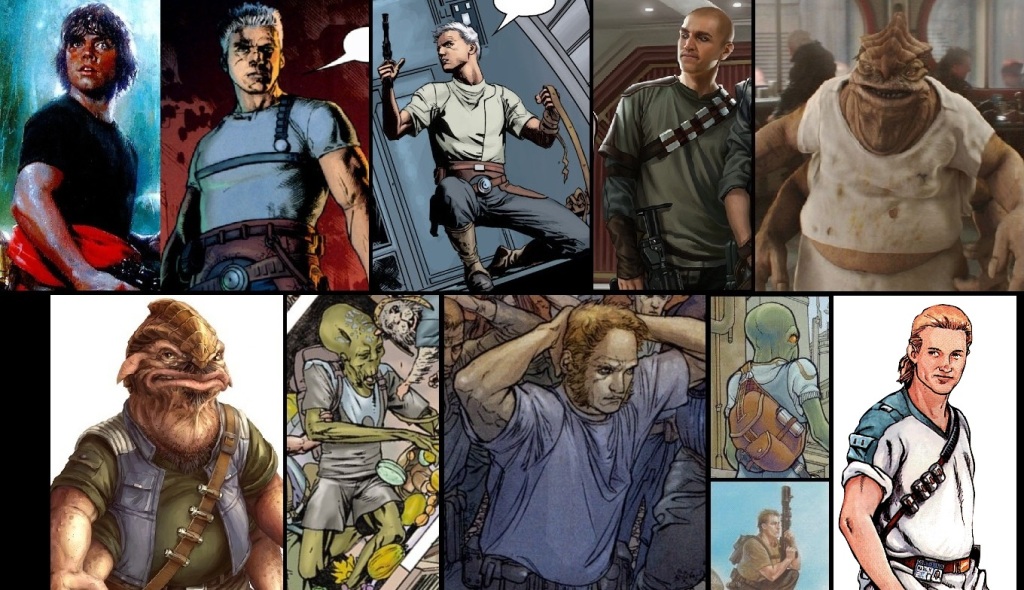
Welcome back to another installment of the Galactic Style Guide, where we break down the ‘Star Wars aesthetic’ in order to help you create a more Galaxy-accurate ‘outer persona’! For this month’s installment, now that midsummer is here (for us in the Northern Hemisphere at least), I wanted to take a look at examples of T-shirts and other short-sleeved or sleeveless tops. What more can you say about them? On modern Earth these are among our most casual clothing, which puts them at odds with the galaxy’s overall space-fantasy aesthetic, but as we’ll see, they do occasionally show up in the EU as everyday clothing.
Short-sleeved T-shirts: Luke (Splinter of the Mind’s Eye), Dass Jennir (Blue Harvest, Out of the Wilderness), Aegis crewman*(Razor’s Edge), Dexter Jettster; NEGtAS Besalisk, Janks, Bandomeer prisoner (Dark Times #15), Duro in the big city (Langdon Foss), Ruusan lookout (Jedi Knight). Voren Na’alContinue reading “Galactic Style Guide – T-shirts and tank tops”
Welcome back to another installment of the Galactic Style Guide, where we break down the ‘Star Wars aesthetic’ in order to help you create a more authentic ‘outer persona’! This month we’re wrapping up our look at in-universe lower-body garments, both long and short.
When the subject of non-cargo kinds of pockets comes up in costuming circles, I’ve seen some people try to argue that hip/slash pockets don’t exist in-universe. Based on our sources I can say that slash pockets do exist in the GFFA, but they aren’t appropriate for all impressions. Rebel soldiers, agents, or operatives frequently wear pants with familiar pockets.:
Pants with hip or rear pockets: Rebel specialist (Battlefront2!2017, Dresselian (NEGtAS), ‘Cassian Andor’, human male Jaden Korr (14 ABY), Kyle Katarn (12 ABY).
It is worth noting that the distinctive hip pockets-and-belt-loops of the Specialist appear to be inspired by surplus Austrian M75 pants (though those also have thigh cargo pockets).
It’s been a while since our last Artifact ID post, but early May always makes me think of the Prequels, and in a bit of serendipity I was able to identify an obscure Episode I artifact while exploring an awesome plant nursery last weekend. Browsing through a display of seed packets, I noticed this gourd looked subconsciously familiar:
If you’re a Prequel aficionado like me—and have spent way too much time poring over DK’s Episode I Visual Dictionary — you might know where this is going.
Welcome back to the Galactic Style Guide, where we break down the ‘Star Wars aesthetic’ in order to help you create a more authentic ‘outer persona’! In this month’s installment we’re starting our look at lower-body garments.
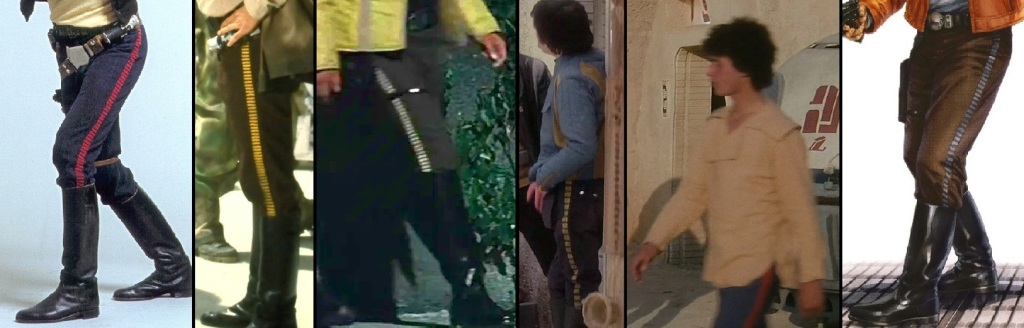
While most humanoids in the Galaxy Far Far Away dress practically and wear long trousers of some sort, because layering is such a large part of the general galactic aesthetic we usually don’t get a good look at most characters’ legwear. If you plan to wear a longer outer garment like a tunic, there’s no need to be picky about your pants—as long as they’re solidly made and able to stand up to authentic use: for example, Luke’s farmboy trousers were just bleached Levis! As a rule of thumb, most in-universe trousers are nondescript but as we will see below, there are a few ways to dress them up for more visual interest.
Han Solo (Episode IV-VI), Luke Skywalker (medal ceremony), Mos Eisley extras, Jarin Flast (WEG SWRPG 2nd Edition)/generic Human (New Essential Guide to Alien Species)Continue reading “Galactic Style Guide – Pants I”
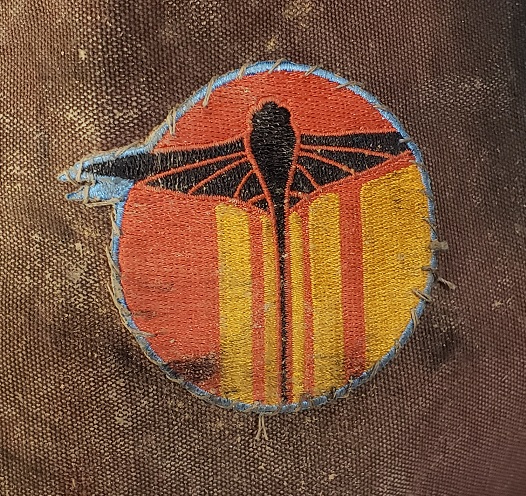
It’s been awhile since I’ve checked in on this project, which was stuck on the back burner for much of last year but has been moving forwards slowly but surely. Inspired by a description of typical spacers traveling the spacelanes with a sturdy duffel bag (FFG Edge of the Empire: Enter the Unknown p.53), my goal is to create an in-universe ‘steamer trunk’ covered with souvenirs of galactic travel for use with my New Republic Archeological Corps impression.
Before getting too carried away with the weathering and distressing, I wanted to first add a few in-universe patches! A brief browse through Etsy or facebook’s SW Patch Collectors group will reveal a mind-boggling number and variety of Star Wars-themed embroidery, but somewhat unsurprisingly the vast majority are not suitable for living history purposes: face characters, divergent stylistic interpretations, pop culture mashups, event commemoratives, and general ‘novelty’ designs (i.e. things that make me ask, “WHYYYY?”) abound. If that group is any indication, lots of folks want patches that let others know they are a Star Wars Fan, but not so many are interested in authentically inhabiting the Star Wars setting…disappointing. However, a few daring individuals have been producing patches that actually reflect an in-universe style!
Welcome back to another installment of the Galactic Style Guide, where we break down the ‘Star Wars aesthetic’ in order to help you create a more Galaxy-accurate ‘outer persona’! This month we’re finishing up our brief survey of in-universe head coverings.
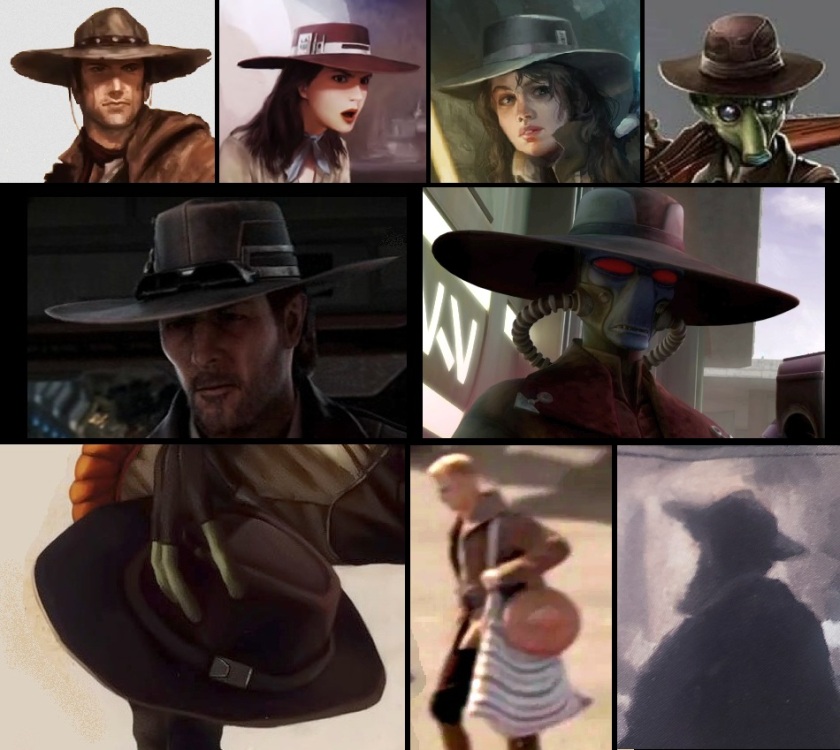
In my research into space-archeology clothing styles, I found the wide-brimmed, low-crowned style seems more common on the galaxy’s fringes, and is more likely to be worn by bounty hunters, settlers, explorers, treasure hunters, and the like. As I discussed previously, this style draws on visual archetypes of Spaghetti Western gunslingers and Pulp Serial archeologists, although our two final examples (both Naboo) seem to buck the trend, and instead invoke the more pastoral petasos of the Classical Greek traveler.
Wide-brimmed hats: Jacobi Sterne, Outer Rim Marshal (FFG Far Horizons), female archeologist/treasure hunter #1, female archeologist/treasure hunter #2; Rodian fringer/explorer; Nico Okarr, Cad Bane; Levet (Duro archeologist), Theed citizen (22 BBY) who appears to be carrying (in addition to a large striped bag) a wide-brimmed (straw?) hat; ‘the artist of Naboo’ (SW Visionaries).read more
While I started this blog back in 2017, I spent the first few weeks detailing the basic ideas behind the ‘Advanced Costumed Arts’ of reenacting and living history. Over the intervening three+ years this blog has been plugging away merrily, and those early posts—while still collected at the ^FIRST STEPS page^—are effectively buried for those who might find their way here and don’t want to endlessly scroll or use the search bar or Categories >>. Therefore, I wanted to put together a miniseries to lay out the underlying foundations for what it is we aspire to do here, why we do living history specifically, and how You can do it too!
WHAT are reenacting and living history? (For a short but very complete general introduction to these activities, I recommend downloading F.L. Watkins’ The Reenactor’s Encyclopedia, from which I’ll be quoting here and there.) At their most basic, both reenacting and living history are activities in which participants seek to learn about and experience life in a non-contemporary time period. These activities usually involve the participant assembling a ‘kit’ (what you’ll often see referred to here as ‘the outer persona’) of “possessions…that might have been owned by his impression”; this should start with clothing, and then might extend to include tools, food, camp gear, sundries, and weapons.
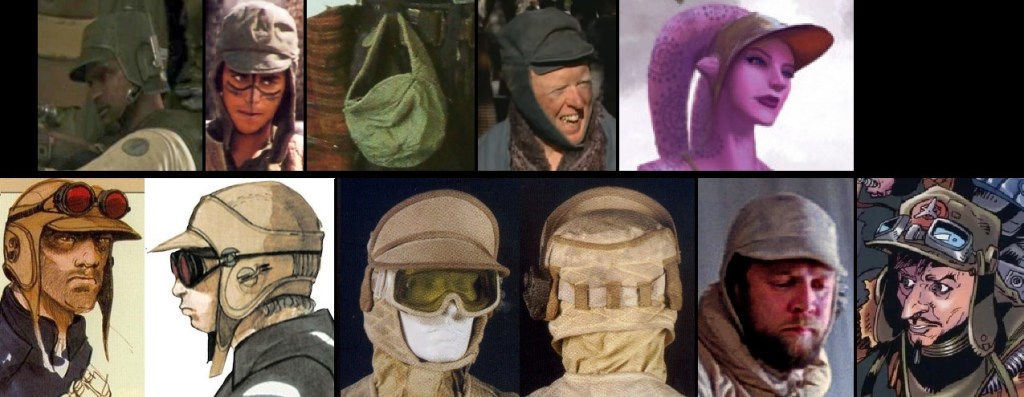
Welcome back to another installment of the Galactic Style Guide, where we break down the ‘Star Wars aesthetic’ in order to help you create a more authentic ‘outer persona’! For this month’s installment, we’re taking things from the top and talking Hats! Our main cast of characters tend to go hatless, but for secondary and background characters, hats are very commonplace. While certain styles tend to work better with certain settings, covering your head in some way is a great way to remind your audience that you are portraying an inhabitant of the Galaxy Far Far Away. When I put a call out to the SWLH facebook group for style suggestions, the immediate first response was ‘Caps with flaps!’. As this type of hat is readily available as military surplus, such hats are a no-brainer way to make yourself quickly blend into the galactic populace:
It’s worth pointing out that the hats of the Hoth hangar techs are essentially a WW2 US Navy deck hat, so if you’re handy with a sewing machine, stick around at the end for a free pattern.








 Living History in the Star Wars Galaxy