Galactic Style Guide – Footwear I

Welcome back to another installment of the Galactic Style Guide, the monthly series where we break down the ‘Star Wars aesthetic’ in order to help you create a more authentic ‘outer persona’! It’s taken us a few years to get here, but in this entry, we’re finally taking a look at the one element a good costume literally stands upon – shoes! There’s a lot to unpack here, so our first two entries will look at live-action sources, and the third will cover visual examples from EU sources.

I’ve done my best to break these down by category, but my research library is far from exhaustive!; these are mostly drawn from the Complete Visual Dictionary (DK) and Alinger’s SWCOT. (Even if I could afford a copy, Trisha Biggar’s Dressing a Galaxy is not as useful for those of us interested in ‘common’ galactic folk…plus, the prevalence of characters wearing long robes means we don’t often see any footwear anyway!).
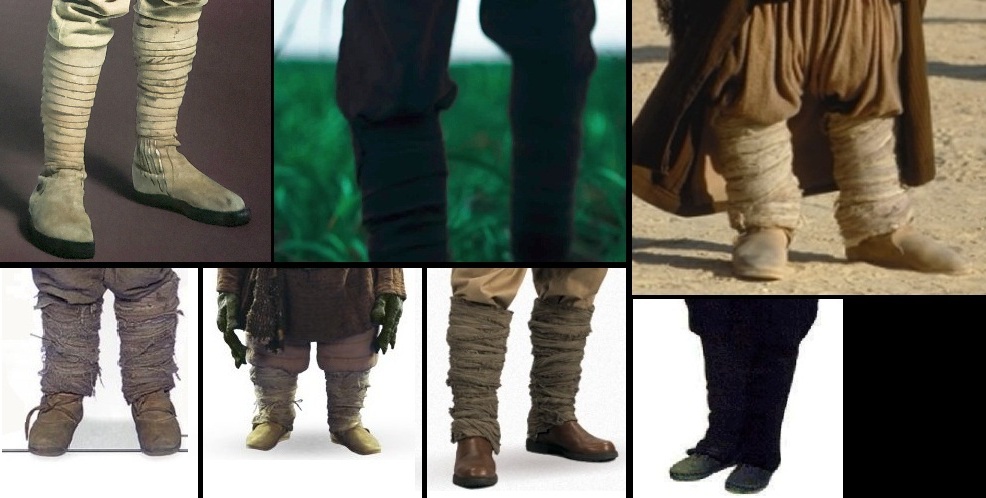
Let’s get started by looking at what it seems just about everybody wears in the Galactic Civil War era:

Riding boots: Biggs Darklighter, Ben Kenobi, Dannik Jerriko, the Tonnika sisters, Han Solo;
Rebel pilots (0 BBY), Luke Skywalker (medal ceremony), Bespin wing guard, Alliance generals, Luke (4 ABY), Bib Fortuna

I didn’t include them here (because…y’know, space-fascism), but I should note that most ranking Imperials wear similar boots. If you’re portraying a character in the Civil War period, you really can’t go wrong with something tall, black, and shiny!

Plenty more examples within!

Diamonds in the Rough – Scott Bowen

Welcome back to our monthly spotlight series! In this feature, I interview Star Wars costumers who have ‘gone the distance’ and put in the effort to create solid, in-universe outfits or personas. This month we’re looking at Scott Bowen’s excellent original Rodian character, ‘Bossome Scow’:

As you might imagine, Scott’s initial inspiration for this character design was the ur-Rodian example, GREEDO! His goal had a challenge embedded, however: not only to create an original Rodian character, but also to try and stick to Greedo’s iconic orange/teal/yellow colorscheme. As we will see, he definitely succeeds!

read the complete interview!

Galactic Style Guide – Design

Welcome to another installment of our ‘Galactic Style Guide counterpoint’ subseries, where we help you strengthen your ‘Star Wars eye’ by highlighting and remedying common costuming faux pas that can make an outfit look Not Star Warsy. As part of the GSG, the ultimate goal is still to help you create a more accurate ‘outer persona’ – but we approach the goal from the opposite direction!

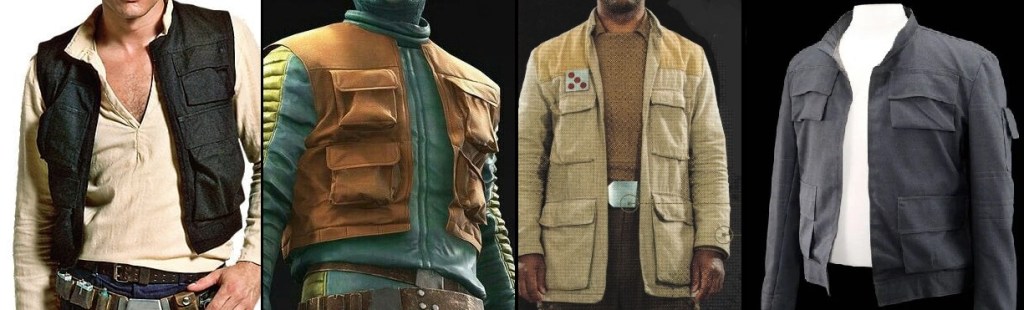
Our last two Style Guide entries on jackets concluded with a bit of homework. I wanted us to look at our source examples and pay special attention to the design elements of each jacket, particularly any areas that used different-colored paneling, the placement of any added details, and the overall degree of symmetry. All of these contribute to this month’s theme of “Design”.
As we’ve seen in previous posts, there are several aspects which are commonly seen in GFFA upper-body outerwear and—taken as a whole—contribute to ‘the Star Wars ‘look”’. In addition to a muted color palette, these include:

-plenty of pockets (typically with flaps)
striped, ribbed, or pleated sections down sleeves
many more examples within!

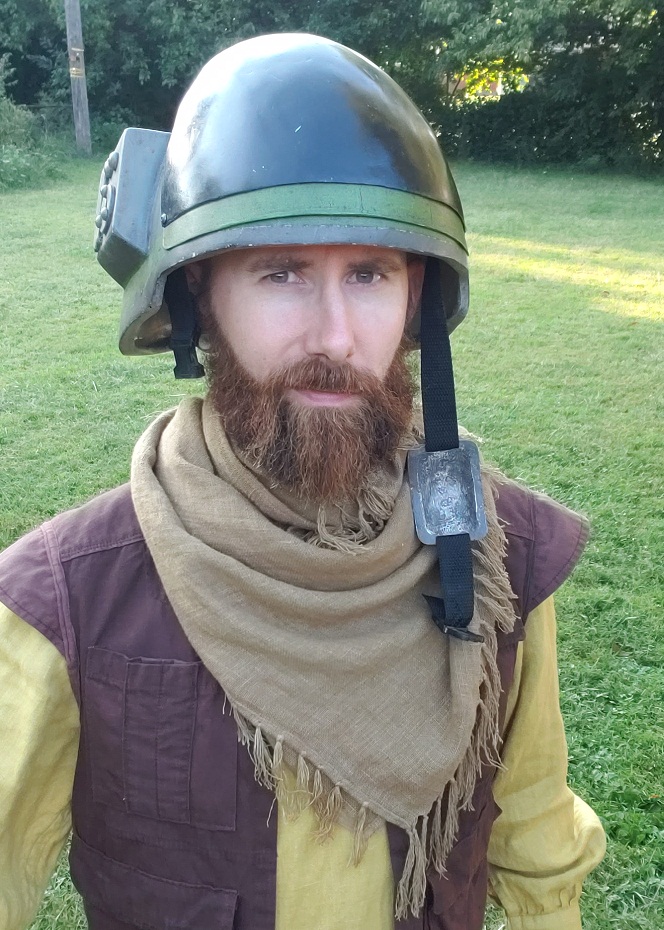
HOW TO: DIY shemagh scarf

As we’ve seen before, scarves and headwraps are absolutely legitimate pieces of in-universe headwear, but if I had to make a list of commonly-seen ‘reenactorisms’ which have the power to derail my appreciation of an otherwise-solid GFFA outfit, an off-the-shelf, Earth-y, two-tone shemagh/keffiyeh headscarf would have to be near the top. (Also up there? Those zipper-covered, holster-wannabe, drop-leg fanny packs.)
These items are super useful for all sorts of authentic adventuring uses besides looking cool and keeping the sun off one’s head (improvised gathering container, level-one water prefilter, bandage/sling, last-ditch cordage source, etc); however, your standard two-color shemagh has some issues.


Visually, prints or busy motifs are rarely seen in GFFA ‘soft kit’ – solids are by far the rule. (Especially in the Classic Trilogy period; in the Prequels, more variation is seen, but this is typically accomplished by embroidered details, not the actual weaving.)
Thematically, there’s nothing wrong with channeling an ethnic fashion sense for SW purposes…a good scarf or headwrap can make you feel like a romantic desert rebel (Lawrence of Arabia, the Fremen of Arrakis, etc) which is a perfectly valid GFFA character type! However, in the 21st century, mass-produced shemaghs have a tendency to feel more ‘tacticool prepper bro’ than ‘exotic native insurgent’.
Politically (because of their association as a ‘tactical’ accessory), the shemagh has been embraced by various anti-democratic groups…and we absolutely want to distance ourselves from that kind of sithspit.

BUT what if I told you that for about the same price as an Amazon-bought shemagh, you could make your own headscarf that’s even better? If you want to easily level up your Star Wars costuming and gain some DIY XP, read on!

get started on an Easy afternoon project

Galactic Style Guide – Jackets II

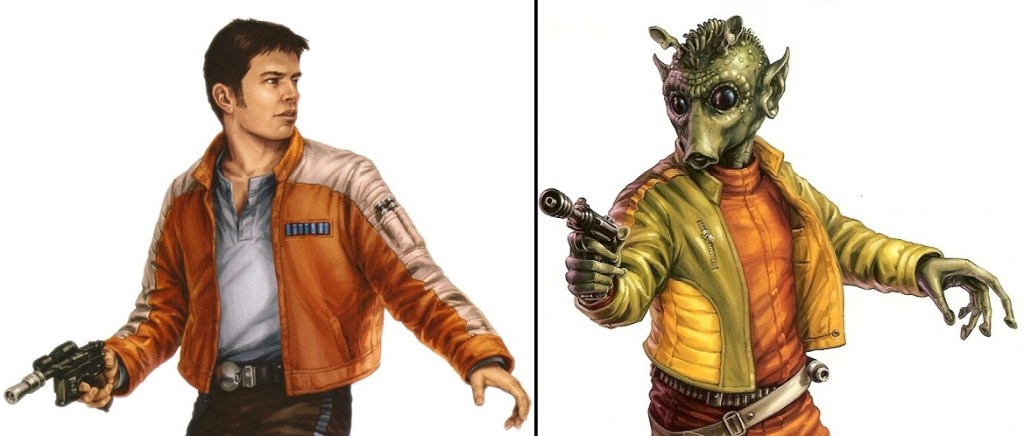
Welcome back to another installment of the Galactic Style Guide, the monthly series where we break down the ‘Star Wars aesthetic’ to help you create a more authentic ‘outer persona’! As I promised last month, this entry is devoted to examples of in-universe jackets drawn from the various sources of the Expanded Universe and ancillary materials. Let’s get started with the two jacket-wearers seen in the New Essential Guide to Alien Species:

Human and Rodian wearing puffy racing-type jackets (by Chris Trevas) – just mentally ignore the Rodian’s zipper.
see more examples from comics, games, reference books, and rpgs!

Galactic Style Guide – Buttons

Welcome to another installment of our ‘Galactic Style Guide counterpoint’ subseries, where we help you strengthen your ‘Star Wars eye’ by highlighting and addressing commonly-made costuming faux pas. As part of the GSG, the ultimate goal is still to help you create a more accurate ‘outer persona’ – but we approach the goal from the opposite direction!

Since the earliest designs of Star Wars ’77, one of the main signifiers of GFFA fashion is the absence of visible fasteners—as chief costume designer John Mollo said, “George didn’t want any fastenings to show, he didn’t want to see buttons, he didn’t want to see zips, so we used stuff like Velcro, and things were just wrapped over and tied with a belt…”The Making of Star Wars (J.W. Rinzler), p. 125.
Since this is one of the chief ‘rules’ of Star Wars fashion and comes straight from the top, something like 98% of the outfits seen onscreen abide by this rule. When visible fastenings do show up on screen, eagle-eyed costume-minded folks (or those who really want to cut corners) tend to make a big deal of it….although they really shouldn’t.

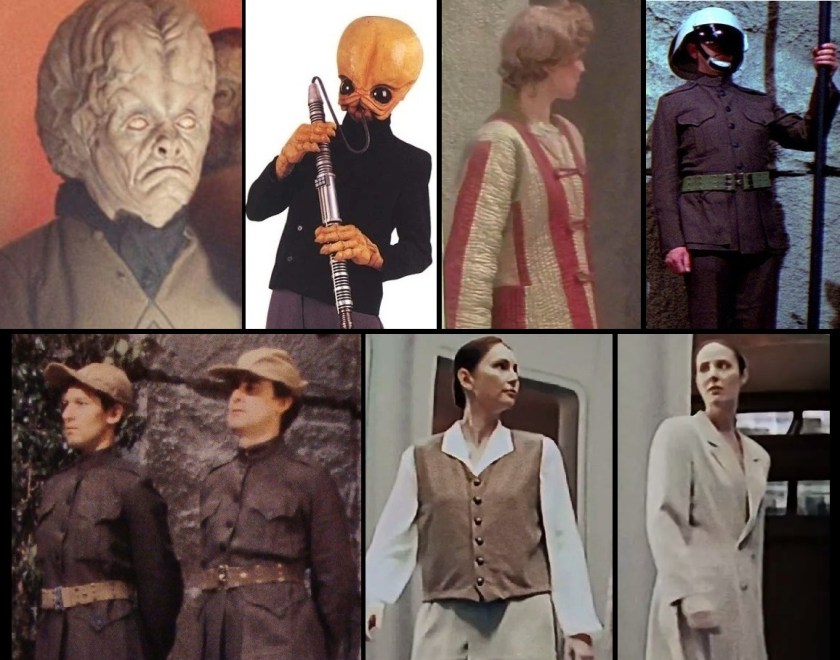
buttons onscreen in OT and PT: Pons Limbic, Figrin D’an (and the rest of the Modal Nodes), Rebel honor guard, Yavin ceremony backgrounders, Tian Chyler, Jango Fett, Elan Sleazebaggano
more visible fasteners after the jump

Programming Announcement – 2022

Hello there, readers! As I did last summer, I want to give a heads-up that the next several months will see a change in the pace of material being published here at the Star Wars Living History blog. While I kind of wish this announcement was coming at the start of another long-distance backpacking adventure, the actual reasons for it are still exciting!

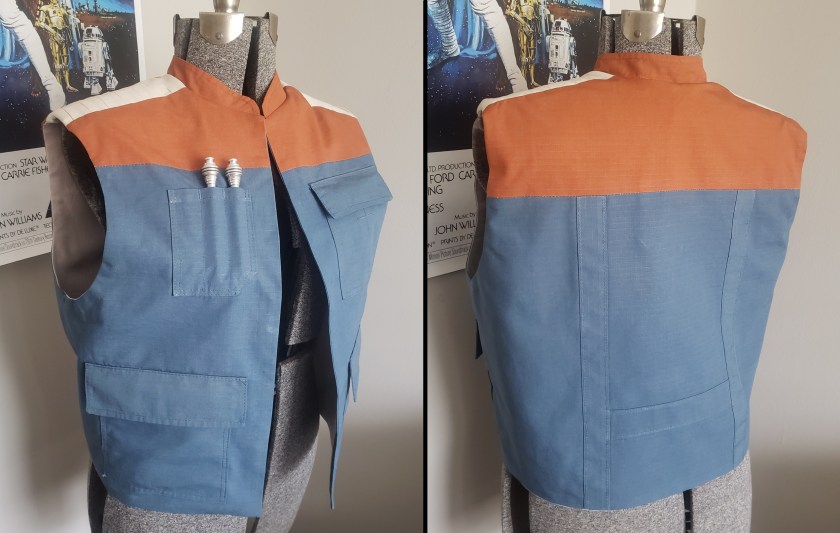
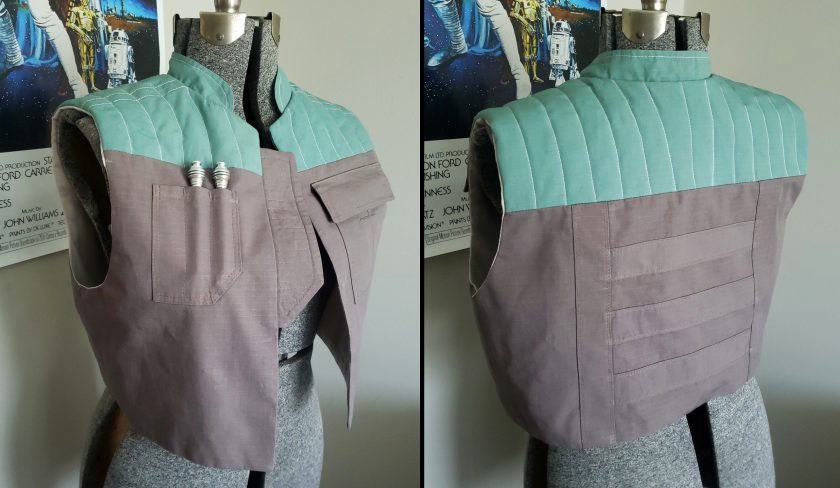
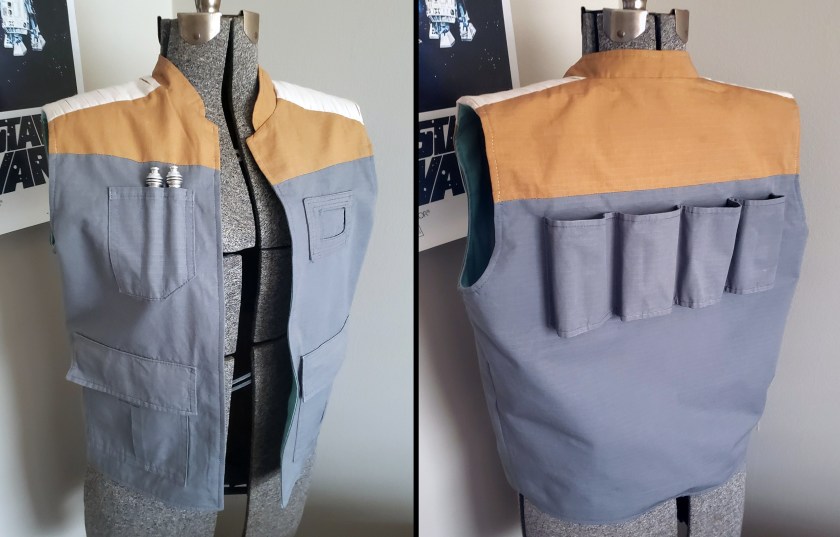
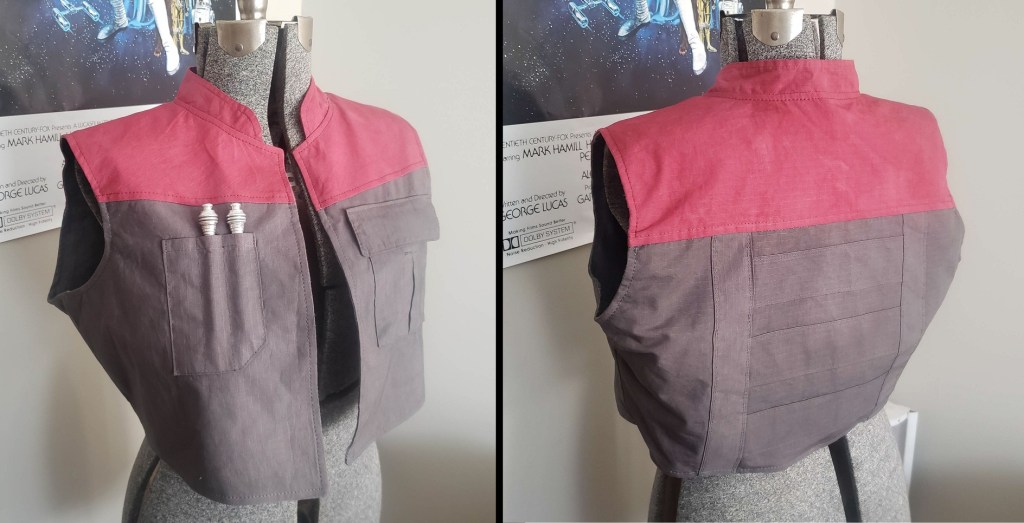
Somewhere around the middle of Virginia last fall I decided that when I returned from the Trail I wanted to get into the (small) business of galactic clothing, and this spring launched my Offworld Outfitters brand. At present my product line is limited to in-universe-styled spacer/adventurer’s vests, with plans for other offerings possible down the line. I trust that the previous five years’ worth of posts at this blog will sufficiently demonstrate my commitment to quality and the authentic GFFA style 😉 For those interested in a vest of your own, you can find my vest commission form and more information at the OFFWORLD.OUTFITTERS link above!

So: in order to better divide my time between this venture and some intensive projects for the Middle-earth Reenactment Society, plus for my own mental health (you can experience ‘burnout’ on hobbies, too!), over the next few months you will see me stepping back from publishing this blog on a weekly basis. What this means for you, reader: my recurring series the Galactic Style Guide will continue to drop on the last Saturday of each month, while future entries in our new Diamonds in the Rough interview series will come out on the second Saturday of each month. In between those, I may release other posts on an individual basis as time allows; in other words, as a rule you should expect two posts per month instead of four (or five).
I’m also open to the idea of reader-submitted guest articles, so if you have a fictional-reenacting or GFFA-living-history-related topic you would like to research and report on, please don’t hesitate to click the CONTACT button above and get in touch!

Thank you for reading, and may the Force be with you!

Galactic Style Guide – Color II

Welcome to another installment of our ‘Galactic Style Guide counterpoint’ subseries, where we help you strengthen your ‘Star Wars eye’ by highlighting and remedying common mistakes that can make an outfit look Not Star Warsy. As part of the Galactic Style Guide, the ultimate goal is still to help you create a more accurate ‘outer persona’ – but we approach the goal from the opposite direction!
As I teased last time, we’re going to be working with at an excellent tool for helping us see the ‘Star Wars look’ in action: Mando Creator . This handy bit of coding lets users create their own two-dimensional Mandalorian outfit by customizing every element in terms of design, color, and decoration. If you’ve used Bitmoji, HeroCreator, or similar avatar-making tools, it’s pretty easy to get the hang of. I’d never played with it before, and in 20 minutes I had made up my own hypothetical Mandalorian kit!:

when you know the rules, it’s really not that hard to make something that looks passably in-universe

One of the coolest parts—at least for the purposes of training our ‘Star Wars Eye’—is the Armor Gallery feature, where we find (in addition to a few novelty designs and face characters like Din Djarin and the Fetts) a wide variety of completed assemblages submitted by other users.

two easy tweaks to boost your in-universe style accuracy!

Upgrading the Rebel persona: Naboo tunic, Mk II

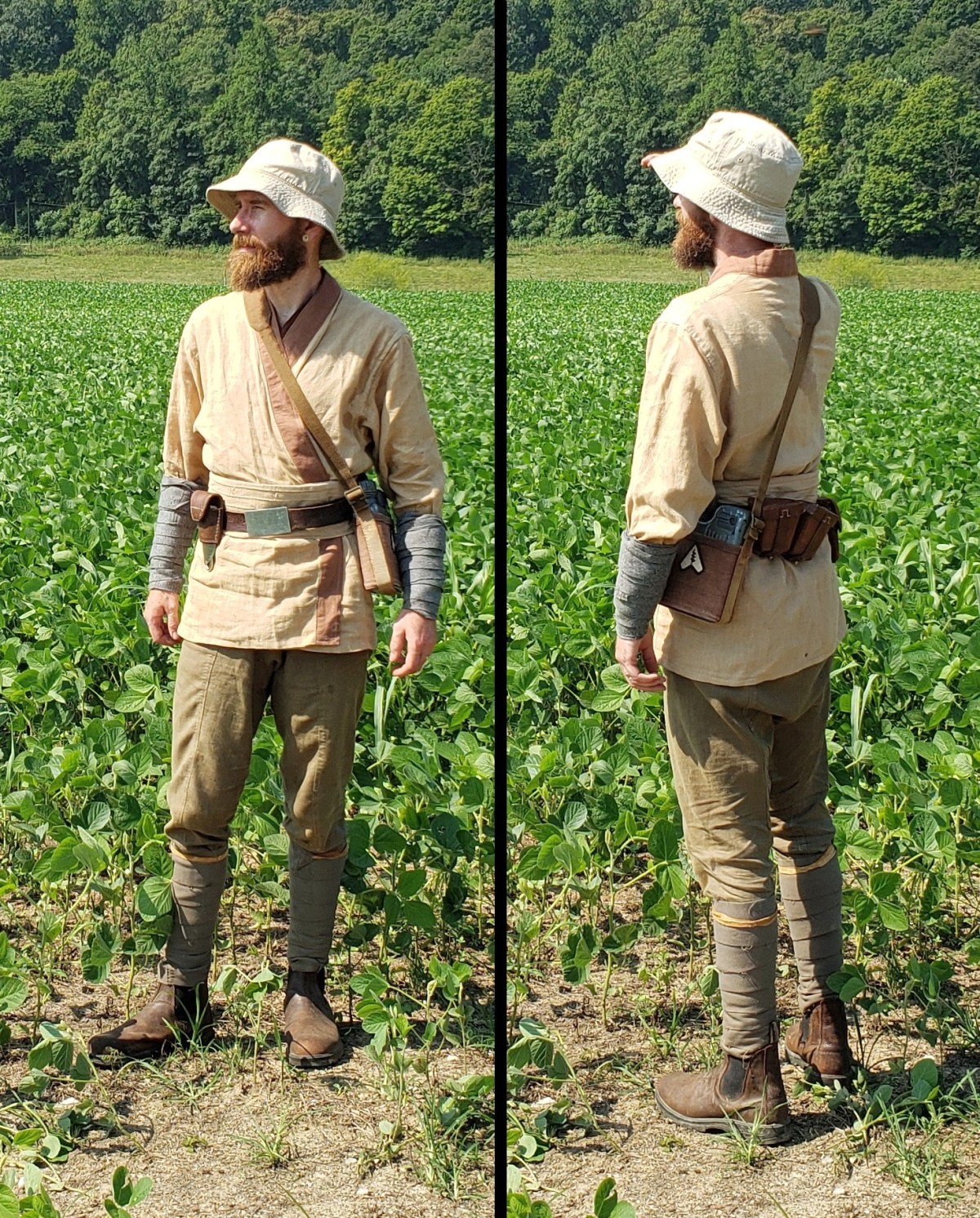
Since debuting my first draft Rebel-partizan-on-Naboo impression back in 2018, further research has caused me to continue to refine the kit. In addition to needing some more layering, the main thing that needed upgrading was the shirt. My ‘Mark I’ Naboo shirt was not (aside from the Mandarin collar and the color) based on any specific onscreen examples, and the use of a Vietnamese ao dai pattern was only inspired by costume designer Trisha Biggar’s comments re: the general use of Asian elements in Naboo fashion (and at the time I liked the asymmetry of the design). However, I realized that I should probably wear something that more clearly ‘read’ as Naboo in origin, and it should probably be constructed of a lighter material as well – the Mk I was sewn from a ‘rustic’ 7.1-ounce linen.
Since this piece is intended for a Galactic Civil War era persona, I really wanted to try and move away from the traditional Naboo style seen in the Prequels, especially the Renaissance-heavy designs of 32 BBY:

“We had designed Naboo more or less around Art Nouveau (we called it “Space Nouveau”), which was based on organic, plantlike forms. The costume ideas looked gorgeous on the women, but when you put guys in them, they didn’t look very tough.” – Ian McCaig, Dressing A Galaxy, p.72.

Roughly inspired by the lines of the traditional Indian kameez, I pored over my reference library to see what Naboo male fashion stuck around through the years while noticing any common elements:

sartorial synthesis and more, within!

Galactic Style Guide – Color I

Welcome to the first entry in our ‘Galactic Style Guide counterpoint’ subseries! Where the GSG could be summed up as ‘how to look Star Warsy’, these alternate posts are meant to highlight and remedy common mistakes that can make an outfit look Not Star Warsy!
From the very beginning, the world of Star Wars has always had a very specific visual style. Unlike the matinee serials it was inspired by (in which heroes wore shiny, silver bodysuits and enemies wore bright gold and scarlet robes), the Galaxy Far Far Away was much more grounded in its visuals. While characters might fly starships across the galaxy and duel with swords made of pure energy, they didn’t dress futuristic. Chief costume designer John Mollo’s mix-and-matching of real world historical styles (Russian/Japanese peasantry, American cowboys, medieval gowns, World Wars military uniforms, etc) for inspiration provided the solid and believable foundation from which the series’ visuals would evolve. As part of this grounded approach, most characters tend to wear costumes in a very specific range of colors:

“The color scheme basically was the baddies would be black or gray, with the exception of the stormtroopers, and the goodies should be in earth colors—fawns and whites… Mollo tried to keep the colors muted wherever possible. Color is very, very difficult to use. Bright colors don’t work well on film, particularly reds and blues. George always goes for the authentic….and if it’s all garish color, it doesn’t work.” (Brandon Alinger. Star Wars Costumes – the Original Trilogy, 2014. p 15.)

This rule does not mean, however, that your outer persona need be limited to earth tones and shades of gray – as we saw a few weeks ago, there are tons of examples of characters wearing every color of the rainbow (especially in the pre-Imperial period)! However, if you noticed, almost all of them had something in common. As we read above, the main rule for creating authentic in-universe clothing is simple: Avoid. Garish. Color.: thus, if a garment is a fully-saturated hue, it is much less likely to ‘read’ as being authentic to the Star Wars setting. Let’s take a look at what I mean.

unSWarzy colors fixed using digital wizardry, within!