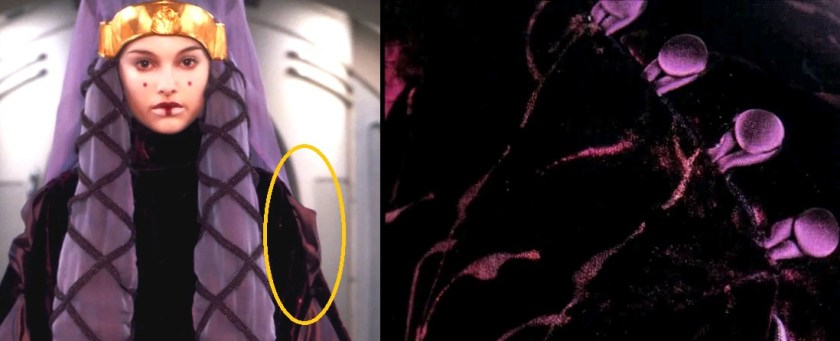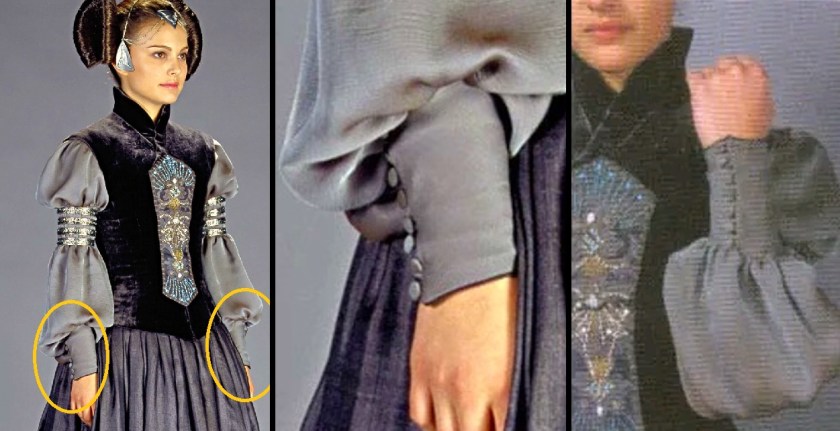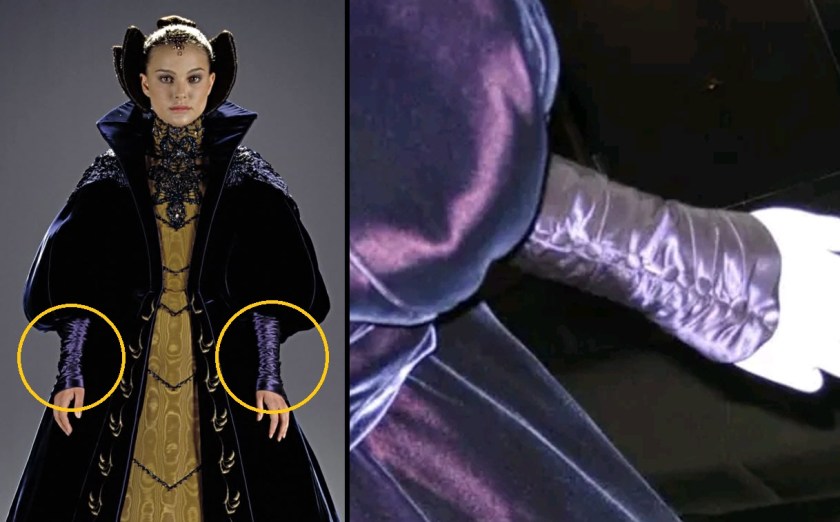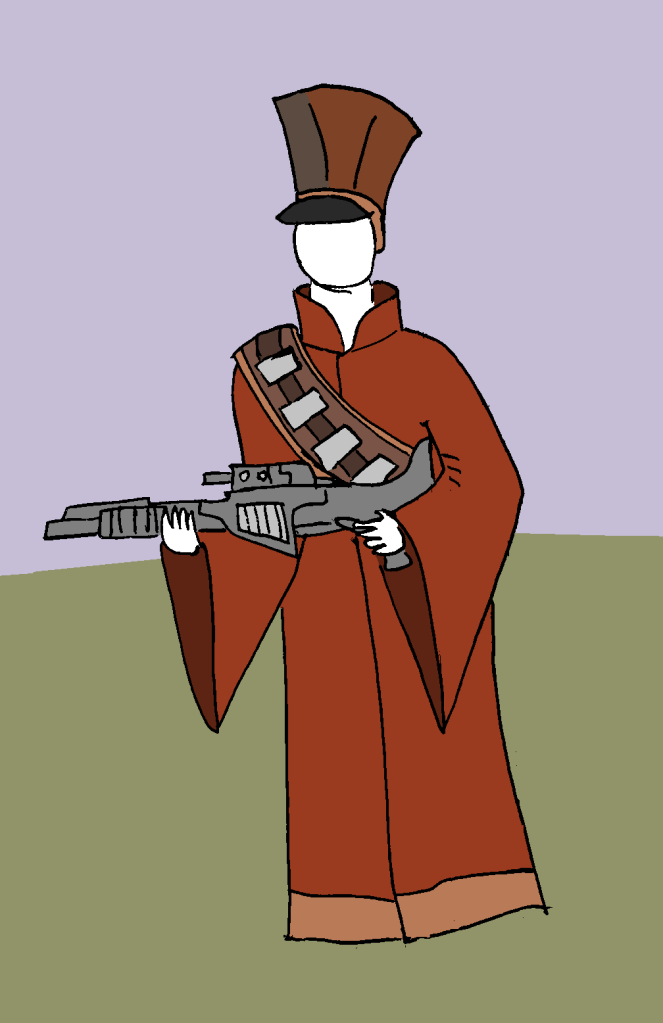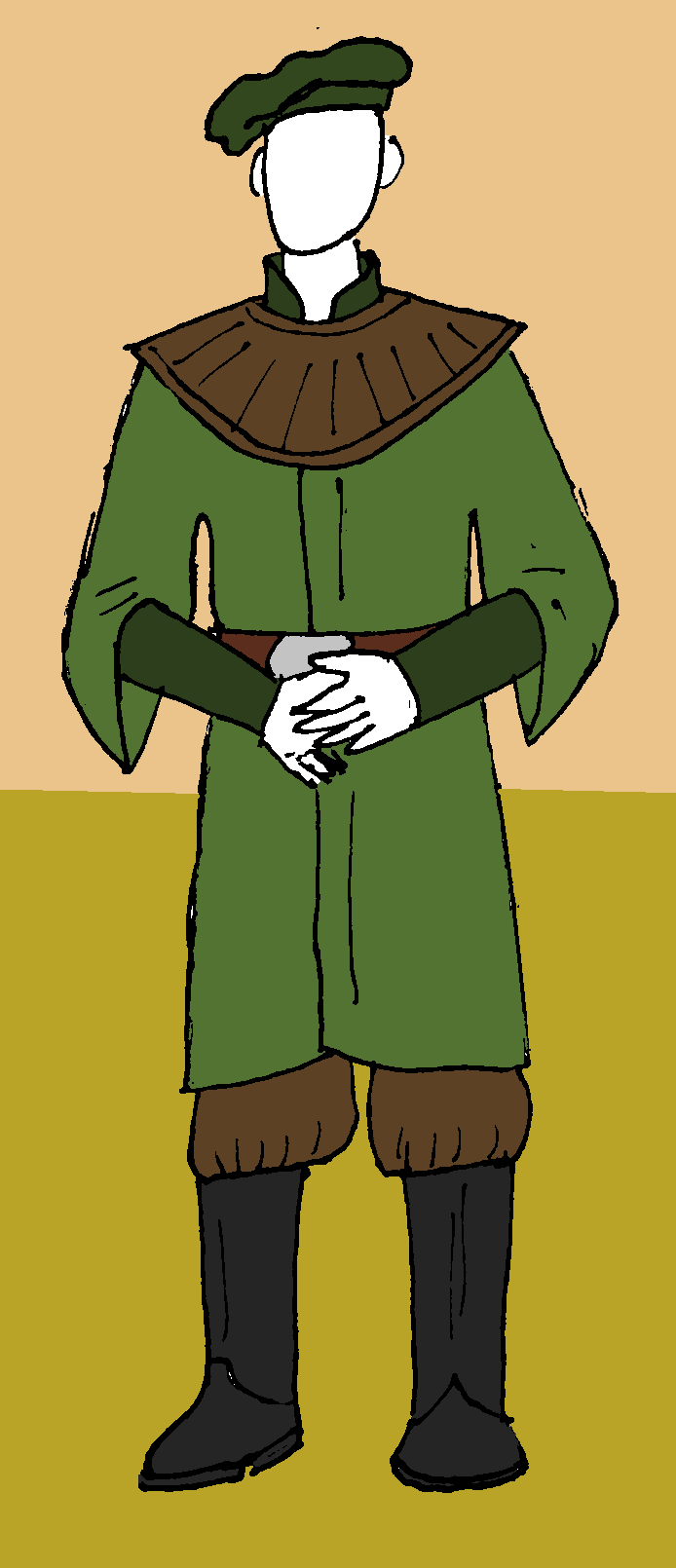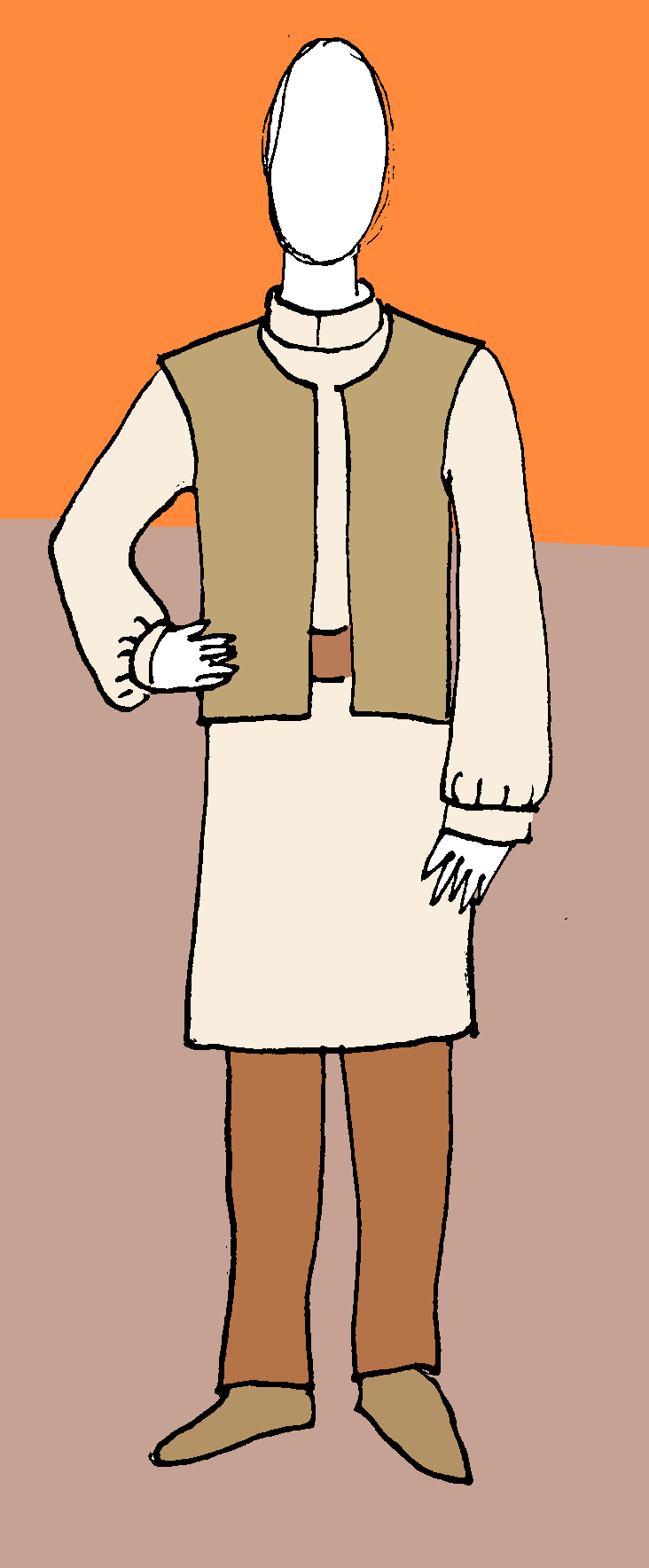
Galactic Style Guide – Designing Foundational Characters: part 3

Welcome back to the Galactic Style Guide, the series where we break down the ‘Star Wars aesthetic’ in order to help you create a more authentic ‘outer persona’ for your ‘denizen’ or OC.
As pointed out in EC Henry’s excellent video on the foundations of good SW vehicle design (which I believe is absolutely applicable to character/costume design as well), the first requirement is an iconic design – i.e. like computer icons, Star Wars characters (and character types!) should be recognizable by their silhouettes and largely not be mistaken for each other.
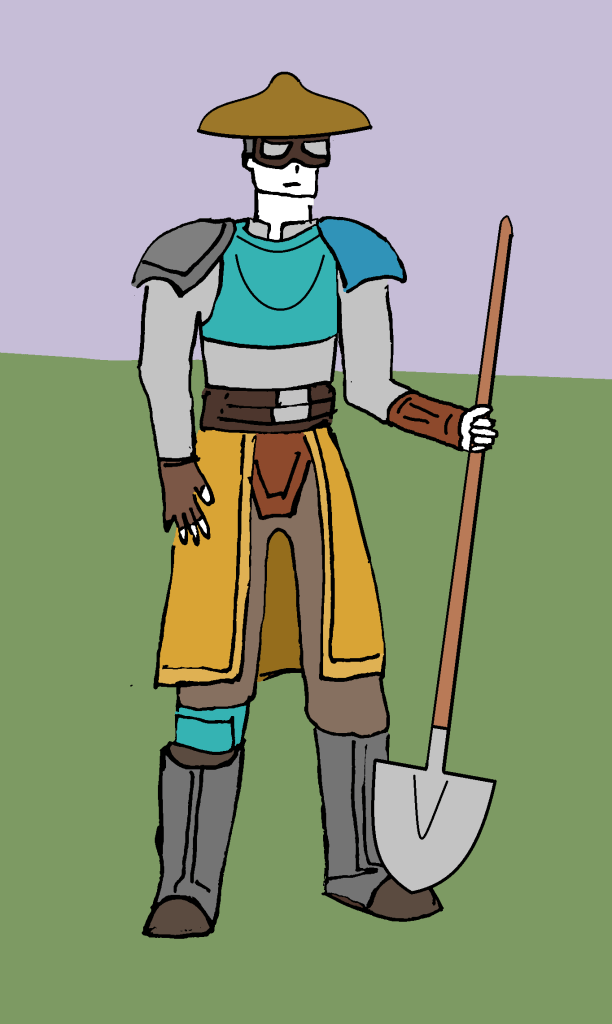
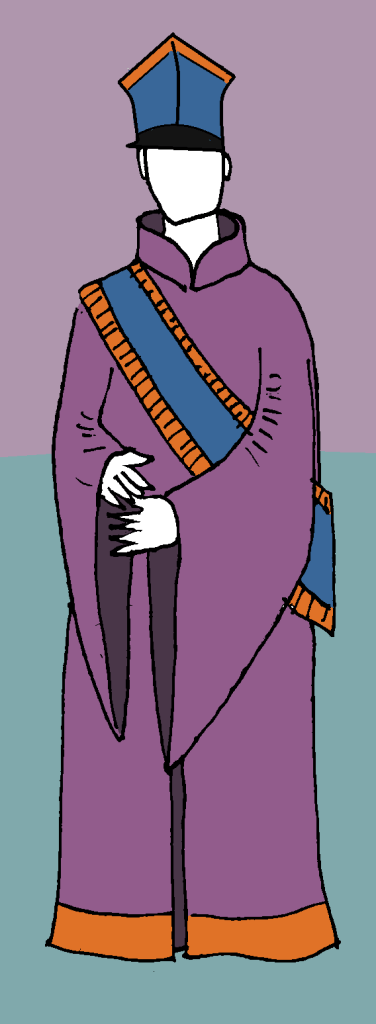
Cosplayers new to the idea of ‘original character’ or ‘denizen’ costuming often chafe when exposed to the reality that the GFFA setting, while far-reaching, is not in fact without limitations, but operates instead within a specific visual idiom in which character types are associated with certain design styles.
We’ve explored several of these in our two previous entries, so this time, I want to show how trying to mix-and-match elements from these styles can actually sabotage otherwise-solid character concepts.

keep reading for more examples and artwork

Project: Coat Retool 2024

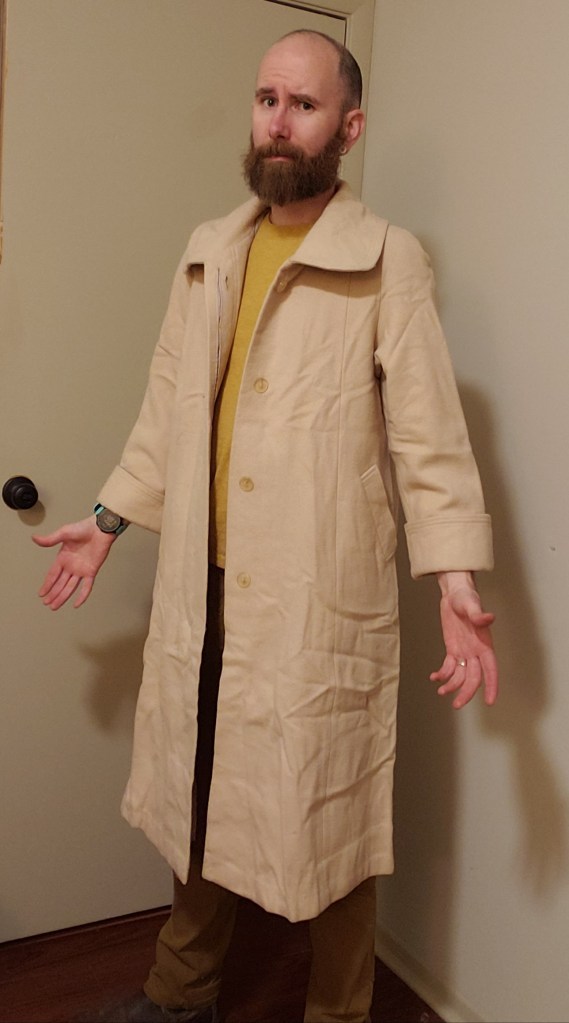
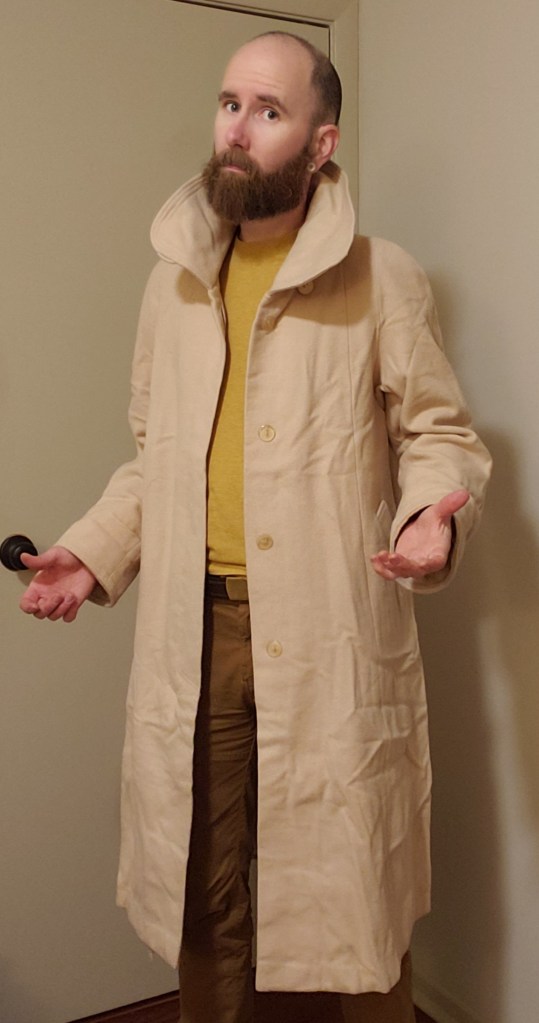
If it feels like it’s been forever since I’ve had a finished project to unveil, you would be right – turns out it’s been nearly a year! The funny thing is, this one has been finished since Christmas, but I’ve been so busy with, y’know, gutting a house and renovating it literally from the ground up to be able to work on nearly anything else (like taking pictures of the final product!) We may have moved in right after the New Year, but it’s only been in the last two weeks that I’ve got my sewing space in a more-or-less workable condition! Anyway, this particular project started last January when I was (as ever) browsing the racks at my local Goodwill, not looking for anything in particular, only to find something in a solid material with great potential Swarziness…if I could just manage to rework it to be less hideous.

In this case, a camel-colored 100% wool coat with a massive collar and weirdly rounded shoulders…major Asian granny vibes. However, I’m always up for a challenge (especially at a price point of just $7!) and was in the market for a lighter-weight coat (my only other option at the time was a Soviet behemoth meant for the Eastern Front!) so I got it home and started making my plan of attack.

what all goes into such a transformation?

Galactic Style Guide – Designing Foundational Characters: part 2

Welcome back to the Galactic Style Guide, the series where we break down the ‘Star Wars aesthetic’ in order to help you create a more authentic ‘outer persona’! Continuing on from our last entry, we’re trying something a little different. As we said last time, the first requirement for a great character is an iconic design – i.e. like computer icons, Star Wars characters and character types should be recognizable by their silhouettes and largely not be mistaken for each other. What exactly makes each of those character archetypes unique is the question we’re discussing right now!

-As we’ve seen before, upper-class characters (like politicians, diplomats, etc.) typically wear less tailored garments, relying instead on more voluminous robes and cloaks made of lushly draped fabrics often more colorful than what the average citizen wears. While still rare overall, patterns are somewhat more frequently seen among this group, but silly hats are well represented!

keep reading for more character examples and artwork

Galactic Style Guide – Designing Foundational Characters: part 1

Welcome back to the Galactic Style Guide, the series where we break down the ‘Star Wars aesthetic’ in order to help you create a more authentic ‘outer persona’! In this installment, we’re trying something a little different!

Cosplayers new to the idea of ‘original character’ or ‘denizen’ costuming often chafe when faced with the reality that the Galaxy Far, Far Away, while far-reaching, is not in fact without limitations, but instead operates within a specific visual idiom in which character types are associated with certain design styles:

“[Lucas] made pronouncements of a general nature … First of all, he wanted the Imperial people to look efficient, totalitarian, fascist; and the rebels, the goodies, to look like something out of a Western or the US Marines [in Vietnam]. He said, ‘You’ve got a very difficult job here, because I don’t want anyone to notice the costumes. They’ve got to look familiar but not familiar at the same time.’ – _The Making of Star Wars_ (Rinzler), p.130.

“[Mollo] broke down the [Episode IV] characters into general costume themes:
peasant costumes (Russo-Japanese); Western/U.S. cavalry/motorcycle looks; Nazi-style uniforms/armor/cloaks; space technology-type outfits; ladies’ mock-medieval/Tarzan attire; semi-monsters with armor; and full monsters.” – _SWCOT_ (Alinger), p.16. From the sound of it, these categories roughly correspond with: Tatooine civilians, Alliance leadership/Han, Imperials & Vader, pilots, Leia/upstrata, Chewbacca, and…???

As pointed out in EC Henry’s excellent video on the foundations of good SW vehicle design (which I believe is absolutely applicable to character/costume design as well), the first requirement is an iconic design. Like computer icons, Star Wars characters (and more importantly for us, character types!) ought to be recognizable by their silhouettes and largely should not be able to be mistaken for each other: in other words, each of these “classes” has a specific visual style that makes it unique; because of the ‘period piece’ nature of the setting, these visual styles usually hearken back to some historical antecedent, albeit often slightly remixed.
For those interested in creating an ‘OC’ for cosplay/costuming/reenacting/living history purposes, I’ve used the above categories as a jumping-off point to break these character archetypes into general style pointers, hopefully to help illustrate what makes each look unique and how to avoid a key pitfall when creating such characters.

We’ll begin with general ‘galactic ‘peasants’ (what we might call ‘commoners’ or civilian-type characters), which is a wide category and varies (naturally) by planet:

keep reading for more character archetypes and artwork

Galactic Style Guide – the Post-Disney era (part 2)

Welcome back to another installment of the Galactic Style Guide, the series where we break down the ‘Star Wars aesthetic’ in order to help you create a more authentic ‘outer persona’!
Like last time, this entry is a bit of a departure from our usual collection of references. This time we’re continuing to focus on elements which I’ve identified as either clear deviations from what existed in the Lucas days, or which originated firmly in the post-Disney era. Let’s keep it moving with #6!

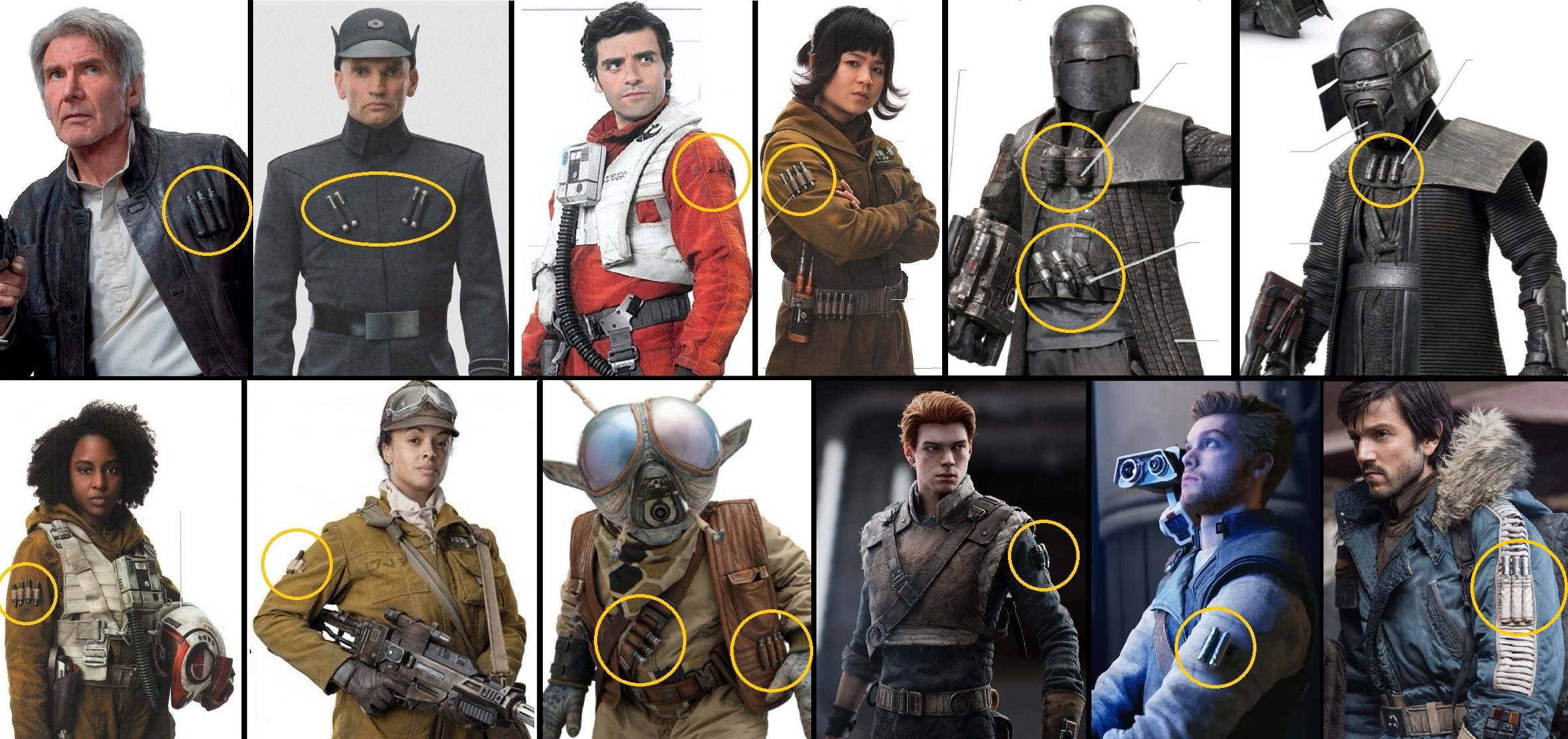
When it comes to soft kit, after perusing the various Visual Dictionaries one trend I noticed started appearing with the Sequels and subsequently latched onto by fan-makers is that of little discrete loops (instead of pockets) being used to hold various doodads on clothing – your code cylinders, ‘mini flares’, blaster ammo, etc.:

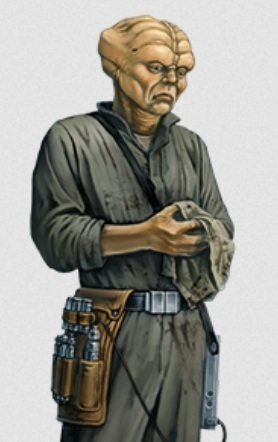
What I really want to know is why everyone in the new continuity seems to need so many of these little silver things anyway? In the OT, we’d see Rebel pilots and technicians with small ones on their belts, and big ones kept below the knee (Reb pilots and Bossk seemed to be just about it). But in the Disney era, they’re all over the place! In short, I think they’re a symptom of the new era costumings’ general reliance on overdesign, versus good design, which in the case of the Star Wars setting, usually boils down to Less is More. You don’t need to have every single visible surface sporting some sort of detail – it’s OKAY for costumes to have ‘blank space’! This is especially true in our crispy 4k UHD+ present, when it is all too easy for an overdesigned outfit to leave the viewers’ eyes overwhelmed.

Keep reading for more observed abberations!

Galactic Style Guide – the Post-Disney era (part 1)

Welcome back to another installment of the Galactic Style Guide, the series where we break down the ‘Star Wars aesthetic’ in order to help you create a more authentic ‘outer persona’!
And now, for something completely different. If you’ve been following this site, you may have noticed that the majority of my references come from live-action sources of the Lucas era. However, as we inexorably continue further from the boundary between that period and the current one, it becomes clear that not only did this modern era come with a new continuity, but a noticeable shift in visual aesthetics as well, and I want to explore elements of this shift as they relate to our pursuits here (recreating the Star Wars galaxy in ‘reenacting’ form!). In this post (and at least one more!), we’re looking specifically at some elements which I (coming from a relatively outside perspective) have identified as either clear deviations from what existed before, or which originate firmly in the post-Disney era. You’ll see what I mean.
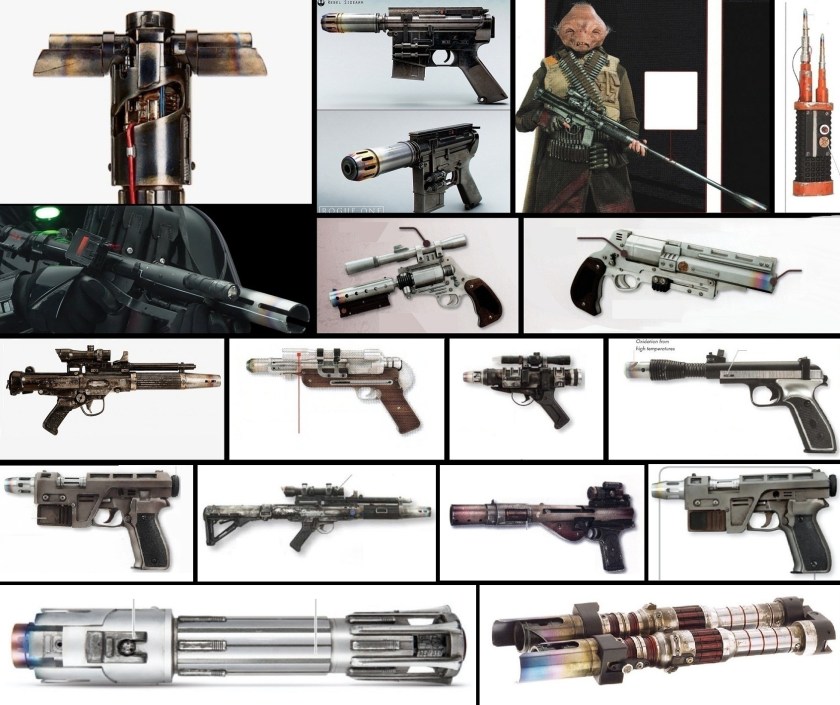
I’m not doing this ‘countdown’ style, but when it comes to something we got along without perfectly fine and was unequivocally not present in the pre-Disney days, #1 at the top of the list has to be the presence of the tempering rainbow on the muzzles, emitters, or tips of blasters, lightsabers, or tools:

I read somewhere that all the Remnant TKs in Mandalorian also feature this, but the scenes are so dark it’s hard to tell.
Keep reading for more observed abberations!

Galactic Style Guide – Mechanics and Technicians II

Welcome back to another installment of the Galactic Style Guide, the series where we break down the ‘Star Wars aesthetic’ in order to help you create a more authentic ‘outer persona’! In this entry, we’re continuing our examination of blue-collar mechanic or technician-type characters by seeing how examples from print sources compare to those from live-action. While most SW titles center around exciting or elite character classes (Jedi, Sith, politicians, mercenaries, troopers, etc), if there’s one subset of GFFA publication that fully embraces the more mundane characters like these, it’s role-playing games – especially the current license holder Fantasy Flight Games. FFG’s Age of Rebellion and Edge of the Empire games include sourcebooks for Technicians and Engineers to give us a number of examples to help fill out our sample. If they follow the trends we noted in our live-action examples last time, we should expect these RPG designs to dress in text-free, one-piece coveralls of a muted single color. Let’s see how they measure up!

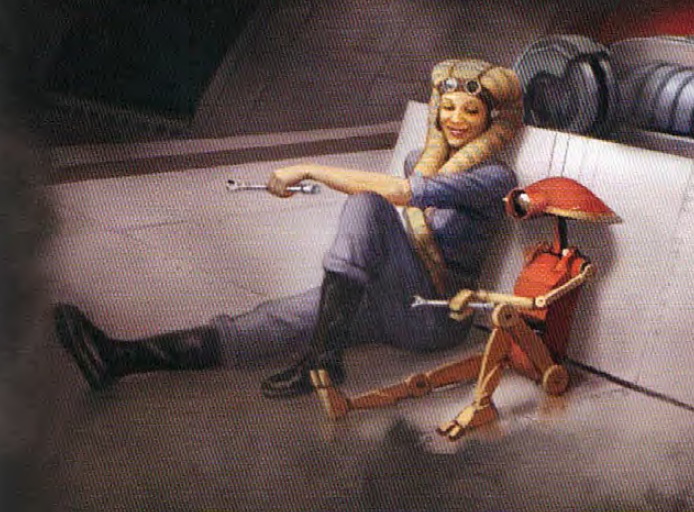
The vignette that opens Special Modifications (the Technician sourcebook) sees Twi’lek mechanic Chalan Talosi hanging with her pit droid, WAC-77. We can see she wears a gray or slate blue coverall with the sleeves and legs rolled up – normally if a tech is wearing tall boots, they’re visible because the pants are tucked/bloused, not rolled up, so this is certainly a choice…but hey, maybe it gives better ventilation or something? It could simply be a gathered waistband, but it does look like she’s wearing a belt. Also note the goggles (not currently in use), which are a prime accessory for any welding-related occupation!

keep reading for more examples, and analysis!

Galactic Style Guide – Mechanics and Technicians I

Welcome back to another installment of the Galactic Style Guide, the series where we break down the ‘Star Wars aesthetic’ in order to help you create a more authentic ‘outer persona’! By audience request, in this entry we’re trying something different! This time around, we’re not looking at a specific category of clothing or gear, but a specific “character class”! Just like with our regular Style Guide entries, the idea is still to analyze examples of a single theme to see what they share – and therefore see what the most common and representative elements are, hopefully to prevent the spread of reenactorisms! As always, there’s plenty of room in the Galactic Costumed-Arts Spectrum for fun and personal interpretations, but if (as I believe is entirely possible) the GFFA is to be seen as a legitimate setting for high-quality living history, it really pays to take a page from the reenacting playbook and try to represent the common galactic populace as faithfully as possible…which means sticking to the visual ‘rules’ of the setting. What are those rules for mechanic/technician characters? Let’s find out!

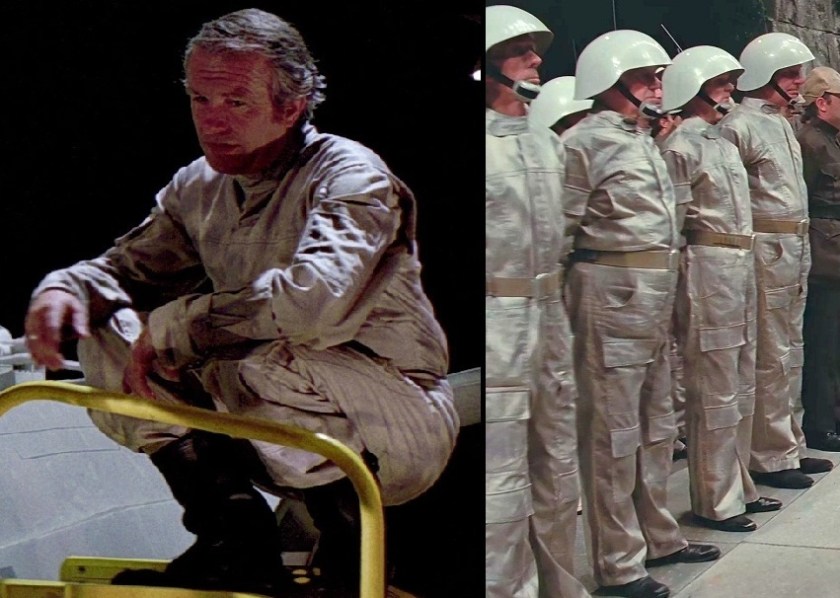
As the majority of SW titles continue to revolve around face characters from the more ‘exciting’ (i.e. typically martial) character classes (Jedi, fighter pilots, bounty hunters, troopers, etc.), we have a relatively small pool to draw from, at least when it comes to live-action. Our first look at this type of character comes from act three of SW’77, with our heroes’ arrival at the Rebel base on Yavin IV.

(We’ll see Rebel hangar crews continuing to dress like this before Endor as well)
Keep reading

Galactic Style Guide – Zippers

Welcome to another installment of our ‘Galactic Style Guide counterpoint’ subseries, where we help you strengthen your ‘Star Wars eye’ by highlighting and remedying common faux pas that can make your kit look Not Star Warsy. As part of the GSG, the ultimate goal is still to help you create a more accurate ‘outer persona’ – but we approach the goal from the opposite direction!
This month, we’re taking a look at one of the specific elements which George Lucas decided would have no place in his Star Wars aesthetic – zippers! (For our look at the other form of visible fastener Lucas specifically didn’t want to see, see this previous entry).

If I were to ask you when you first learned that Lucas didn’t want to see zippers and buttons onscreen, there’s a very good chance it was sometime after 2014 and the release of Brandon Alinger’s excellent SW Costumes – The Original Trilogy. However, the no-visible-fastener rule had already been in print for at least seven years: discussed in Rinzler’s The Making of Star Wars (2007), on page 125. What accounts for the delay before this fundamental GFFA costuming rule became truly widely known is, I think, social media; Facebook was still in its relative infancy in 2007. Since then however, the top-down Lucas directive has become frequently-cited in costuming circles, and yet cosplayers and Batuu-bounders still try to excuse visible zippers in their costumes; typically, this involves pointing to a screenshot of Luke Skywalker zipping up his flightsuit in Episode V:

Remember, per our sources, Lucas said he didn’t want to see such fasteners, not that they didn’t exist at all (many seem to have trouble with this distinction). Why Luke’s zipper (and presumably, those of all the other onscreen pilots and technicians) is perfectly permissible is simple: once worn, it isn’t visible – it’s hidden by a flap! (If you can think of a way to convey a pilot suiting up for battle by donning a one-piece flightsuit without showing them zipping it up, I am all ears!) However, there are a fair number of other characters whose costumes do include uncovered zippers: luckily for us, these tend to fall into one of two categories; unluckily for us, things seem to have taken a step backwards in the modern era…

keep reading for plenty of examples from the lucas and disney eras!

Diamonds in the Rough – Keith Olsen

Welcome back to our monthly spotlight series, where we discuss Star Wars costumers who have ‘gone the distance’ and put in the effort to create solid, in-universe outfits or personas. This month’s entry comes from Keith Olsen, who has done his research to put together an excellent impression of a generic ‘Pyke Syndicate’ soldier.

As you can see, this build was initially inspired by the appearance of the Pykes as seen on ‘The Book of Boba Fett‘ (though as I’ll discuss in a bit, an animated-style Pyke would look quite different!), and as such is based at around 5 ABY.

Keith did a lot of old-school costume replication legwork – unless something goes on display for an exhibit, this typically involves very carefully scrutinizing screenshots – to determine the materials and types of clothing that could be bought off the shelf for this outfit.
Let’s examine the elements one by one!

keep reading for the full breakdown and details