Galactic Style Guide – Duffel Bags

Welcome back to another installment of the Galactic Style Guide, the series where we break down the ‘Star Wars aesthetic’ in order to help you create a more authentic ‘outer persona’! While the Galactic Starcruiser may no longer be taking on passengers and has instead been gathering dust for the last year, there’s never a bad time to do a little research and try to improve your ‘Star Wars eye’. Following up on our last entry, this month we’re looking at a specific type of soft, in-universe luggage, duffel bags!
Just a quick FYI/programming note before we begin: this entry is fairly quick and dirty, but there’s a good reason: my wife and I bought a house last month, and real life takes priority over hobbies, naturally! We’ve made lots of progress, but we’re still knee-deep in renovations and expect to be well into the New Year, but hopefully things go smoothly and I can get back to more regular and in-depth posting before too long. With that said, let’s get started!

Dark Horse’s Republic #80 (2005) with art by Doug Wheatley features padawan Noirah Na in the aftermath of Order 66, lugging around a large duffel bag as a backpack. Plus, for those following along after our last entry, a suitcase! What d’you know: it checks all of our boxes (interesting shape, logo and text free, muted color, and pre-Rollaboard design)!

keep reading for more examples!

Galactic Style Guide – Luggage

Welcome back to another installment of the Galactic Style Guide, the series where we break down the ‘Star Wars aesthetic’ in order to help you create a more authentic ‘outer persona’! While the Galactic Starcruiser may no longer be taking on passengers and has instead been gathering dust for the last year, I’m long overdue to examine examples of in-universe LUGGAGE! Back in its heyday, many Starcruiser passengers considered a themed suitcase essential for voyage immersion, but most of the ones I saw went pretty far off the mark from what we actually see onscreen…but there’s never a bad time to do a little research and try to improve your authentic ‘Star Wars eye’!
(But first, a quick FYI/programming note before we begin: this entry and next month’s are fairly quick and dirty, but there’s a good reason: my wife and I just bought a house, and naturally, real life takes priority over hobbies! I fully expect to be knee-deep in renovations well into the New Year, but hopefully things go smoothly and I can get back to more regular and in-depth posting before too long. With that said, let’s get started!

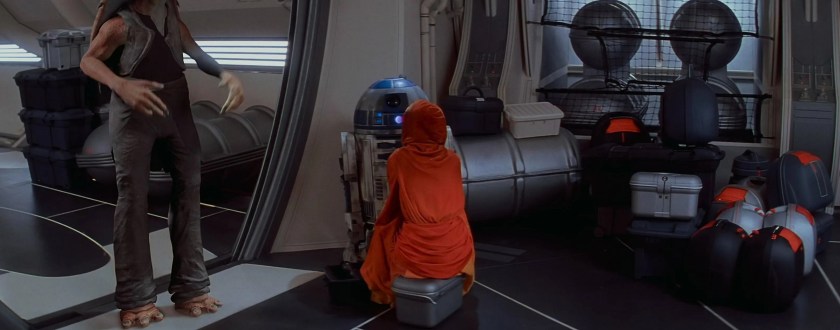
There aren’t many (if any?) examples of what we would recognize as luggage in the Original Trilogy. Luke has his blue backpack and a couple of trunks on Dagobah, but that’s about it – most everyone travels extremely light otherwise! It’s not until Episode I that we get a good look inside a ship’s cargo hold to see what traveling gear looks like in-universe.

The scene in which Padme cleans R2-D2 gives us our best look:

What does in-universe luggage have in common?

Galactic Style Guide – Binoculars

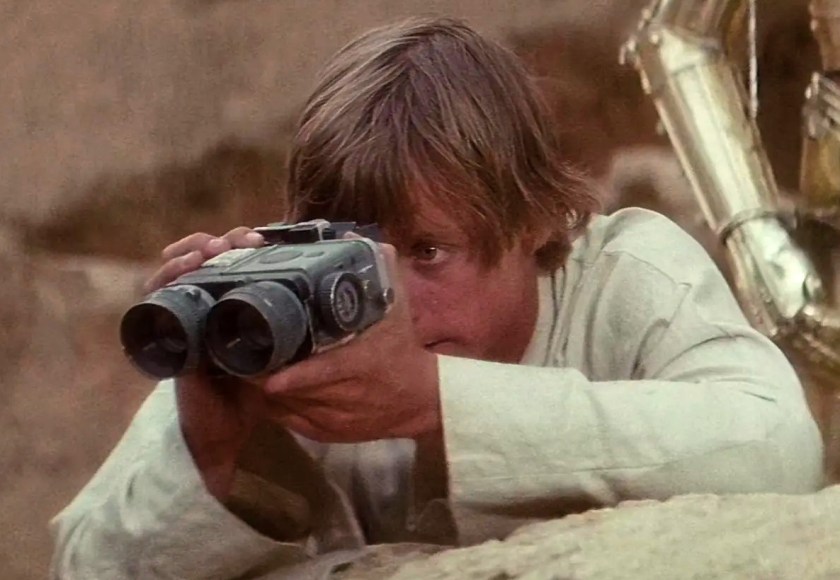
Welcome back to another installment of the Galactic Style Guide, the series where we break down the ‘Star Wars aesthetic’ in order to help you create a more authentic ‘outer persona’! It’s been a while since we’ve looked at any in-universe hardware, but in this installment, we’re digging deep into a specific type of gear used in the field across the galaxy: space binoculars!
A good set of binocs (whether macro- or electro-) are a great accessory to help add depth to an appropriate character impression, filling in for the collapsible brass telescope or ‘field glasses’ frequently carried by characters in various SW-influencing historical genres – whether that be swashbuckling pirates, Old West cowboys, or World War soldiers.
Let’s get started with our ur-example: the Lydree MB450 macrobinoculars carried by Luke back in SW’77:

keep reading to see TONS more examples!

HOW TO: Hide Your Buttons #2

In a previous post, I concluded by saying “when the flavor of the world is ‘no visible fasteners’, then cover up your darn buttons.” However, for some folks that may be easier said than done. If you like the idea of having an outfit be sans visible-fasteners but find the idea of how to actually make it happen a little overwhelming, then this post is for you!
Adding the ability to hide fasteners to your toolbox is a major level-up, especially for those outfitting an Original Character. Off-the-rack items can be great for dressing a ton of far-background characters, or creating a suggestive ‘everyday bounding’ look, but if you’re after a 100%-in-universe-legit look, these kinds of pieces can only take you so far. I hope you’ll note how our main characters almost always wear custom-designed garments, which may still be reminiscent or incorporate elements of familiar/off-the rack pieces, but usually tweaked just a little to give it that timeless GFFA flavor.
In this post, we’re going to show you a second method to create a button-free appearance on an upperbody garment by ‘genderswapping’ our garment, a version of which I’ve used before on this raw silk shirt retool project. How do you swap a piece of clothing’s gender, you ask? Keep reading to find out!

level up your costuming game with this handy skill

HOW TO: Hide Your Buttons #1

In one of my previous entries, I concluded by saying “when the flavor of the world is ‘no visible fasteners’, then cover up your darn buttons.” However, for some folks that may be easier said than done; if you like the idea of having an outfit be sans visible-fasteners but find the idea of how to actually make it happen a little overwhelming, then the next couple posts are for you!
Adding the ability to hide zippers or buttons to your toolbox is a major level-up, especially for those outfitting an Original Character. Off-the-rack items can be great for dressing a ton of far-background characters, or creating a suggestive ‘everyday bounding’ look, but if you’re after a 100%-in-universe-legit look, off-the-rack can only take you so far. I hope you’ll note how our main characters almost always wear custom-designed garments, which may still be reminiscent or incorporate elements of familiar/off-the rack pieces, but usually tweaked just a little to give it that timeless GFFA flavor.
In this post, we’re going to show you one method to create a button-free appearance on an upperbody garment by sewing a very basic cover panel over our buttonholes. Then, in part two, we’ll learn to hide buttons by ‘genderswapping’ our garment. What’s that all about, you ask? You’ll just have to wait and see, but for now let’s get started!

level up your sewing game with this handy skill

HOW TO: Collar conversion

Even if you’re fairly keyed into the intricacies of clothing in the Galaxy Far, Far Away, there’s one easily-overlooked element that plays a major role in helping separate our own modern fashion from that of the Star Wars galaxy: collars!

When he first began designing his world, we read how Lucas “made pronouncements of a general nature” and that he wanted “the rebels, the goodies, to look like something out of a Western” (Rinzler: The Making of Star Wars, p.130; quoted slightly modified in Alinger’s SWCOT, p15). This is an important distinction, as it was one of the broad styles John Mollo used to sort his character designs : “peasant costumes; Western/U.S. cavalry/motorcycle looks; Nazi-style uniforms/armor/cloaks; space technology-type outfits”, etc. (Alinger, p16). More on these categories later!

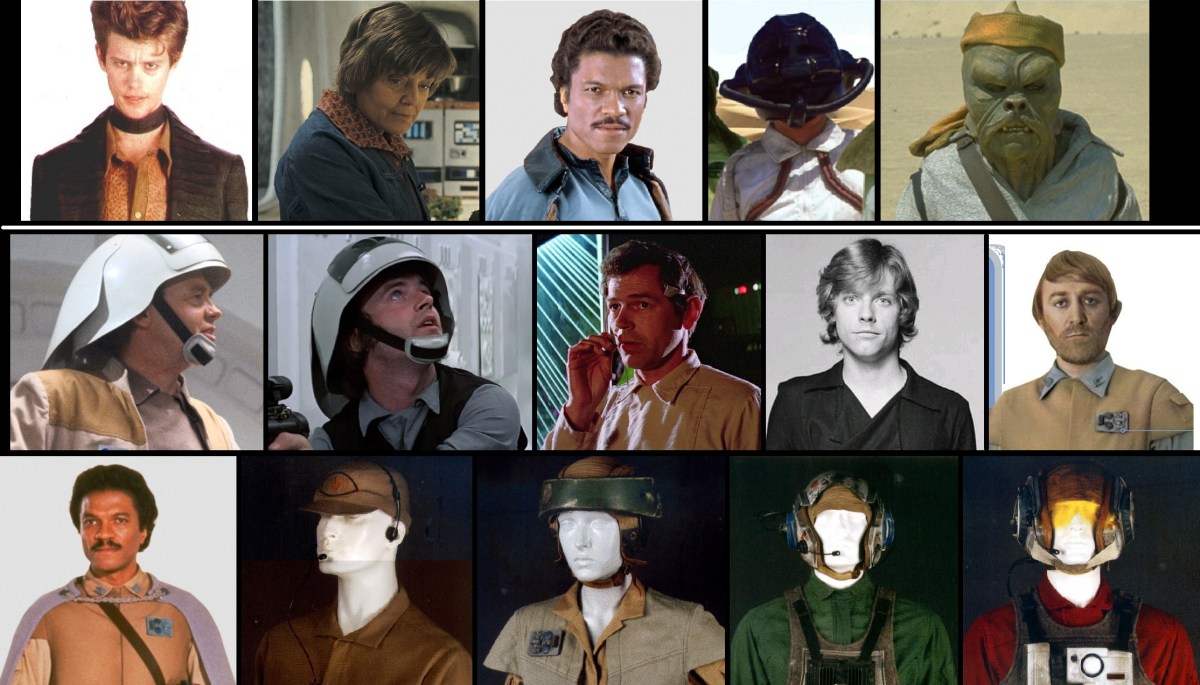
As something so mundane as the collar on a shirt or jacket, it’s likely you may not have noticed the fact that fairly few characters in Star Wars actually wear shirts with modern-style ‘fall collars’. Of course, we do have a few examples, but by-and-large, most characters who wear collared garments wear ones with some form of ‘stand collar’, and quite often these are full-on Mandarin collars.
After thumbing through my reference library, if I had to spitball some numbers, I would say that well over 50% incorporate some form of upright collar, perhaps 20% are collarless, and less than 5% are fall collars – really, the characters above are pretty much all I came up with.

I hope you’ll note that of our samples, the majority of them are Rebel Alliance ranks or ‘character classes’ (officer, fighter pilot, fleet trooper, communications tech, etc.)! Ergo, judging by our samples, the fall collar is generally a good way to give ones’ impression a touch of Rebel Alliance-style militarism, but if you’re portraying an unaffiliated galactic citizen, something that says ‘slightly exotic’ like some flavor of stand collar may be the way to go.
Luckily, most modern shirts with two-piece fall collars are readily adaptable to a more upright style with one easy tweak!

learn an easy minimal-sewing hack to upgrade your outfit!

Galactic Style Guide – Mechanics and Technicians II

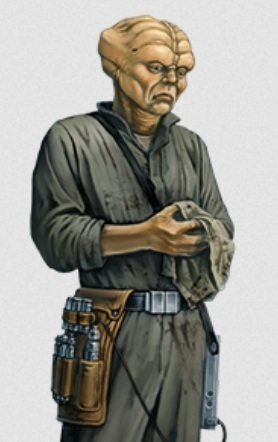
Welcome back to another installment of the Galactic Style Guide, the series where we break down the ‘Star Wars aesthetic’ in order to help you create a more authentic ‘outer persona’! In this entry, we’re continuing our examination of blue-collar mechanic or technician-type characters by seeing how examples from print sources compare to those from live-action. While most SW titles center around exciting or elite character classes (Jedi, Sith, politicians, mercenaries, troopers, etc), if there’s one subset of GFFA publication that fully embraces the more mundane characters like these, it’s role-playing games – especially the current license holder Fantasy Flight Games. FFG’s Age of Rebellion and Edge of the Empire games include sourcebooks for Technicians and Engineers to give us a number of examples to help fill out our sample. If they follow the trends we noted in our live-action examples last time, we should expect these RPG designs to dress in text-free, one-piece coveralls of a muted single color. Let’s see how they measure up!

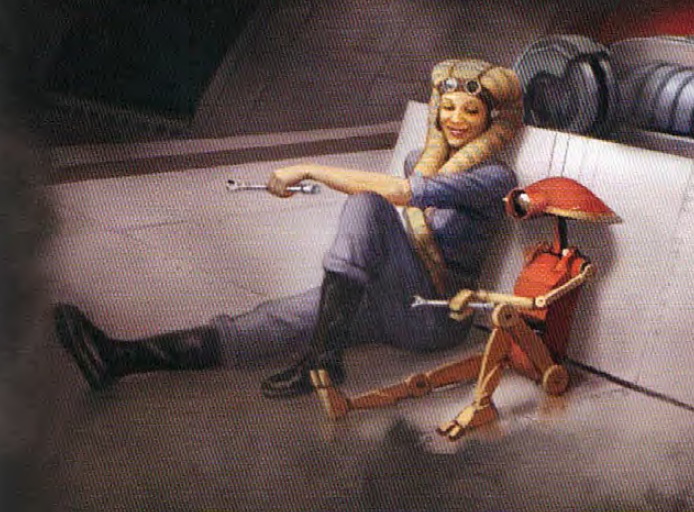
The vignette that opens Special Modifications (the Technician sourcebook) sees Twi’lek mechanic Chalan Talosi hanging with her pit droid, WAC-77. We can see she wears a gray or slate blue coverall with the sleeves and legs rolled up – normally if a tech is wearing tall boots, they’re visible because the pants are tucked/bloused, not rolled up, so this is certainly a choice…but hey, maybe it gives better ventilation or something? It could simply be a gathered waistband, but it does look like she’s wearing a belt. Also note the goggles (not currently in use), which are a prime accessory for any welding-related occupation!

keep reading for more examples, and analysis!

Galactic Style Guide – Mechanics and Technicians I

Welcome back to another installment of the Galactic Style Guide, the series where we break down the ‘Star Wars aesthetic’ in order to help you create a more authentic ‘outer persona’! By audience request, in this entry we’re trying something different! This time around, we’re not looking at a specific category of clothing or gear, but a specific “character class”! Just like with our regular Style Guide entries, the idea is still to analyze examples of a single theme to see what they share – and therefore see what the most common and representative elements are, hopefully to prevent the spread of reenactorisms! As always, there’s plenty of room in the Galactic Costumed-Arts Spectrum for fun and personal interpretations, but if (as I believe is entirely possible) the GFFA is to be seen as a legitimate setting for high-quality living history, it really pays to take a page from the reenacting playbook and try to represent the common galactic populace as faithfully as possible…which means sticking to the visual ‘rules’ of the setting. What are those rules for mechanic/technician characters? Let’s find out!

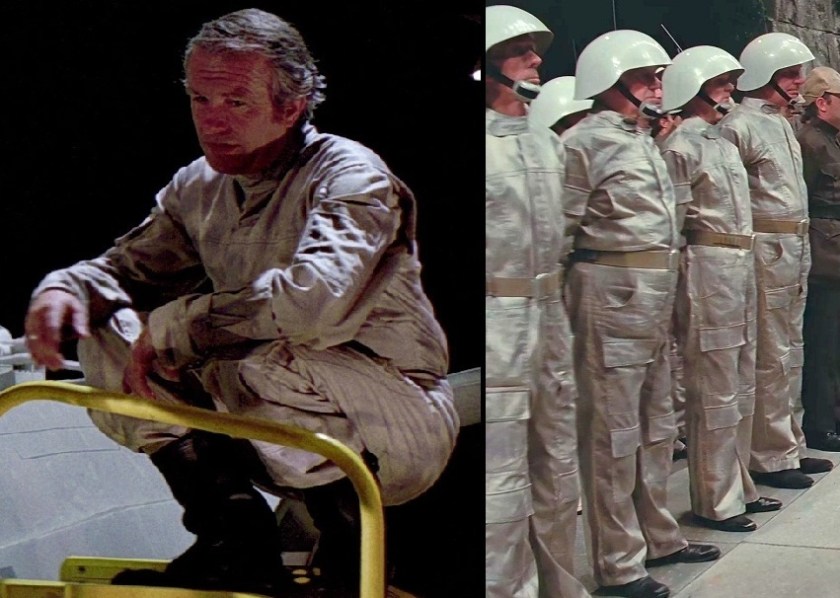
As the majority of SW titles continue to revolve around face characters from the more ‘exciting’ (i.e. typically martial) character classes (Jedi, fighter pilots, bounty hunters, troopers, etc.), we have a relatively small pool to draw from, at least when it comes to live-action. Our first look at this type of character comes from act three of SW’77, with our heroes’ arrival at the Rebel base on Yavin IV.

(We’ll see Rebel hangar crews continuing to dress like this before Endor as well)
Keep reading

Building the Alliance pilot – Part 2: Soft Kit

In our last post, I laid out my plan to push the boundaries of Original Trilogy pilot style in a simple, believable way: take the iconic ANH look and swap the orange flightsuit for a tan one. It may be a minor change, but it’s also an effective one – let’s get started and break it down layer by layer!

The flightsuit in question is my old tan standby from Wampawear – originally purchased for a hypothetical New Republic Archeological Corps shovel bum impression. That may have fizzled out, but the elements I initially gathered for it are as solid as ever. All the weathering you see is 100% honest and natural: every time over the last 4 or 5 years when I’ve had to work on my car (oil changes, brakes, pushing out dents, lug stud swaps, etc.) I’ve worn this flightsuit, and in the process have built up a really impressive pattern of real wear in authentic places. In person it’s absolutely filthy looking, but on camera it just reads as extra well-used. I hesitate to wash it because I’m so pleased with the patina but I’m also aware that doing so would probably be good for the garment. If I do, it will likely just be handwashed with little (if any) detergent.
(Boots are Finnish military jackboots I snagged from Varusteleka years ago.)

From the beginning, the ejection harness was one component I really wanted to do in as authentic or realistic a manner as possible. While it’s an obvious stylistic homage to the parachute harnesses of WW2, it doesn’t quite make much sense—there’s just not that much to it, comparably. Apparently, Rebel Legion folks just safety pin or Velcro the naked top end of their harness webbing to the flak vest or flight suit, which I find completely un-immersive! I wanted this to really feel like a piece of in-universe military gear – one I wouldn’t be afraid to be seen suiting up in – so I came up with a simple over-the-shoulder design that would still remain unseen under the shoulders of the flak vest.

Continue getting dressed, pilot-style!

Galactic Style Guide – Capes and Cloaks II

Happy Orthodox Star Wars Day!, and welcome back to another installment of the Galactic Style Guide – the series where we break down the ‘Star Wars aesthetic’ in order to help you create a more authentic ‘outer persona’! In this entry, we’re continuing our exploration of capes and cloaks by looking at those seen in Lucas’ Prequel Trilogy. Star Wars’ costume designs have always been a unique mixture of Spaghetti Western, 20th century military, Eastern/’exotic’, and medieval styles, and the use of capes/cloaks are largely responsible for the latter. Let’s get back to it, and see what we can learn!

Seeing how the story revolves around a Republic becoming a dictatorship, it’s no surprise that one of our main Senator characters (Bail Organa) in Episode III is often seen wearing an asymmetrical toga-like cloak, as does his ship’s captain (Raymus Antilles). Here’s another set of cloaks I would love to get my hands on in the Lucas Archives and examine just how they are constructed (I have a suspicion that they’re simpler than they appear, and are likely just a multi-yard rectangle with stitched pleats and an offset neck hole). Note the leather(?) piping along the leading edge and around the neck hole, which is a low-impact way to add a bit of detail and structure without being distracting.

As we’ll soon see, while the folks wearing capes and cloaks in the Classic Trilogy were often of questionable repute, those in the Prequels are commonly upstrata, and often members of the Republic government.

our breakdown of Prequel Trilogy capes and cloaks continues