Galactic Style Guide – Comlinks

Welcome back to another installment of the Galactic Style Guide, where we break down the ‘Star Wars aesthetic’ in order to help you create a more authentic ‘outer persona’! This month, we’re taking a break from ‘soft kit’ to look at a piece of ‘hard kit’ that we would expect to see in the pocket, or on the wrist or belt of most galactic citizens in some form or another: we’re talking COMLINKS!
While comlinks are—like cellular phones—used to send and receive audio signals at long distances, unlike their Earth analogues, comlinks show a remarkable variety in their designs. Ignoring backpack-based comlinks, we’ll break our sample down into handheld and wrist-mounted comlinks.

The first comlink seen onscreen is the C1 model, made by SoroSuub and carried by Imperial stormtroopers (potentially this might also be what Leia uses at the bunker on Endor). If you’re portraying a character in a position to scavenge some Imperial gear, the C1 might be for you! For extra functionality, you can buy a C1-styled Bluetooth-enabled handset at the Galaxy’s Edge park ($60).


As we’ll see next, the propmakers of Episode I made a wide array of prototypes for the Jedi to carry before settling on kitbashing a womens’ razor for the Hush-98 (also made by SoroSuub):

Continue reading “Galactic Style Guide – Comlinks”

How long is a Podrace?

Before I went on Appalachian Trail thru-hiking blog-hiatus, some dedicated Star Wars ‘reenactors’ and I were kicking around ideas for some sort of asynchronous long-distance trek or ‘ruck’ challenge we might organize in the future. We started by brainstorming any known distances from the Saga materials, and one of the first things that came up was the Mos Espa Arena podrace circuit. We figured if the length of the racetrack could be determined, it might serve as a nice basis for some sort of virtual relay race. The question was…how long was it?

As has become disppointingly apparent in my attempts to apply the rigors of realism to the galactic setting, because 90% of stories told under the Star Wars banner are purely plot-driven, the mundane details of life are too often nonexistent. Or if they are included, it is done in the most minutiae-focused manner and overlooks the more relatable pieces of information. Or, to paraphrase Maw Installation Redditor FlavivsAetivs, “plot and visual aesthetics—not technical specifications or internal consistency—are the primary focus of Star Wars“.

Case in point: the Boonta Eve Classic podrace! I could easily tell you the names of all the formations or obstacles on the race course, the names, species, and homeworlds of each racer, which racers did not finish the race, which racers completed the course, how fast they did so, and their average speed. But I have thus far been unable to find any mention of the distance the race covered. Unfortunately for us, the Boonta is not like the Indy 500 (the distance is right there in the name). However, a little math does allow us to calculate the length of the race course!

Continue reading “How long is a Podrace?”

Galactic Style Guide – Shirts III

Welcome back to the Galactic Style Guide, the monthly series where we break down the ‘Star Wars aesthetic’ in order to help you create a more accurate ‘outer persona’! For this installment, we’re wrapping up a few upper-body stragglers which are both easy ways to add a little unconventional GFFA style to your own wardrobe.

Center closure: Dunlan, Astor (The Ahakista Gambit), Teesoo and Saya Ksi (Bounty Hunter’s Code); Biggs Darklighter (Dewback Attack-Hugh Fleming (SW Insider #35), Tag Rogaren (From the Ruins of Alderaan), colonist (FFG Far Horizons), Soontir Fel (Rogue Squadron #25)

Note that examples 1&2 both come from the planet Ahakista, and almost half of these use a right-over-left ‘womens’ closure!
For the reenactor with some basic sewing know-how, this is a very easy style to replicate. Because of Western fashion’s silly gender-specific closure rules, if you buy a button-down shirt of the opposite gender, you can flip-flop the front sides and get a closure without buttonholes on top. Then just add a strip of Velcro down both fronts. If you want Fel’s Mandarin collar style, it’s likewise easy to remove the fall from a shirt’s collar to leave the stand (this will still have a buttonhole at the top, however; you may be able to cannibalize the removed material to make a new, buttonhole-less stand).

you may already have our next example in your closet!

Guest Post: Is a blaster right for you?

[This submitted post comes from ‘Kantis Nolef’ of the SWLH facebook community.]

“Hokey religions and ancient weapons are no match for a good blaster at your side, kid.” – Han Solo, Episode IV.

When most people start thinking of props and accessories, they tend to think of blasters first. Blasters in the Star Wars universe seem to be as common cell phones in ours, and with myriad shapes and sizes, there’s something for every species. But does your character need one? Sure, if you’re in the Outer Rim on an inhospitable planet, it’s a matter of survival…but what if you’re not? Would it be necessary for a musician on Corellia to have a rifle slung across their back? Does a cook on Sullust need a pair of Westars?

Whichever career path you choose, I can’t stop you from arming yourself. That being said, I hope I can help you get the best blaster for your persona.

Continue reading “Guest Post: Is a blaster right for you?”

Galactic Style Guide – Aurebesh II

Welcome back to another installment of the Galactic Style Guide (where we break down the ‘Star Wars aesthetic’ in order to help you create a more authentic ‘outer persona’) and the end of Aurebesh Month! In last week’s installment we showed how before the Disney buyout, Aurebesh words on clothing were incredibly rare. This week, we’re taking a look at some places where using in-universe lettering IS appropriate!:

Tattoos or scarification: Force Hounds (26,000 BBY), Morlish Veed (Legacy), Kaddak (Cry of Shadows), Enviro-suit (FFG), Sketch, Kix (The Clone Wars)

Note that while there are plenty of tattoos in-universe, these were the Only examples of letters-as-body-art I could find in the rather complete listing of Aurebesh appearances.

Continue reading “Galactic Style Guide – Aurebesh II”

Galactic Style Guide – Aurebesh I

Welcome back to Aurebesh Month and our first of two installments of the Galactic Style Guide (where we break down the ‘Star Wars aesthetic’ in order to help you create a more authentic ‘outer persona’) taking a look at something that’s become really popular among the Batuu-bounding community in recent years: using in-universe Galactic Basic lettering—the Aurebesh—on kit items.

I see folks incorporate Aurebesh words into their clothing so often, it inspired me to do some digging and see how many examples I could find from the various visual media sources.
The first instances I found are all a certain segment of the galactic populace that I don’t think I’ve ever seen re-created before, but which would make for an excellent living history impression:

PRISONERS: from Agent of the Empire—Hard Targets and Empire: The Wrong Side of the War

I was a little disappointed that these guys are just wearing yellow/orange jumpsuits, and that there wasn’t a little more consistency between them and the more interesting prisoner uniform of the Imperial Remnant in 12 ABY (Jedi Outcast):

And speaking of Jedi Outcast

more examples of aurebesh on clothing after the jump

We need to talk about Aurebesh (part 2)

Welcome back to Aurebesh Month! You can read last week’s entry HERE! When the subject of backwards Aurebesh comes up, oftentimes people like to point to LucasArts games as a source of the flipping confusion. I will admit that there have been many times in LucasArts games where Aurebesh (or another in-universe script) has been seen in a horizontally-flipped orientation. However, this is different from the ‘flipped capitals’ reenactorism…because in these cases the letters aren’t flipped… the entire word is, and there’s an easy explanation.

Mysteries of the Sith (1998), level 9
Continue reading “We need to talk about Aurebesh (part 2)”

We need to talk about Aurebesh (part 1)

In a post earlier this year, I brought up the idea of ‘reenactorisms’—the spread and perpetuation of an inaccuracy being unknowingly (or knowingly) passed around because somebody didn’t do their research. After that initial post, I realized one of the biggest reenactorisms in Star Wars costuming was my most infuriating pet peeve: the phenomenon of backwards Aurebesh letters. Having spent probably-too-much-time thinking about the issue, I thought I’d try something new and devote an entire month to the topic of writing in the Galaxy Far, Far Away. That’s right, folks: welcome to Aurebesh Month!

A quick search of Etsy for the term will easily reveal the problem we are facing: an annoying lack of consistency in how the letters are to be written. A number of these items are geared towards the Batuu-bounding crowd—patches, ID tags, Aurebesh ‘translators’, luggage tags, etc.—and I suspect it is the popularity of the Disney parks (coupled with the recent rise of Cricut-type machines that make cranking out crispy stickers so easy) that has caused the proliferation.

At the heart of the issue is the erroneous idea that Aurebesh has capital letters at all, let alone that it indicates them by horizontally flipping the letters. None of the Aurebesh texts seen at the Galaxy’s Edge park—the writing system’s most high-profile manifestation—includes these backwards capitals, so where did this idea originate???

Continue reading “We need to talk about Aurebesh (part 1)”

Galactic Style Guide – Revealing Outfits

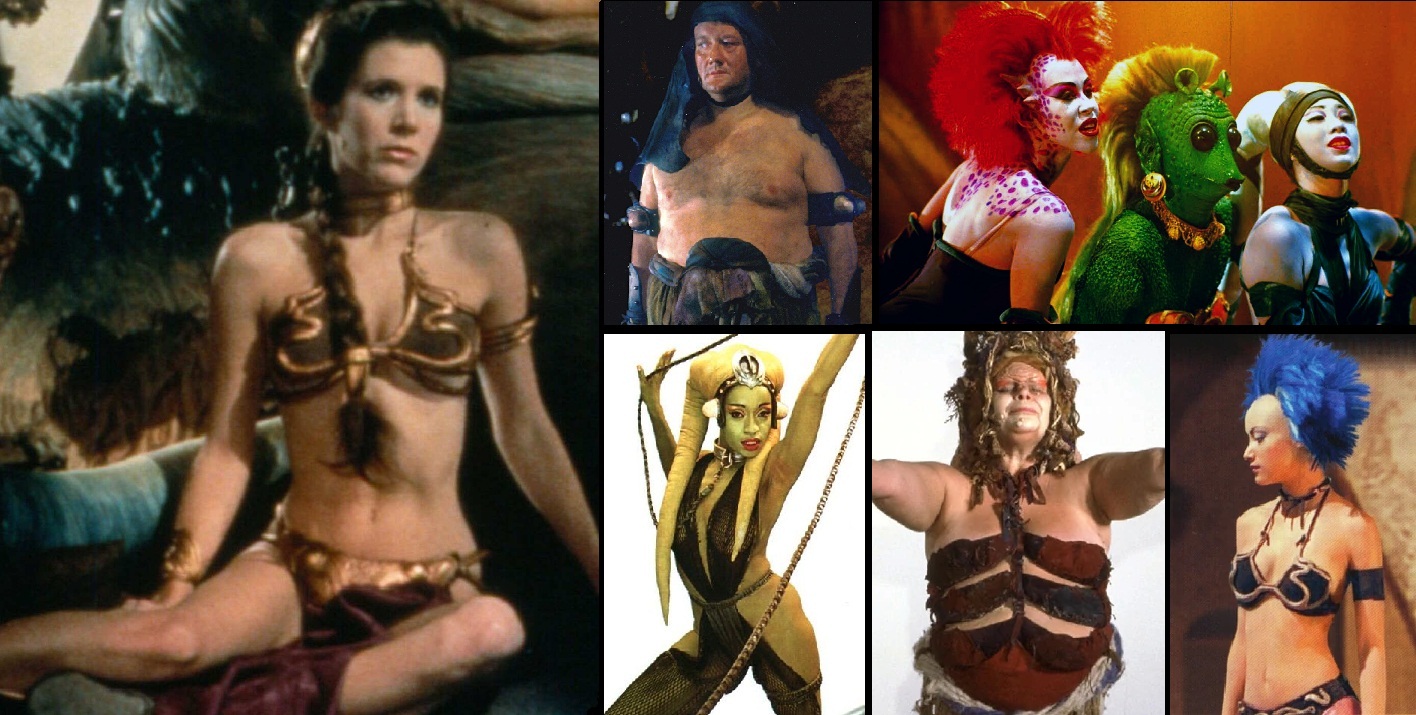
Welcome back to another installment of the Galactic Style Guide, the series where we break down the ‘Star Wars aesthetic’ in order to help You create a more authentic ‘outer persona’! While this series is normally geared at pointing out style elements that are widely and commonly represented in the galaxy, this month we’re taking a look at a ‘style’ which is comparatively un-common. Or perhaps I should say, while we have many examples of revealing outfits, after examining the complete sample, we will see that this style should really only be worn by a limited set of character types. (For our purposes here, I’m considering an outfit ‘revealing’ if it exposes some combination of arms, legs, or torso).

scanties-Jabbas
Jabba’s scanty retinue: Leia, Malakili, Rystall/Greeata/Lyn Me;
Oola, Yarna d’al’ Gargan, Diva Shaliqua.
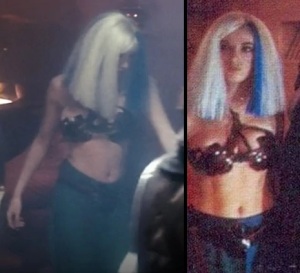
The character Jess—said to be a popular musician—while not a slave or servant, nonetheless dresses revealingly while at Jabba’s court.
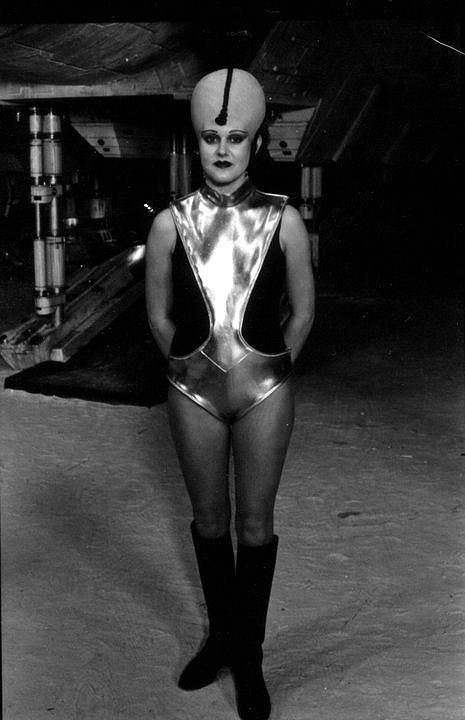
far background Mos Eisley cantina patron Leesub Sirln – wearing a surprisingly futuristic-looking and revealing…leotard? (with riding boots!)

The Expanded Universe includes a number of examples as well:

keep reading

The great Twi’lek mix-up

I’ve explored the idea of Reenactorisms—the acceptance and perpetuation of an innaccuracy—several times before, but it is worth pointing out that these are not limited to fan creations: official resources can still fall into the pit.
Work on this month’s Style Guide post got me thinking about a key confusion in the depiction of the Twi’lek species: males have ears, but what do females have? The past 20+ years of visual sources suggest they all have cones where their ears should be, but prior to the release of The Phantom Menace in 1999, Twi’lek females most definitely had ears! We can trace the source of this confusing inconsistency by noting the examples of ‘cone’ or ‘ear’ as they appeared in order of release.

1983: Oola—the first depiction of a female Twi’lek—is green. The cones on Oola’s headdress are clearly white, and are also clearly part of the headdress, not protruding from within it.

January 1995: art development/pre-production begins on Episode I

Continue reading “The great Twi’lek mix-up”