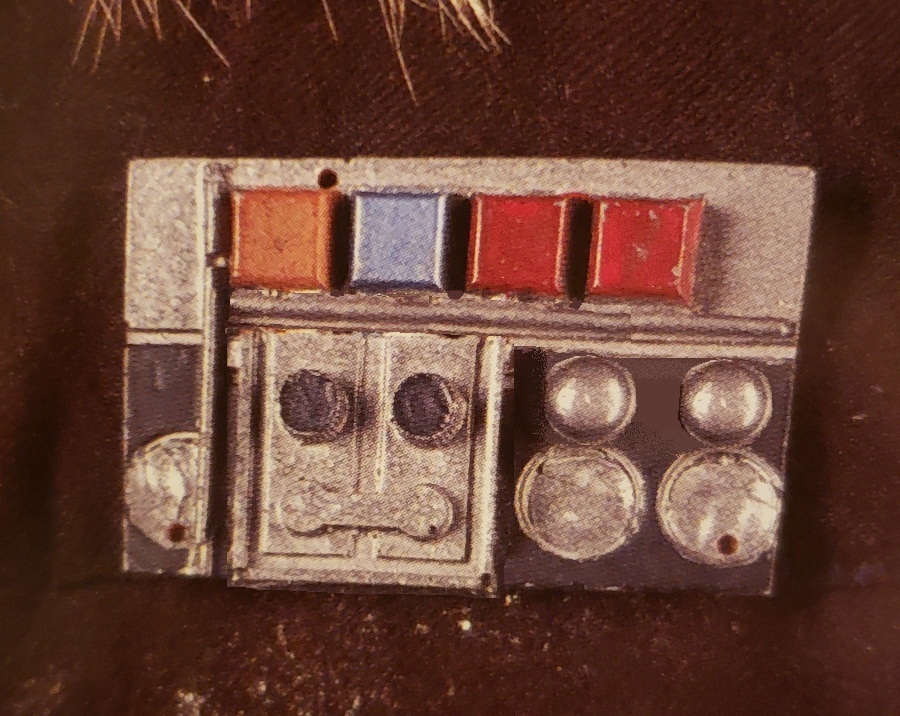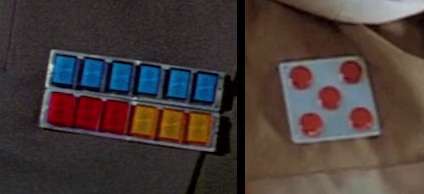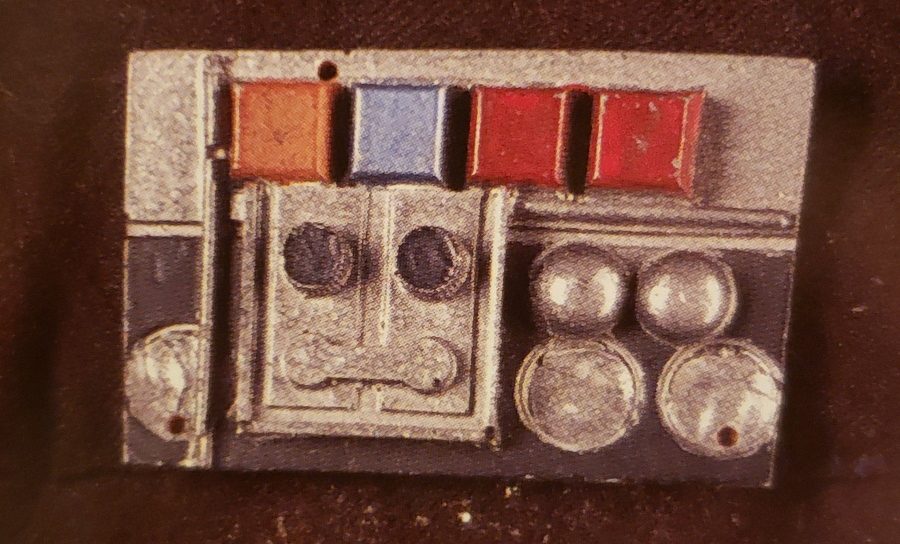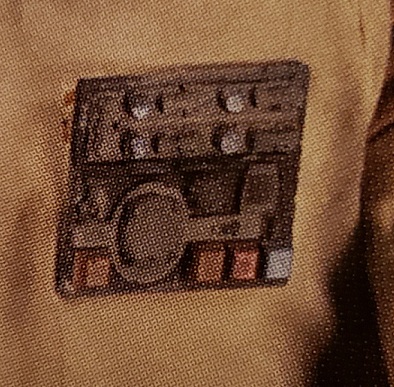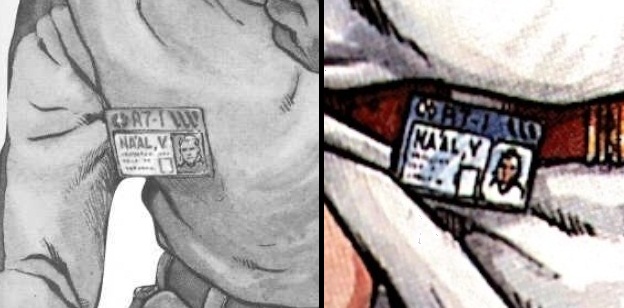
Welcome back to another installment of the Galactic Style Guide, the monthly series where we break down the ‘Star Wars aesthetic’ in order to help you create a more authentic ‘outer persona’! In this entry, we’re taking a look at examples of a rarely-seen category of ‘pocket trash’ which can really help to ground an impression in the Galaxy Far Far Away – we’re talking ID cards! To show the evolution over time, I’ve chosen to present these in real-world chronological order, starting with examples from the West End Games era.
MerenData IPI-1000 (Galladinium’s Fantastic Technology sourcebook, 1995)New Republic historian Voren Na’al wears his ID clipped to his tunic and on his belt (SWRPG 2nd Edition Revised & Expanded, 1996)many more examples within!
Welcome to another installment of our ‘Galactic Style Guide counterpoint’ subseries, where we help you strengthen your ‘Star Wars eye’ by highlighting and remedying common costuming faux pas that can make an outfit look NotStar Warsy. As part of the GSG, the ultimate goal is still to help you create a more accurate ‘outer persona’ – but we approach the goal from the opposite direction!
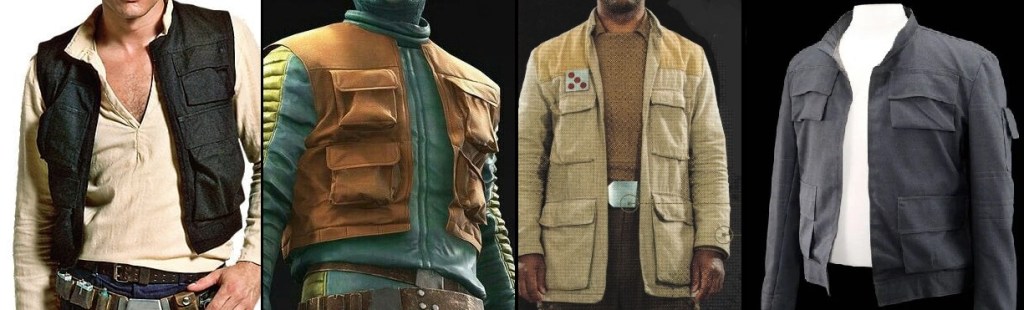
Our last two Style Guide entries on jackets concluded with a bit of homework. I wanted us to look at our source examples and pay special attention to the design elements of each jacket, particularly any areas that used different-colored paneling, the placement of any added details, and the overall degree of symmetry. All of these contribute to this month’s theme of “Design”. As we’ve seen in previous posts, there are several aspects which are commonly seen in GFFA upper-body outerwear and—taken as a whole—contribute to ‘the Star Wars ‘look”’. In addition to a muted color palette, these include:
-plenty of pockets (typically with flaps)striped, ribbed, or pleated sections down sleevesmany more examples within!
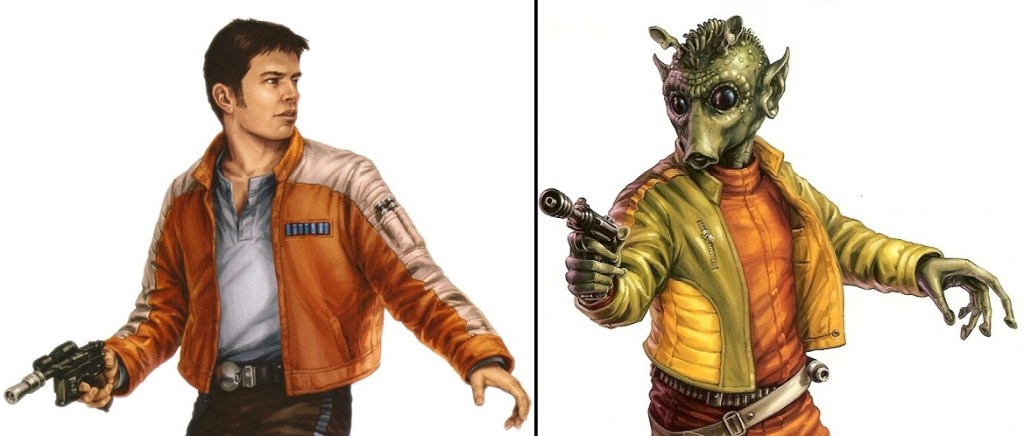
Welcome back to another installment of the Galactic Style Guide, the monthly series where we break down the ‘Star Wars aesthetic’ to help you create a more authentic ‘outer persona’! As I promised last month, this entry is devoted to examples of in-universe jackets drawn from the various sources of the Expanded Universe and ancillary materials. Let’s get started with the two jacket-wearers seen in the New Essential Guide to Alien Species:
Welcome to another installment of our ‘Galactic Style Guide counterpoint’ subseries, where we help you strengthen your ‘Star Wars eye’ by highlighting and addressing commonly-made costuming faux pas. As part of the GSG, the ultimate goal is still to help you create a more accurate ‘outer persona’ – but we approach the goal from the opposite direction!
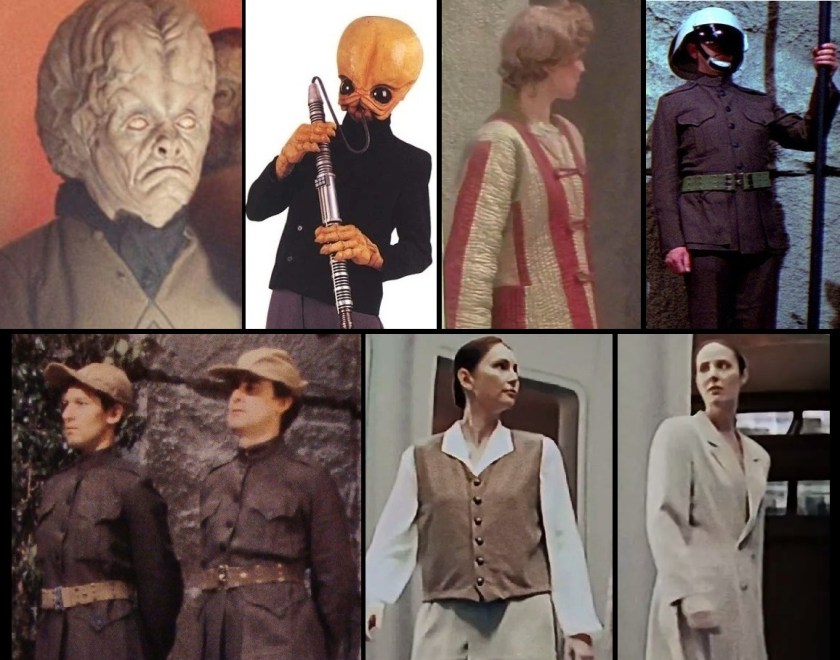
Since the earliest designs of Star Wars ’77, one of the main signifiers of GFFA fashion is the absence of visible fasteners—as chief costume designer John Mollo said, “George didn’t want any fastenings to show, he didn’t want to see buttons, he didn’t want to see zips, so we used stuff like Velcro, and things were just wrapped over and tied with a belt…” – The Making of Star Wars (J.W. Rinzler), p. 125. Since this is one of the chief ‘rules’ of Star Wars fashion and comes straight from the top, something like 98% of the outfits seen onscreen abide by this rule. When visible fastenings do show up on screen, eagle-eyed costume-minded folks (or those who really want to cut corners) tend to make a big deal of it….although they really shouldn’t.
buttons onscreen in OT and PT: Pons Limbic, Figrin D’an (and the rest of the Modal Nodes), Rebel honor guard, Yavin ceremony backgrounders, Tian Chyler, Jango Fett, Elan Sleazebaggano
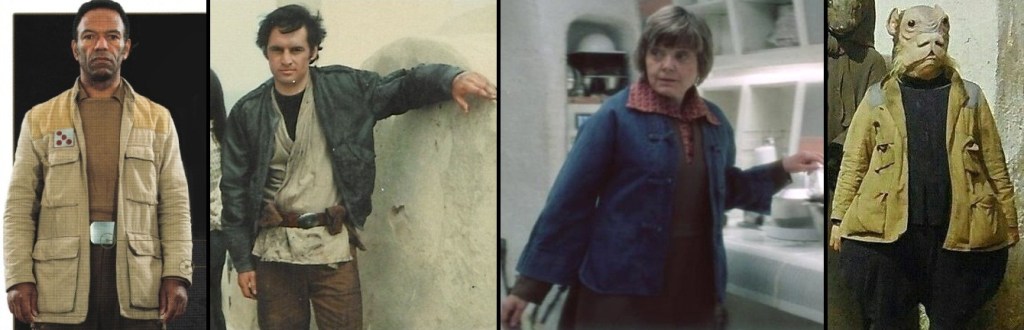
Welcome back to another installment of the Galactic Style Guide, the monthly series where we break down the ‘Star Wars aesthetic’ to help you create a more authentic ‘outer persona’! Folks have been asking me to do a post on in-universe jackets for a long time, so I figured the best time is Now! In fact, I dug up so many examples that this is going to be a two-parter (it feels like we haven’t had one of those in a while)! This month, we’re looking exclusively at examples from live-action sources. For our purposes, when we say ‘jackets’ we are talking about sleeved, (typically open-front) roughly waist-length outer garments; longer garments along these lines would be considered coats (and will be discussed in a later entry!). As we’ll see, these garments have been a big part of the GFFA style since day one:
it’s never been quite clear if Cpt. Antilles is a Rebel wearing an Alderaanian jacket, or an Alderaanian wearing an Alliance-issued jacket. Any ideas?Episode IV jackets: Rebel leadership, Fixer Loneozner, Beru Lars, a Mos Eisley Lutrillianplenty more examples below!
Welcome to another installment of our ‘Galactic Style Guide counterpoint’ subseries, where we help you strengthen your ‘Star Wars eye’ by highlighting and remedying common mistakes that can make an outfit look NotStar Warsy. As part of the Galactic Style Guide, the ultimate goal is still to help you create a more accurate ‘outer persona’ – but we approach the goal from the opposite direction! As I teased last time, we’re going to be working with at an excellent tool for helping us see the ‘Star Wars look’ in action: Mando Creator . This handy bit of coding lets users create their own two-dimensional Mandalorian outfit by customizing every element in terms of design, color, and decoration. If you’ve used Bitmoji, HeroCreator, or similar avatar-making tools, it’s pretty easy to get the hang of. I’d never played with it before, and in 20 minutes I had made up my own hypothetical Mandalorian kit!:
when you know the rules, it’s really not that hard to make something that looks passably in-universe
One of the coolest parts—at least for the purposes of training our ‘Star Wars Eye’—is the Armor Gallery feature, where we find (in addition to a few novelty designs and face characters like Din Djarin and the Fetts) a wide variety of completed assemblages submitted by other users.
Welcome back to another installment of the Galactic Style Guide, where we break down the ‘Star Wars aesthetic’ in order to help you create a more authentic ‘outer persona’! While the Style Guide has traditionally been concerned with topics of clothing and personal adornment, one’s outer persona can also include GEAR. Well, summer has arrived and after spending half of last year in a tent with my wife on the Appalachian Trail, I had two questions on my mind: 1) what kinds of shelters might adventurers in the Galaxy Far, Far Away use to protect themselves from the elements? And 2) are there any tents readily available in 2022 that might approximate these galactic styles? The answer may surprise you! While this topic might not be much use to readers planning a visit to the Galactic Starcruiser or their local fan convention, it’s important to remember that ‘doing (in the reenacting/living history sense) Star Wars‘ can (and probably should) take more authentic forms, and that if you want to venture into the outlands or create an in-universe encampment—like say, for an upcoming GFFA airsoft event?—having a good shelter can really come in handy.
While tents seen in earlier Star Wars materials (or only described in text) tend towards the unrealistic (at least by current capabilities)*, many shelters from visual media are actually fairly mundane, which is great for those wishing to create a reenacting encampment, or undertake an in-universe backpacking trip! *for a perfect example of this, see Mace Windu’s “wallet tent” in the novel Shatterpoint, which packed down to the size of a pocket yet could automatically unfold into a two-person shelter
Welcome to the first entry in our ‘Galactic Style Guide counterpoint’ subseries! Where the GSG could be summed up as ‘how to look Star Warsy’, these alternate posts are meant to highlight and remedy common mistakes that can make an outfit look NotStar Warsy! From the very beginning, the world of Star Wars has always had a very specific visual style. Unlike the matinee serials it was inspired by (in which heroes wore shiny, silver bodysuits and enemies wore bright gold and scarlet robes), the Galaxy Far Far Away was much more grounded in its visuals. While characters might fly starships across the galaxy and duel with swords made of pure energy, they didn’t dress futuristic. Chief costume designer John Mollo’s mix-and-matching of real world historical styles (Russian/Japanese peasantry, American cowboys, medieval gowns, World Wars military uniforms, etc) for inspiration provided the solid and believable foundation from which the series’ visuals would evolve. As part of this grounded approach, most characters tend to wear costumes in a very specific range of colors:
“The color scheme basically was the baddies would be black or gray, with the exception of the stormtroopers, and the goodies should be in earth colors—fawns and whites… Mollo tried to keep the colors muted wherever possible. Color is very, very difficult to use. Bright colors don’t work well on film, particularly reds and blues. George always goes for the authentic….and if it’s all garish color, it doesn’t work.” (Brandon Alinger. Star Wars Costumes – the Original Trilogy, 2014. p 15.)
This rule does not mean, however, that your outer persona need be limited to earth tones and shades of gray – as we saw a few weeks ago, there are tons of examples of characters wearing every color of the rainbow (especially in the pre-Imperial period)! However, if you noticed, almost all of them had something in common. As we read above, the main rule for creating authentic in-universe clothing is simple:Avoid. Garish. Color.: thus, if a garment is a fully-saturated hue, it is much less likely to ‘read’ as being authentic to the Star Wars setting. Let’s take a look at what I mean.
As I was preparing an upcoming post, I started wondering which characters in the Saga wore colors beyond earthtones, black, white, or shades of gray. I started leafing through my Visual Dictionaries and several hours later I had created the following rainbow of characters. These are presented in chronological order within each color band, and as we cans see, Trisha Biggar’s costumes for the Prequels are FAR more colorful than those of the Galactic Civil War period. If I do a third collection for all the blacks, whites, grays, and earthtone characters, I’m sure there will be many more OT characters represented.
Whenever I go to the thrift store, I usually cruise the racks on the lookout for certain materials—chiefly linen, wool, and silk—to be cannibalized into items for my various reenacting kits. After years and years of doing this, I can often identify a piece’s fiber content just by walking or thumbing past it, with no need to check the tag. When I go thrift-shopping with my wife, she will often remark and wonder on how I’m able to do this, and the answer is simple: trial and error, reinforced by years of practice. It’s a kind of exercise, and I’ve simply trained my ‘fabric eye’ to recognize one cloth from another.
(This is the same type of practiced skillset that allows me to go into the woods with the Middle-earth Reenactment Society and confidently pick a stalk of nettle or milkweed out of a thicket of other dead, gray plant stalks when we’re in need of some wild cordage on a trek).