Galactic Style Guide – the Post-Disney era (part 2)

Welcome back to another installment of the Galactic Style Guide, the series where we break down the ‘Star Wars aesthetic’ in order to help you create a more authentic ‘outer persona’!
Like last time, this entry is a bit of a departure from our usual collection of references. This time we’re continuing to focus on elements which I’ve identified as either clear deviations from what existed in the Lucas days, or which originated firmly in the post-Disney era. Let’s keep it moving with #6!

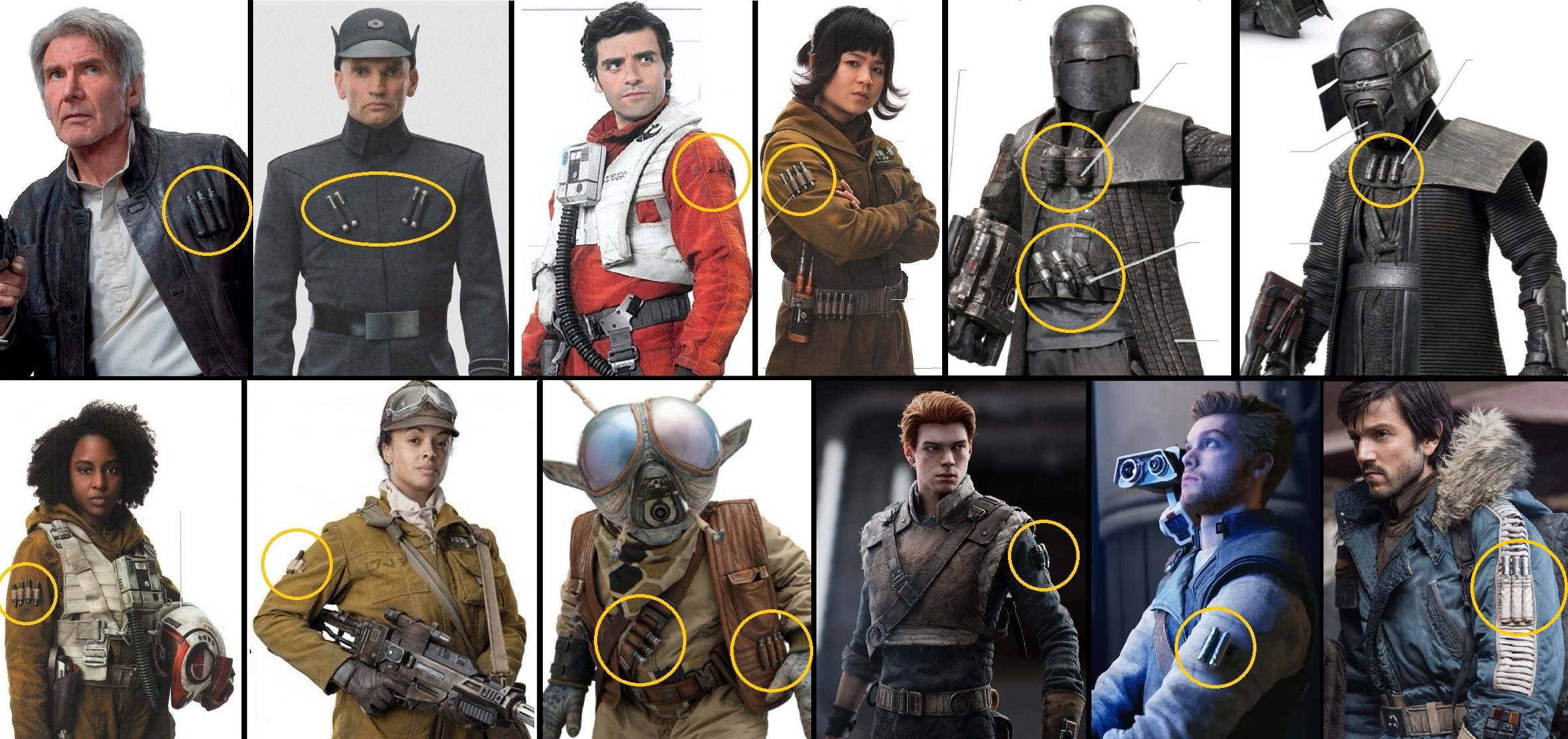
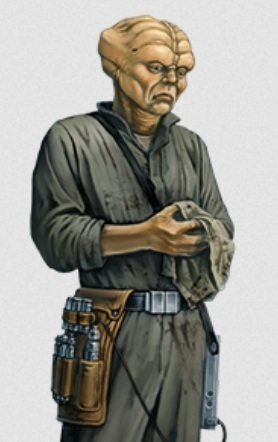
When it comes to soft kit, after perusing the various Visual Dictionaries one trend I noticed started appearing with the Sequels and subsequently latched onto by fan-makers is that of little discrete loops (instead of pockets) being used to hold various doodads on clothing – your code cylinders, ‘mini flares’, blaster ammo, etc.:

What I really want to know is why everyone in the new continuity seems to need so many of these little silver things anyway? In the OT, we’d see Rebel pilots and technicians with small ones on their belts, and big ones kept below the knee (Reb pilots and Bossk seemed to be just about it). But in the Disney era, they’re all over the place! In short, I think they’re a symptom of the new era costumings’ general reliance on overdesign, versus good design, which in the case of the Star Wars setting, usually boils down to Less is More. You don’t need to have every single visible surface sporting some sort of detail – it’s OKAY for costumes to have ‘blank space’! This is especially true in our crispy 4k UHD+ present, when it is all too easy for an overdesigned outfit to leave the viewers’ eyes overwhelmed.

Keep reading for more observed abberations!

Galactic Style Guide – the Post-Disney era (part 1)

Welcome back to another installment of the Galactic Style Guide, the series where we break down the ‘Star Wars aesthetic’ in order to help you create a more authentic ‘outer persona’!
And now, for something completely different. If you’ve been following this site, you may have noticed that the majority of my references come from live-action sources of the Lucas era. However, as we inexorably continue further from the boundary between that period and the current one, it becomes clear that not only did this modern era come with a new continuity, but a noticeable shift in visual aesthetics as well, and I want to explore elements of this shift as they relate to our pursuits here (recreating the Star Wars galaxy in ‘reenacting’ form!). In this post (and at least one more!), we’re looking specifically at some elements which I (coming from a relatively outside perspective) have identified as either clear deviations from what existed before, or which originate firmly in the post-Disney era. You’ll see what I mean.
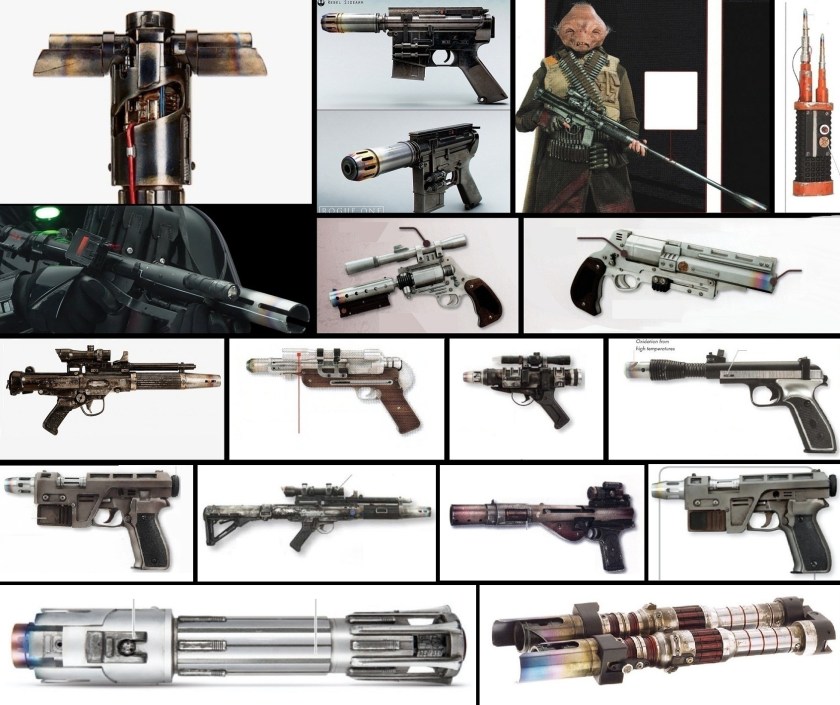
I’m not doing this ‘countdown’ style, but when it comes to something we got along without perfectly fine and was unequivocally not present in the pre-Disney days, #1 at the top of the list has to be the presence of the tempering rainbow on the muzzles, emitters, or tips of blasters, lightsabers, or tools:

I read somewhere that all the Remnant TKs in Mandalorian also feature this, but the scenes are so dark it’s hard to tell.
Keep reading for more observed abberations!

Galactic Style Guide – Mechanics and Technicians II

Welcome back to another installment of the Galactic Style Guide, the series where we break down the ‘Star Wars aesthetic’ in order to help you create a more authentic ‘outer persona’! In this entry, we’re continuing our examination of blue-collar mechanic or technician-type characters by seeing how examples from print sources compare to those from live-action. While most SW titles center around exciting or elite character classes (Jedi, Sith, politicians, mercenaries, troopers, etc), if there’s one subset of GFFA publication that fully embraces the more mundane characters like these, it’s role-playing games – especially the current license holder Fantasy Flight Games. FFG’s Age of Rebellion and Edge of the Empire games include sourcebooks for Technicians and Engineers to give us a number of examples to help fill out our sample. If they follow the trends we noted in our live-action examples last time, we should expect these RPG designs to dress in text-free, one-piece coveralls of a muted single color. Let’s see how they measure up!

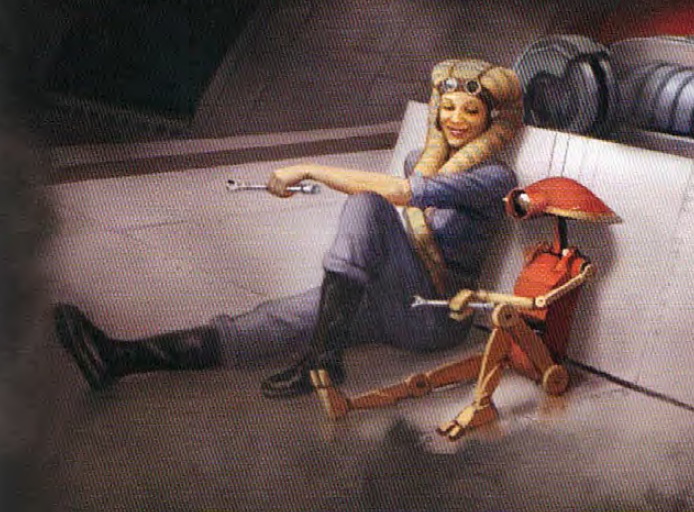
The vignette that opens Special Modifications (the Technician sourcebook) sees Twi’lek mechanic Chalan Talosi hanging with her pit droid, WAC-77. We can see she wears a gray or slate blue coverall with the sleeves and legs rolled up – normally if a tech is wearing tall boots, they’re visible because the pants are tucked/bloused, not rolled up, so this is certainly a choice…but hey, maybe it gives better ventilation or something? It could simply be a gathered waistband, but it does look like she’s wearing a belt. Also note the goggles (not currently in use), which are a prime accessory for any welding-related occupation!

keep reading for more examples, and analysis!

Galactic Style Guide – Mechanics and Technicians I

Welcome back to another installment of the Galactic Style Guide, the series where we break down the ‘Star Wars aesthetic’ in order to help you create a more authentic ‘outer persona’! By audience request, in this entry we’re trying something different! This time around, we’re not looking at a specific category of clothing or gear, but a specific “character class”! Just like with our regular Style Guide entries, the idea is still to analyze examples of a single theme to see what they share – and therefore see what the most common and representative elements are, hopefully to prevent the spread of reenactorisms! As always, there’s plenty of room in the Galactic Costumed-Arts Spectrum for fun and personal interpretations, but if (as I believe is entirely possible) the GFFA is to be seen as a legitimate setting for high-quality living history, it really pays to take a page from the reenacting playbook and try to represent the common galactic populace as faithfully as possible…which means sticking to the visual ‘rules’ of the setting. What are those rules for mechanic/technician characters? Let’s find out!

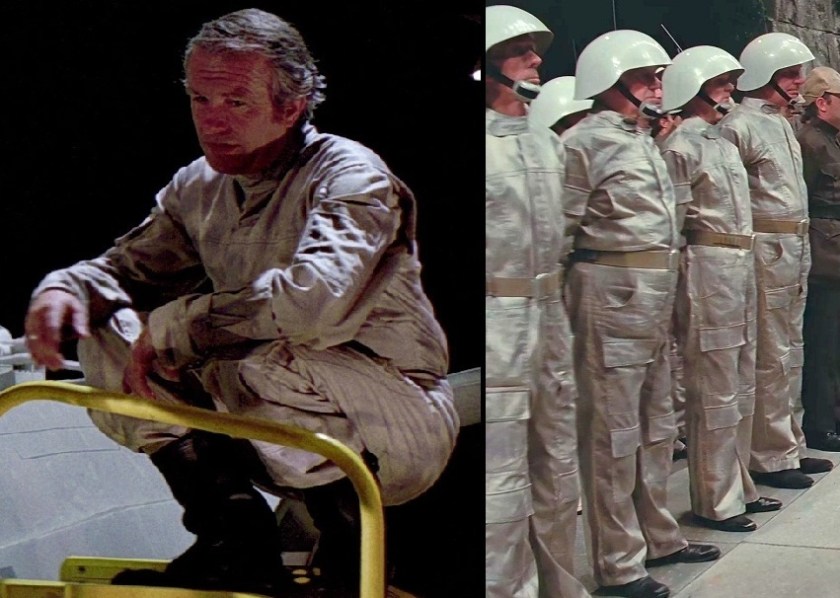
As the majority of SW titles continue to revolve around face characters from the more ‘exciting’ (i.e. typically martial) character classes (Jedi, fighter pilots, bounty hunters, troopers, etc.), we have a relatively small pool to draw from, at least when it comes to live-action. Our first look at this type of character comes from act three of SW’77, with our heroes’ arrival at the Rebel base on Yavin IV.

(We’ll see Rebel hangar crews continuing to dress like this before Endor as well)
Keep reading

Galactic Style Guide – Capes and Cloaks II

Happy Orthodox Star Wars Day!, and welcome back to another installment of the Galactic Style Guide – the series where we break down the ‘Star Wars aesthetic’ in order to help you create a more authentic ‘outer persona’! In this entry, we’re continuing our exploration of capes and cloaks by looking at those seen in Lucas’ Prequel Trilogy. Star Wars’ costume designs have always been a unique mixture of Spaghetti Western, 20th century military, Eastern/’exotic’, and medieval styles, and the use of capes/cloaks are largely responsible for the latter. Let’s get back to it, and see what we can learn!

Seeing how the story revolves around a Republic becoming a dictatorship, it’s no surprise that one of our main Senator characters (Bail Organa) in Episode III is often seen wearing an asymmetrical toga-like cloak, as does his ship’s captain (Raymus Antilles). Here’s another set of cloaks I would love to get my hands on in the Lucas Archives and examine just how they are constructed (I have a suspicion that they’re simpler than they appear, and are likely just a multi-yard rectangle with stitched pleats and an offset neck hole). Note the leather(?) piping along the leading edge and around the neck hole, which is a low-impact way to add a bit of detail and structure without being distracting.

As we’ll soon see, while the folks wearing capes and cloaks in the Classic Trilogy were often of questionable repute, those in the Prequels are commonly upstrata, and often members of the Republic government.

our breakdown of Prequel Trilogy capes and cloaks continues

Building the Inner Persona: pilot slang

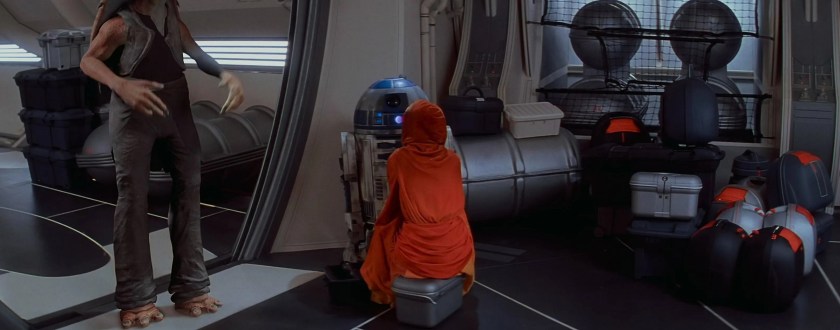
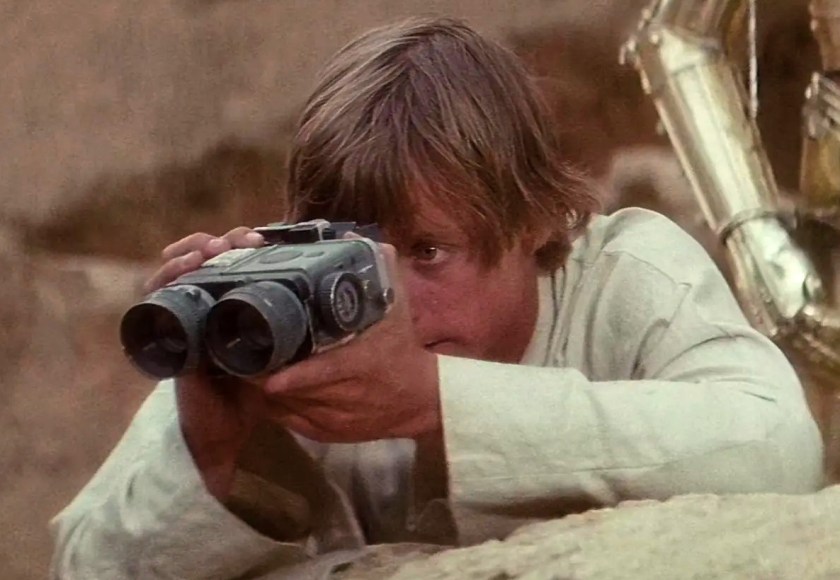
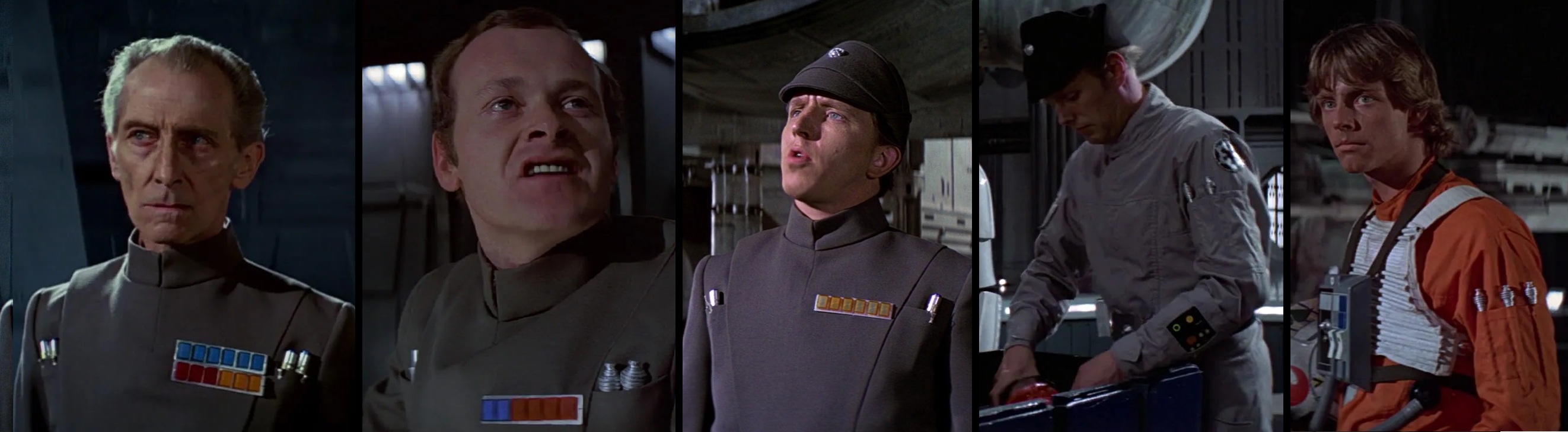
Hello there and ‘May the Fourth be with you’! It’s been a while since we’ve had one of these ‘in-universe vocab’ entries, but in the course of my recent work on a pilot impression, I was reminded of this excellent set of terms, as found in The Essential Guide to Warfare, (p. 141):

3-9 line: A line across a fighter’s wings, based on an imaginary clock in which 12 is ahead of a fighter and 6 is behind. The goal of dogfighting is to keep bandits in front of one’s 3-9 line.

ACM: Aerial combat maneuvering, better known as dogfighting.

Bandit: A hostile fighter or starship.

Big L: Lightspeed.

Bingo: Having enough fuel for a safe return.

Bluelined: Disabled by an ion cannon blast.

keep reading for more terms to make you sound like a gffa stick jockey!

Galactic Style Guide – Capes and Cloaks I

Welcome back to another installment of the Galactic Style Guide, the series where we break down the ‘Star Wars aesthetic’ in order to help you create a more authentic ‘outer persona’! In this entry, we’re examining examples of capes and cloaks. (Robes—like those worn by the Jedi or Emperor Palpatine—have sleeves and will be covered in a future post!) Traditionally, a Cape will be shorter in length and made of more fashionable materials compared to the longer, more utilitarian Cloak, but I use them fairly interchangeably here.

Star Wars’ costume designs have always been a unique mixture of Spaghetti Western, 20th century militaria, Eastern/’exotic’, and medieval styles, and the use of capes/cloaks are largely responsible for the latter. With many cosplayers eager to add a little ‘swish’ to their outfits, I hope these posts will be of some use: because when inspiration is needed, it is best to go right to the source instead of to what others have done!

Let’s dive right in with the only guy (IMHO) who can compete with Han Solo in terms of style!

Biggs Darklighter shows up to his desert hometown rocking a solid black knee-length wool cape with a short standing collar (and no visible fasteners, naturally!). It doesn’t appear to be lined, so that great drape is due to it being a really solid weight of fabric. If it is lined, it’s in a pretty similar color or material (note also that this is a rare example of a ‘good guy’ character wearing a ‘bad guy’ color).
However, with the Anchorhead scenes on the cutting room floor, we have few major characters wearing these kinds of garments in the rest of the film.
The only one who really comes to mind is the Mos Eisley spy Garindan who wears a most interesting hooded cloak:

Unlike the rest of our examples, old Long-snoot’s hooded cloak is a one-piece, and I’d love to see what the overall shape of it is! Visually, we can deduce that he’s an antagonist (because the cloak is black!), and as we will come to expect, it’s made of wool in a nice weight, is a solid color, and unadorned.
Aside from Garindan, It’s not until we make it to Cloud City in the next installment that we find another cape in the foreground:

Breaking down lots more In-universe caped characters after the jump

Galactic Style Guide – Ammo belts and Pouches III

Welcome back to another installment of the Galactic Style Guide, the series where we break down the ‘Star Wars aesthetic’ in order to help you create a more authentic ‘outer persona’! In this entry, we’re concluding our examination of the various styles of belt gear and pouches seen onscreen by looking at Original and Prequel examples together – let’s get started! In the first two entries, we focused on military-surplus (or milsurp style) gear, so this time we’re looking at the few non-milsurp examples.

Our two male heroes have belt gear which seems military but (as far as I know) isn’t – if you can’t swing actual milsurp, you can’t go wrong with real, unadorned leather in one color, and minimal hardware (snaps and brass studs, at most):

One of the ‘Pruneface’ commandos in Episode VI has an intriguing cylindrical belt pouch, which I believe was also borrowed for Wilford Brimley’s character a few years later:

What do we think it is? Optic case of some sort? Milsurp or not?

One of the places where we see a decidedly different style in action is among the ‘scum and villany’ at Jabba’s palace. Let’s break it down:

Continue reading “Galactic Style Guide – Ammo belts and Pouches III”

Galactic Style Guide – Ammo belts and Pouches II

Welcome back to another installment of the Galactic Style Guide, the bimonthly series where we break down the ‘Star Wars aesthetic’ in order to help you create a more authentic ‘outer persona’! In our second entry looking at the various styles of belt pouches and bandoliers seen onscreen, we’re focusing on military surplus (and milsurp-style) examples as seen in the Prequel Trilogy.
Let’s begin (again!) on Tatooine!

Throughout Episode I, we see young Anakin Skywalker wearing one half of an Italian Army ammo pouch for the Carcano rifle (plus another mystery pouch):


Several of the background characters in Mos Espa have belt gear with ‘Lift The Dot’ fasteners; these appear to be a dual-magazine pouch very similar to this WW1-era pouch for the Colt 1911. As I discussed previously, I feel that these kinds of pouches are acceptable for outfitting far-background characters like these, but I feel they toe the line of ‘visible fasteners’. However, they’re usually very sturdily made to stand up to the rigors of authentic use, so if you are reenacting or doing living history with an audience inside the 10-foot line, it’s probably worthwhile to take the extra effort to cover them behind some canvas or webbing.

Jedwar Seelah, Chokk, and the unnamed Nikto podrace mechanics.
keep reading for more examples!

Galactic Style Guide – Ammo belts and Pouches I

Welcome back to another installment of the Galactic Style Guide, the bimonthly series where we break down the ‘Star Wars aesthetic’ in order to help you create a more authentic ‘outer persona’! In this entry, we’re taking a deep dive into a specific category of gear that plays a major role in creating the GFFA’s uniquely grounded, quasi-militaristic aesthetic – belt pouches! As a great number of Star Wars character designs utilize longer robes or tunics instead of more western/modern shirts and trousers (and thus are are sans pockets), it seems that even the most pedestrian costume designs are routinely festooned with a wide variety of semi-rigid containers for carrying small items!
Due to the great number of onscreen examples, I waffled back and forth for how best to organize and present them all. Eventually, I decided to break them down by real-world source (milsurp vs. non-milsurp) and era (Classic Trilogy vs. Prequels) within these categories. As usual, we’ll close with some important takeaways for those of you who may want to incorporate a pouch or two in your own kit to add some in-universe style points! Let’s begin (as we so often do) on Tatooine!

The first folks we see onscreen wearing military surplus are the Jawas, who set the trend for what follows. Much like the majority of base firearms used for blaster building, the Jawas’ belt gear is comprised of European ammunition pouches and bandoleers drawn from a period of roughly 1890 to 1945 CE.

Jawas and Tuskens are both seen using British pattern 1903 bandoleers
K98 Mauser triple pouch

Farmboy Luke continues our trend of leather Euro milsurp pieces, sporting an interesting trio of belt pouches:

keep reading for more examples of authentic, in-universe belt gear!