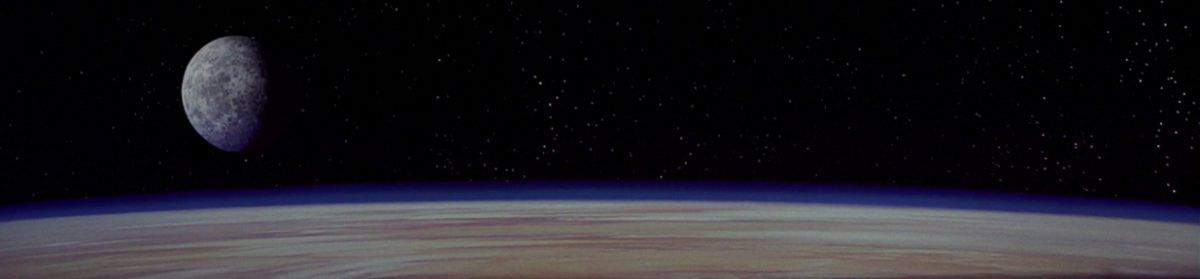
I was re-watching Episode I on its 19th anniversary the other day, and I happened to notice something. Do you see it?

That’s right, Naboo has Beech trees! I did some digging, and as it turns out a lot of the outdoor Naboo scenes were filmed in England right outside of Leavesden Studios. And it got me to thinking…
Continue reading “Location, location, location!”
Category: Research
Image Analysis: Taxi Ride

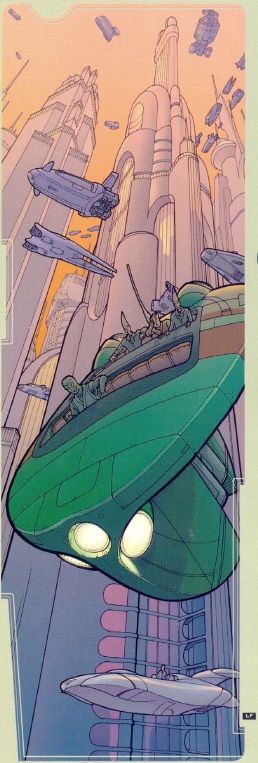
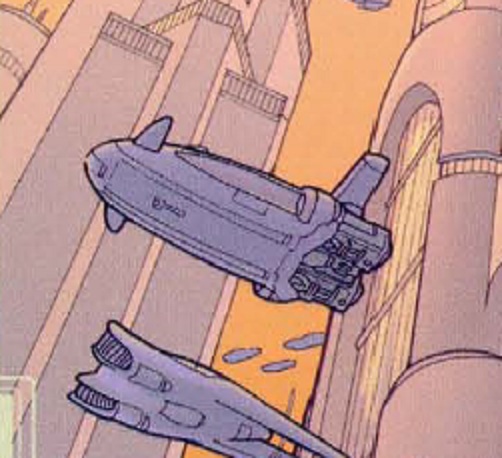
This will be a short post, as there’s not a lot in this vignette (from page 109 of Wizards of the Coasts’ Galactic Campaign Guide) to talk about, just some buildings, a lot of ships, and a few non-humans (a Duros taxi driver, two Cereans, and an unknown). However, one of those speeders is very familiar:
Don’t recognize it? How about now?

That’s right, we finally have an appearance of Boba Fett’s toy airspeeder in situ – it’s no longer just a prop made up for a Visual Dictionary, it’s a legitimate vehicle!
Artifact ID: blue milk cups
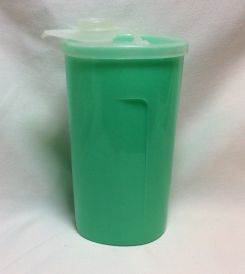
This is another one of those on-screen artifacts I had a really easy time identifying, because I grew up seeing identical cups in my mom’s kitchen drawer of plastic cups and bowls—except hers were a sort of seafoam-ish green:

The cup that Luke drinks from is an actual vintage Tupperware cup, known as a “Sweet Saver” (product #640-8) meant for storing and pouring liquids like maple syrup or salad dressing.
These are often available and relatively inexpensive on eBay, or you may get lucky by combing your local thrift shop for vintage Tupperware.
Continue reading “Artifact ID: blue milk cups”
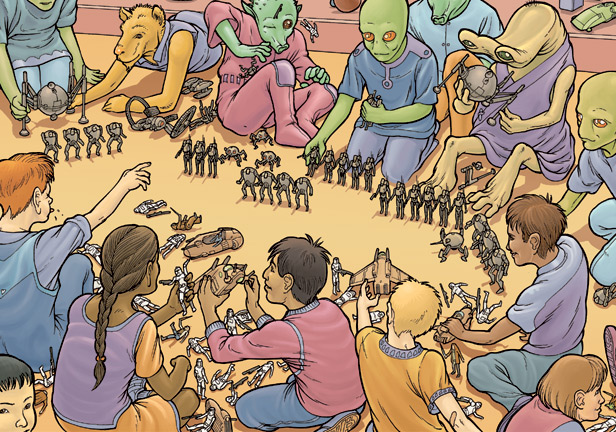
Image Analysis: Clone Wars Playtime
One feature I’ve been wanting to implement here is a series in which I take a close look at individual images, something along the lines of Townsend’s Sifting the Past blog. And here, I think, is the perfect example to start with!

This picture comes from Wizards of the Coast’s Galactic Campaign Guide (2003), p. 113. The book is a great source for our purposes, as it includes (among many other juicy details) an excellent section on species-specific naming conventions, and many similar world-building vignette scenes.
Looking at this image with an anthropologist’s discerning eye, several details leap out at me.
Continue reading “Image Analysis: Clone Wars Playtime”
Searching for winter headwear in the Galaxy
Hats of any type are comparatively rare in most Star Wars sources (especially when it comes to main characters), and hats for cold-weather scenarios are doubly rare. Since the main films only depict one cold-weather setting (Hoth in Episode V), we have an extremely limited pool from which to draw inspiration for cold-weather gear. As a result, most depictions tend to use variations on the Episode V ensembles, such as an obscure ‘cold weather gear’ Obi-Wan action figure based on Han Solo’s parka, or the Jedi Academy PC game, which outfits Jaden Korr for his mission to Hoth in the uniform of an Echo Base technician.
However, having proper GFFA cold-weather items is necessary if, like me, you don’t want to be limited to three-season excursions.
Continue reading “Searching for winter headwear in the Galaxy”
Artifact ID: Boba Fett’s toy airspeeder
Appearing (as far as I know) only in the Episode II Visual Dictionary (p. 43) (and of course, subsequent frequent reprints by DK), Boba Fett’s airspeeder model is one of those items where one just has to scratch their head and wonder. Continue reading “Artifact ID: Boba Fett’s toy airspeeder”
Artifact ID: Donovian Rainmen
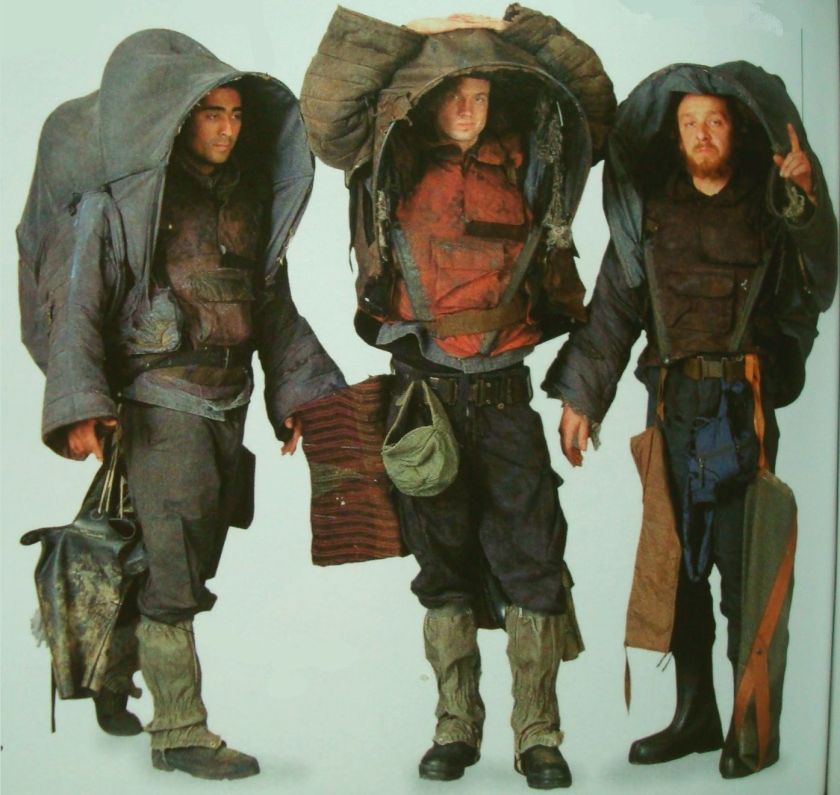
The ‘Donovian Rainmen’ are a pretty deep cut, never appearing (as far as I know) on-screen in their film, but only in a DK reference book, a behind-the-scenes documentary (“A Twinkle Beyond Pluto”) on the Episode II DVD, and one frame of Dark Horse’s Republic #80.

However, they have always intrigued me, given their specific ‘occupational’ identity. Continue reading “Artifact ID: Donovian Rainmen”
Artifact ID: Neimoidian Silver Cups
As this post goes live on January 1st (by Gregorian Reckoning), I thought it would be nice to have something that would tie in with celebratory toast-making and libations.
This was a pretty simple artifact to identify, and like the refugee water bottle from a few weeks ago, the actual items are fairly plentiful, easy to find, useful, and SHINY.
The scene: Year 3 after the Great ReSynchronization (32 BBY), aboard the Trade Federation battleship Saak’ak (Profiteer). The Neimoidians, stalling for time before they deal with the Chancellor’s negotiators, send a protocol droid into the conference room. The droid enters bearing a tray of refreshments; our Jedi heroes accept the cups and sip politely…until the Neimoidians pump toxic gas into the room and everything goes to hell.
Continue reading “Artifact ID: Neimoidian Silver Cups”
Artifact ID: Refugee’s water bottle
In the spirit of Christmas and the Nativity (even though Jesus of Nazareth was most definitely Not born at midwinter), I wanted to publish something with a Mary and Joseph, poor-folk-on-the-road theme.
On a recent rewatch of Episode II (focusing on scenes with background commoners), I noticed something in the scene on the refugee transport. I’m surprised I never noticed it before, considering it’s so shiny and eye-catching…

Yes, as Obi-Wan says, “Your eyes can deceive you” and that we shouldn’t trust them. However, in this case, seeing is believing, because that is quite clearly an unmodified, off-the-shelf, stainless steel water bottle sitting on the table between Padme and Anakin.
At first, a small part of me wondered if it was even meant to be there. Continue reading “Artifact ID: Refugee’s water bottle”
Building the Inner Persona: Vocabulary
Updated terms in italics
One of the later steps (#7 of 8) in Townsend’s Getting Started series is the process of further developing one’s persona through building of the ‘inner persona’. This means going beyond the superficial outer persona (one’s clothes and gear), and better inhabiting the mental headspace of your chosen individual. One great way to do this is through the words we use for things.
For example, if I were portraying an American settler in the early 1700s, referring to the indigenous population as “Native Americans” would smack of modern political correctness; but to refer to them as “savages” or “naturals” would be quite appropriate. Likewise, to greet someone with the postmodern “Whatsup?” in a 19th century reenacting context would be quite jarring! Continue reading “Building the Inner Persona: Vocabulary”