Welcome back to the Galactic Style Guide, the series where we break down the ‘Star Wars aesthetic’ in order to help you create a more authentic ‘outer persona’ for your in-universe ‘denizen’ or OC cosplay!
In this entry, we’re wrapping up our look at an element of character design that I think gets frequently overlooked in SW costuming circles – Texture! By the end of this post, I hope you’ll see how this element is actually a key pillar of achieving a authentic, suitably Swarzy look. While the visual effect may be similar to patterns, in this case we’re dealing with the actual physical dimensionality of the fabrics used to create a character’s costume. This degree of dimensionality means that the surfaces of various fabrics catch light in different ways, creating more or less visual interest. Stick around to the end for another kind of texture that can really help give your kit the air of authenticity! First though, we’ll keep it going with some somewhat more familiar or ‘Earth-ier’ textured garments.
On the lowest end of textured materials, we have various form-fitting garments. Not only do these make up a tiny minority of onscreen costumes, but they also seem to only ever be worn by females:
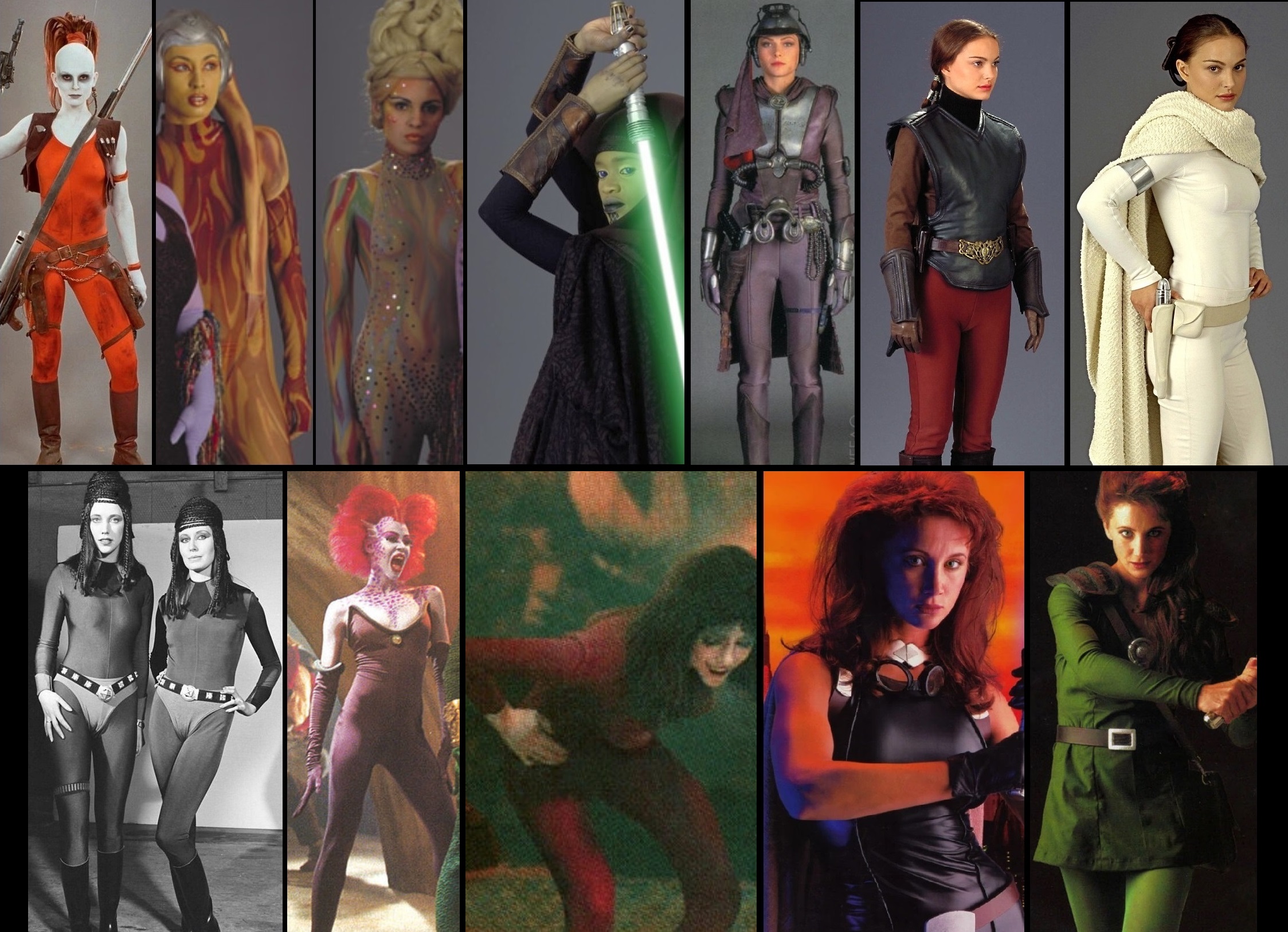
the ‘Tonnika sisters’, Rystall Sant, Laudica (@ Jabba’s), Mara Jade x21.)
Of these, Padme’s white ensemble has the most texture as it appears to be a thicker material and incorporate more natural fibers than the more synthetic stretches of the others. (To see the difference between a knit stretch and a proper woven fabric, compare the pants of Padme’s pilot disguise with those of Captain Typho:
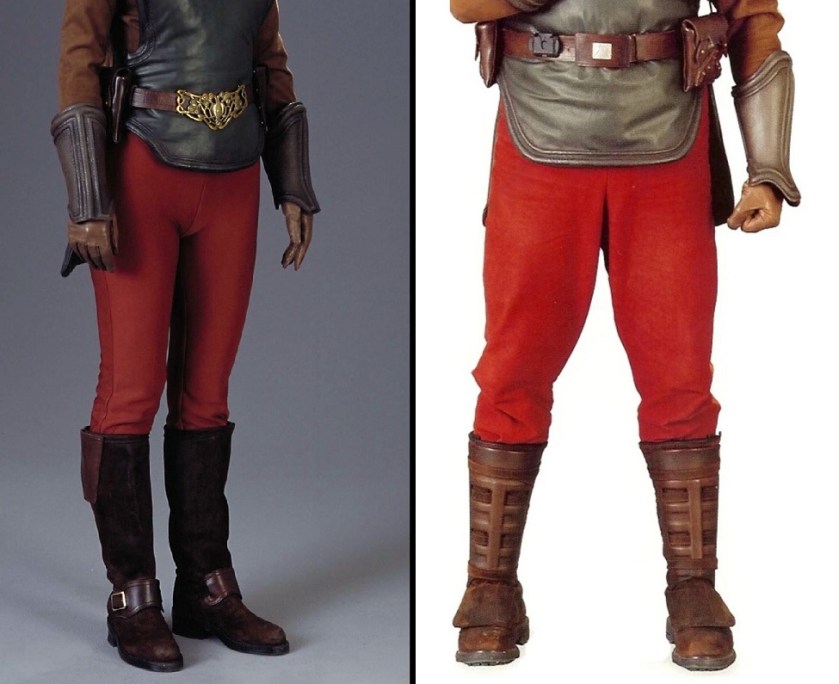
Though still rare in such a majority-woven setting, when the occasional stretch or knit fabric does show up in the GFFA, they stick out a bit less when they’re more textured than the above examples: take Barriss Offee (who opts for a dark horizontal-rib top, instead of the trad Jedi’s earthtone, eastern-style wrap tunic), or the sublimely mid-90s vertical-rib (not waffle!) top worn by Jan Ors in Dark Forces 2 (a piece which would be something of a ‘holy grail’ thrift shop find for me):
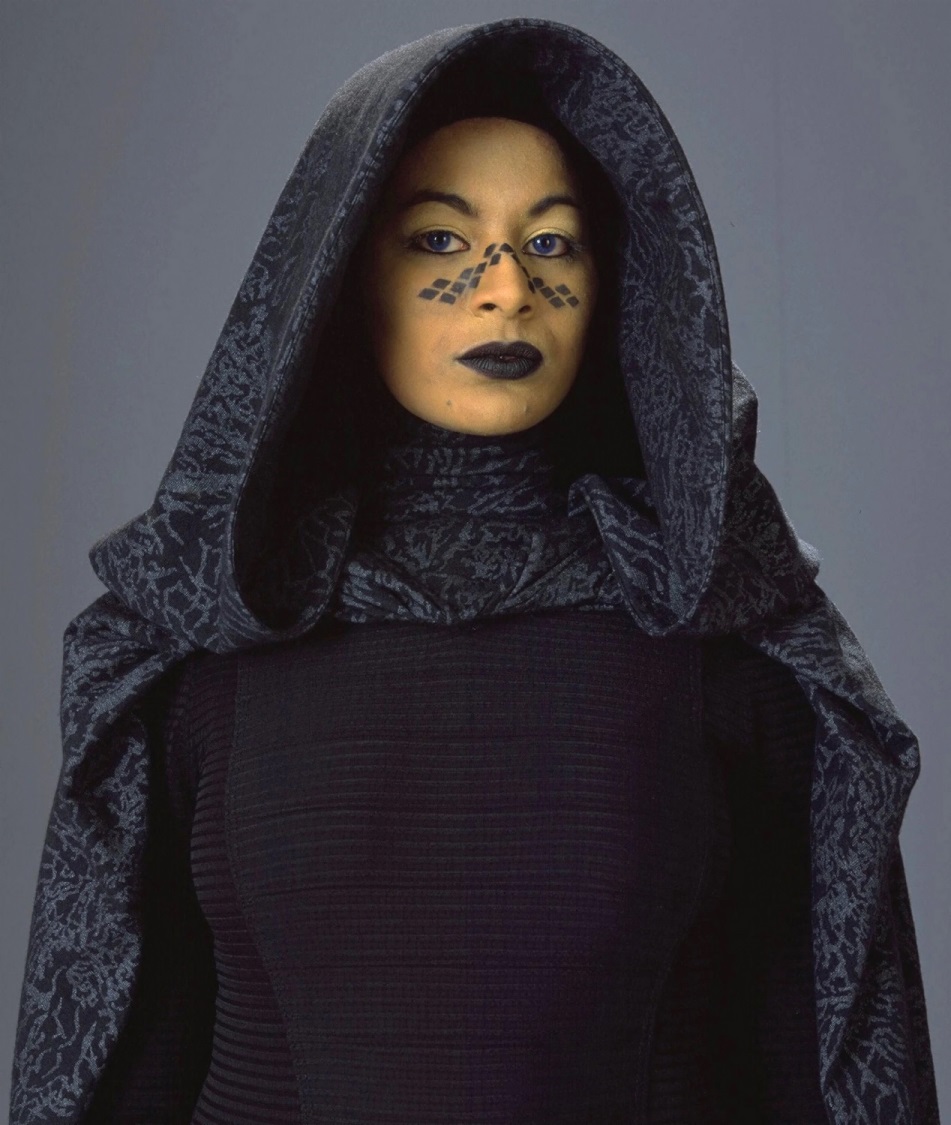
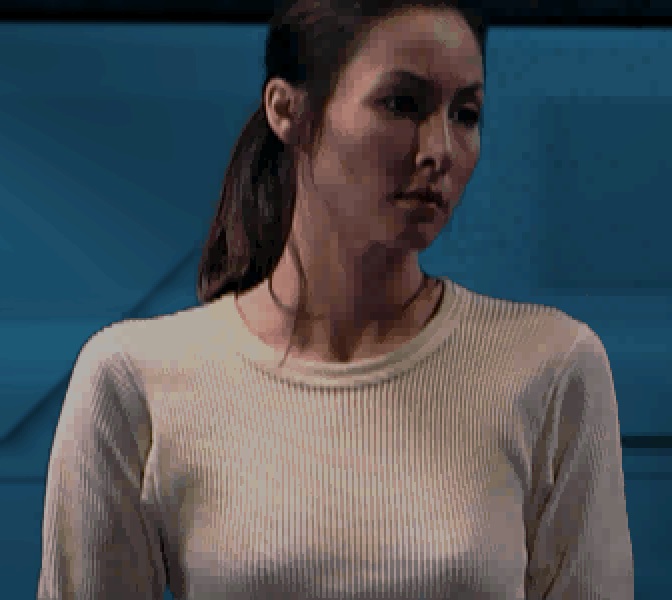
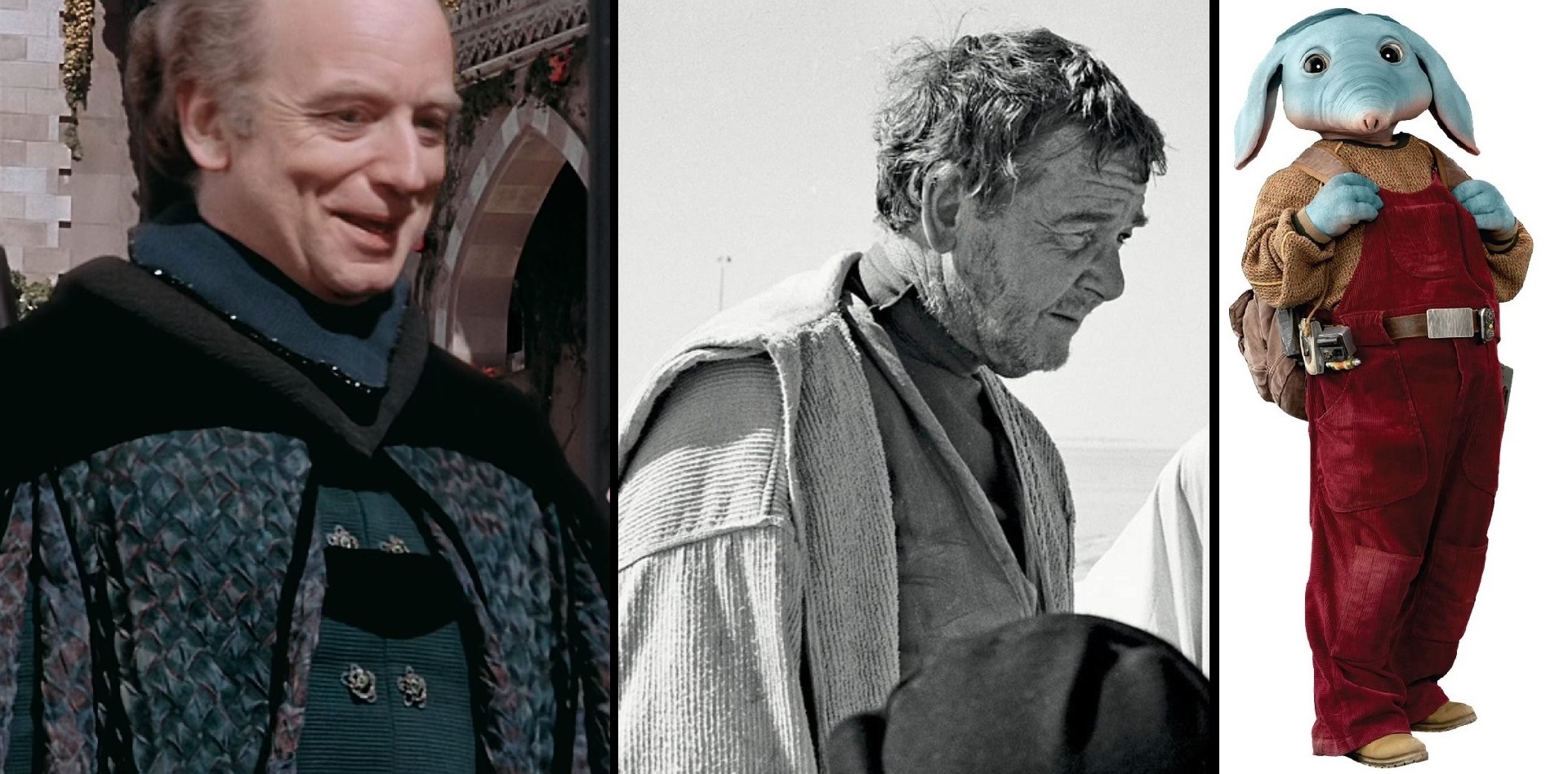
In fact, Jan’s ribbed top is almost reminiscent of corduroy, a material which I’m pretty sure has shown up on a couple of occasions:
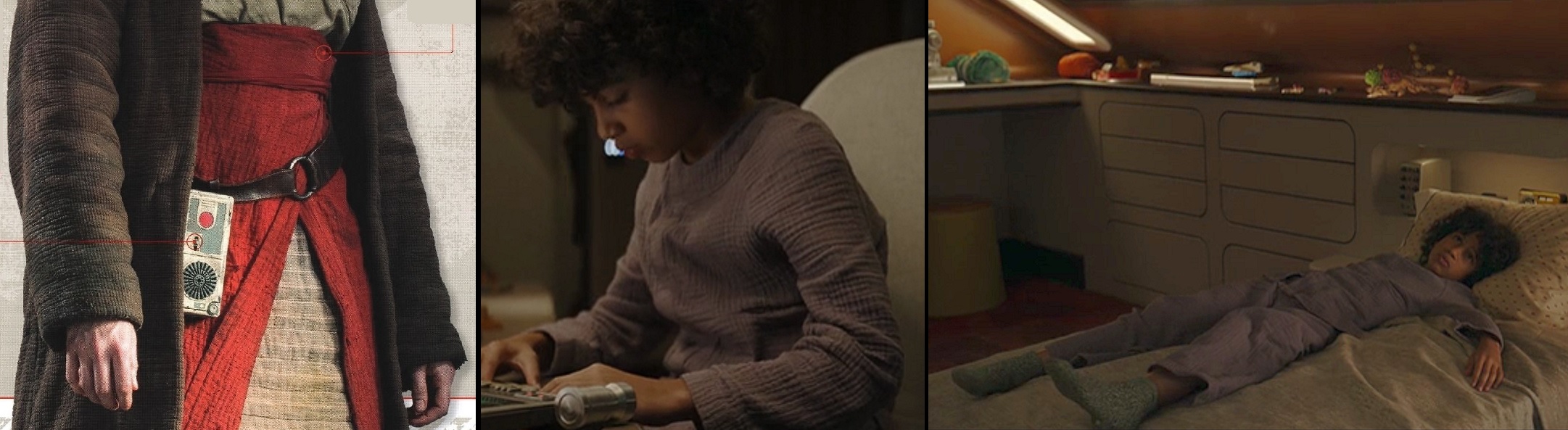
As we creep closer to familiar textures, one somewhat ‘Earth-y’ (and much less durable!) textured material seen onscreen is ‘Bubble Gauze‘, which as far as I can tell has only shown up in modern (post-Disney) titles. I don’t know when it was invented (out of universe – drop a comment if you have an idea!), but its first appearance onscreen was as the red sash/skirt-thing worn by ‘Lyra Erso’ in Rogue One and more recently used for the pajamas worn by Wim in Skeleton Crew. Neither of these quite projects ‘tough and active’, so if you want to portray a more adventurous character along those lines, it may be best to opt for a more hard-wearing fabric better suited to the rough and tumble life – canvas, leather, etc. – or at the very least, line it with something else to give it weight and the illusion of ruggedness!
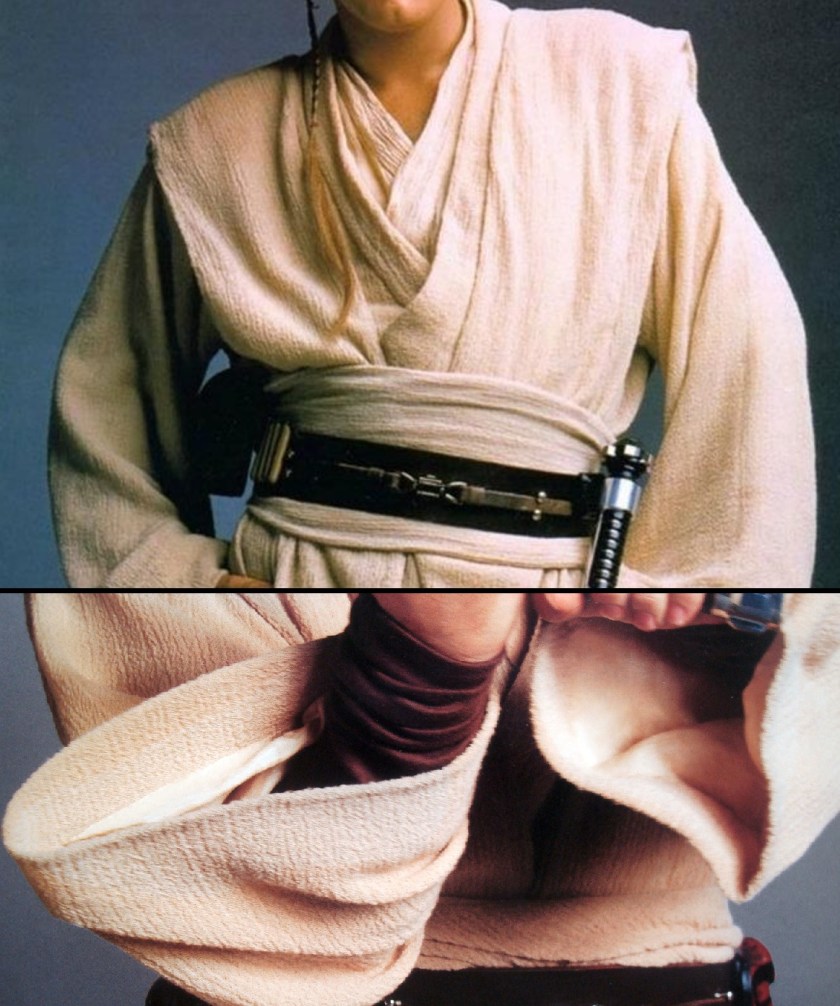
Another fabric available ‘off-the-bolt’ is ‘crinkle cotton‘, used extensively in the Prequels for various Jedi tunics. The material itself is very thin, so it’s best used in two layers (or paired with another lining material) to give it some drape and weight.
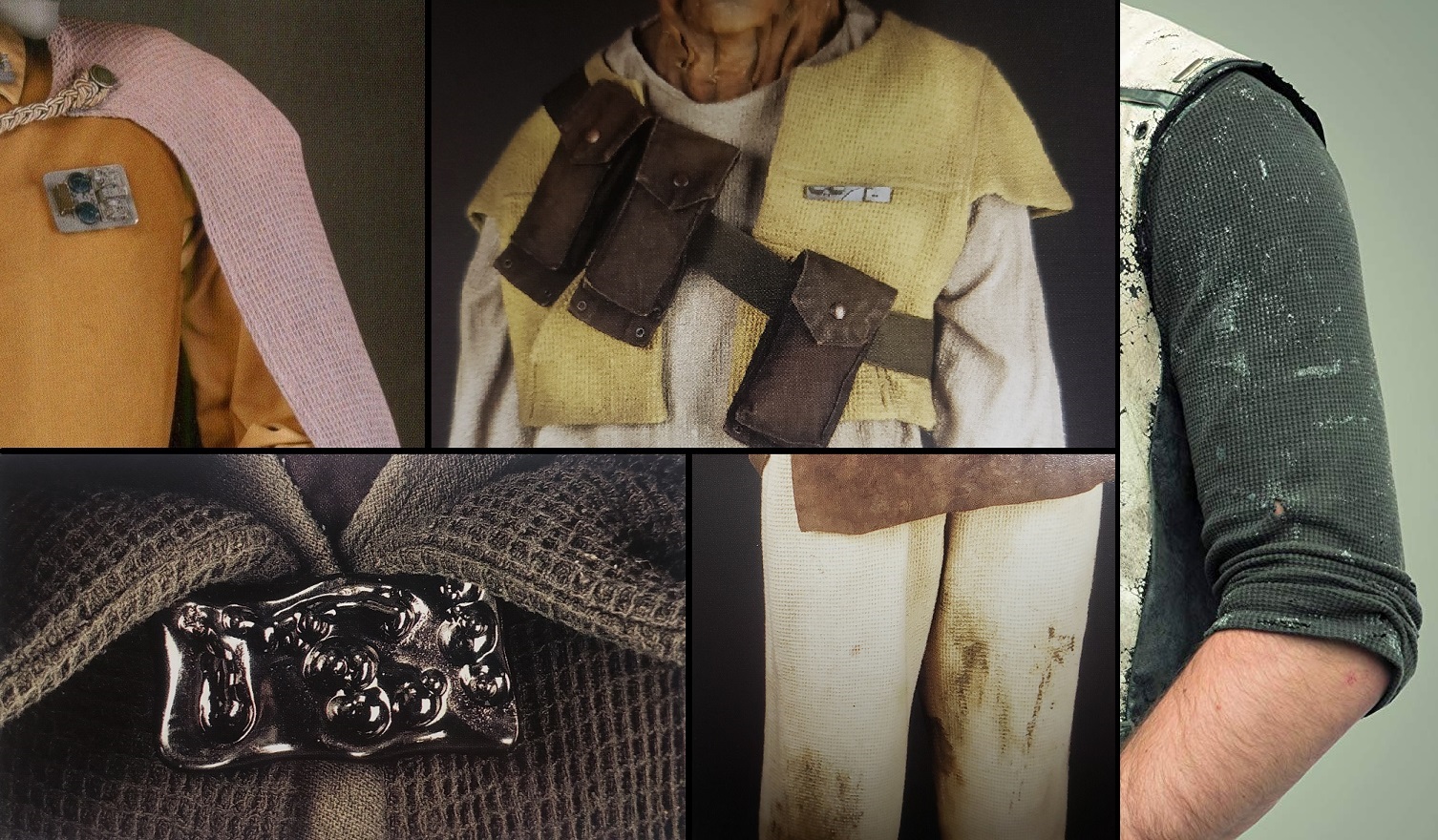
When it comes to another familiar texture—waffle weave—I’ve noted a few examples which appear to cover a wide range of social classes: Lando’s Episode VI general cape, pants for some of Jabba’s skiff guards, Barada’s vest, Palpatine’s OT robe, and the black shirt worn by young Han in SOLOASWS. On the right we have the not-quite-waffle-weave material worn by ‘Bix’ on ANDOR. Note how much crispier it is compared to the others- a result of a modern manufacturing process, or the 4k nature of the modern era? Maybe both!
On the flip side of the materials we’ve looked at so far, we have far more characters whose outfits use less texture, but they make up for this by using simple designs in nonetheless substantial-looking solid-color woven fabrics (unlike the synthetic stretch knits we opened with, these don’t cling to the wearer and still form creases and wrinkles). What kinds of characters are these? Often, those serving in some variety of armed forces:
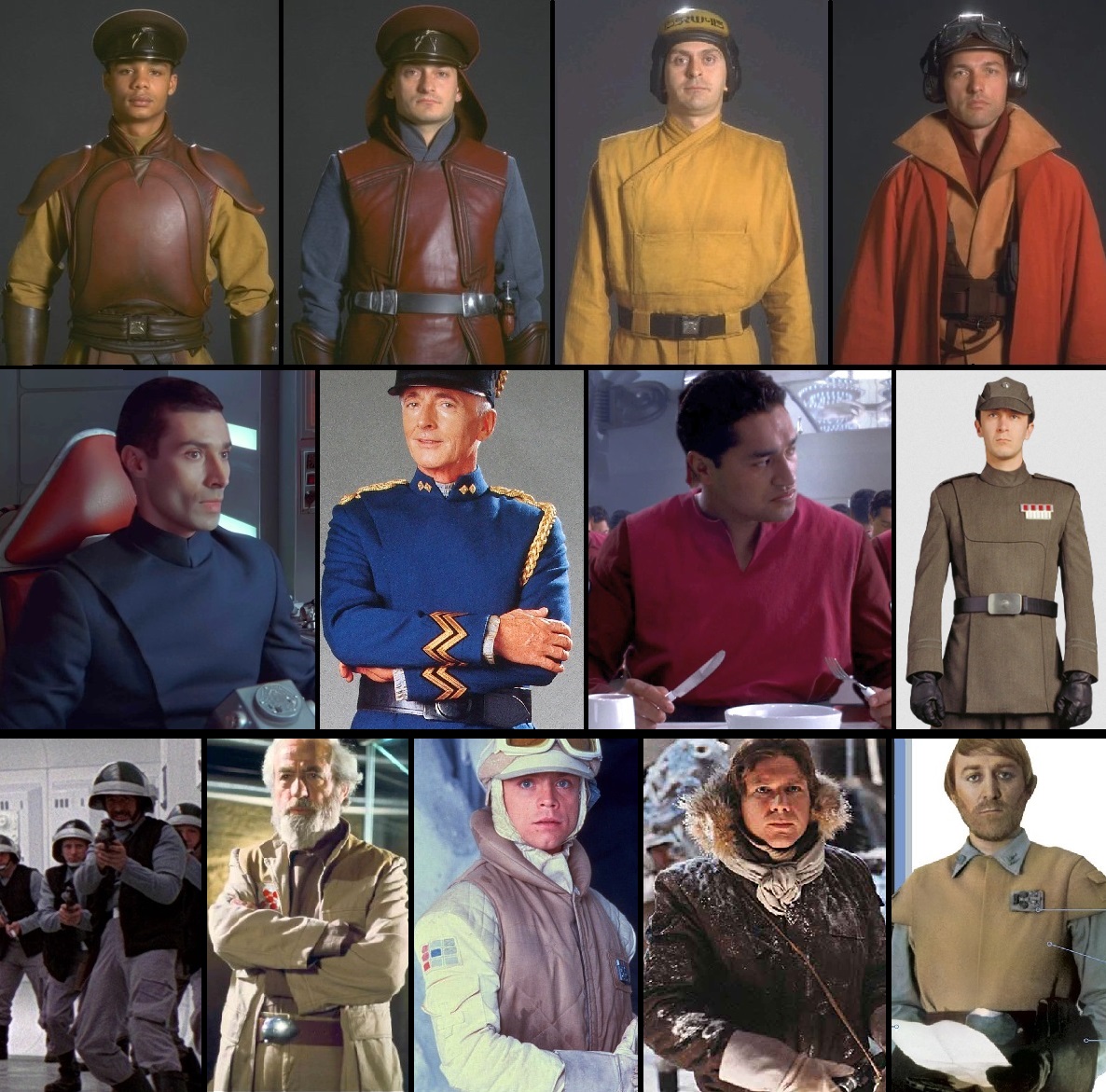
Planetary Defense Forces (Judicials), clone cadets, Republic Navy;
Alliance to Restore the Republic
So, why does texture matter so much? As a prime example, look no further than the costume worn by ‘Gaya’ back on the Galactic Starcruiser…
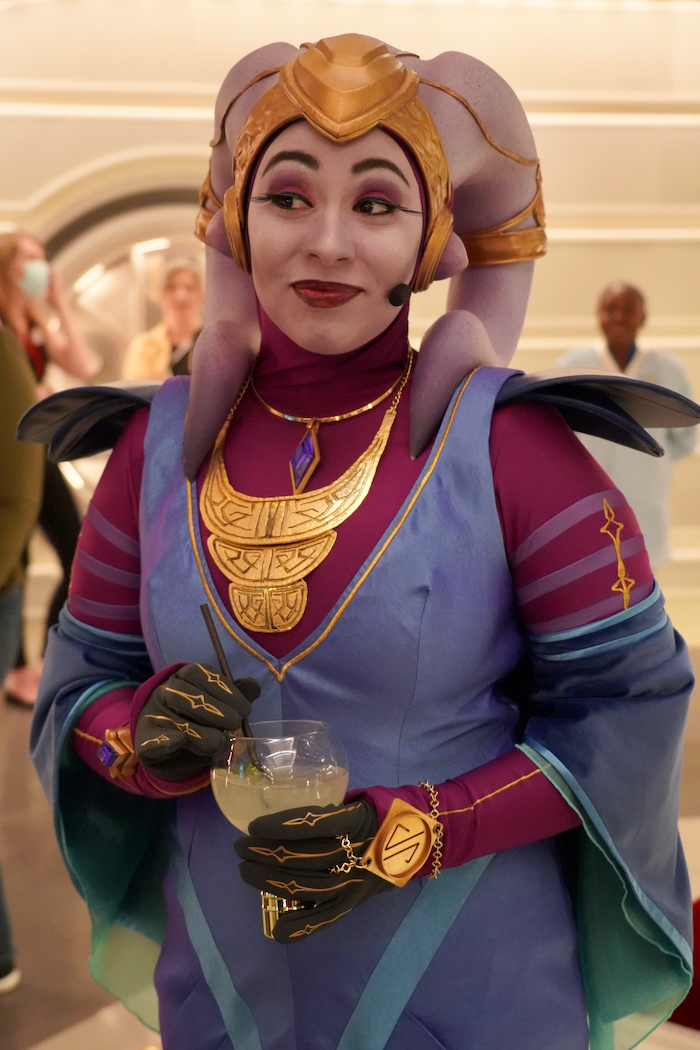
Look, I get that given the quick turnover for shows and the multiple actresses involved, Disney probably had to make several copies of the costume and these were likely constantly being laundered…but c’mon, Mickey – if you’re going to cut corners on weathering, you’ve gotta make sure to counteract it with some actual good fabric if you want it to look like anything other than a Spirit Halloween ‘Space Diva’.
Combined with the shiny, unweathered, textureless materials, the overdesign and colors make this whole outfit feel more like something from one of the animated shows, which, considering this is a flesh-and-blood character, isn’t necessarily a good thing – especially when we compare what Starcruiser guests got above with one of Bryan Matyas’ concept arts for the same character:
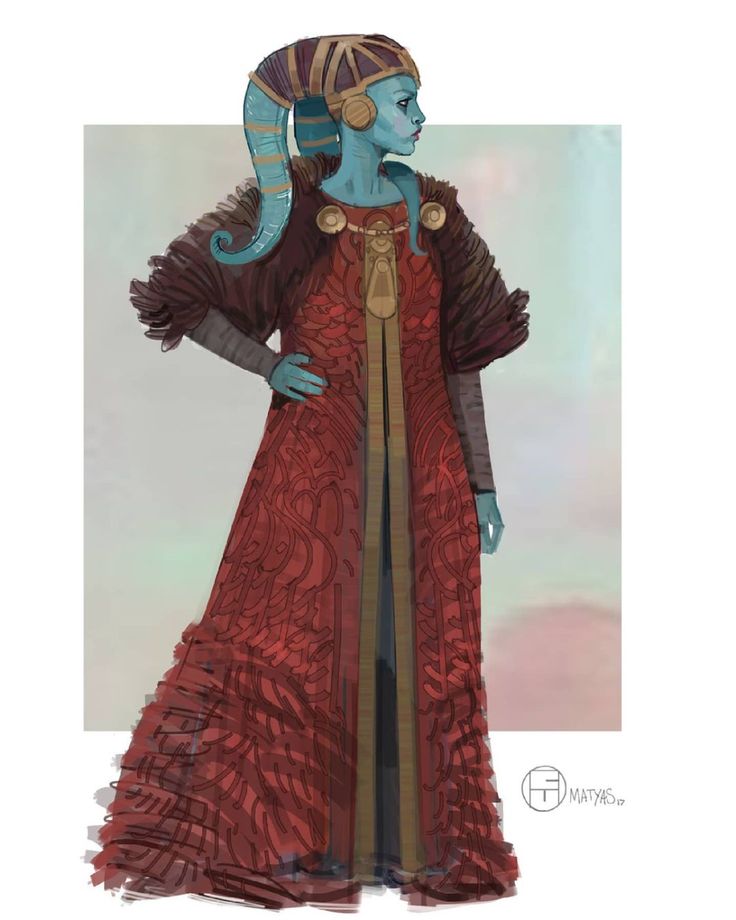
WOW! – a much simpler design, yet so much more interesting! However, I also recognize that realistically, something like this would likely have been much harder to achieve as an easily-launderable outfit. (Like the animated characters in Rebels, I’d love to see someone take Gaya’s final design but just translate it to some rich, textured, woven fabrics and see how it instantly improves.)
In other words, just like costumes in a stage play, while an outfit of textured material will look like clothing up close, it will still lose detail when seen at a distance. However, if the material has no texture or weight, then up close it will look like a cheap costume, and from a distance it will look like a cartoon (this is especially true if the outfit is unweathered!)
This is why I use linen (and natural weathering) as often as I can in my own kits!:
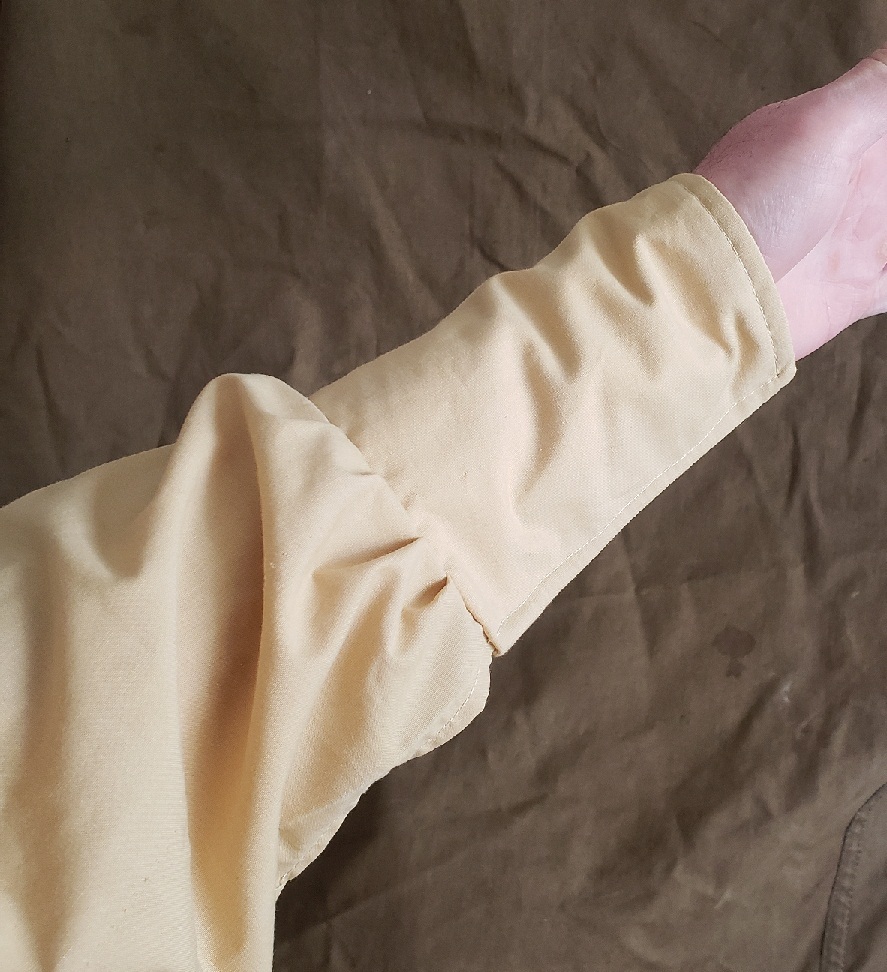
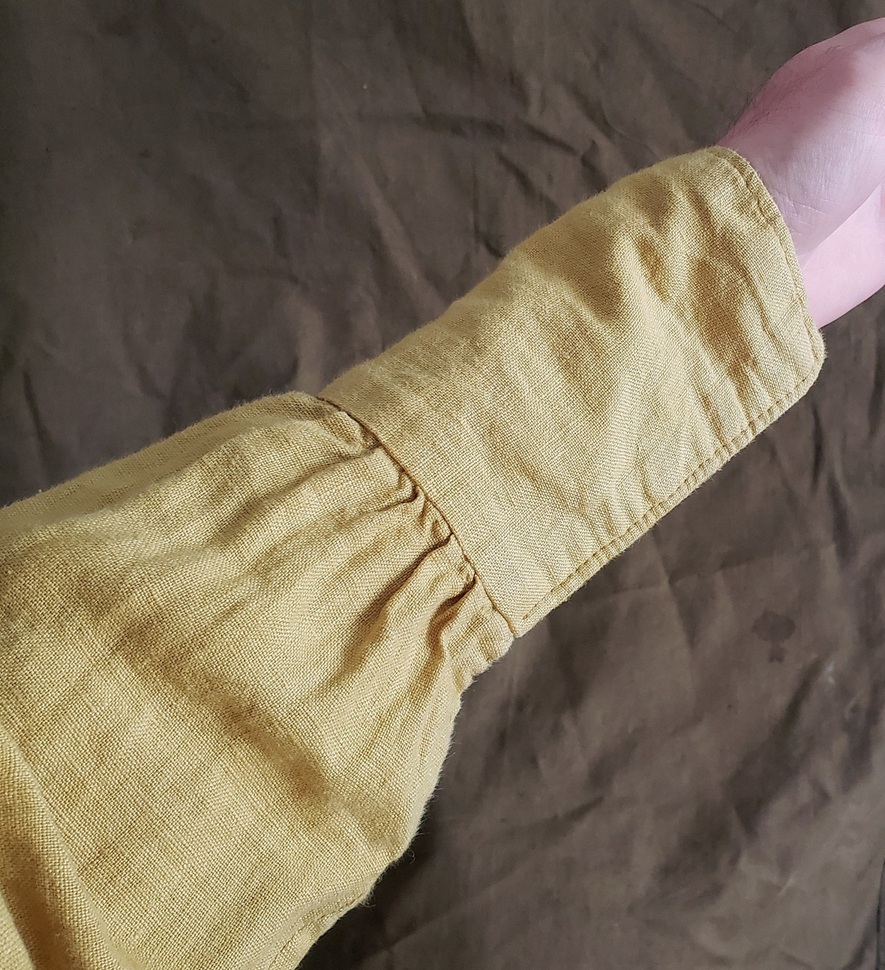
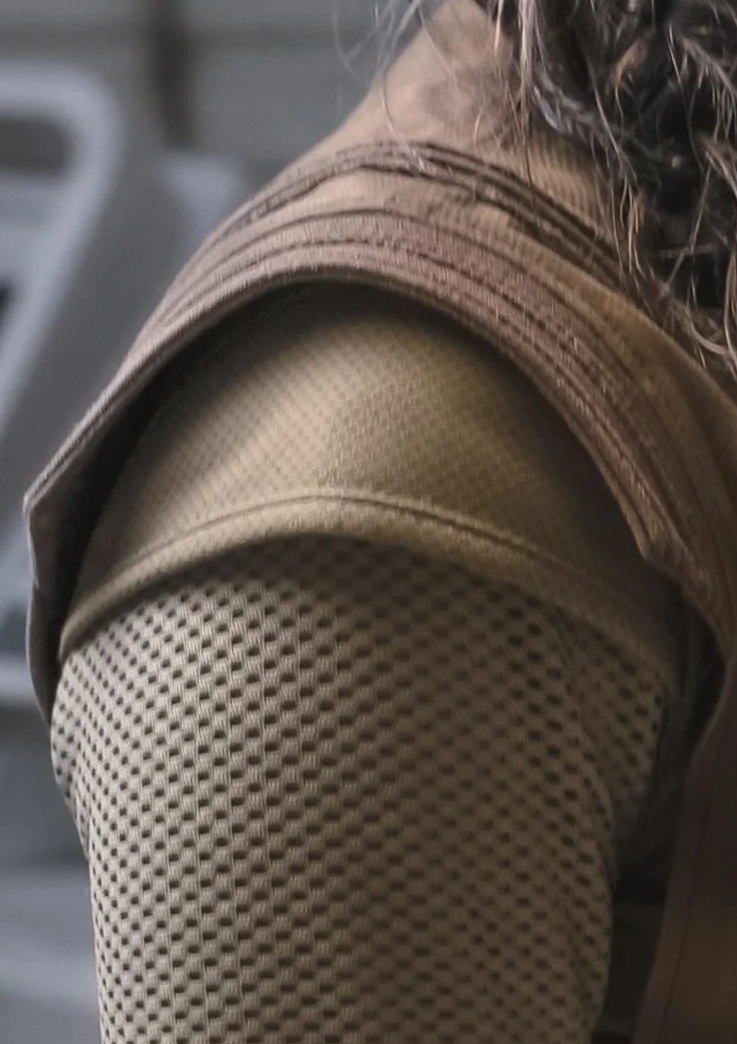
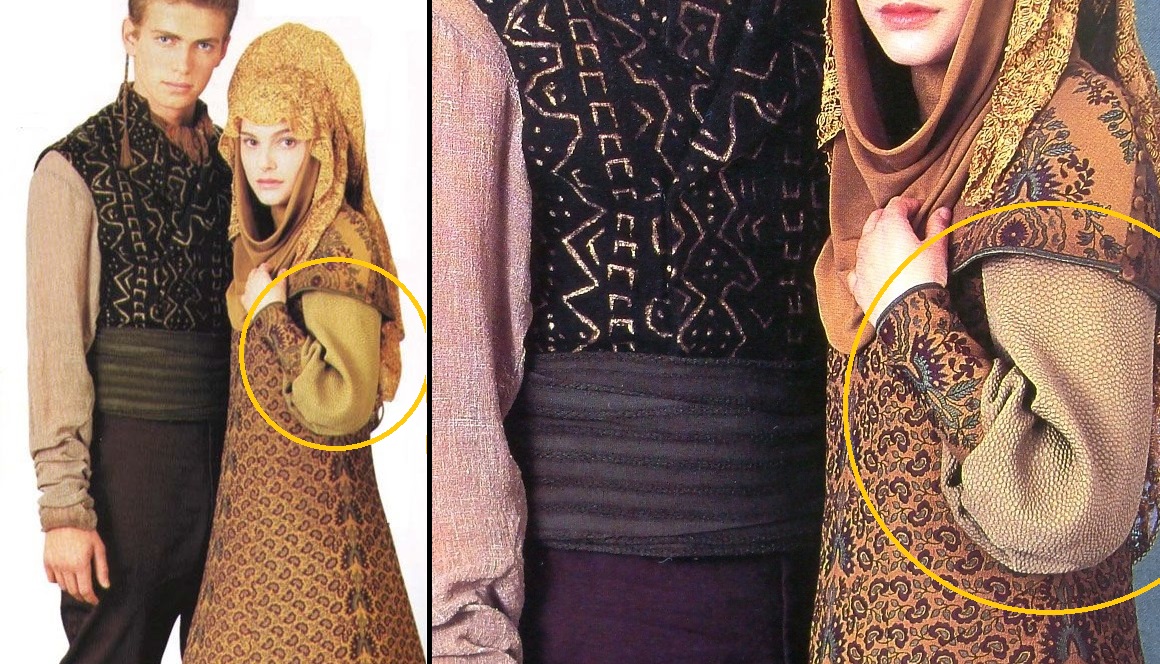
However, even at a distance, our eyes will still subconsciously pick up on a good texture to tell our brains that the material is substantial. Case in point: Padme’s refugee disguise sleeves – up close, they look more like, I dunno, pebbled lizard leather?!, while from a distance they’re simply ‘interesting clothing with good drape’:
Or take Palpatine’s “I love democracy” outfit from Episode II – you know, the one with THE SLEEVES:
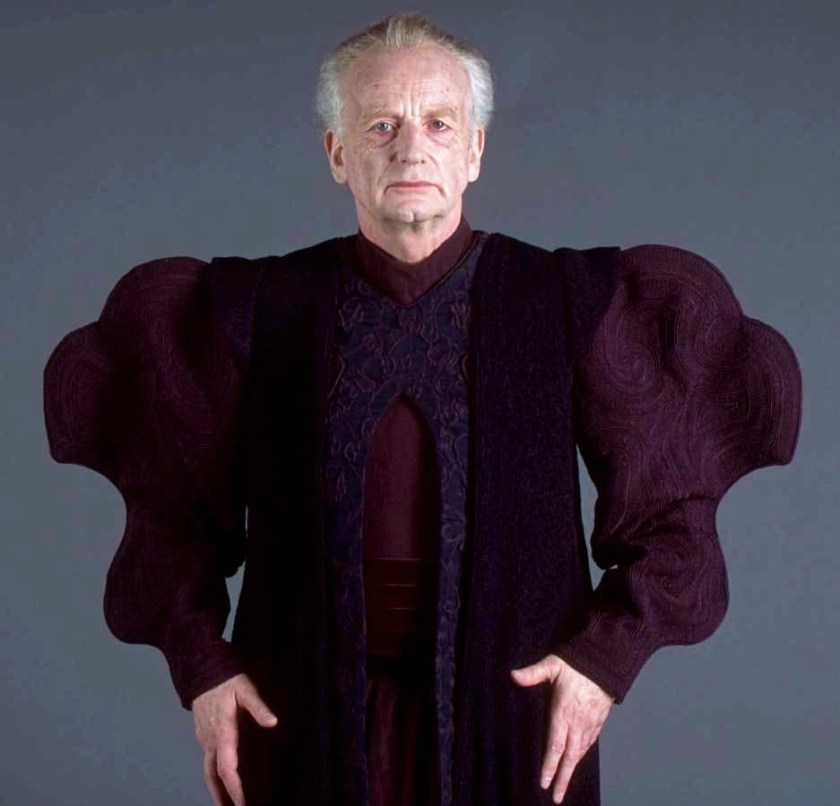
That’s what we saw onscreen and in reference books. But seen up close on display in a well-lit museum exhibit…
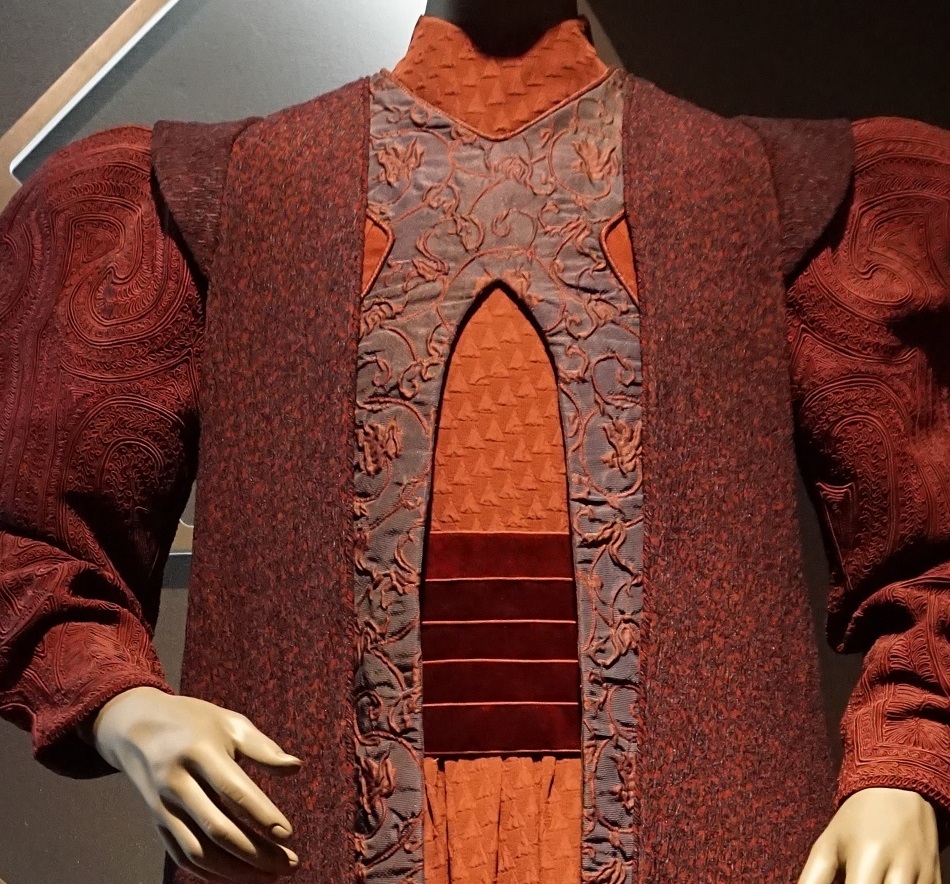
That’s right: 3D TRIANGLES!!? Even though the actual texture wasn’t discernible onscreen, our brains still knew that something interesting was there nonetheless.
This other kind of texture doesn’t get mentioned very often, but in this day and age I really think creators should take it into account from the beginning of a project, as the medium the project is seen in plays a big role in how much detail and material texture comes through to the viewer. For example, I believe that a large reason for the ‘aesthetic shift’ between titles of the Lucas and modern eras has to do with the fact that the latter are being shot on high-resolution modern digital cameras, which are far less forgiving when it comes to showing details. However, the inverse is also true, and I suspect shooting on grainy film did a whole lot of the heavy lifting encouraging us to suspend our disbelief, and make the GFFA feel grounded, believable, and ‘real’. Even though they may both use similarly low-textured materials, military-type uniforms of the OT and the modern era ‘feel’ very different onscreen or in reference books: the same way a film viewed on an 8K flatscreen at 60 FPS with ‘motion smoothing’ turned on is hard to take serious when it looks like a crispy soap opera. (Good lighting also plays a huge role!)
If you’re just starting out and your cosplay relies on relatively low-texture fabrics and is mainly going to be viewed digitally, you can compensate for this by being sure to weather your outfit, but you can always give it some extra texture by adding a ‘film grain’ filter, or even apply a tiny bit of blur – it might be just the thing to give it that ‘real’, ‘cinematic’ feel.
Well, what do you think? Am I on the right track or am I way off the mark? Will you be integrating any interestingly-textured fabrics into your kit this year? Drop a comment below and let me know, or come discuss GFFA aesthetics with us at the SWLH facebook group. Until next time!
Thanks to my readers and supporters (shoutout to S.F.)! Researching, writing, and editing a post like this takes a lot of time and energy (no ChatGPT here!), so if you’ve enjoyed reading, learned something, or have been inspired to integrate some interesting textures into your own outfit, please consider supporting my work via ko-fi, or with a small donation below! If you can’t give, please share this post or site with your friends! Thank you!
Make a one-time donation
Make a monthly donation
Choose an amount (US dollars only – unfortunately, I cannot currently accept Republic credits 😉
Your contribution is greatly appreciated and will help me continue to bring you this kind of in-depth material! Alternately, you can support my work via ko-fi as well.
Your contribution is greatly appreciated and will help me continue to bring you this kind of in-depth material! Alternately, you can support my work via ko-fi as well.
DonateDonate monthly- (Speaking of Mara Jade, the idea that she runs around in a black leather catsuit is an interesting sort of early-Internet reenactorism – this post from DIY Galaxy provides a good explanation for where it comes from and why it caught on.) ↩︎
 Living History in the Star Wars Galaxy