
Welcome back to the Galactic Style Guide, the series where we break down the ‘Star Wars aesthetic’ in order to help you create a more authentic ‘outer persona’ for your in-universe ‘denizen’ or OC cosplay!
First up – my apologies for the inadvertent hiatus in regular posts over the last few months. I started a new job back in September and even though I still get to bike-commute each day, the ride is about twice as long and so eats a bit more of my free time each day. Plus, the job itself is super detail-oriented – so when it’s quitting time, my brain is usually pretty fried. Couple this with ongoing new-home improvements (but still no usable workshop or photography space!), putting together a presentation for an out-of-state conference, the constant travel of the holiday season, weekly volunteering, a couple of polar vortices, plus a lack of local opportunities to actually Do something with my hobbies… with the end result that I’ve been feeling more than a bit burnt-out and unmotivated lately. However: the days are getting longer, and I am making an effort to continue contributing to this site!
In our next two Style Guide entries, we’re analyzing examples of an element of character design that I think gets frequently overlooked in SW costuming circles – Texture! Over the next couple months, I hope you’ll come to see how this element is actually a key pillar of achieving a authentic, suitably Swarzy look. While the visual effect may be similar to patterned materials, when we talk about texture, we’re talking about the actual physical dimensionality of the fabrics used to create a character’s costume. The degree of dimensionality means that various fabrics catch light in different ways, creating more or less visual interest.
Let’s get started with a material that may not immediately come to mind as ‘Swarzy’ – yet the overwhelming evidence shows that it definitely is!
As we can see here, while it only appears in the OT worn by a small handful of characters (curiously, all in Episode VI), velvet got a big representational boost in the Prequels due to their focus on upstrata characters.
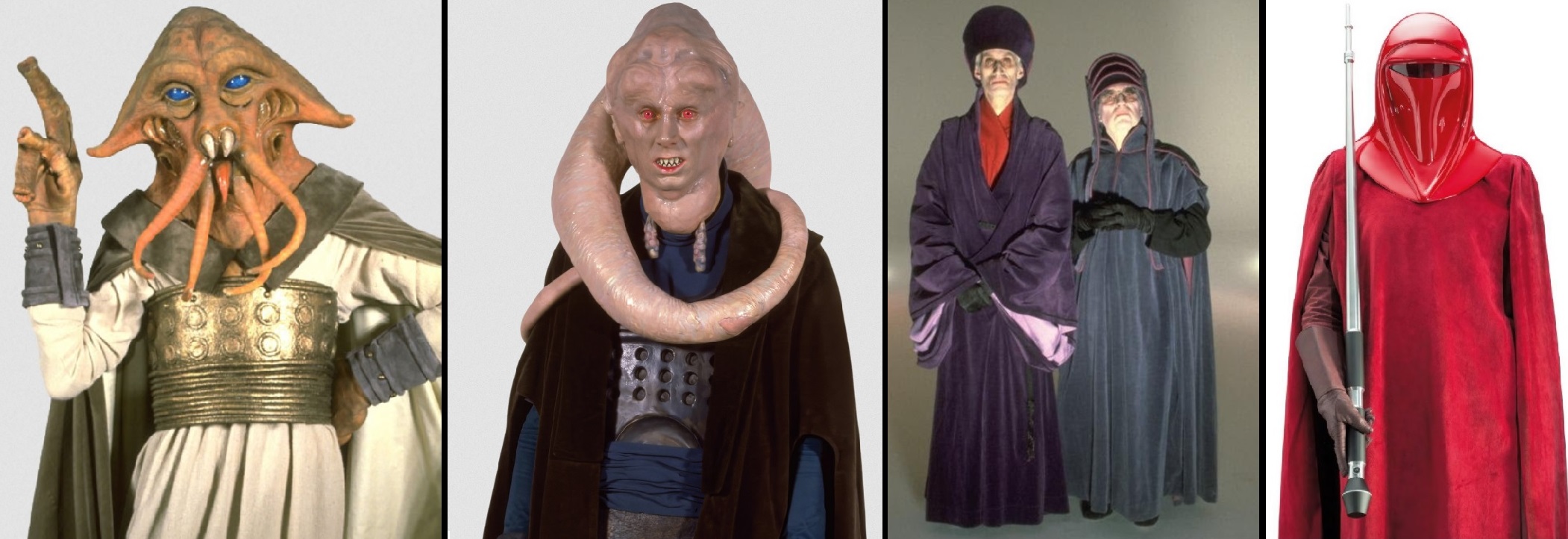

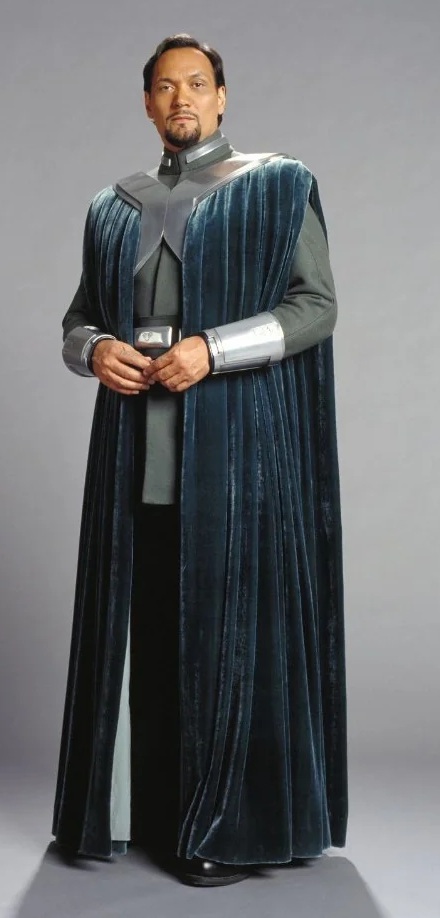
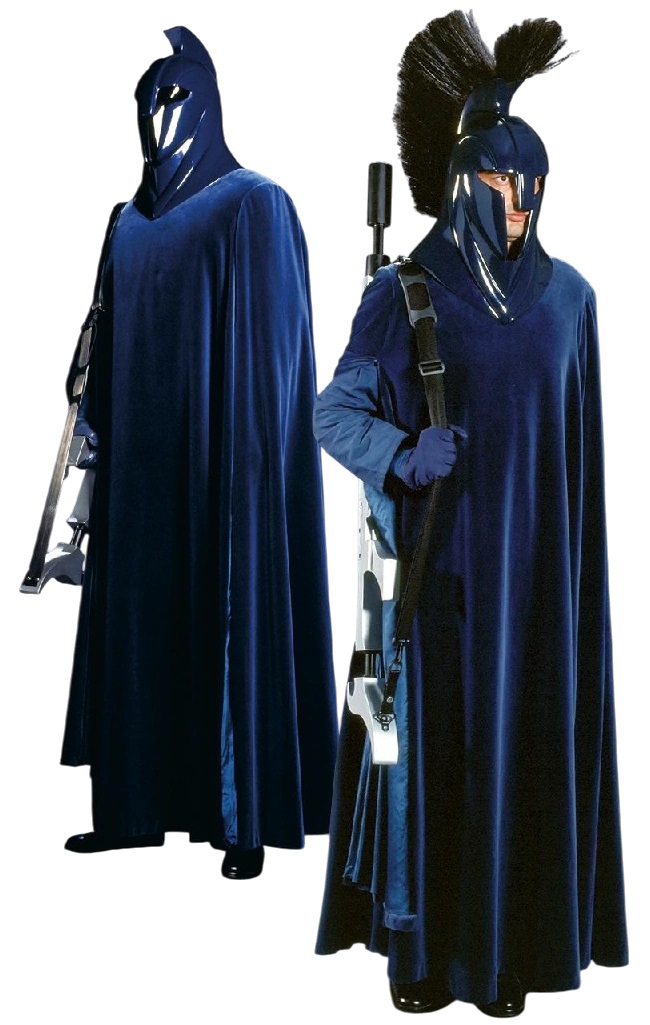
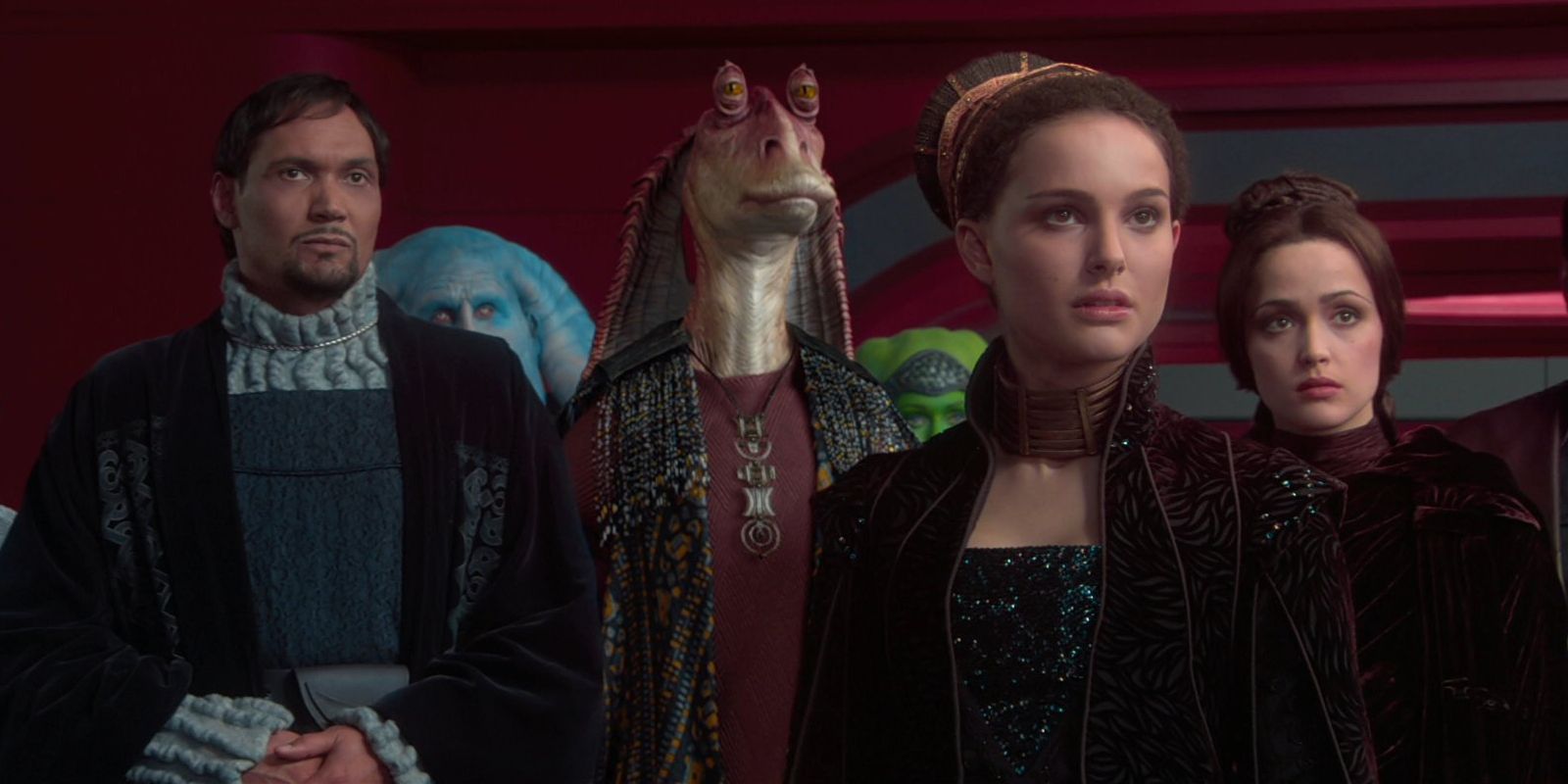
As should be evident from our examples here, velvet really excels when used for long, flowing garments like capes, cloaks, and robes; it would certainly be a strange choice for a ‘pants and vest’-type active character like a ship’s captain or Rebel general to wear such a material.
Speaking of the Prequels as a whole, the textures in that trilogy are incredible! Unlike the Original Trilogy (which largely follows the no-nonsense broadcloth and gabardine military styles of the Rebel Alliance and Imperial forces), I would say that in general, the majority of foreground (and a decent chunk of background) characters in Episodes I-III—from the dirt poor to galactic royalty—are rocking duds with at least some sort of textured fabric.
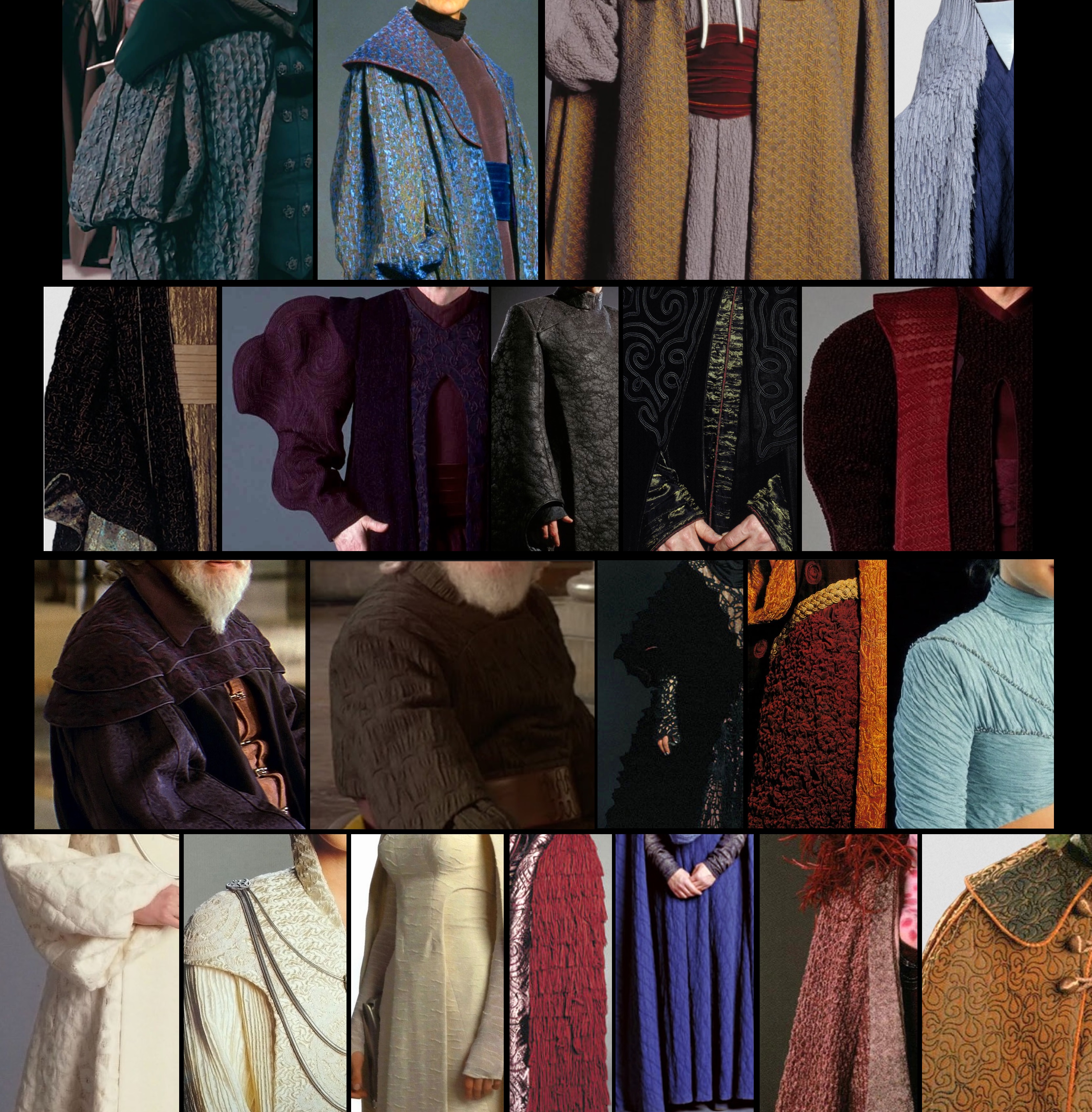
Senator Palpatine, Chancellor Valorum, Mas Amedda (III), Sly Moore;
Chancellor Palpatine (II, II, III, III, III);
Sio Bibble (I & II), Amidala’s traveling gown, senate gown, family croptop;
Mon Mothma (III)x2, Sheltay Retrac, Chi Eekway, Silya Shessaun, Rystall, Waks Trode.
This includes pretty much all the Neimoidians and Separatists as well:
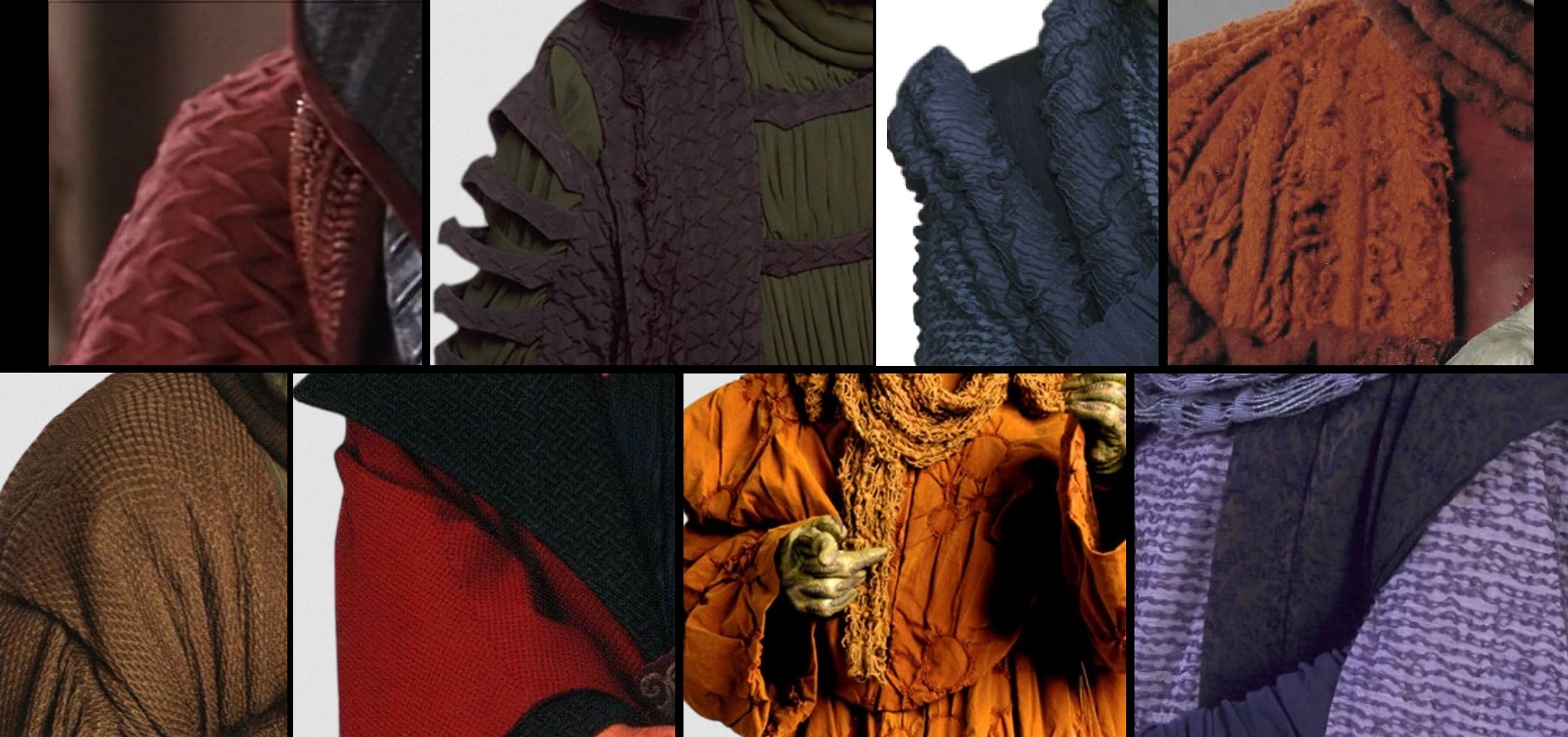
Rute Gunray, Tikkes, Passel Argente, Dinaria Kee
It should also come as no surprise that pretty much everyone on Tatooine is wearing cozy-looking homespun materials:
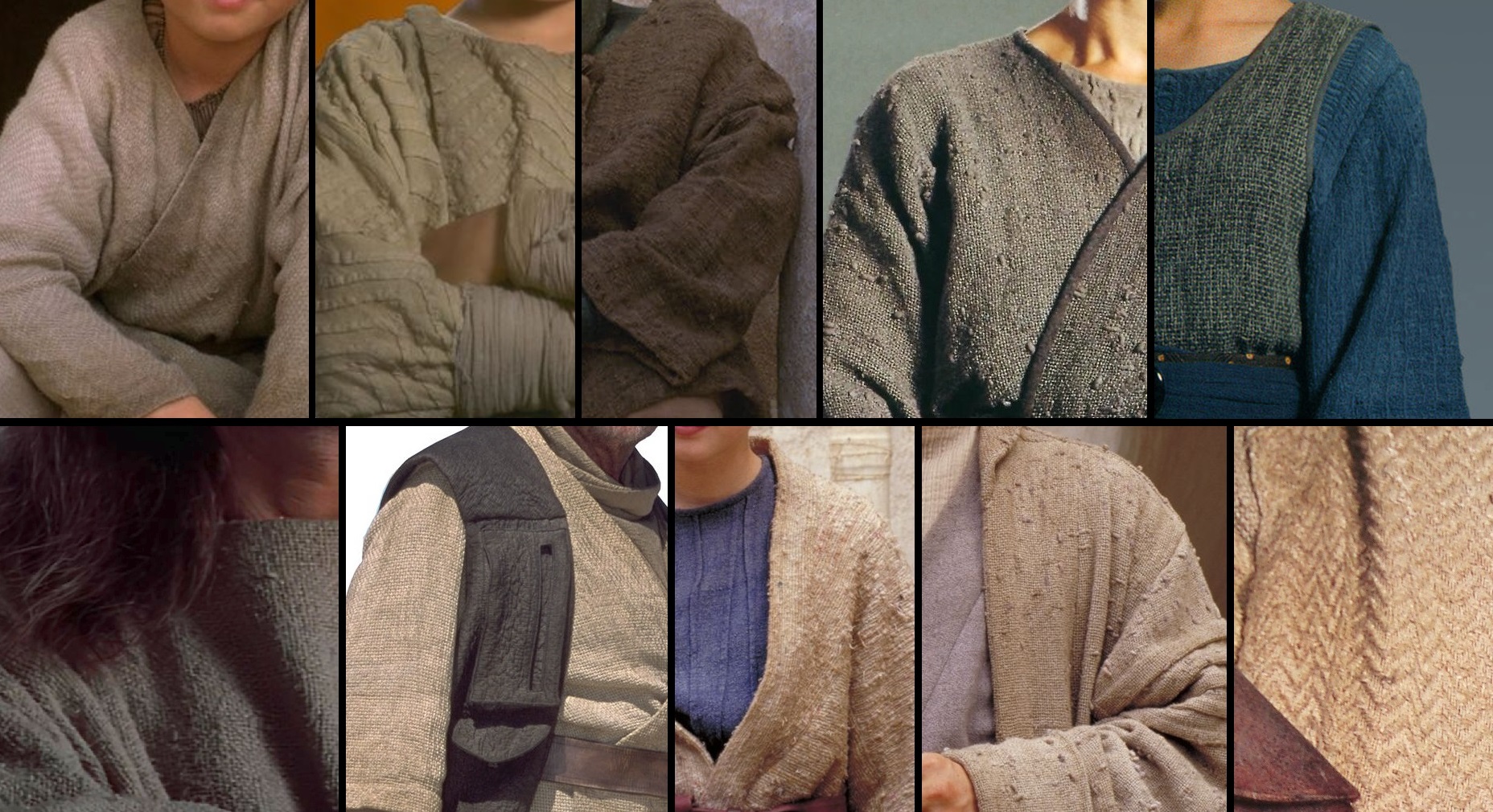
Qui-Gon, Cliegg, Beru, and Owen Lars, Tuskens.
Of these, Anakin’s is probably the least-textured material, but even as (apparently) a simple twill weave, the material still has great weight and character seen up close (linen/silk/hemp for the win!):
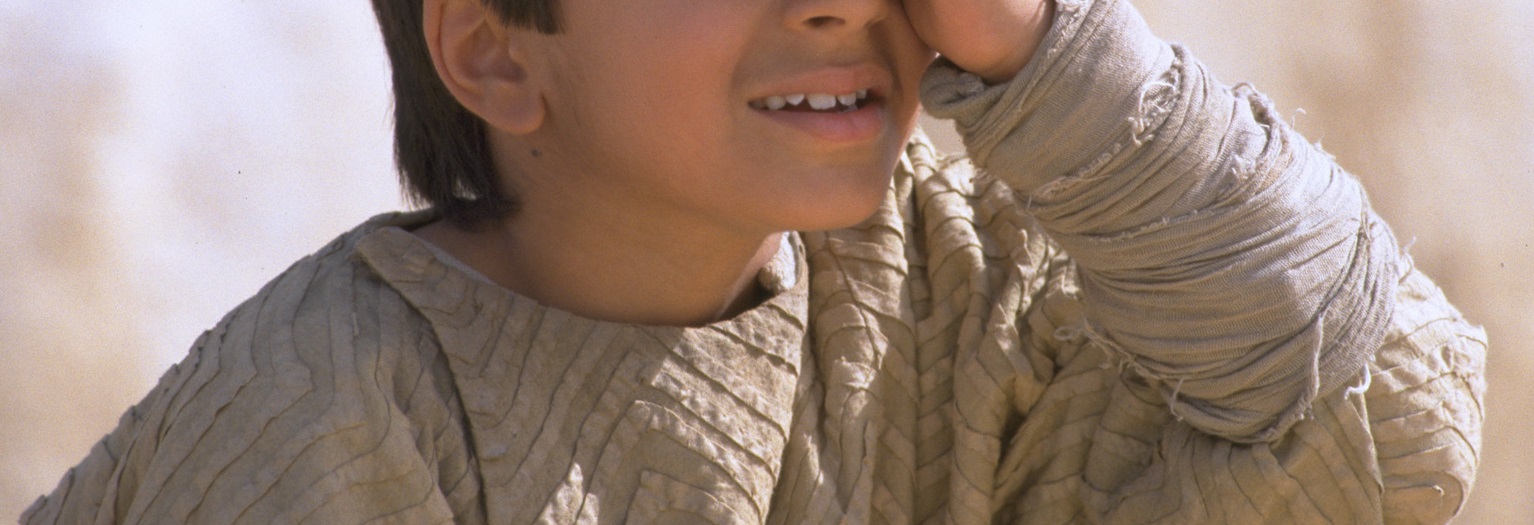
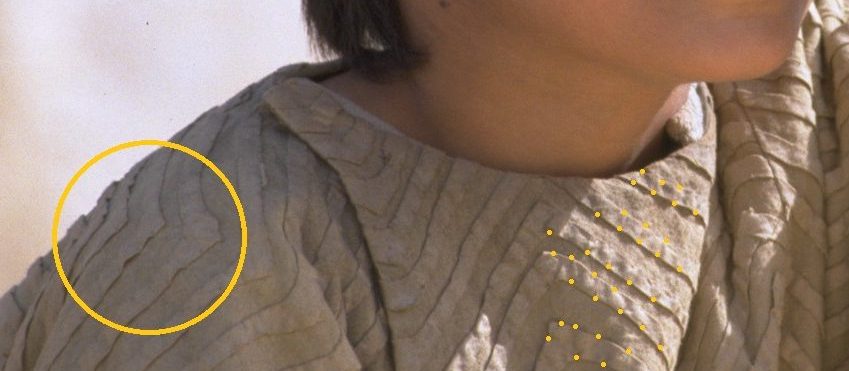
Now, if you want something to really scrutinize, let’s go down a rabbithole with a look at the lovely tunic worn by Anakin’s buddy Kitster. From a distance, it simply looks like it’s been sewn from a nubby ethnic fabric with a zig-zag weave, but after closer inspection, I can confidently say that it must have been jaw-droppingly labor-intensive to create…
Because as it turns out, each zig-zag we’re seeing is in fact an individual strip of fabric that’s had its edges turned under and been blind-stitched onto the base tunic! – you can see the dimpled appearance on the front, and the gaps where the strips raise up between stitches on the shoulder. Is there a name for this technique? If you know what it’s called, leave a comment below!
As we mentioned in one of our Materials posts, using silk noil (‘raw silk’) is a great way to automatically give a garment some texture – especially if you want to channel an earthy, humble, Jedi vibe:

Finally, let’s wrap this first part up with a bit of texture potpourri (to be expanded as more examples reveal themselves!):
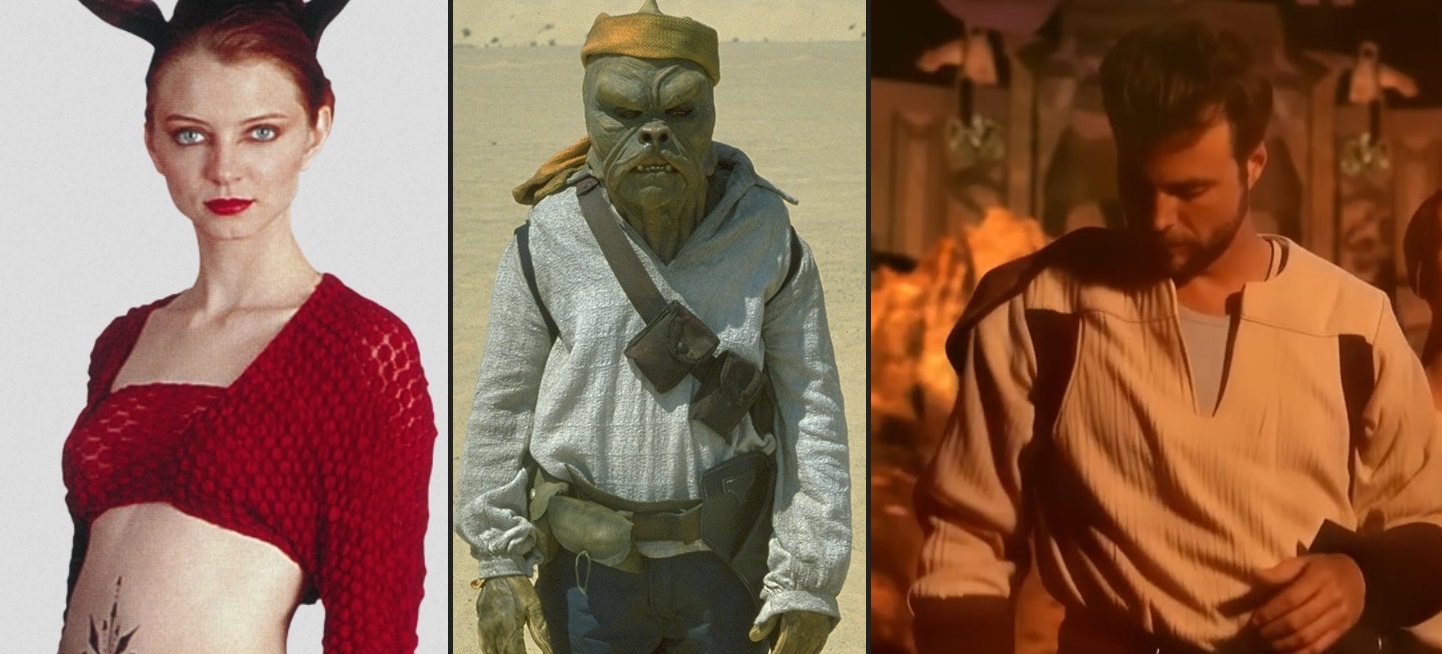
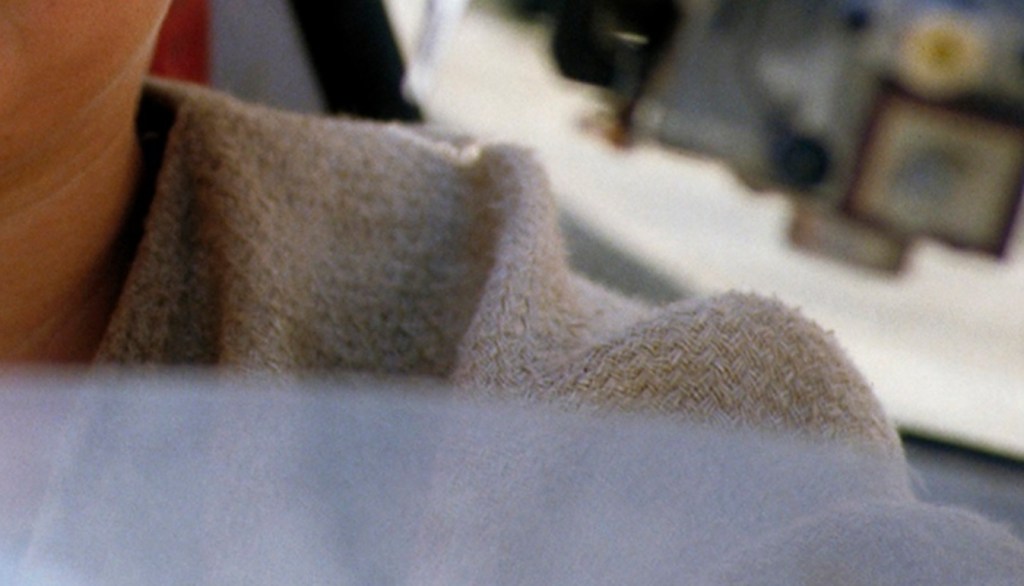
Kyle’s shirt is a great case of the importance of using texture to its full advantage. Some have suggested that this shirt reminds them of modern ‘crinkle cotton’ but to my eyes it’s less crinkly and (if not lined, which it likely is) definitely heavier weight. I’ve used an upscaled picture here to show the texture better, but the inherent nature of 90s FMV cutscenes means a lot of detail gets lost to pixelation, so if Kyle had been running around in a shirt made of plain, lightweight broadcloth, the result would look a lot more costume-y.
As to how and why texture and/or the material used plays such a big role in making a kit feel ‘real’, that’s something we will be unpacking in detail next month – plus some examples of textured materials you may already have in your own closet!
Until then, come show off your favorite textured fabrics or join the discussion at the SWLH facebook group. See you next month!
Thanks to my readers and supporters (shoutout to G.B)! Researching, writing, and editing a post like this takes a lot of time and energy (no ChatGPT here!), so if you’ve enjoyed reading, learned something, or have been inspired to integrate some interesting textures into your own outfit, please consider supporting my work via ko-fi, or with a small donation below! If you can’t give, please share this post or site with your friends! Thank you!
Make a one-time donation
Make a monthly donation
Choose an amount (US dollars only – unfortunately, I cannot currently accept Republic credits 😉
Your contribution is greatly appreciated and will help me continue to bring you this kind of in-depth material! Alternately, you can support my work via ko-fi as well.
Your contribution is greatly appreciated and will help me continue to bring you this kind of in-depth material! Alternately, you can support my work via ko-fi as well.
DonateDonate monthly Living History in the Star Wars Galaxy