
Welcome back to the Galactic Style Guide, the series where we break down the ‘Star Wars aesthetic’ in order to help you create a more authentic ‘outer persona’ for your ‘denizen’ or OC.
As pointed out in EC Henry’s excellent video on the foundations of good SW vehicle design (which I believe is absolutely applicable to character/costume design as well), the first requirement is an iconic design – i.e. like computer icons, Star Wars characters (and character types!) should be recognizable by their silhouettes and largely not be mistaken for each other.
Cosplayers new to the idea of ‘original character’ or ‘denizen’ costuming often chafe when exposed to the reality that the GFFA setting, while far-reaching, is not in fact without limitations, but operates instead within a specific visual idiom in which character types are associated with certain design styles.
We’ve explored several of these in our two previous entries, so this time, I want to show how trying to mix-and-match elements from these styles can actually sabotage otherwise-solid character concepts.
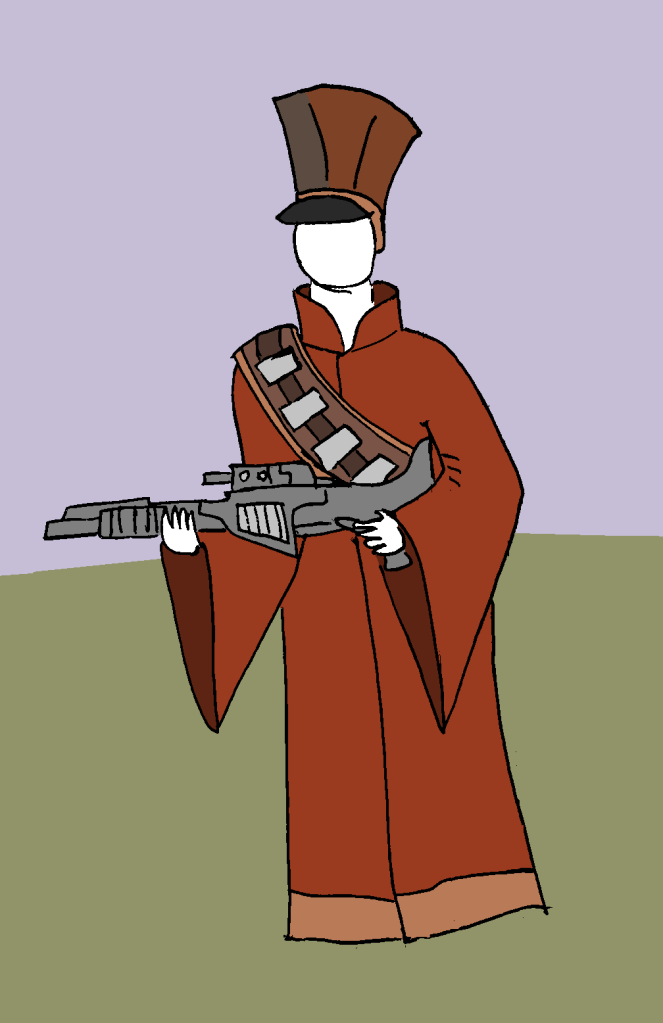
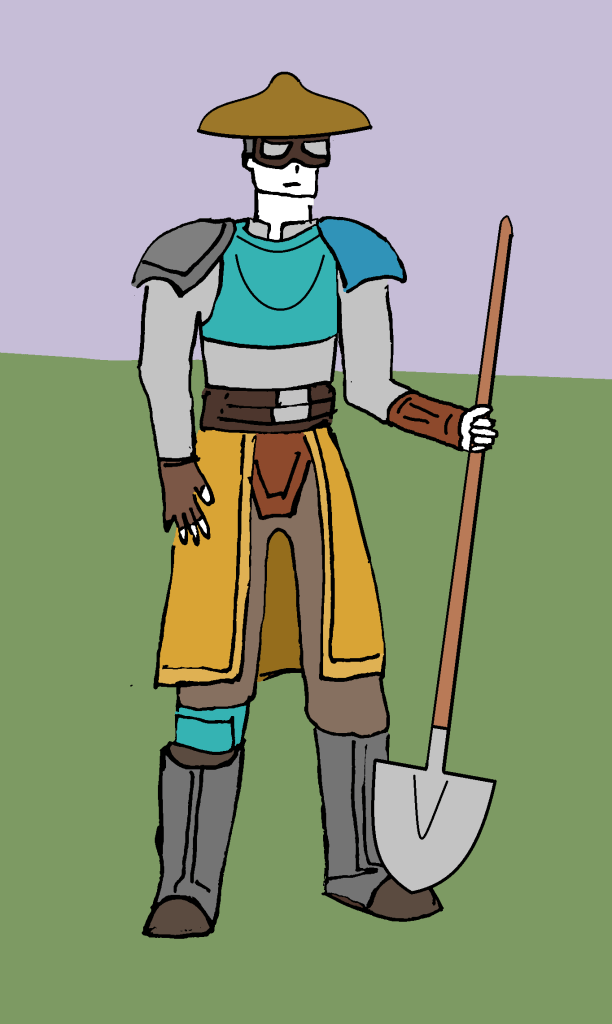
As we will see, the GFFA upstrata look is consistently associated with yards and yards of floor-length draped garments (gowns, robes, cloaks, etc.) and fanciful headwear, while the “combat classes” like mercenary or bounty hunter are encased in various types of armor to protect themselves in battle, giving a higher percentage of ‘hard’ to ‘soft’ elements in their costumes. When most of a costume is ‘soft’ (with only one or two ‘hard’ pieces like belt buckles) and garments are longer but not upstrata-voluminous, the overall look reads as space-peasant or local civilian.

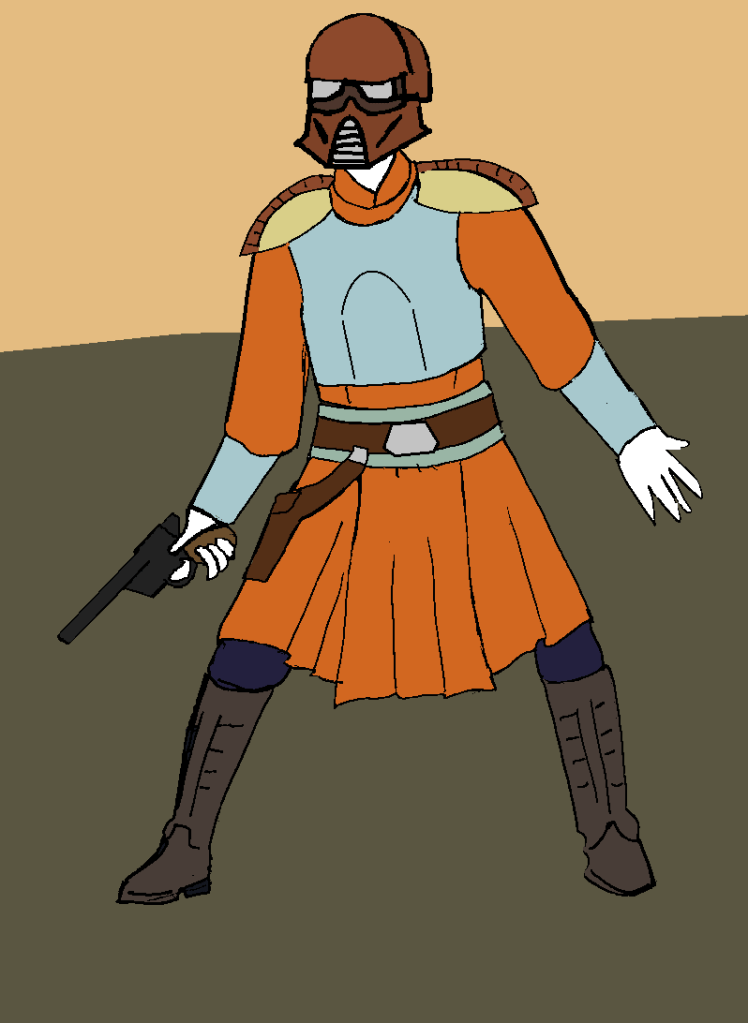
By contrast, the spacer/’smuggler’/starship captain look is probably the most similar to the modern Western style (tailored, ~hip-length tops worn with trousers); the main inspiration comes from the cowboy of Western cinema (think quickdraw holsters, vests, riding pants and boots). This is at odds with the Force-user archetype, which draws on Orientalist ‘exotic’ style longer tunics, paired with accessories that suggest religious vestments (tabards, wide sashes, etc); darksiders may add some hard armor that lets us know they’re ready for a fight. However, a good smuggler’s goal is to avoid attracting attention, and so they should do their best to dress space-casual and not project a ‘combat-ready’ stance.
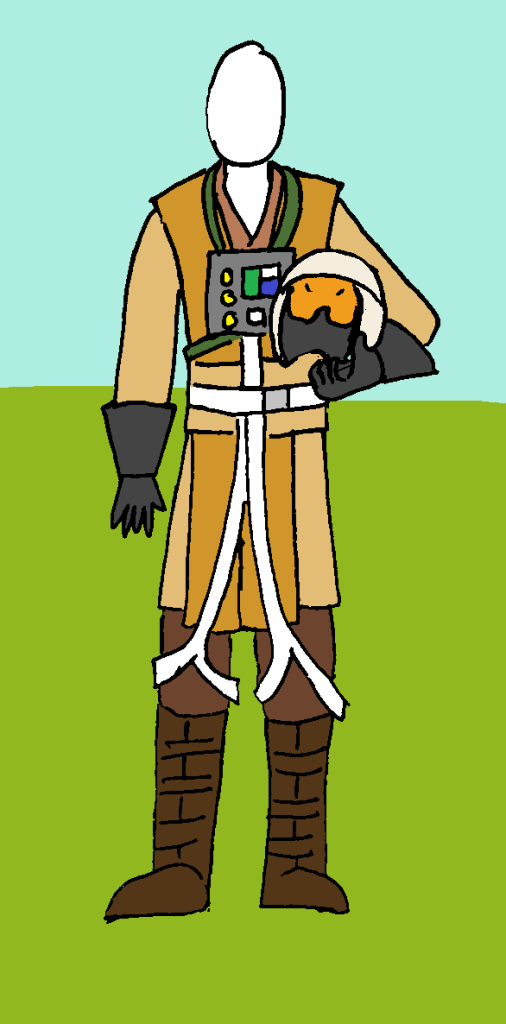

*Besides, we already know what Jedi pilots look like:

The snubfighter pilot class of the GFFA is primarily inspired by the looks of military pilots of the Second World War: one-piece flying suits (heavily pocketed!), parachute/ejection harnesses, cloth flight caps, oxygen masks/tubing/life support boxes, etc….plus postwar flight helmets. This is at odds with the cozy robes and tunics of the Force-user, who are fairly unadorned as befits an order of space-monks. In fact, Jedi don’t even have pockets!, thus they can’t slouch around with their hands in them, and are forced to do different things with their hands. (Now there’s a bit of homework for you – go rewatch a Star War and only pay attention to characters’ hands!) However, as we can see above, the no-nonsense style of a military pilot clashes if paired with the ostentatious trappings of the galactic upstrata.
And let’s round things out with a couple stragglers:
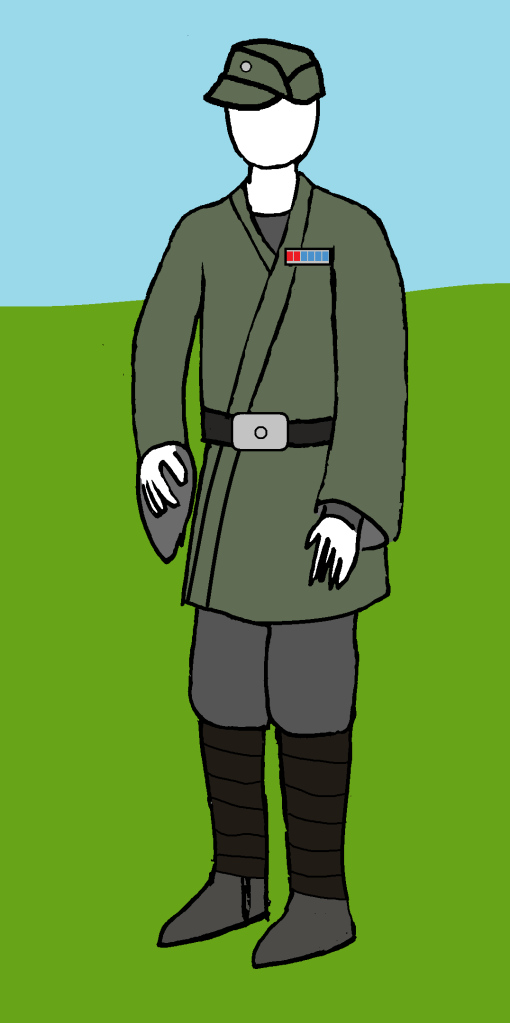


The Imperial style has never been shy about its visual inspiration: clean, efficient fascist styles of the early 20th century: think crisp double-breasted jackets, leather riding boots, and jodhpur-cut pants. The styles of the galactic peasantry, on the other hand, are more varied but tend to come from remixed historical designs, often from non-Western cultures: long homespun robes of Middle Eastern/North African desert nomads, wrap-front coats and legwraps of northern Europe, or light, breezy tunics and trousers of south Asia. These typically are made from rustic fabrics with lots of texture and character; the Imps use less-textured but still high-quality fine wools. Even if paired with the trappings of space-fash like rank plaques and belt/hat discs, trying to combine the two looks just doesn’t quite work.
However, perhaps the least effective denizen OCs result from what I’ll call the ‘kitchen sink’ approach to character building. Have you ever seen one of those ‘survival’ tools that claims to be like, “17 TOOLS IN ONE!”?
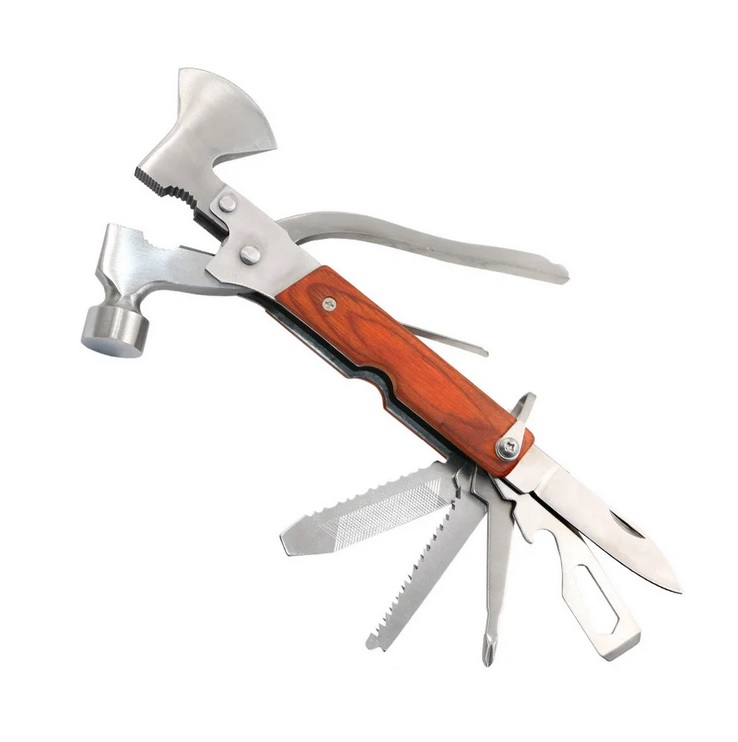
By trying to be too many things at once, the end result is 17 subpar tools that work way worse than they would have individually. These are basically the hardware equivalent of Aesop’s fable about The Man, The Boy, and The Donkey, whose moral (“Try to please all, and you will please none“) is absolutely applicable to OC costuming, and ‘kitchen sink characters’ in particular. Even though it might be made up of recognizable GFFA elements, if the concept for your Star Wars OC is something like ‘Jedi Pilot Mechanic Trooper’, the end result will almost certainly be an unfocused mess that won’t particularly read as any one of those:
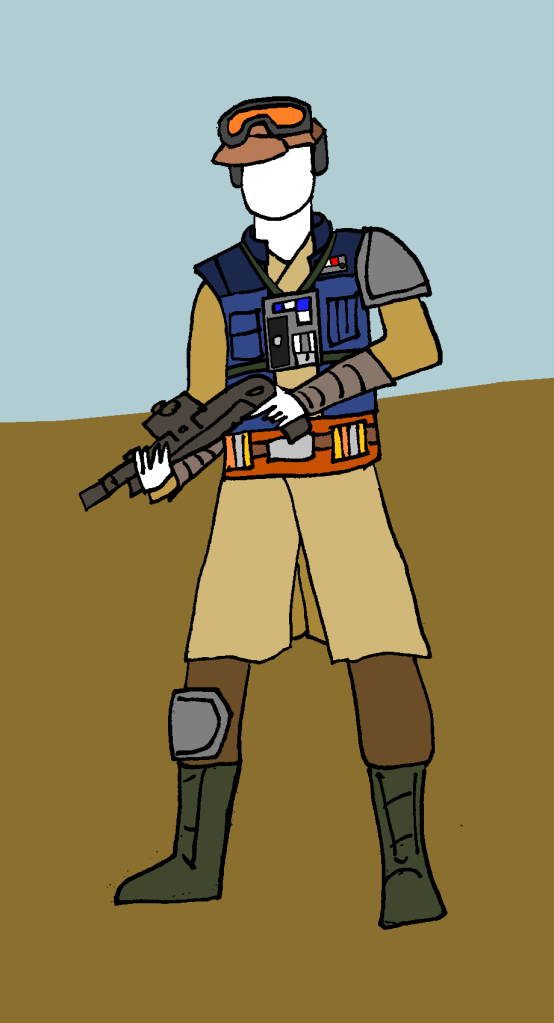
In summary, mix-and-matching can be a solid approach for creating a denizen look, but it works best when the elements used are all drawn from examples of the same ‘character class’. As my buddy Greg has explained it:
“Following a predetermined aesthetic can help ensure that an impression is actually recognized for what it is meant to be. This is vital for those in the public eye, lest they be mistaken for a character entirely unrelated.”
Are there any onscreen characters I’ve overlooked who exemplify these kinds of character class mashups? Is there some archetype I’ve missed and should have included? Let me know down below with a comment, or come discuss with us at the SWLH facebook group. See you next time!
Thanks to my supporters! While I love doing these sketches, writing and putting a post like this together takes a lot of time and energy (no ChatGPT here!) If you’ve learned something from this post, please consider supporting my work via ko-fi, or with a small donation below! If you can’t give, please share this post or site with your friends! Thank you!
Make a one-time donation
Make a monthly donation
Choose an amount (US dollars only – unfortunately, I cannot currently accept Republic credits 😉
Your contribution is greatly appreciated and will help me continue to bring you this kind of in-depth material! Alternately, you can u003ca href=u0022http://ko-fi.com/offworldoutfittersu0022u003esupport my work via ko-fiu003c/au003e as well.
Your contribution is greatly appreciated and will help me continue to bring you this kind of in-depth material! Alternately, you can u003ca href=u0022http://ko-fi.com/offworldoutfittersu0022u003esupport my work via ko-fiu003c/au003e as well.
DonateDonate monthly Living History in the Star Wars Galaxy