
(This article is a modified version of a workshop I recently taught at the 10th annual Whippoorwill Festival here in central Kentucky)
Greetings, galactic crafters! – and happy ‘May the Fourth’ weekend!
If you’re in search of an authentic GFFA wardrobe that can stand up to the rigors of authentic GFFA activities, I find that off-the-rack fashion pieces from Amazon can only take your look so far. When you’re in the middle of a tariff war and most of that cheap clothing comes from overseas, this might be the perfect time to add a useful skill to the ol’ proverbial toolbox and start creating more of your garments yourself!
So, do you want to create a solid, in-universe outfit but find that the good materials (linen, raw silk, wool, etc.) at the online fabric merchants have gotten too expensive? Or has your go-to big-box craft store gone bankrupt and closed its doors, leaving a choice between one that doesn’t even sell fabric in-store, and another run by Christian Nationalists? Then you should consider Fabric Prospecting!
What’s that? I’m glad you asked!

Traditionally, prospecting is done for valuable raw materials—like precious metals, or crude oil—but in the costumed arts, the raw material in demand is quality fabric! As you would expect, traditional markets price these accordingly (especially when compared with synthetics, which are dirt cheap). However, did you know that there’s an oft-overlooked source of high-quality, natural-fiber fabric just waiting to be exploited and put to costumery uses?
The first step is to visit your local secondhand shop and head to the dresses, skirts, and bedding sections. If your ‘fiber eye’ is sufficiently trained (or you don’t mind checking the tags for every item), then you’re in the right place to find these materials at absolutely rock-bottom prices, and if the Force is really with you, you might walk out the door with some major treasures like these:
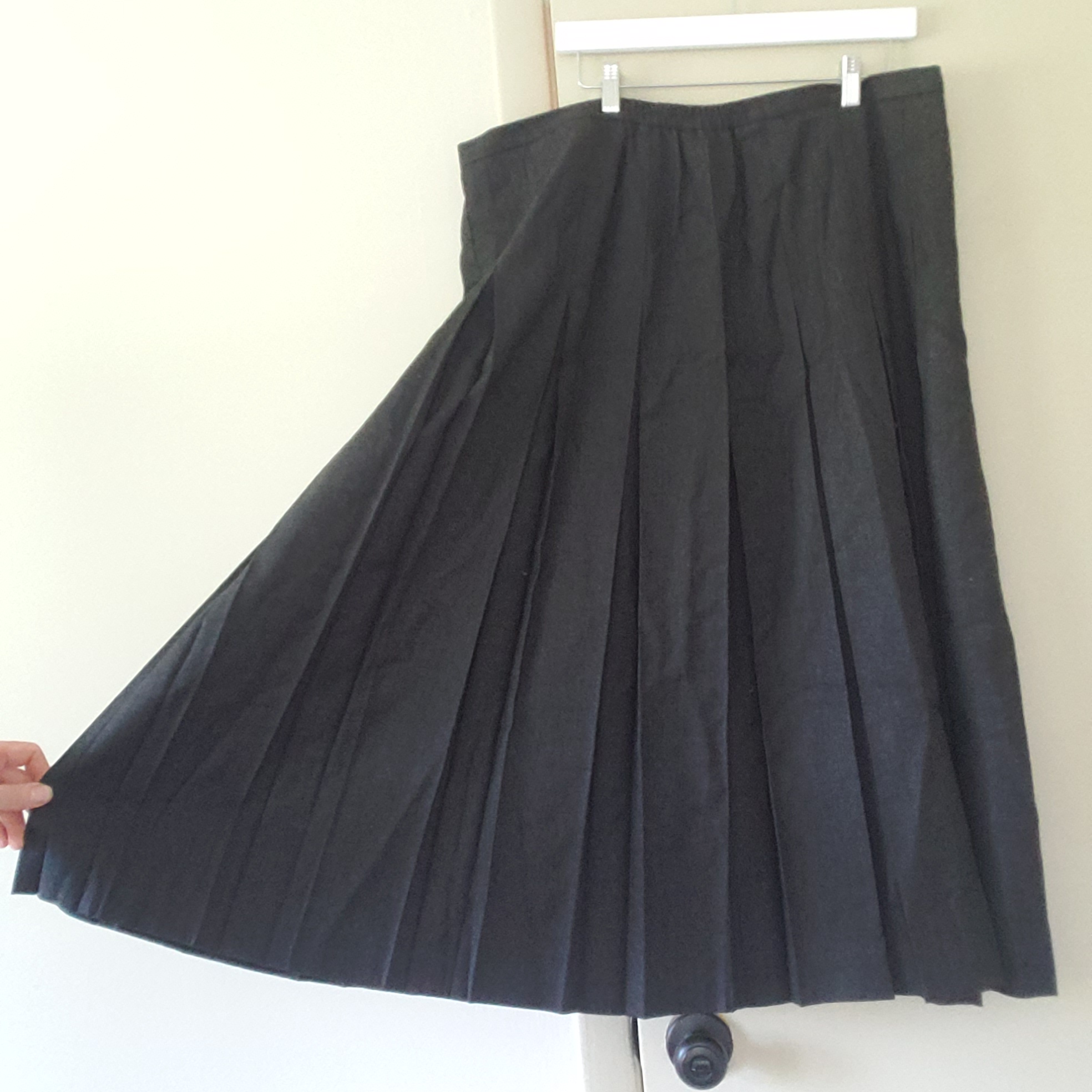

This 100% wool skirt illustrates a key pro tip: when it comes to skirts and dresses, plus sizes and pleats are your friends! – after all, pleats are just a way to pack more material into a smaller area! In this case, the skirt had a 40 inch waistband but thanks to being fully box-pleated, the skirt itself yielded over nine FEET of lush charcoal-gray material, the equivalent of two cut yards. At regular prices, this amount of wool might cost you 40 or 50 dollars, but this skirt was only $6.99!
However, not all pleats are created equal. One skirt I recently found looked like another boxpleated motherlode, but it was only after I started taking it apart that I discovered the pleats were cheats, reducing the amount of readily-usable fabric by about 25%:
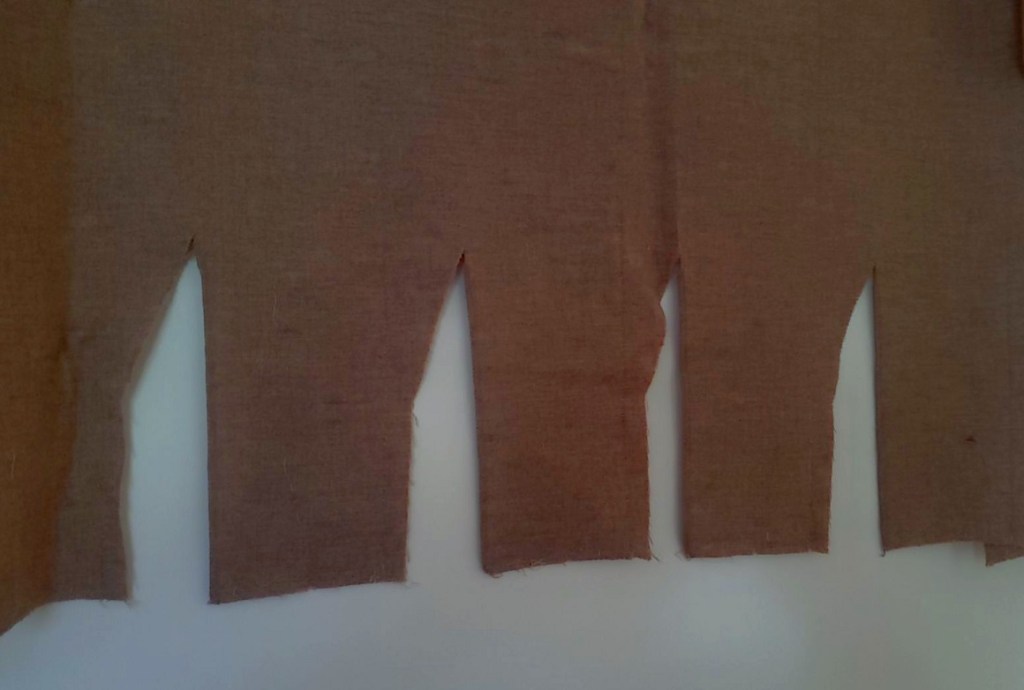
Learn from my mistake – always check the inside of the pleats to make sure they run the full length of the garment!
In terms of sheer quantity, bedding often pays the biggest dividends, in the form of thick curtains, sheets, tablecloths, or the odd blanket.
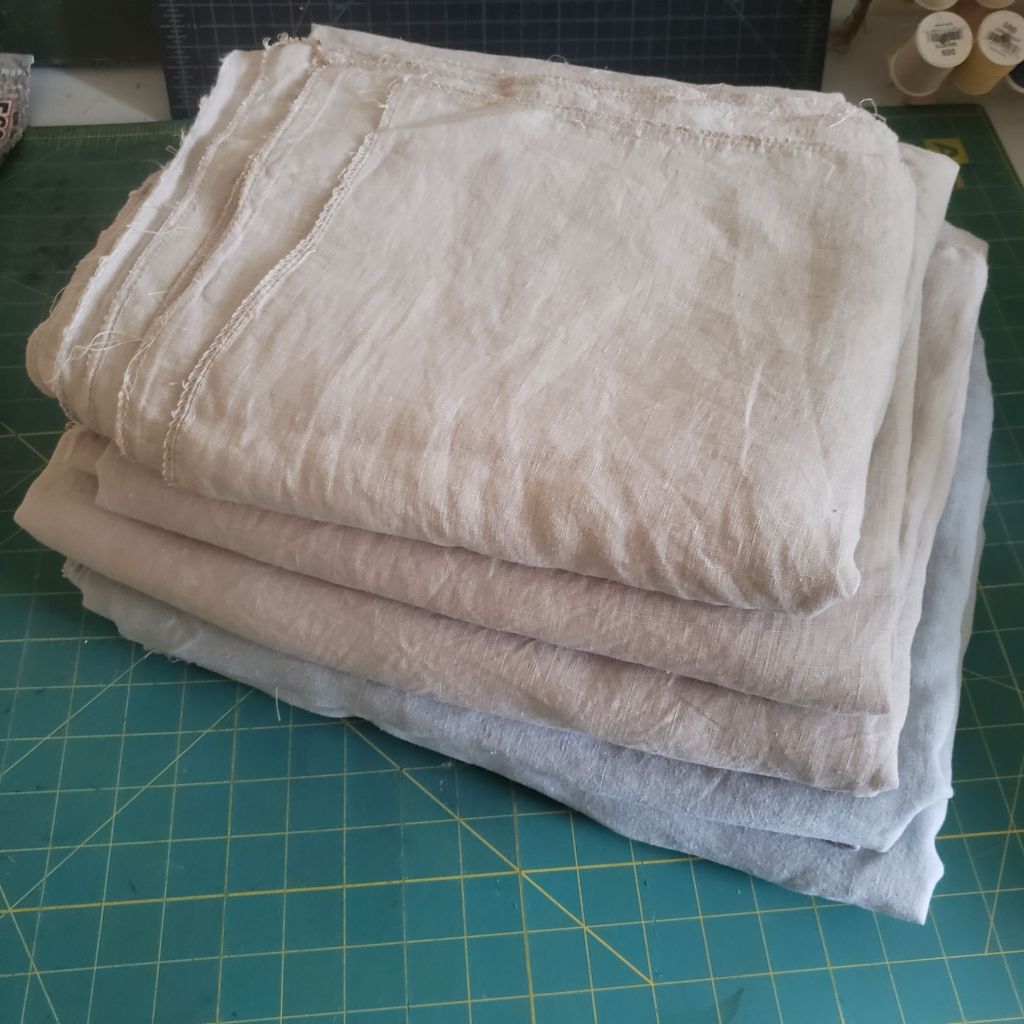
These three king-size 100% linen sheets and a duvet cover yielded a whopping TWELVE yards of garment-weight material in Swarzy muted colors. Price: $10 for all.
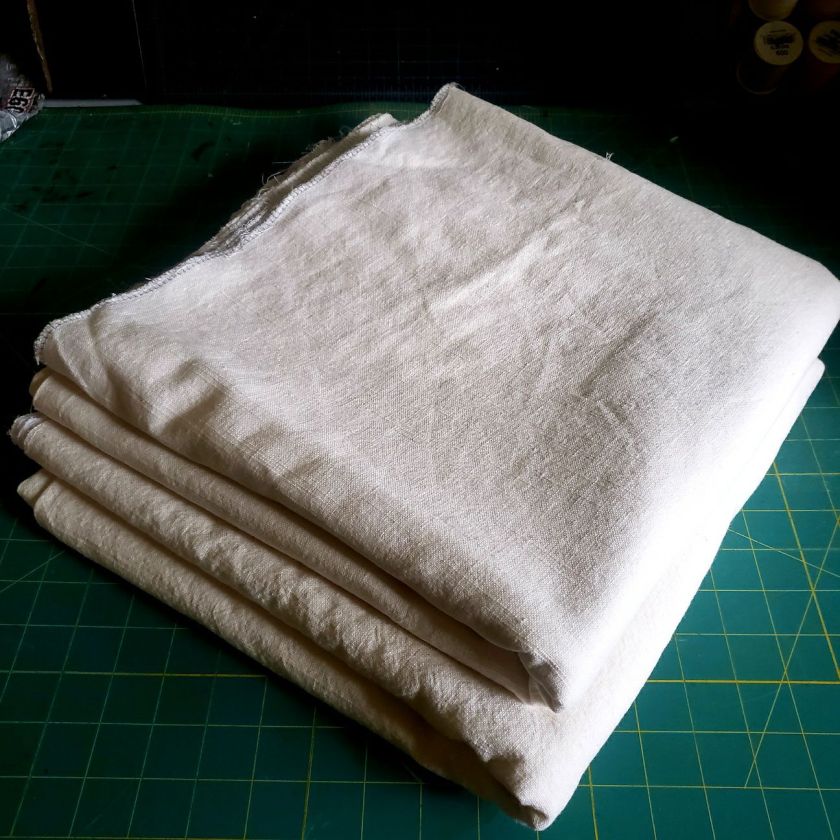
These two 73% linen/27% cotton curtains originally cost over $150 at Pottery Barn, and yielded five yards of heavy canvas destined for ponchos. Price: $10 for the pair.
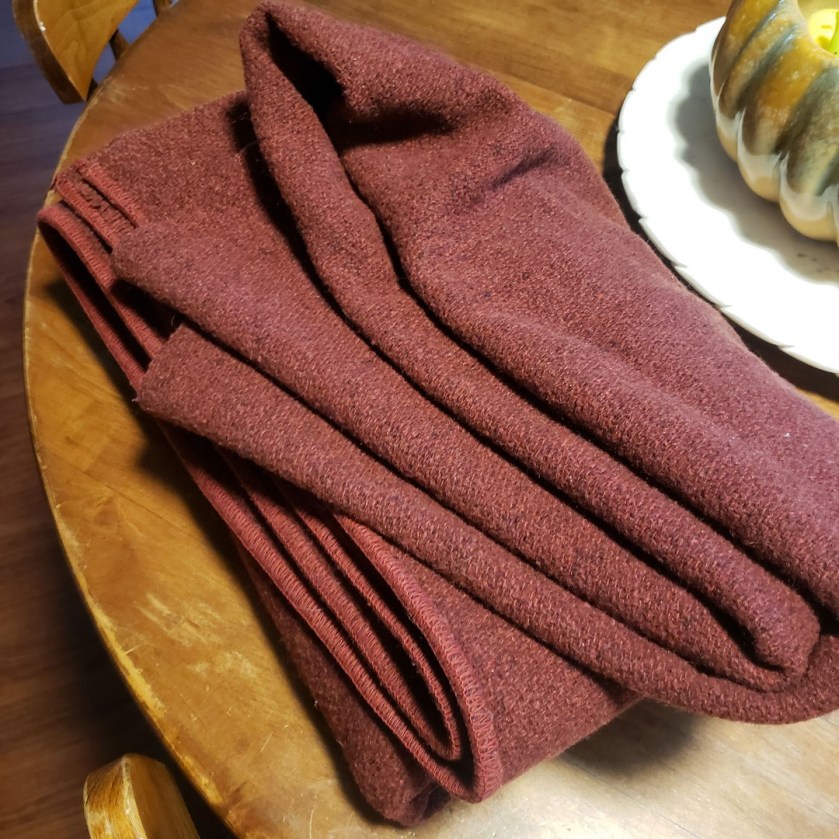
This 100% wool blanket was destined to become a comfy winter cloak – price: $2!
(Another source for high-quality fabric I’ve had good luck with lately are yard and estate sales, especially if the house belonged to an elderly, crafty fabric hoarder! Unlike a thrift shop, the nice thing about yard sales is that you can haggle – I recently scored another wool blanket for just $3 (down from $7) after I pointed out that it had a couple moth-nibbled holes!
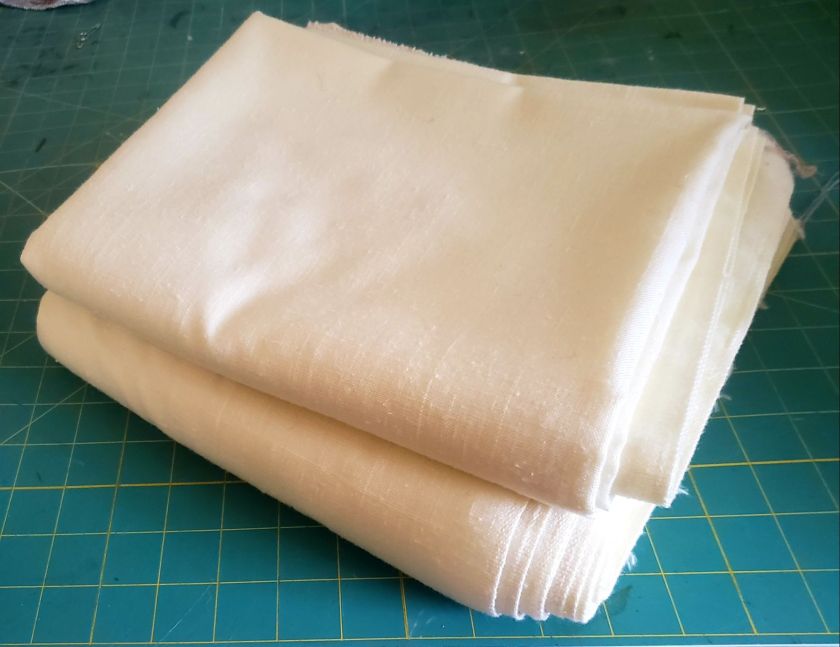
These five yards of pale yellow linen came from an estate sale down the street, price? $5. I’m pretty sure it has never even been pre-washed!
Once you’ve identified a given ‘vein’ and got your treasure home, then it’s time to start ‘mining’ – the tedious stage where you actually get the material into a usable form. Typically, this is the work of a seam ripper and an hour or two. For large items like sheets or curtains, this isn’t totally necessary (you could just cut the seams off and use what’s left), but if you want to extract the maximum usable material, you should! (I’ve found that sometimes the parts of multi-piece skirts are not cut with the fabric’s grain running totally square, so it can be a good idea to pull threads until you have a true square edge.) After everything has been taken apart at the seams, it’s time to serge, overcast, or zig-zag your edges, toss it in the washing machine, then iron flat.
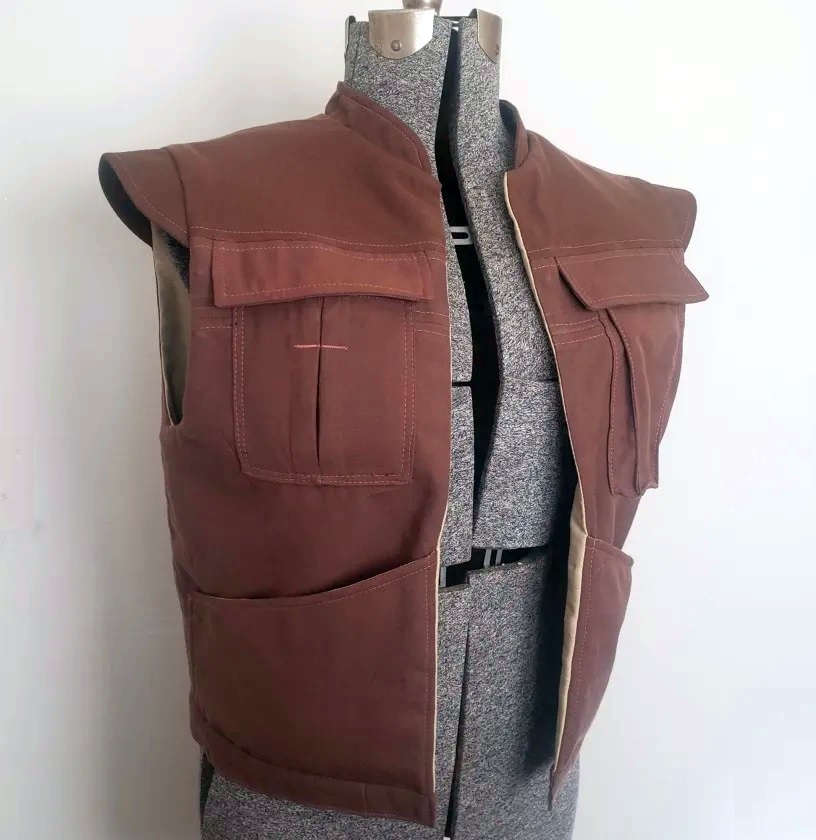
Now that your material has been processed, it’s ready to be transformed into your next creation, like this 100% wool vest, whose shell started out as a plus-sized, extra-long skirt!
Thanks to my readers! Writing and editing a post like this takes a lot of time and energy (no ChatGPT here!), so if you’ve learned something or have been inspired to take up ‘fabric prospecting’ yourself, please consider supporting my work via ko-fi, or with a small donation below! If you can’t give, please share this post or site with your friends! Thank you!
Make a one-time donation
Make a monthly donation
Choose an amount (US dollars only – unfortunately, I cannot currently accept Republic credits 😉
Your contribution is greatly appreciated and will help me continue to bring you this kind of in-depth material! Alternately, you can support my work via ko-fi as well.
Your contribution is greatly appreciated and will help me continue to bring you this kind of in-depth material! Alternately, you can support my work via ko-fi as well.
DonateDonate monthly Living History in the Star Wars Galaxy
One thought on “Intro to Fabric Prospecting”