Galactic Style Guide – Coats & Robes

Welcome back to the Galactic Style Guide, the series where we break down the ‘Star Wars aesthetic’ in order to help you create a more authentic ‘outer persona’! Somehow it’s been about a year since we’ve had a Style Guide entry dealing with soft kit, so this time around we’re diving into another category of somewhat ‘swishy’ garments – coats and robes!
As we ran into a similar semantic issue when we looked at capes and cloaks (distinct from today’s subject due to their lack of sleeves), before we get ahead of ourselves we should probably try to nail down the differences between these two.
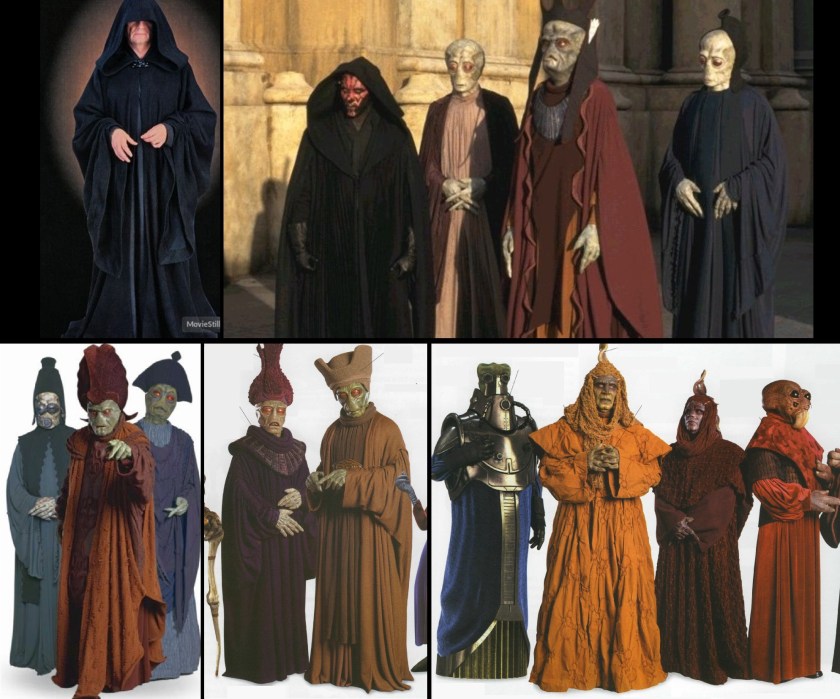
So, how exactly does a coat differ from a robe? To be honest, it’s a blurred line. After collecting and scrutinizing the references for this entry, the answer seems to be a combination of 1) the amount of tailoring the garment has, 2) the wearer’s activity level, and 3) perhaps the degree of closure: thus Robes tend to be longer and flowier (less tailored), worn closed, and folks who wear them tend to do more standing around. Coats tend to be somewhat shorter, more tailored, worn open, and those wearing them do more while wearing them. Or perhaps robes are less utilitarian, while coats serve more functional purposes, like protecting the wearer (from cold, dirt, etc.)? As I say, it’s a complicated spectrum to navigate, and the boundaries are more than a little unclear, but I’ve done my best to group them here, hopefully to show the differences.

First up we have what I’m calling ‘true robes’:
continue reading

Project: Coat Retool 2024

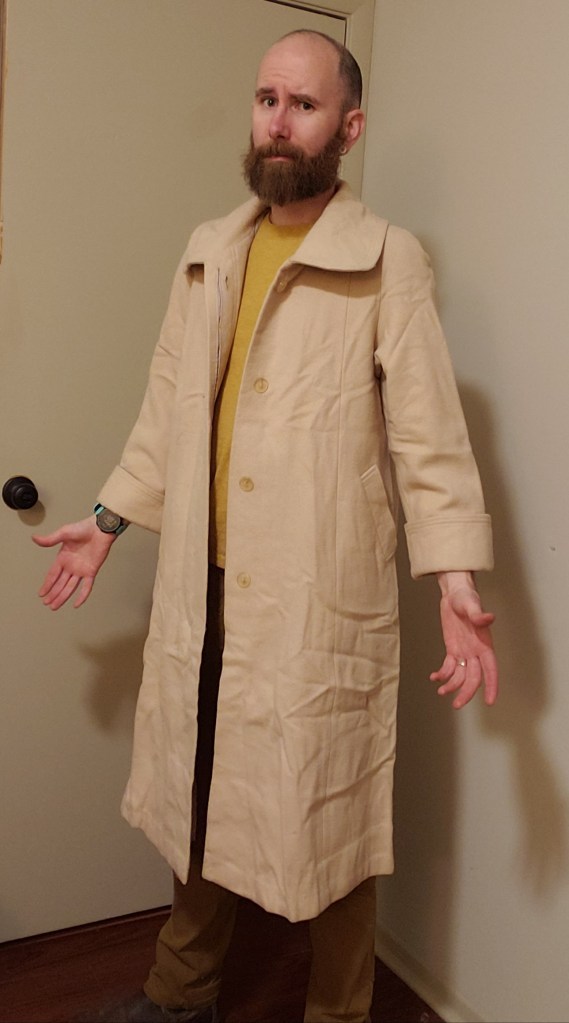
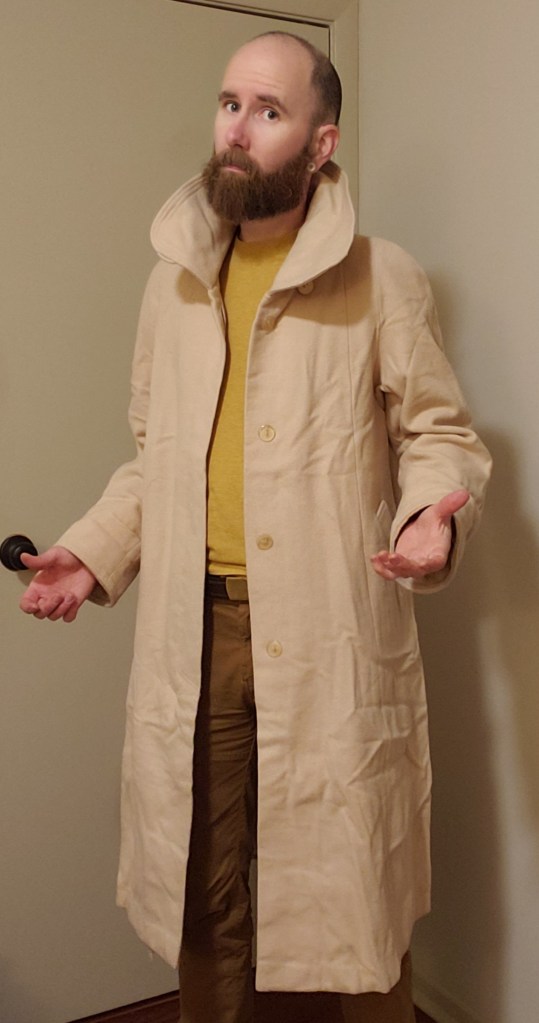
If it feels like it’s been forever since I’ve had a finished project to unveil, you would be right – turns out it’s been nearly a year! The funny thing is, this one has been finished since Christmas, but I’ve been so busy with, y’know, gutting a house and renovating it literally from the ground up to be able to work on nearly anything else (like taking pictures of the final product!) We may have moved in right after the New Year, but it’s only been in the last two weeks that I’ve got my sewing space in a more-or-less workable condition! Anyway, this particular project started last January when I was (as ever) browsing the racks at my local Goodwill, not looking for anything in particular, only to find something in a solid material with great potential Swarziness…if I could just manage to rework it to be less hideous.

In this case, a camel-colored 100% wool coat with a massive collar and weirdly rounded shoulders…major Asian granny vibes. However, I’m always up for a challenge (especially at a price point of just $7!) and was in the market for a lighter-weight coat (my only other option at the time was a Soviet behemoth meant for the Eastern Front!) so I got it home and started making my plan of attack.

what all goes into such a transformation?

Intro to Fabric Prospecting

(This article is a modified version of a workshop I recently taught at the 10th annual Whippoorwill Festival here in central Kentucky)
Greetings, galactic crafters! – and happy ‘May the Fourth’ weekend!
If you’re in search of an authentic GFFA wardrobe that can stand up to the rigors of authentic GFFA activities, I find that off-the-rack fashion pieces from Amazon can only take your look so far. When you’re in the middle of a tariff war and most of that cheap clothing comes from overseas, this might be the perfect time to add a useful skill to the ol’ proverbial toolbox and start creating more of your garments yourself!
So, do you want to create a solid, in-universe outfit but find that the good materials (linen, raw silk, wool, etc.) at the online fabric merchants have gotten too expensive? Or has your go-to big-box craft store gone bankrupt and closed its doors, leaving a choice between one that doesn’t even sell fabric in-store, and another run by Christian Nationalists? Then you should consider Fabric Prospecting!
What’s that? I’m glad you asked!

Traditionally, prospecting is done for valuable raw materials—like precious metals, or crude oil—but in the costumed arts, the raw material in demand is quality fabric! As you would expect, traditional markets price these accordingly (especially when compared with synthetics, which are dirt cheap). However, did you know that there’s an oft-overlooked source of high-quality, natural-fiber fabric just waiting to be exploited and put to costumery uses?

learn the secrets of fabric prospecting!