
Welcome back to the Galactic Style Guide, the series where we break down the ‘Star Wars aesthetic’ in order to help you create a more authentic ‘outer persona’! In this installment, we’re trying something a little different!
Cosplayers new to the idea of ‘original character’ or ‘denizen’ costuming often chafe when faced with the reality that the Galaxy Far, Far Away, while far-reaching, is not in fact without limitations, but instead operates within a specific visual idiom in which character types are associated with certain design styles:
“[Lucas] made pronouncements of a general nature … First of all, he wanted the Imperial people to look efficient, totalitarian, fascist; and the rebels, the goodies, to look like something out of a Western or the US Marines [in Vietnam]. He said, ‘You’ve got a very difficult job here, because I don’t want anyone to notice the costumes. They’ve got to look familiar but not familiar at the same time.’ – _The Making of Star Wars_ (Rinzler), p.130.
“[Mollo] broke down the [Episode IV] characters into general costume themes:
peasant costumes (Russo-Japanese); Western/U.S. cavalry/motorcycle looks; Nazi-style uniforms/armor/cloaks; space technology-type outfits; ladies’ mock-medieval/Tarzan attire; semi-monsters with armor; and full monsters.” – _SWCOT_ (Alinger), p.16. From the sound of it, these categories roughly correspond with: Tatooine civilians, Alliance leadership/Han, Imperials & Vader, pilots, Leia/upstrata, Chewbacca, and…???
As pointed out in EC Henry’s excellent video on the foundations of good SW vehicle design (which I believe is absolutely applicable to character/costume design as well), the first requirement is an iconic design. Like computer icons, Star Wars characters (and more importantly for us, character types!) ought to be recognizable by their silhouettes and largely should not be able to be mistaken for each other: in other words, each of these “classes” has a specific visual style that makes it unique; because of the ‘period piece’ nature of the setting, these visual styles usually hearken back to some historical antecedent, albeit often slightly remixed.
For those interested in creating an ‘OC’ for cosplay/costuming/reenacting/living history purposes, I’ve used the above categories as a jumping-off point to break these character archetypes into general style pointers, hopefully to help illustrate what makes each look unique and how to avoid a key pitfall when creating such characters.
We’ll begin with general ‘galactic ‘peasants’ (what we might call ‘commoners’ or civilian-type characters), which is a wide category and varies (naturally) by planet:

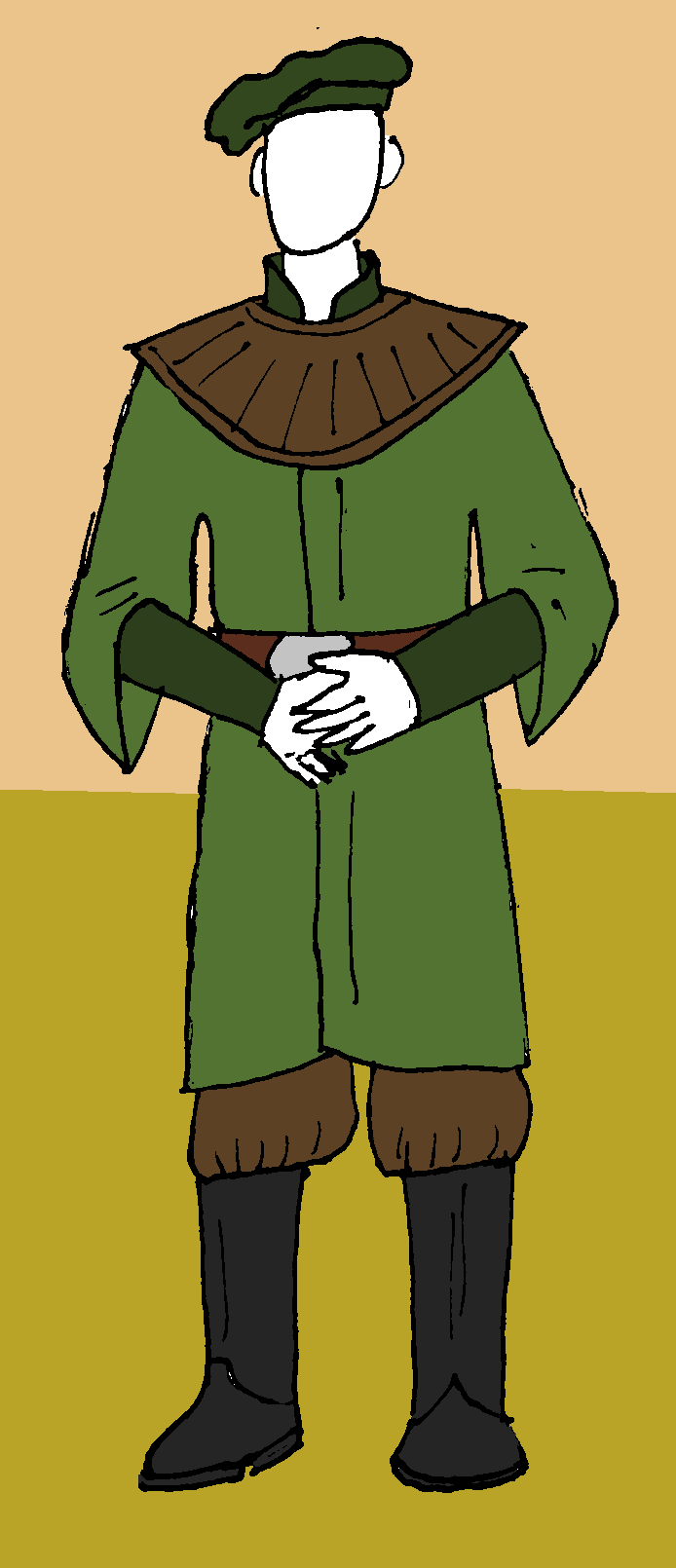
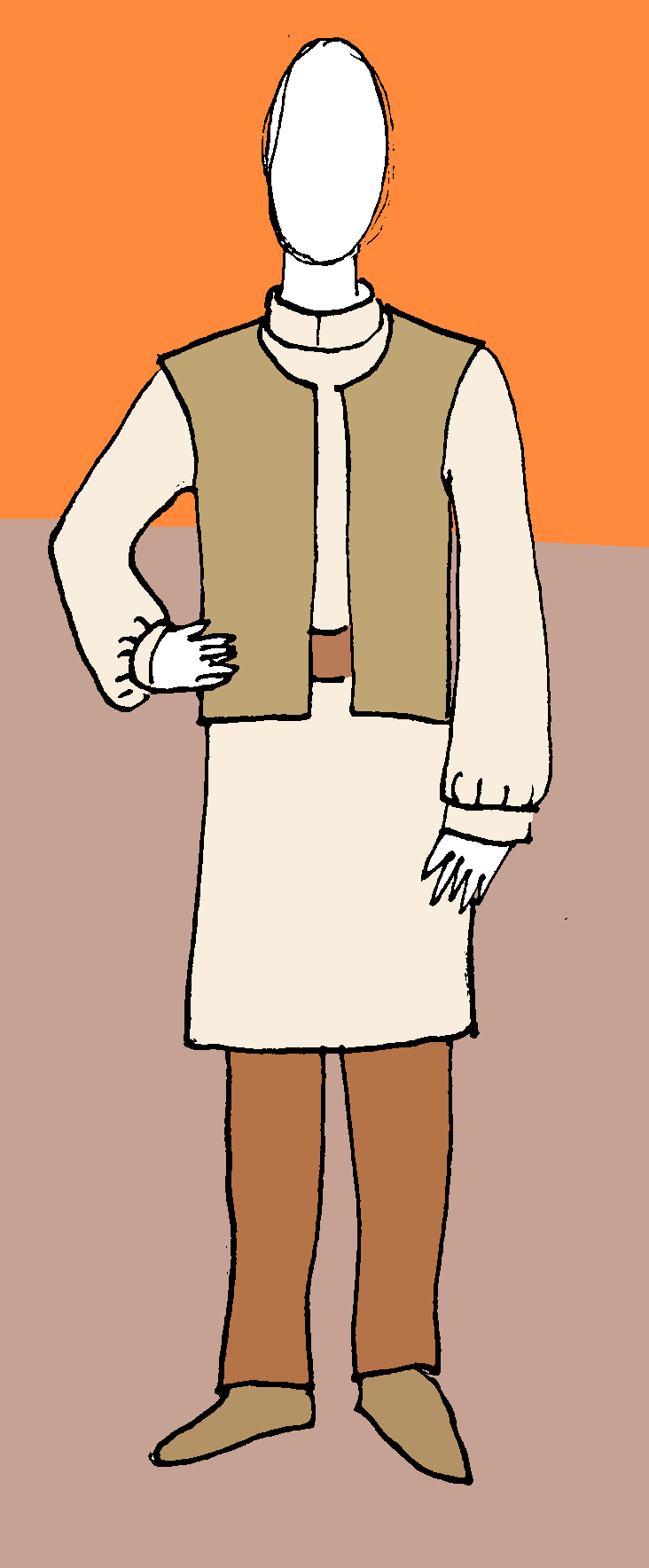

I hope you’ll note that a big element shared by many of these is a degree of ‘space exoticism’ based on a non-modern/Western silhouette, using on upper-body garments that are longer than the waist/hips/fingertips. For whatever reason, ‘comm badge’ greebles are rarely seen among these regular folks.
Tatooine‘s native style is ‘Russo-Japanese’, with a silhouette defined by the use of longer belted tunics, wide sleeves, and legwraps to keep out the sand (Luke, Owen, Jawas, Tuskens, etc). Naboo’s civilian style is a colorful, almost Dinotopian juxtaposition of Renaissance and east Asian elements, incorporating fitted cuffs, puffy or layered sleeves, mandarin collars, wide mantles, and tall boots. Bespin is Indian-inspired (DAG p141; SWCOT p109), often with loose vests and knee-length tunics, puffy sleeves, and fewer boots. Compare these to the local Aldhani style seen in ANDOR: Central Asian-inspired layered fur-trimmed robes and ushanka-like hats, all within a limited color scheme.
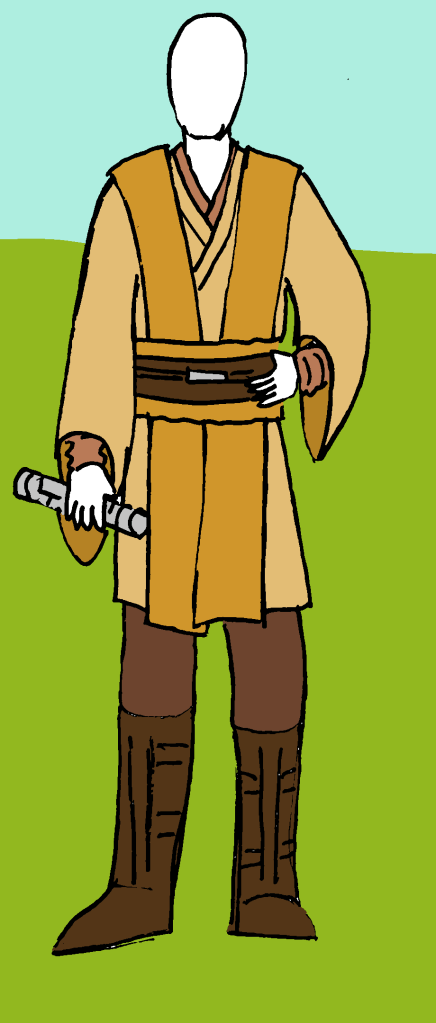
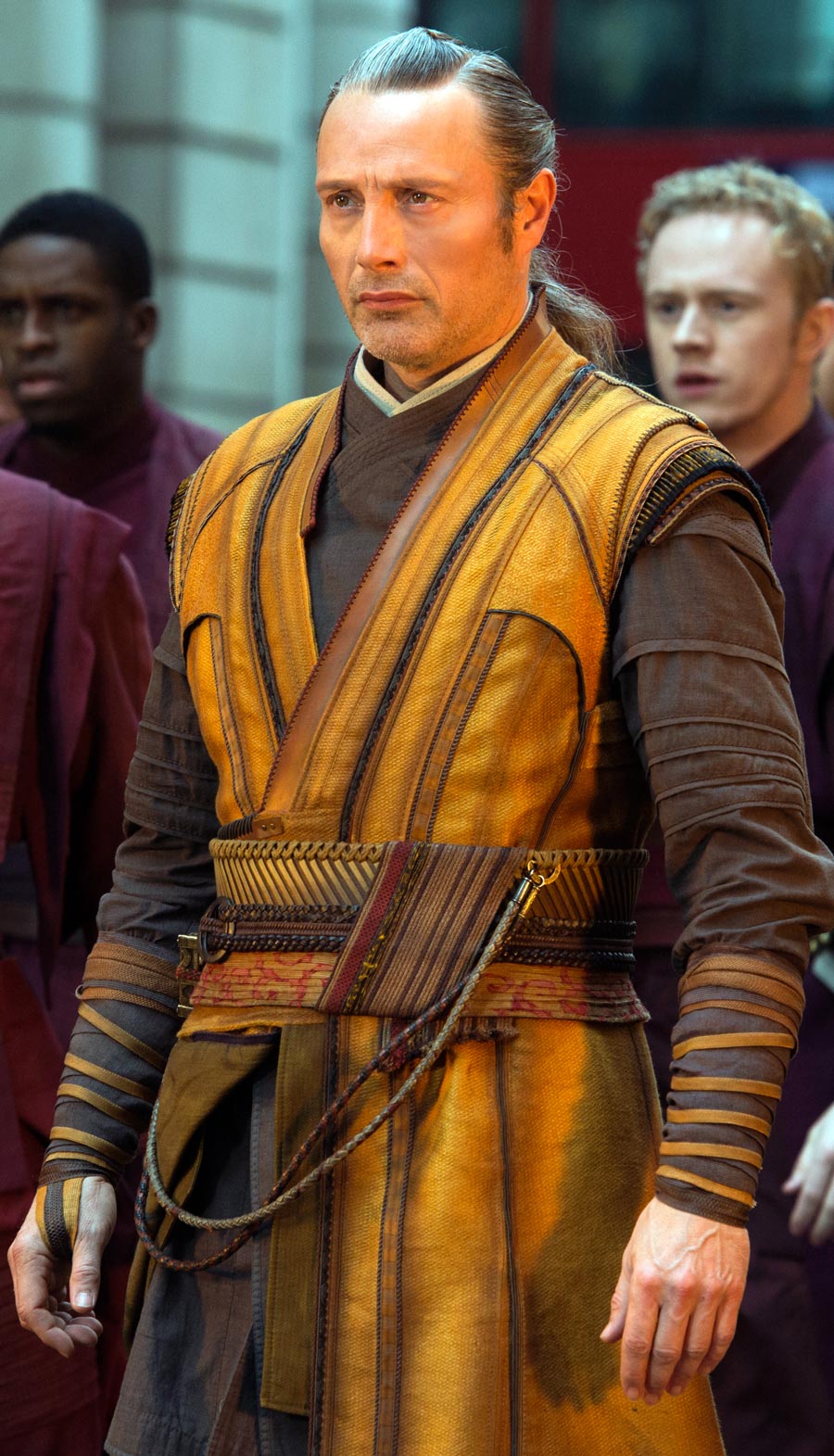
-Adding tabards and a wide sash to the local Tatooine look creates a semi-religious silhouette with vestments that helps differentiate Force-users from simple civilians – a Jedi is more than just a bloke with a lightsaber!
(For proof of this, as I’ve noted before, Mads Mikkelsen’s character’s design in the first Doctor Strange movie used a lot of similar visual shorthand cues which collectively help communicate that he’s a ‘space fantasy wizard’.) While other Force-based groups may have different dress codes, when it comes to the Jedi Order, calming, natural earthtones are by far the standard – trying to dress a Jedi in greens or blues is one thing, but reds or purples are going to make it difficult for the look to ‘read’ as “Jedi”.
-More active character types (think ship-captain spacers, smugglers, or what many nowadays like to call ‘scoundrels’) move closer to the familiar modern/Western silhouette: pairing tucked-in shirts with vests or jackets, creating a clear divide between upper and lower halves. (This look is also much more accommodating of the gunslinger’s low-slung holster, which can look strange belted over a long tunic!)
More often than not, when I see folks begin playing with the idea of ‘Batuu-bounding’, this style is almost always the default, likely because it is the most familiar and closest to what many wear everyday.
When thinking about the nature of smuggling as an occupation, we should remember that success depends on not attracting attention or presenting too aggressive of an appearance: i.e. blending in with the galactic populace! – hence a good smuggler probably shouldn’t wear anything too extravagant nor be clad in tons of plastoid armor.

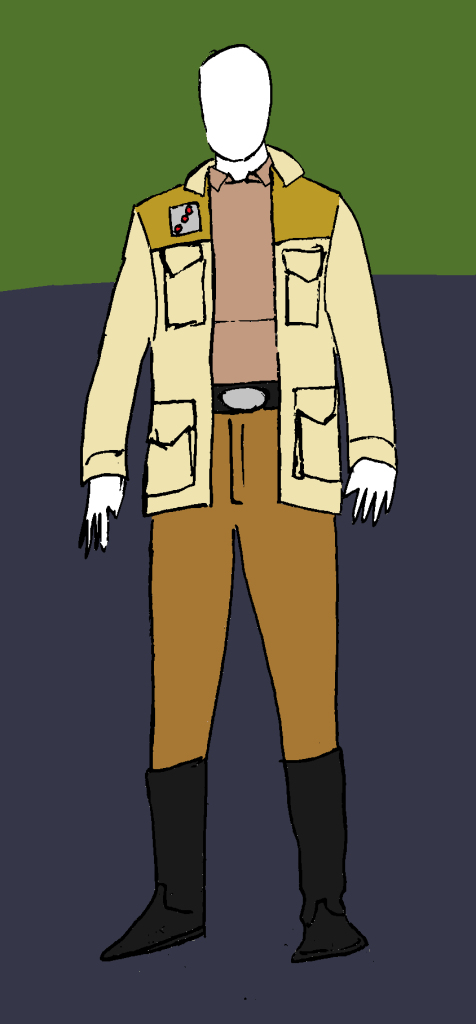
-The ‘good guys’ of the OT (i.e. the Rebel Alliance) are something of a subset of the ‘active’ style-family; they have not only a Western (hemisphere) look with shirts and trousers, but as noted by Mollo, have a definite Western (the cinematic genre) style as well! These rely on a more uniformed military flavor with fall collars, trench coats and flap-pocketed field jackets instead of vests or wrapped tunics, tall boots instead of puttees or gaiters, and—aside from the blue and gray of the ‘Fleet Troopers’—pretty much an all-earthtone color palette.
-For more combative occupations (like mercenary or bounty hunter), if we ask “what is this character’s day to day like? Based on their profession, what do they need?” the answer should be pretty clear. If you are regularly expecting incoming blasterfire or to be grappling with a quarry, this is probably going to be reflected in a higher ratio of ‘hard’ to ‘soft’ elements – i.e. armor! (And in fact this is precisely the change we see in the Jedi dress code during the Clone Wars). As the goal is to present a tough, capable appearance, even if more flexible elements (such as a kama ‘battle cape’) are included, these pieces should still have some rigidity to them and be made of materials actually suited to the rigors of battle (leather, heavy canvas, etc.) – and not light, flowy linens, silks, or…*shudder*…bubble gauze)! In terms of color schemes, more variety is possible, as long as the core fundamentals of SW aesthetics are kept in mind: avoid pure white and black, keep the colors muted, and be sure to Weather!

I think that’s enough for now, but I’ve got another set of character archetypes ready to go for next time! What do you think? Are there any you would like to see included? Drop a comment and let me know below, or come discuss with us at the SWLH facebook group. Thanks for reading!
(And FYI, yes – I do plan on eventually covering each of these ‘classes’ in the standard GSG format (like the Mechanics and Technicians breakdown I did last year), in which I collect examples of each various style. Mostly, I’ve just been sitting on these sketches for too long, and wanted to get them out there!
Thanks to my supporters! While I love doing these sketches, writing and putting a post like this together takes a lot of time and energy (no ChatGPT here!), so if you’ve learned something from this post, please consider supporting my work via ko-fi, or with a small donation below! If you can’t give, please share this post or site with your friends! Thank you!
Make a one-time donation
Make a monthly donation
Choose an amount (US dollars only – unfortunately, I cannot currently accept Republic credits 😉
Your contribution is greatly appreciated and will help me continue to bring you this kind of in-depth material! Alternately, you can support my work via ko-fi as well.
Your contribution is greatly appreciated and will help me continue to bring you this kind of in-depth material! Alternately, you can support my work via ko-fi as well.
DonateDonate monthly Living History in the Star Wars Galaxy
2 thoughts on “Galactic Style Guide – Designing Foundational Characters: part 1”