
Welcome back to the Galactic Style Guide, the monthly series where we break down the ‘Star Wars aesthetic’ in order to help you create a more accurate ‘outer persona’! For this installment, we’re taking a look at devices which seem as prevalent in the Galaxy Far Far Away as smartphones are here on Earth. While a comlink fulfils the role of a telephone (audio-only), a datapad or viewscreen fills the niche of a tablet computer, and is used to display or swap visual information (but not to make ‘calls’).


While datapads have really taken off in recent years (after visitors to Galaxy’s Edge started kitbash-decorating their phone cases), if you’re only familiar with them from these fanmade creations, you may be surprised to see that the MANY visual examples from official sources are designed very differently! This post will be primarily concerned with the general design of these devices’ screen sides, and then next month we’ll pay special attention to the rear face, to which so many would-be Batuu-bounders glue so many greeblies.
Feature-wise, text sources don’t go into much detail but do let us know that various datapad models can have keys (X-wing: Rogue Squadron), touch pads (X-wing: Wraith Squadron), slots for checking ID cards (I, Jedi), and ports for connecting to holoprojectors or other datapads (ibid).
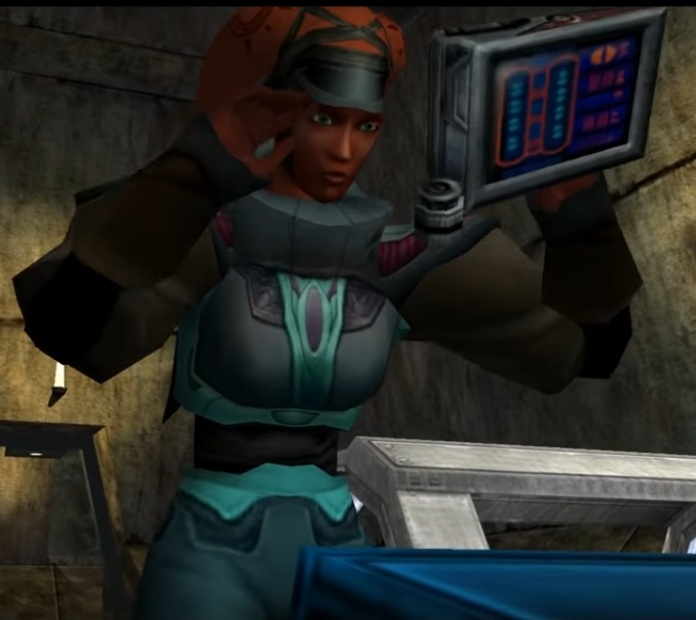
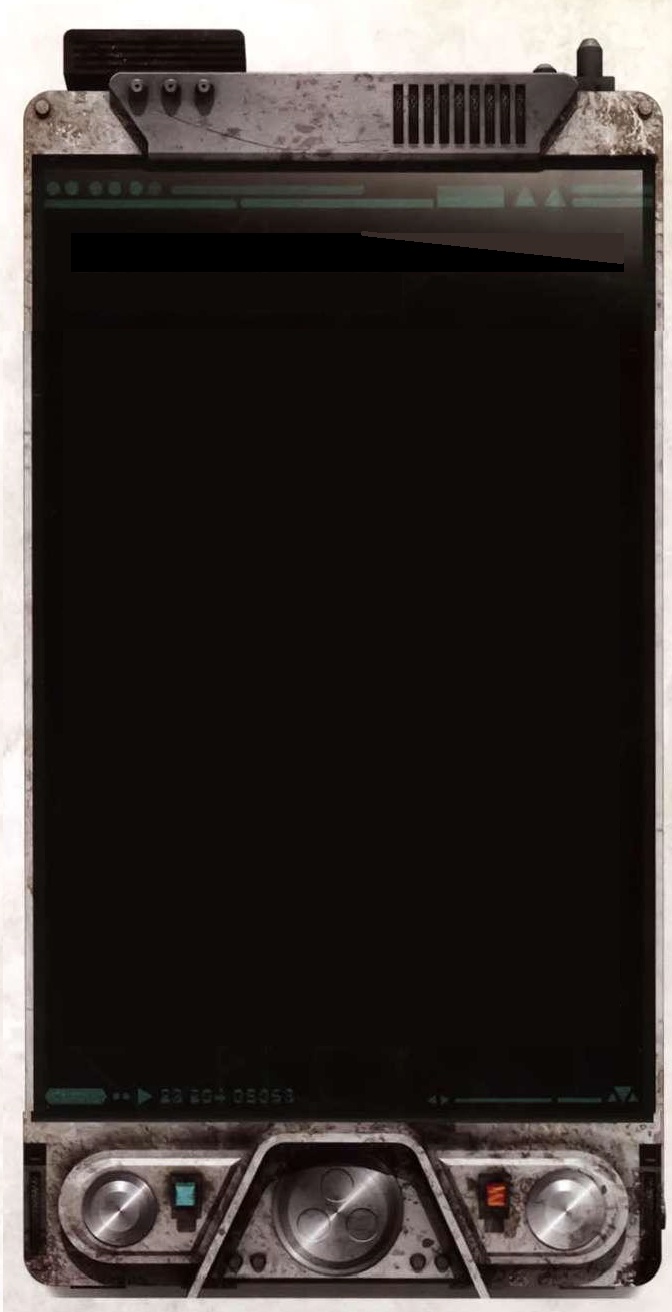
By far the most common style in EU materials is the one seen above, in the form of the earlier Versafunction88 and the later Companion 2000; more or less identical, both were produced by Microdata Technologies. This style of device was in use through at least 14 ABY, as seen in Jedi Academy:
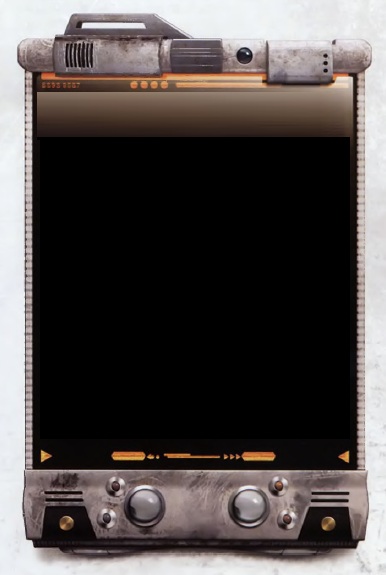
Various other styles of datapads are also frequently seen in FFG RPG sourcebooks and used to share sidebar information. Note the analog interface buttons: something sorely missing on modern smartphones. In general, these more recent designs are somewhat busier than earlier examples.

As we see here, the propmakers for Episode I created a wide variety of viewscreens for use by podrace spectators (all from Episode I Insider’s Guide CDROM):

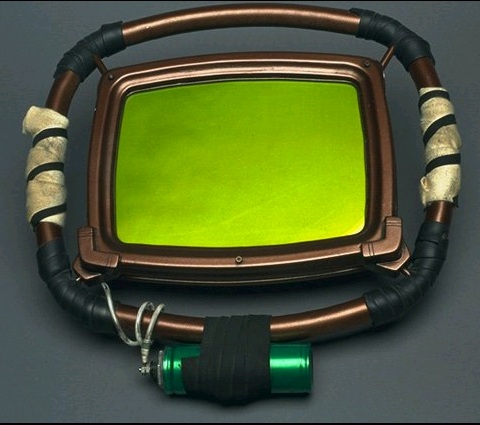

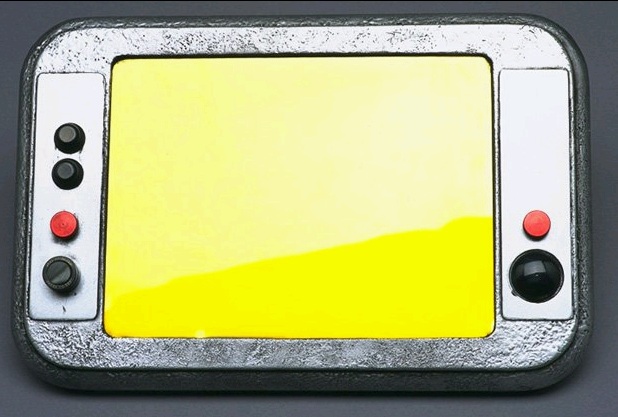
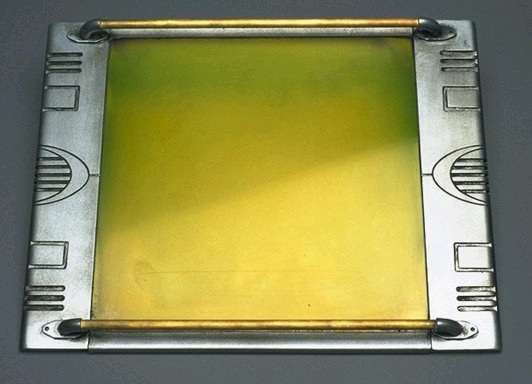


The first style (sans handles) was also available for public use at podraces. The simplicity of this design makes it perfect for an enterprising 3d modeler to create a snap-on cover to camouflage an iPad!
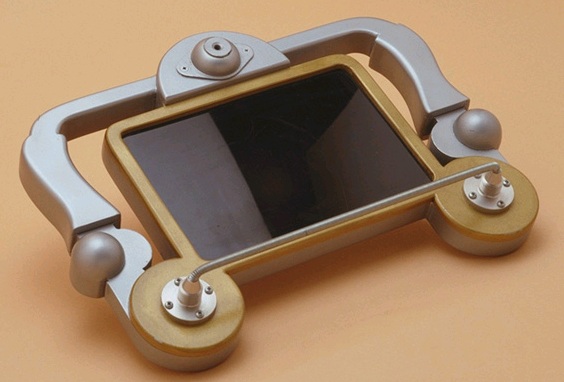
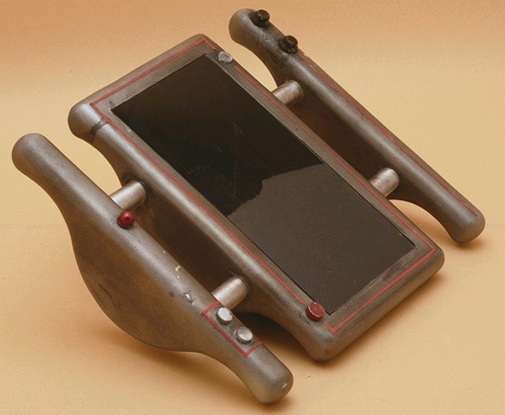
These more refined examples above (also produced for Episode I) feel a bit more art deco/’Coruscanti’ to me.
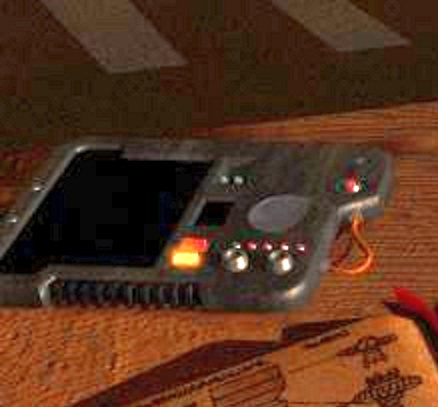
The Dark Forces games usually included a ‘personal datapad assistant’ feature as a place to show objectives inventory, etc. Notice that Katarn’s datapad from the first DF game (top left) appears to include leather detailing!

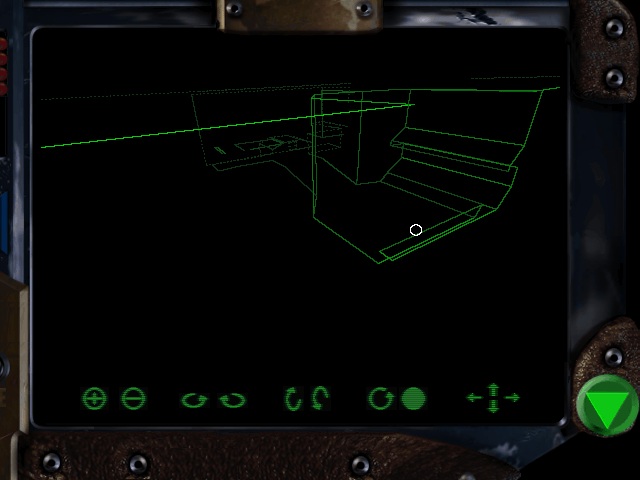
One great source of viewscreen designs is the game Galactic Battlegrounds (Age of Empires in Space!), whose artists used culturally-specific styles to differentiate each of its playable groups. These reveal that viewscreens—while similar—are not designed the same across the board. Unfortunately, the Royal Naboo were included as a faction but did not get their own campaign, so we don’t get to see what a Naboo-specific viewscreen might look like 😦
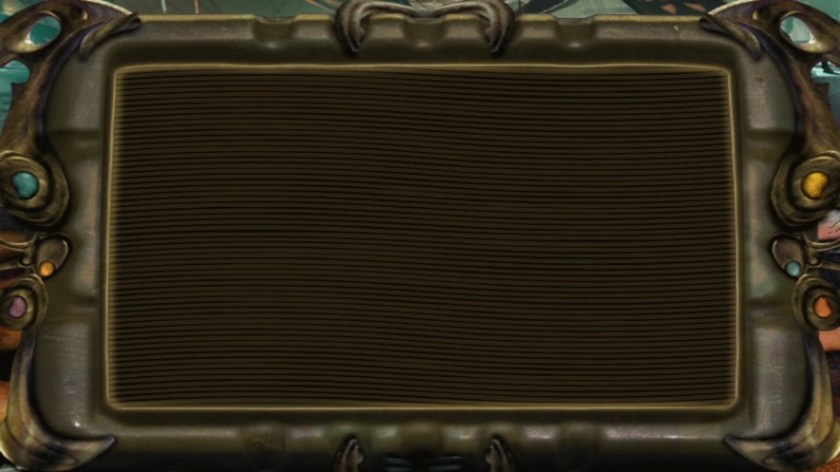
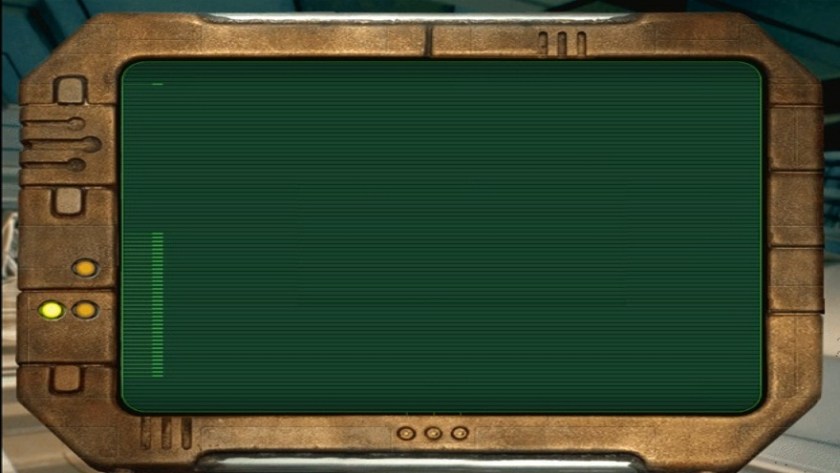
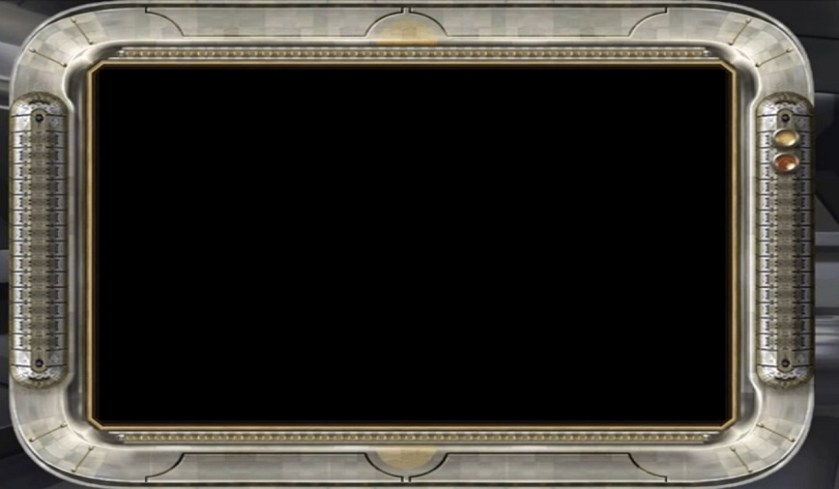
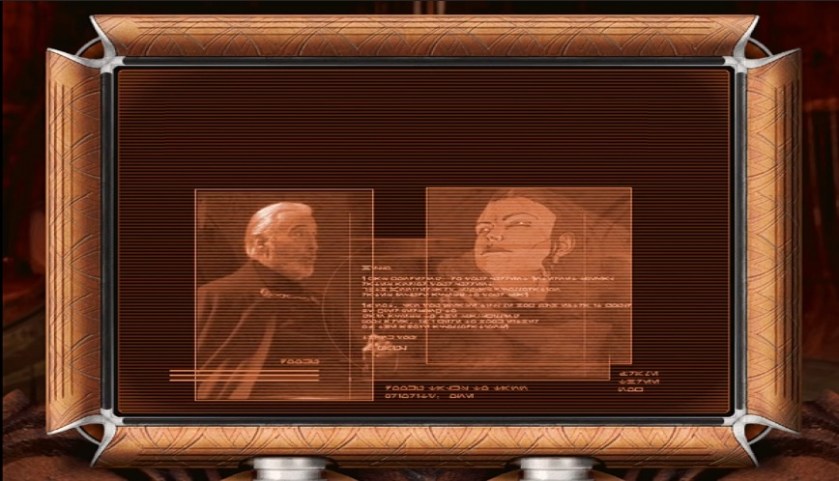


Hopefully, these examples have given you a better feel for the common design features of the ubiquitous datapad/viewscreen. Next month, we’ll flip things over and see just what an authentic GFFA datapad looks like on the other side (Batuu-bounders, be ready to take notes!).
Do you know of any examples I’ve left out? Let me know with a comment below, or come join the conversation at the SWLH facebook community!
Researching, compiling, and writing this site takes a lot of time and energy. If you’ve enjoyed reading, have learned something from this post, or will use it as inspiration for a future project of your own, please consider supporting my work with a small donation below! Thank you!
Make a one-time donation
Make a monthly donation
Choose an amount (US dollars only – unfortunately, I cannot currently accept Republic credits 😉
Your contribution is greatly appreciated and will help me continue to keep this blog ad-free!
(Alternately, you can support my work via ko-fi as well.)
Your contribution is greatly appreciated and will help me continue to keep this blog ad-free!
(Alternately, you can support my work via ko-fi as well.)
 Living History in the Star Wars Galaxy