
As I was leafing through my Star Wars Visual Dictionary—after looking up one thing I usually wind up flipping a few pages to see if anything new jumps out—a few months ago, I came across a particularly un-Star Wars-y looking knife: a Twi’lek dagger with a ‘Taulek -style handle’: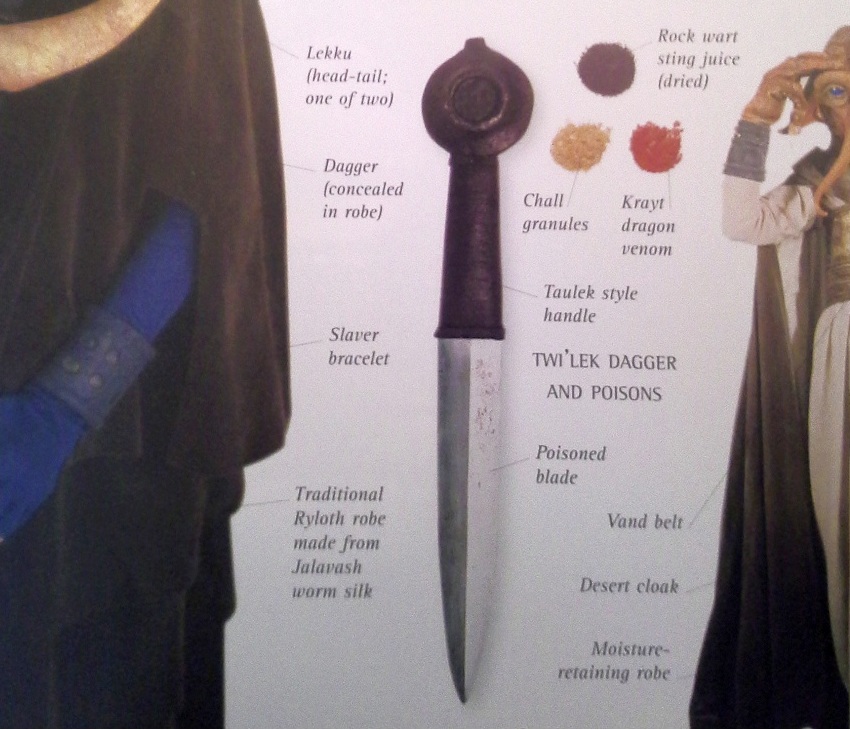 Not only are there no extraneous greeblies, this would appear to not even be intended to be a vibroblade—just a run-of-the-mill, stabby, fighting knife along the lines of a Sykes-Fairbairn. This makes it the perfect candidate for authentic replication, as it requires no hand-waving or suspension of disbelief to explain.The pommel looked very medieval to me and the friends I bounced it off, although I was unable to find any offered via parts kits that looked exactly right. Oh well! This meant I would just have to Do It Myself. While there is nothing given for scale in the SWVD, I based my schematic on scaling the pommel to match a medieval pommel of about 1 7/8ths inches in diameter.
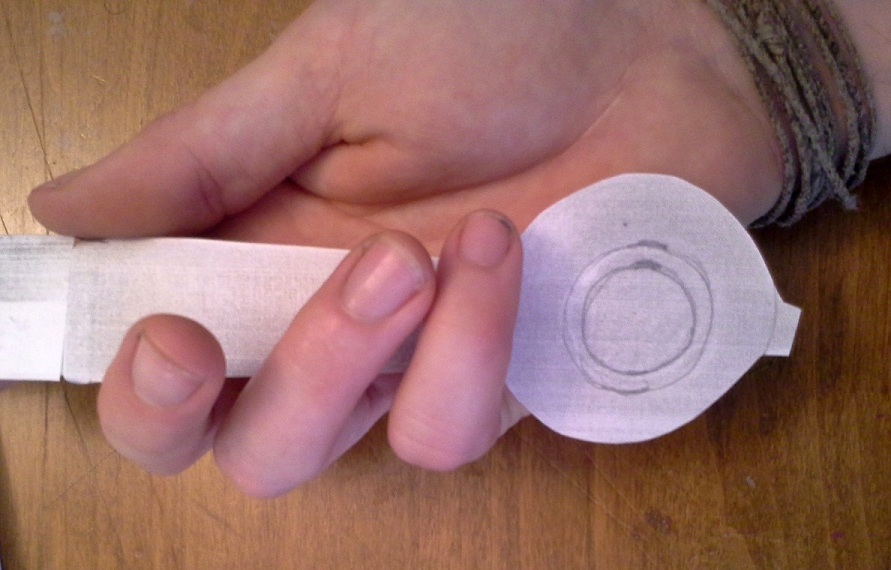
I tracked down a higher-resolution image and printed this out to fit my scale; I then drew up a cross-section that would help me better understand the pommel shape I was seeing.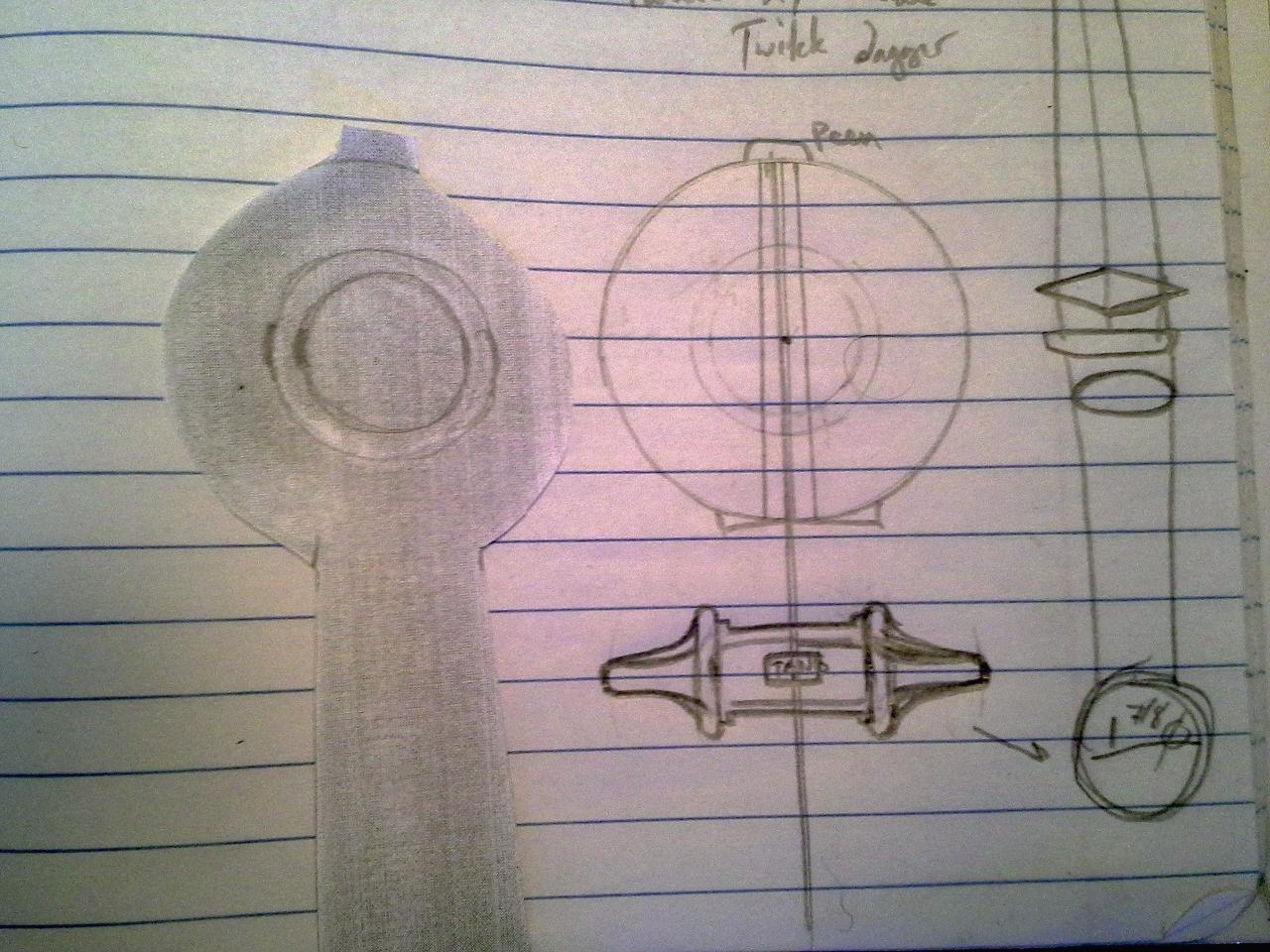 (Printing it out also allowed me to test-fit the dagger to my hand).
 Next, I sculpted the pommel using Victory Amber microcrystalline wax: easy!

I then poured a two-piece plaster mold around it (this required also mixing up some homemade playdough in which to impress the pommel for the first step of the mold making).
With both parts of the mold cured, I used candle soot to coat the two halves and aid in release of the casting. Finally, I heated up my pewter and poured it in. Recently-molten metal retains its heat for a long while, so after giving it 30 minutes or more to cool off, I cracked the mold open to see what we had inside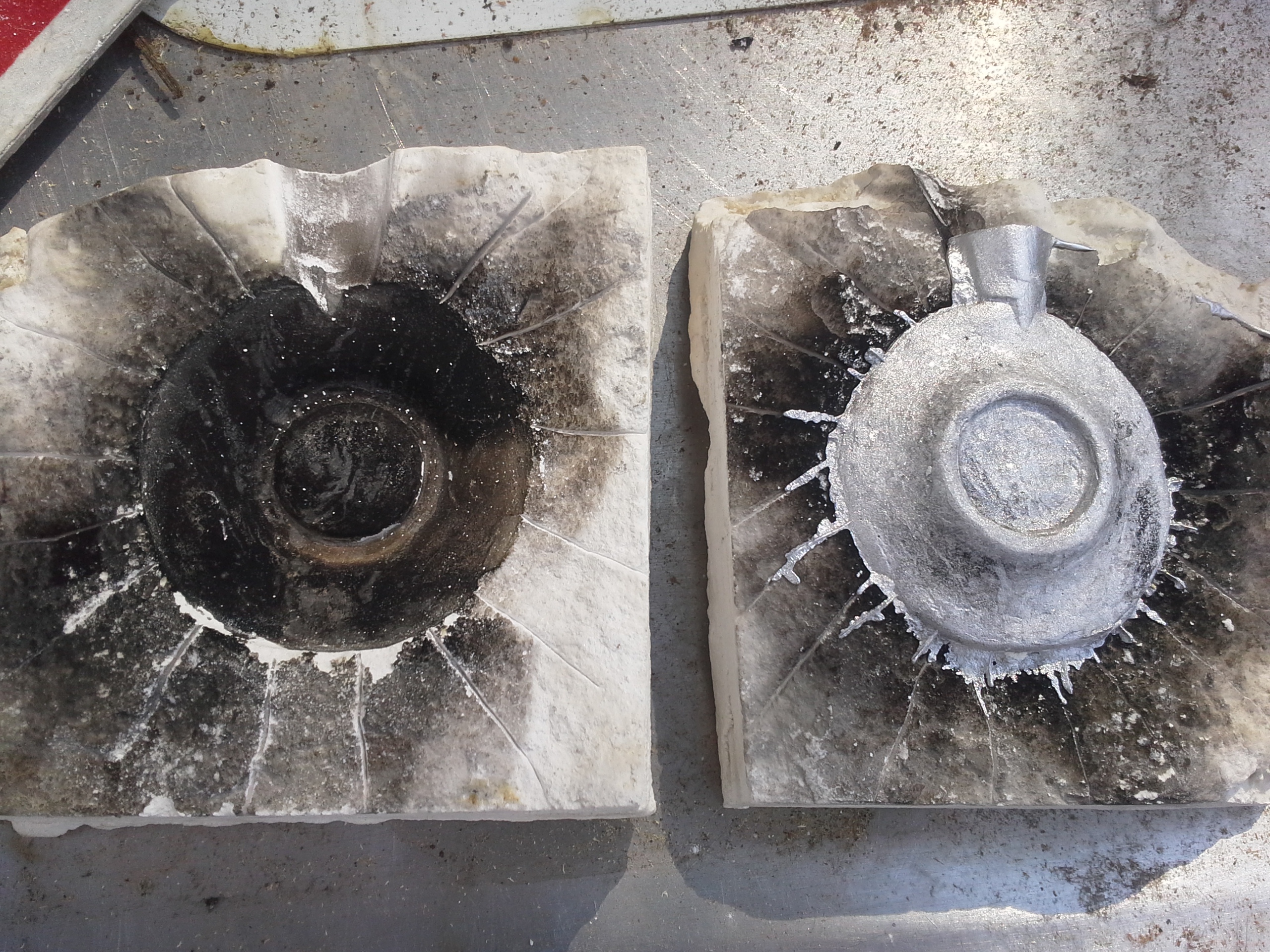
Once I got the flashing cleaned up and the sprue cut off, my cast pommel still felt very heavy in my hand (I know it’s a big hunk of metal, but it felt unnaturally heavy).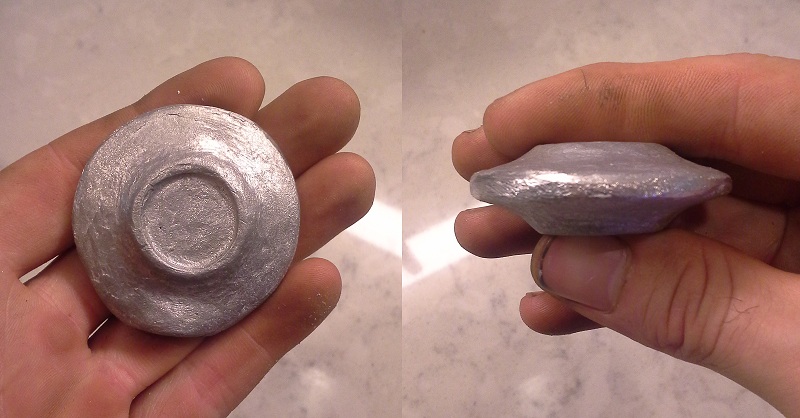
I pulled up a list of known densities of various metals, which showed that lead (the suspected main ingredient in my shoddy ‘pewter’*) had a density of 11.34 grams per cubic centimeter, while tin (the 90+% ingredient of lead-free pewter) had a density of only 7.28 g/cm3. Therefore, I proposed an experiment: if I cast the same piece with pewter of a mostly-tin composition, I would expect it to weigh out about 65% lighter! SCIENCE!
I had a bar of certified lead-free tin lying around, so I cut a chunk of it (using bolt cutters—no need to use a saw and try to save shavings!), melted it down, and poured it in.
With both cleaned up, I plopped each pommel down on a triple-beam balance and let the numbers speak for themselves:


The lead pommel weighed out at 118.05g; while the tin one came in at 81.3g – in other words, 69% lighter! This is likely due to the lead one not being 100% lead but probably having some other nasty elements (antimony? arsenic? cadmium?) changing its composition.Editor’s note: Triple beam balances are fine…if they’re calibrated properly! I recently got an electric balance, and the lead pommel massed at 164.23 grams, the tin one at 123.2 g. This is only a 75% difference, not the expected 65%, but it’s nice to have accurate numbers to back things up.
With the pommel cast and cleaned up, the next steps will be comparatively easy (the hard part will be coercing my blacksmith dad into finding the time to get the smithy fired up for a ‘fun project’! I’ll need to select a piece of wood to do some offset lathe turning for the grip; forge and temper the blade, drill out the pommel, attach it all together and peen the tang. I’m wondering how exactly I’m going to do the grip, as the weight of the pommel will likely feel odd in the hand with a light blade, I may wind up casting a pewter bolster that imitates the cord-wrapped decoration of the artifact.
*Said shoddy ‘pewter’ was originally obtained by melting down a bunch of Jostens graduation medallions… while they were covered in some shiny mystery plating, it’s encouraging** to know that their trinkets are made of carcinogenic heavy metals (or at least they were for the class of 2006). Only the best for our graduates!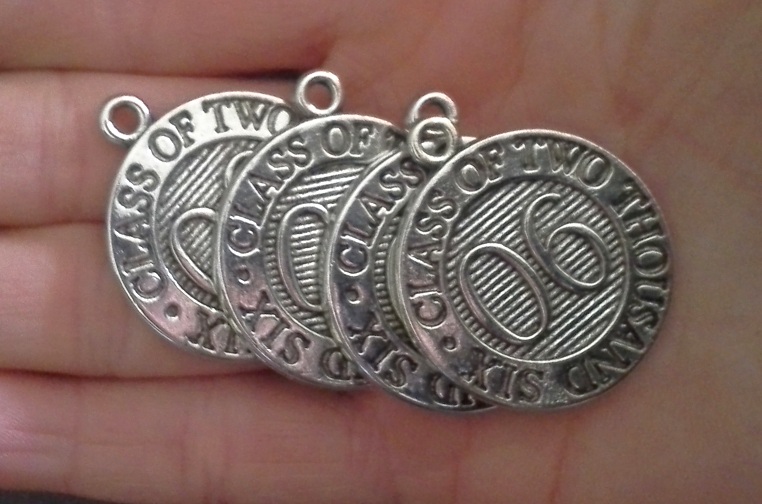 **This is sarcasm. It’s not encouraging at all. It’s actually pretty troubling. Clearly, trinket contracts go to the lowest bidder for the maximum profit. Gooooo capitalism!
Researching, crafting, and writing this site takes a lot of time and energy. If you’ve enjoyed reading, have learned something from this post, or will use it as inspiration for a future project, please consider supporting my work with a small donation below! Thank you!
Make a one-time donation
Make a monthly donation
Choose an amount (US dollars only – unfortunately, I cannot currently accept Republic credits 😉
Your contribution is greatly appreciated and will help me continue to keep this blog ad-free!
(Alternately, you can support my work via ko-fi as well.)
Your contribution is greatly appreciated and will help me continue to keep this blog ad-free!
(Alternately, you can support my work via ko-fi as well.)
 Living History in the Star Wars Galaxy